

















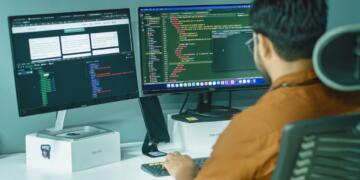






A series of videos circulating widely on Instagram, YouTube, Reddit and X has brought an obscure application, BAT-BMS, into sharp public focus. The clips show individuals approaching moving e-rickshaws, connecting their phones to nearby battery systems, and disabling power through a control function labelled discharge. The impact is immediate. Vehicles lose propulsion without warning, often halting in live traffic and leaving drivers stranded in the middle of the road.
The trend, increasingly referred to online as “tirri control”, has gained momentum through posts that frame the act as humour, retaliation, or experimentation. One widely circulated caption reads, “Bohot pareshan kiya hai tirri walon ne, ab inki rail banegi,” reflecting how quickly a potentially hazardous act has been repackaged as shareable content.
A legitimate tool, an unintended exposure
BAT-BMS itself is not a malicious application. Developed by Shenzhen Grenergy Technology, it is designed as a Battery Management System monitoring tool for lithium battery packs. Its purpose is functional and technical, offering users real-time data on voltage, current, temperature, cycle performance, and individual cell health. In incompatible systems, it also enables controlled management of charging and discharging.
The controversy does not stem from the software’s intent but from the environments in which it is being used. In several low-cost lithium battery systems deployed in e-rickshaws, Bluetooth-enabled Battery Management Units are configured with weak or absent authentication. When such systems remain unsecured, any device within the Bluetooth Low Energy range, typically around 10 to 15 metres, can establish a connection.
Once paired, disabling the discharge function cuts power to the motor. In a moving vehicle, this results in an abrupt, complete shutdown, matching the behaviour seen in viral recordings.
Why is the vulnerability uneven, not universal
Despite online alarm, the risk is not uniform across the sector. A significant share of e-rickshaws still operate on lead-acid batteries, which do not support Bluetooth connectivity at all. Even among lithium-powered models, manufacturers often deploy proprietary Battery Management Systems that are not compatible with third-party applications like BAT-BMS.
This fragmentation matters. The application cannot indiscriminately detect or control nearby vehicles. Only those systems that actively broadcast Bluetooth signals and permit external pairing are potentially accessible. The viral perception of universal vulnerability therefore overstates what is technically possible.
Not hacking, but missing safeguards
What the incident actually exposes is not a cyberattack in the conventional sense but a gap in baseline security design. In several budget battery systems, authentication layers are either minimal or entirely absent, leaving critical controls exposed to anyone within range.
Cybersecurity specialists have long warned that connected mobility systems require more than functional connectivity. Encryption, secure pairing protocols, and strict authentication are essential when software can influence physical movement. In their absence, proximity itself becomes a form of access control.
Between prank culture and infrastructure reality
The speed with which these incidents have been turned into social media content adds another dimension. What might otherwise be treated as a technical vulnerability is being reframed as entertainment, revenge, or challenge-based engagement. In that transformation, the boundary between observation and interference becomes blurred.
At the same time, the episode reflects a broader structural issue within India’s rapidly expanding e-rickshaw ecosystem, where cost-sensitive hardware, uneven manufacturing standards, and increasing digital integration are evolving faster than regulatory or security frameworks.
BAT-BMS has since disappeared from Apple’s App Store, although similar battery monitoring tools remain available across platforms, including on Google Play. The application itself remains a diagnostic instrument. The real question raised by this episode is not about the tool, but about the systems it is quietly revealing.