





















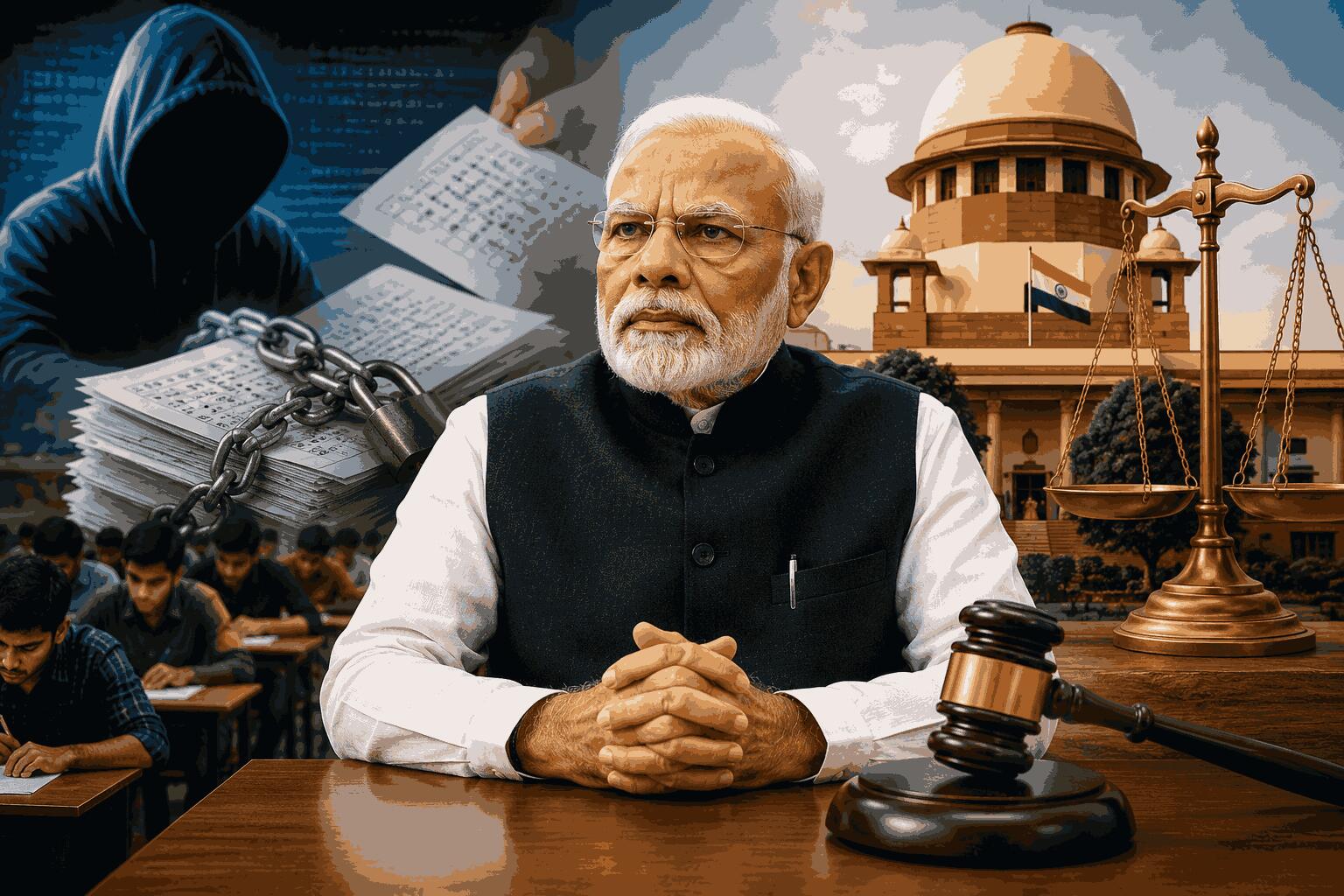
The Union Cabinet has approved a draft law aimed at cracking down on examination paper leaks through stricter punishments, time-bound investigations, and dedicated fast-track courts. The landmark decision reflects the Centre’s determination to restore confidence in India’s examination system after a series of controversies that have shaken the trust of millions of students and their families. The proposed legislation is expected to be introduced in Parliament during the ongoing Monsoon Session.
The proposed amendments significantly raise the legal consequences for individuals and organized networks involved in leaking examination papers. According to reports, offenders found guilty of running organized paper leak rackets could face imprisonment of up to ten years along with fines that may extend to ₹10 crore. The Union Cabinet has also endorsed provisions designed to ensure that investigations and court proceedings are completed within a fixed timeline, reducing prolonged delays that often weaken public confidence in the justice system.
One of the most notable features of the proposed law is the establishment of special fast-track courts dedicated exclusively to paper leak cases. These courts are expected to accelerate trials and ensure that those responsible for jeopardizing students’ futures are brought to justice without unnecessary delays. The Union Cabinet believes that swift judicial action will serve as a powerful deterrent against future examination fraud and strengthen the credibility of public examinations across the country.
The decision comes against the backdrop of growing public concern over recurring examination irregularities, particularly in high-stakes competitive examinations that determine admissions and government recruitment. Repeated allegations of paper leaks have triggered widespread anxiety among students, many of whom invest years of preparation and considerable financial resources in pursuit of academic and professional opportunities. The Union Cabinet has sought to address these concerns by reinforcing the legal framework governing examination security and accountability.
Education experts have long argued that stronger laws alone cannot eliminate paper leaks unless they are accompanied by technological safeguards, improved institutional oversight, and greater coordination between examination authorities and law enforcement agencies. Nevertheless, they believe stricter penalties can discourage organized criminal syndicates that profit from compromising examination integrity. The Union Cabinet‘s latest initiative is therefore being viewed as one component of a broader effort to protect the credibility of India’s examination ecosystem.
Government representatives have repeatedly emphasized that safeguarding the future of young aspirants remains a national priority. Recent public statements from senior leaders underscored the commitment to ensuring that students are not forced to suffer because of organized malpractice or administrative failures. By proposing mandatory fast-track judicial mechanisms and enhanced penalties, the Union Cabinet intends to send a clear message that crimes affecting educational opportunities will attract swift and severe legal consequences.
The draft legislation is also expected to strengthen coordination among investigative agencies responsible for handling complex paper leak cases that frequently span multiple states. Organized rackets often exploit technological loopholes and cross-jurisdictional networks, making investigations challenging under conventional procedures. Supporters of the proposed reforms believe that clearly defined timelines and specialized courts could improve conviction rates while discouraging repeat offenders. The Union Cabinet hopes these measures will help restore public faith in competitive examinations that shape the careers of millions of young Indians.
As Parliament prepares to debate the proposed legislation, attention will focus on how effectively the final law balances stringent enforcement with practical implementation. Educational institutions, students, and recruitment agencies alike will closely watch the legislative process, hoping that the reforms translate into lasting structural improvements rather than temporary responses to recurring crises. If enacted, the measures approved by the Union Cabinet could represent one of the most significant legal overhauls of India’s anti-paper leak framework, reinforcing transparency, accountability, and fairness in the country’s examination system.