




















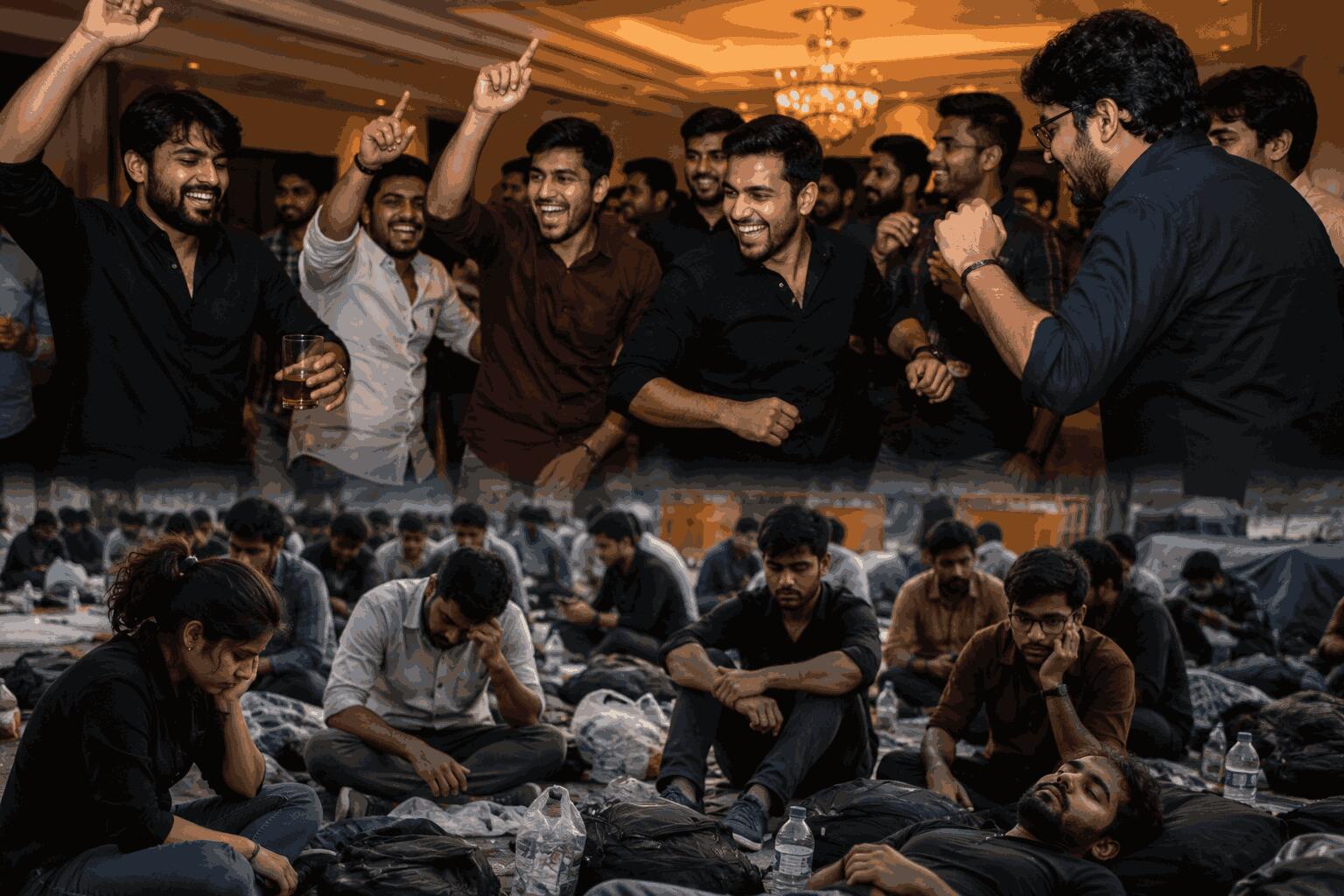
The viral Reisgnation party video has ignited a fresh controversy around the Cockroach Janta Party (CJP), after former member Meghnad S publicly criticized the organization’s leadership over what he described as misplaced priorities following the resignation of former Union Education Minister Dharmendra Pradhan. The video, which has circulated widely on social media, allegedly shows several CJP leaders celebrating at a hotel while, according to Meghnad S, many protesters who had participated in the movement were still awaiting food and logistical support.
According to reports, Meghnad S, who was associated with the movement during its early stages, accused senior leaders of failing to uphold the values that had attracted thousands of young supporters. In social media posts and public remarks, he claimed the movement had begun as a grassroots campaign centered on students’ concerns but had gradually become disconnected from the volunteers who sustained it. The allegations emerged after footage of the gathering rapidly spread online, prompting widespread debate.
The controversy centers on a celebration reportedly held shortly after Dharmendra Pradhan’s resignation, a development widely viewed as a significant moment for the protest movement. Critics questioned whether the timing of the celebration was appropriate, particularly while many protesters remained at demonstration sites or were dealing with the aftermath of weeks of sustained agitation. Supporters of the leadership, however, argued that the event was simply a private gathering marking what they considered an important milestone.
The Reisgnation party video soon became one of the most discussed political clips on social media, with users expressing sharply divided opinions. Some defended the leadership, arguing that celebrating a perceived political achievement was natural after an extended campaign. Others echoed Meghnad S’s criticism, saying that public movements depend on maintaining trust among volunteers and participants, especially during periods of intense mobilization.
Political observers note that internal disagreements often become more visible after major protest movements achieve key objectives. Differences over leadership style, resource allocation, and organizational direction frequently emerge once immediate goals have been accomplished. In this instance, the Reisgnation party video has shifted public attention from the movement’s earlier demands to questions about internal accountability and decision-making.
The episode has also highlighted the growing influence of social media in shaping political narratives. A single viral recording can rapidly dominate public discourse, often overshadowing broader policy debates. Within hours, the Reisgnation party video generated extensive online discussion, with supporters, critics, and independent commentators offering contrasting interpretations of the footage. Digital platforms amplified both the allegations and the responses, ensuring that the controversy reached audiences far beyond the movement’s core supporters.
Meanwhile, individuals associated with the organization have defended their conduct, maintaining that the movement’s objectives remained focused on student concerns and democratic participation. They have argued that isolated clips shared online may not fully reflect the context of the gathering or the broader efforts undertaken during weeks of protests. Nevertheless, Meghnad S’s criticism has ensured that the Reisgnation party video continues to remain at the center of political conversations.
Analysts suggest that public movements often face their greatest tests not during mass mobilization but after achieving symbolic victories. Expectations regarding transparency, financial management, and leadership conduct typically increase once organizations attract widespread national attention. Whether the latest controversy has a lasting impact will depend on how effectively the leadership addresses the concerns raised by former members and volunteers. The Reisgnation party video has therefore evolved beyond a viral social media clip into a broader discussion about accountability within high-profile public campaigns.
As reactions continue across political circles and online platforms, the controversy underscores the challenges that rapidly expanding movements face in balancing public expectations with internal management. While supporters continue to emphasize the movement’s achievements, critics insist that organizational credibility depends not only on public victories but also on maintaining the confidence of volunteers and early members. With debate showing little sign of subsiding, the Reisgnation party video is likely to remain a prominent point of discussion in the days ahead, illustrating how viral content can reshape the narrative surrounding a political movement.