






















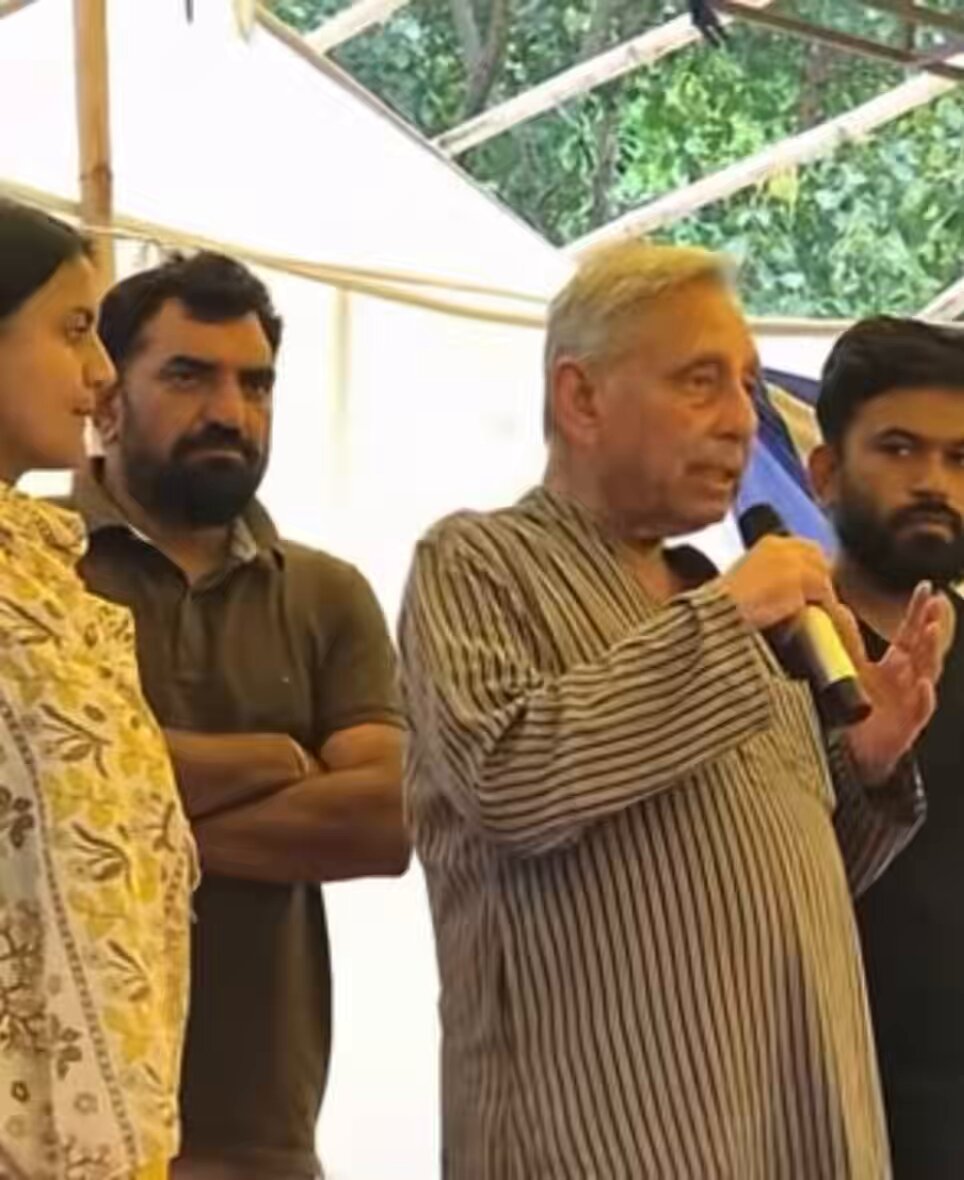
Former Union minister and veteran Congress leader Mani Shankar Aiyar drew attention on Friday after joining CJP protest at Delhi’s Jantar Mantar, where he described the gathering as a historic moment and spoke about fear, dissent, and the need for dialogue. The remarks quickly set off political debate, especially after he referred to Umar Khalid and Sharjeel Imam while discussing how the government handles dissent-related cases.
Aiyar said he had come to “learn” from the students and praised them for standing up without fear. He contrasted that with his own generation, saying that people of his age had often been intimidated by the political environment and hesitant to speak openly. His comments were delivered from the protest platform and were widely circulated online soon after.
The student demonstration at Jantar Mantar centered on complaints about government action, policing, and broader institutional accountability. Mani Shankar Aiyar framed the gathering as more than a protest over one issue, calling it a lesson in courage for older generations and urging that public grievances be met with conversation rather than suppression. In his view, peaceful dissent remains an essential part of democratic life.
According to reports from the event, Mani Shankar Aiyar also said that the state should be able to prove its case in court if it is pursuing serious allegations against anyone. That remark became one of the most discussed parts of his speech, because it linked the protest atmosphere to an ongoing national conversation about due process and prolonged incarceration in high-profile cases.
The most controversial element of the speech was Aiyar’s reference to Umar Khalid and Sharjeel Imam, both of whom remain central figures in the long-running legal and political debate around the 2020 Delhi riots case. He said he had seen their cases and suggested that the government had not succeeded in proving its allegations in court so far. The comments prompted sharp reactions from critics, who accused him of lending legitimacy to people facing serious charges.
Supporters of Aiyar’s position argued that his remarks were about legal process rather than endorsement of any alleged conduct. In that reading, Mani Shankar Aiyar was not making a factual ruling on the cases, but stressing that prolonged detention without a completed judicial process raises serious democratic concerns. Opponents, however, viewed the comments as politically loaded and inappropriate for a public rally.
The episode also renewed attention on the language used by senior political figures when discussing contentious legal cases. For critics of the Congress leader, the problem was not simply that he spoke at the protest, but that he appeared to frame accused individuals as examples of courage without acknowledging the gravity of the allegations against them. That has made the speech a fresh flashpoint in an already polarized political environment.
At the same time, the rally reflected a familiar tension in Indian public life: the difference between defending the right to protest and being seen as endorsing the subjects of a protest. Mani Shankar Aiyar has long been known for outspoken remarks, and this appearance fit that pattern, blending criticism of fear in public discourse with a call for constitutional restraint and legal fairness.
The controversy matters because it touches two sensitive issues at once: free speech and criminal justice. Public figures can easily be pulled into a larger political fight when they mention high-profile accused persons, especially in cases that have stretched on for years and still carry emotional weight. The reaction to Aiyar’s comments shows how quickly a speech can become a proxy battle over ideology, law, and public memory.
For now, the event is best understood as a protest speech that crossed into a larger national argument. To his supporters, Mani Shankar Aiyar used the platform to praise fearless youth and question the pace and substance of state action, but the references he made ensured that the message would be read far beyond Jantar Mantar.