

















For nearly a year, Pakistan’s military establishment and its wider information ecosystem have repeatedly claimed that Indian Rafale fighter jets were shot down during Operation Sindoor. That assertion, elevated into a central pillar of its post-conflict narrative, now faces renewed scrutiny after a routine Indian Air Force procurement document brought foundational operational details back into focus.
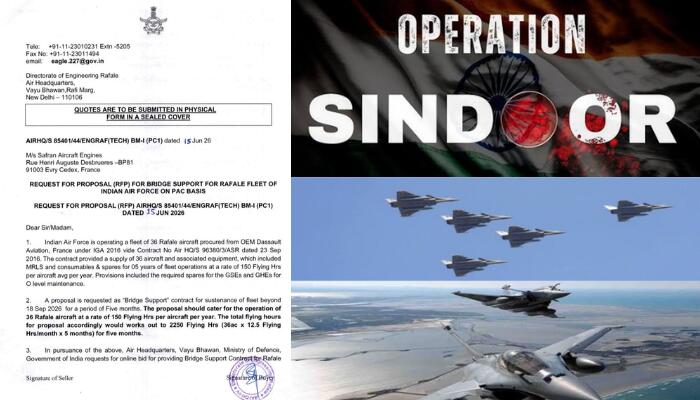
In strategic affairs, some of the most significant clarifications emerge not from press briefings or political messaging, but from institutional documentation. The latest Request for Proposal (RFP) issued by the Indian Air Force to Safran Aircraft Engines falls precisely into that category.
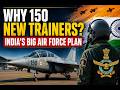
On the surface, the document is procedural, focused on maintenance and logistics support for the Rafale fleet. However, its opening paragraph explicitly references the Indian Air Force operating 36 Rafale fighter aircraft and outlines continued maintenance and support requirements for the entire fleet.
It also recalls the Inter-Governmental Agreement signed between India and France on 23 September 2016, under which India procured 36 Rafales through a government-to-government arrangement. The agreement further included consumable spares for five years under the Performance Based Logistics (PBL) framework.
India acquired the Rafales on an urgent basis under this agreement, with deliveries beginning in 2020. Since then, the aircraft have become one of the most advanced and operationally significant components of the Indian Air Force’s frontline combat capability.
The critical implication of the document lies in its continuity. It proceeds on the basis that all 36 Rafale aircraft remain accounted for within the force structure and are being planned for long-term maintenance support.
The Claim That Anchored Pakistan’s Narrative
During Operation Sindoor, Pakistan repeatedly claimed that it had shot down four Indian Rafale fighter jets. The assertion was formally issued by the DG ISPR, who identified specific tail numbers allegedly destroyed: RB001, RB021, RB022 and RB027.
These claims were widely circulated across Pakistani media platforms and quickly became central to Islamabad’s framing of the conflict.
Despite Pakistan reportedly suffering significant military losses during the same escalation, the Rafale claim remained the most prominent element of its victory narrative.
Over time, it evolved into a symbolic foundation of Pakistan’s broader portrayal of Operation Sindoor, built around the assertion that India’s most advanced fighter aircraft had been neutralised.
The narrative also carried political weight, influencing interpretations around the projection of Pakistan Army Chief Asim Munir’s elevation to Field Marshal status, which was viewed by some observers through the same lens of constructed operational success.
A Debate That Entered India’s Political Discourse
The controversy did not remain external.
Within India, sections of the political opposition, commentators and online discourse repeatedly questioned alleged Rafale losses. The phrase “how many Rafales were shot down” became a recurring talking point and eventually entered parliamentary discussion, prompting formal responses from the Defence Minister.
Despite sustained repetition of Pakistan’s claims, no verifiable evidence of Rafale losses was ever produced in the public domain.
The Indian Air Force, meanwhile, did not engage in a parallel narrative contest. It operated through institutional processes, one of which has now effectively reset the baseline of the debate.
The latest RFP assumes full fleet strength of 36 Rafales under ongoing logistics and maintenance planning. That continuity directly challenges the premise of multiple aircraft losses.
Earlier Indicators That Already Raised Doubts
This is not the first instance that cast doubt on the claim.
Two aircraft allegedly identified as destroyed, RB021 and RB022, were reportedly seen flying as part of the Indian Air Force’s Sindoor Formation during Republic Day celebrations on 26 January 2026.
Their appearance had already raised questions regarding the credibility of Pakistan’s assertions. The new procurement document reinforces that challenge by reaffirming the operational continuity of the full Rafale fleet.
Taken together, these developments significantly weaken the structural basis of the narrative that four Rafale fighters were lost during Operation Sindoor.
Operation Sindoor in Operational Context
The Rafale debate sits within a broader military context that has often been overshadowed by competing narratives.
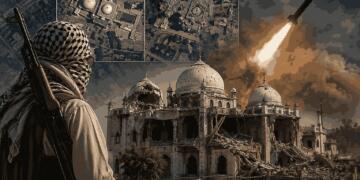
During Operation Sindoor, Indian forces reportedly struck terrorist infrastructure in the initial phase. As escalation widened, operations expanded to include strikes on seven Pakistani airbases, along with aircraft hangars, radar installations and command-and-control facilities.
These were precision operations aimed at degrading operational capability and shaping escalation control.
Following the intensified strikes, Pakistan reportedly requested a ceasefire within three days.
Within standard military assessment frameworks, such outcomes are evaluated on the basis of strategic objectives achieved rather than isolated claims of platform losses.
The Larger Strategic Reality
Modern conflicts are increasingly defined by narrative competition alongside battlefield outcomes.
The Rafale claim became a central component of Pakistan’s information narrative around Operation Sindoor. The Indian Air Force has now responded not through rhetoric or public confrontation, but through institutional documentation that continues to account for all 36 aircraft acquired in 2016.
In doing so, it has shifted the discussion back to verifiable records, placing renewed scrutiny on a claim that has remained politically and symbolically significant for nearly a year, and exposing the fragility of a narrative built more on assertion than evidence.