


















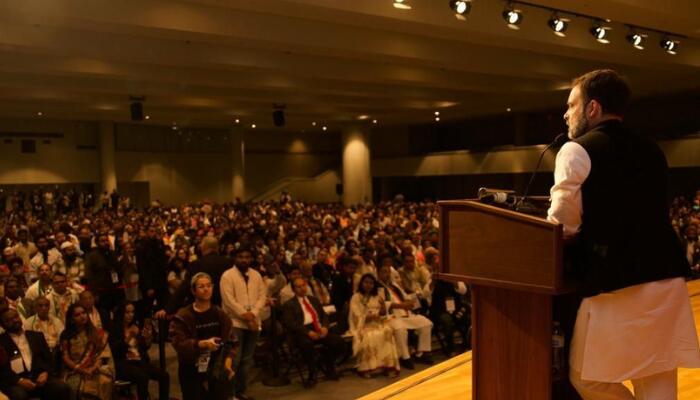
A sharp political confrontation has intensified after the Bharatiya Janata Party launched a coordinated offensive against Congress leader Rahul Gandhi over his recent remarks in the United States. The ruling party has accused the Leader of Opposition of making statements it describes as misleading, factually incorrect and damaging to India’s global image.
The BJP has framed the issue as one of political responsibility, arguing that comments made on foreign soil carry national and diplomatic implications.
Sikh identity, reservation and border remarks spark backlash
During his US interaction, Rahul Gandhi claimed that Sikh community members in India face restrictions on wearing turbans in gurdwaras and are being prevented from freely practising their religion. The BJP has rejected this outright, calling it completely baseless and disconnected from ground reality.
He also raised concerns over the reservation system. The BJP interpreted this as an allegation that the NDA government intends to abolish reservation. The party has strongly denied the claim and maintained that reservation has been strengthened for Dalits, Other Backward Classes and tribal communities.
Gandhi’s remarks on the India-China border situation have also drawn sharp criticism. The BJP said the comments were misleading and not based on facts, and urged restraint when addressing sensitive national security issues abroad.
Election Commission remarks resurface
The controversy has also revived earlier remarks made by Rahul Gandhi in the United States, where he questioned the Election Commission of India. He described it as “compromised” and suggested systemic flaws in the electoral process.
He also referred to the Maharashtra elections, alleging that around 6.5 million voters were added in a short span of time. The BJP has repeatedly disputed this claim and rejected it as inaccurate.
Congress meeting statement adds domestic context
The row also draws from remarks made by Rahul Gandhi at a Congress Minority Department advisory council meeting on May 23. He reportedly said the government “will not last till next year” if economic conditions worsen.
The meeting included senior Congress leaders such as KC Venugopal, Abhishek Singhvi, Tariq Anwar, Imran Masood and Shayar Imran. Congress MP Imran Masood later criticised inflation and fuel price rise, alleging that public concerns were being wrongly dismissed as foreign-influenced narratives.
Rajnath Singh leads BJP’s response
Defence Minister Rajnath Singh led the BJP’s response, calling Rahul Gandhi’s remarks “extremely shameful” and saying they undermined India’s dignity on the global stage.
He rejected the allegations on Sikh religious restrictions and reservation rollback, stating they were entirely baseless. He also said the Sikh community is widely respected across India and that reservation policies have been strengthened under the current government.
Singh further said Gandhi’s remarks on the India-China border situation were factually incorrect and urged political leaders to act responsibly when speaking abroad.
Amit Shah intensifies attack
Union Home Minister Amit Shah escalated the criticism, accusing Rahul Gandhi of reviving what he termed the Congress party’s “anti-reservation face”.
He said the BJP remains firmly committed to protecting reservation and safeguarding national security. Shah also alleged that Gandhi repeatedly associates with forces that seek to divide the country and referred to past Congress positions in Jammu and Kashmir as evidence of a consistent pattern.
BJP widens criticism across leadership
BJP spokesperson Sudhanshu Trivedi said Rahul Gandhi has a pattern of statements that harm India’s global image. He also criticised Gandhi’s meeting with a US lawmaker described by the party as anti-India, calling the conduct “dangerous”.
Union Minister Giriraj Singh also joined the attack, accusing Gandhi of attempting to mislead India’s youth against Prime Minister Narendra Modi through unsubstantiated allegations. He further alleged that the Congress has drifted towards extremist ideological positions.
The episode reflects a widening political divide between the BJP and Congress, with statements made abroad now becoming a recurring flashpoint in domestic political discourse.