


















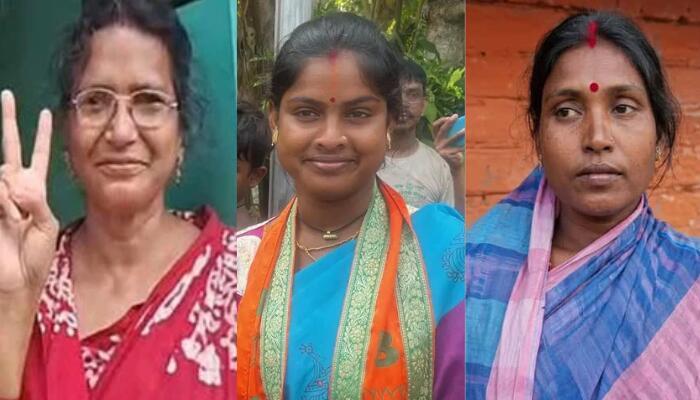
From personal tragedy to grassroots resistance, the BJP’s women winners in West Bengal’s 2026 Assembly election reflect a deeper shift in the state’s political language. Grief, protest, and everyday survival are no longer confined to private life. They now operate as visible political currency, shaping how candidates are seen and how mandates are built.
Panihati: Where Grief Became Political Identity
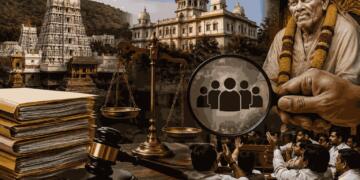
In Panihati, Ratna Debnath’s victory stands out as one of the most emotionally charged outcomes of the election. She entered the contest in the aftermath of the 2024 RG Kar Medical College incident, which had already triggered widespread public outrage over women’s safety and institutional accountability in Bengal.
Debnath is not just a political candidate in the conventional sense. She is the mother of the victim in the case, and that identity shaped the entire tone of her campaign. Her presence in the election converted a deeply private loss into a public political question.
The campaign did not rely on conventional mobilisation alone. It drew strength from an already emotionally activated electorate. For many voters, especially women and younger sections of the constituency, the election became a referendum on safety, institutional trust, and justice.
Debnath defeated the Trinamool Congress candidate by 28,836 votes.
Her victory, therefore, cannot be read only as a party win. It also reflects how grief, when publicly visible and politically resonant, can become a decisive factor in electoral outcomes.
Sandeshkhali: Protest as Political Foundation
In Sandeshkhali, Rekha Patra’s emergence reflects a different but equally significant political current. The region had already been in the spotlight due to allegations of harassment, coercion, and long-standing complaints against local power structures.
Over time, these grievances moved beyond individual complaints and turned into collective mobilisation. Women-led protests became a defining feature of the region’s political atmosphere. This transformed Sandeshkhali into a constituency where resistance itself became a form of political identity.
Patra’s candidature was closely associated with this movement. She was not projected as an isolated political figure but as someone emerging from an already active social assertion. Her campaign carried the weight of that collective experience.
The contest remained tightly fought between the BJP and the Trinamool Congress. However, the nature of the battle in Sandeshkhali was not only about party organisation. It was about who could better represent the language of grievance that had already taken root in the constituency.
The BJP candidate defeated the Trinamool Congress candidate by 17,510 votes.
Ausgram: The Politics of Everyday Survival
Kalita Majhi’s victory in Ausgram represents a quieter, but no less important, dimension of this shift. Unlike constituencies driven by high-profile incidents or mass protests, Ausgram reflects the politics of everyday survival.
Majhi comes from a modest socio-economic background and has worked in informal employment. Her political identity is shaped less by a singular moment of crisis and more by sustained economic hardship.
In rural constituencies like Ausgram, voter priorities often revolve around access to livelihoods, wage security, and basic dignity. Party loyalty matters, but it is frequently secondary to immediate material concerns.
Majhi defeated the Trinamool Congress candidate by 1,200 votes,
Majhi’s win reflects this reality. Her candidature resonated not through a dramatic narrative of protest or tragedy, but through familiarity with everyday struggle. It signals how economic precarity continues to shape political outcomes at the grassroots level in Bengal.
The Trinamool Challenge and Shifting Ground
Across these constituencies, the Trinamool Congress remained the principal challenger. As the ruling party in the state for over a decade, it retained a strong organisational presence and deep electoral networks.
Yet, the contests in Panihati, Sandeshkhali, and Ausgram were not shaped by organisation alone. They were increasingly shaped by narrative. Candidates arrived with identities that were already embedded in public consciousness before polling began.
This altered the nature of competition. The election was not simply a comparison of party structures. It became a contest over whose story best reflected the anxieties and aspirations of the electorate.
BJP’s Strategy: Elevating Lived Experience
The BJP’s candidate selection strategy in these constituencies reflects a deliberate political calculation. The party elevated women whose public identities were already formed outside formal political systems.
Some came from personal tragedy. Others came from protest movements. Others still came from sustained socio-economic struggle. Together, they represented a politics rooted in lived experience rather than traditional political apprenticeship.
This approach created a direct emotional connection with voters. It was particularly effective among women voters, whose turnout patterns and issue sensitivity played a decisive role in close constituencies.
However, this strategy also shifts the nature of political representation. It prioritises narrative visibility alongside organisational strength, changing how candidates are perceived and evaluated.
A Shift in Political Understanding
Taken together, these victories signal more than electoral success for the BJP in select constituencies. They point to a shift in Bengal’s political grammar.
Personal history is no longer peripheral to politics. It sits at the centre of how legitimacy is built and how authority is contested.
In this evolving landscape, elections are not only about parties and policies. They are also about whose life story carries enough weight to become public truth, and ultimately, political power.