



















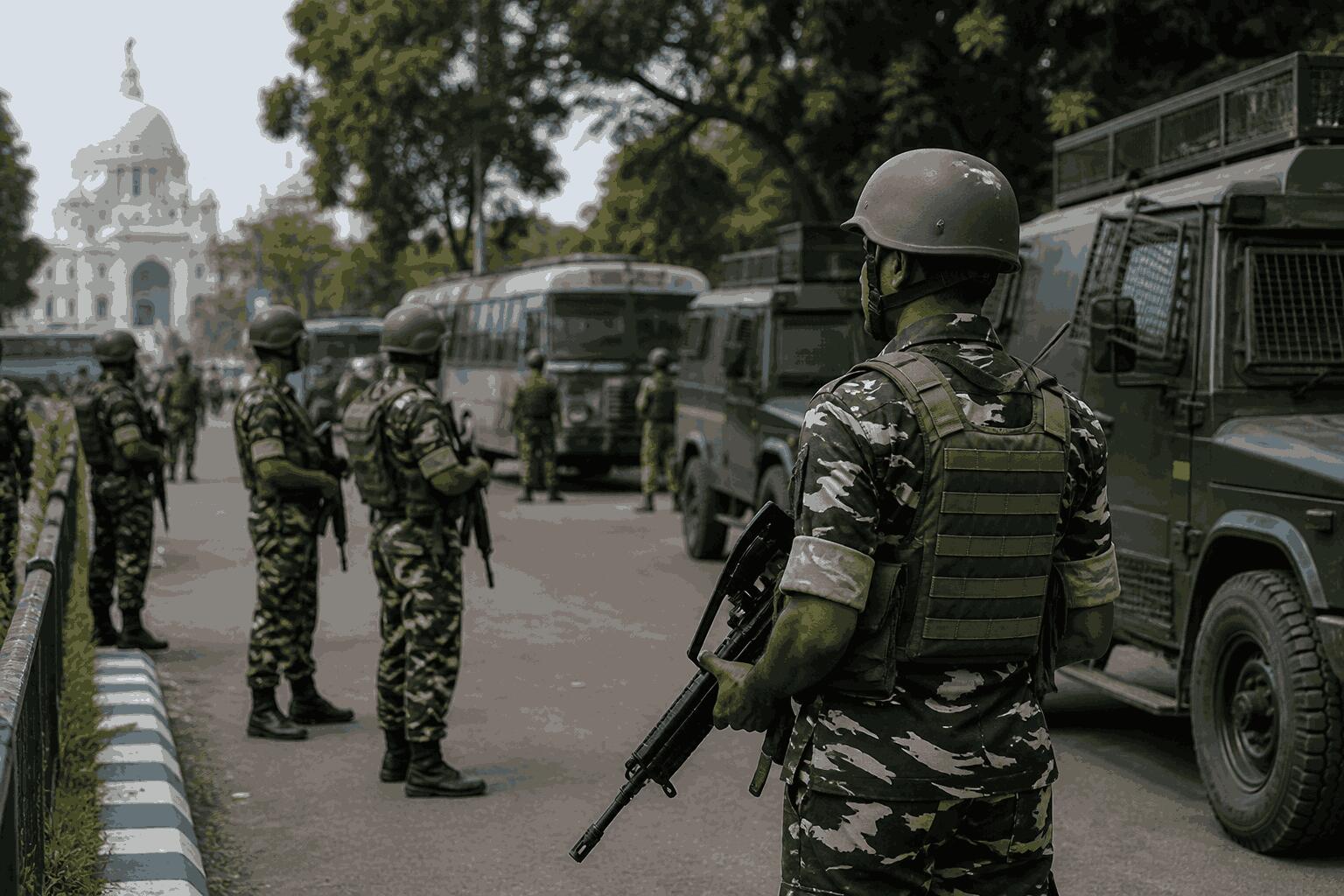
West Bengal is set to witness an unprecedented post-election security arrangement after the Election Commission decided that around 700 companies of Central Armed Police Forces (CAPF) will remain deployed in the state after polling, aiming to prevent unrest and curb the threat of TMC hooligans in the sensitive post-result period. The move comes as counting day approaches and memories of earlier violence remain fresh across many districts.
According to officials, the deployment follows an earlier Election Commission security plan issued in March. The forces will remain stationed until further orders and will be assigned law-and-order duties, especially in areas identified as vulnerable. Authorities believe this step is necessary to ensure that ordinary citizens, opposition workers, and polling staff are protected from any intimidation allegedly linked to TMC hooligans after results are declared.
The scale of the deployment underlines how seriously the Commission is treating Bengal’s post-poll environment. West Bengal has often witnessed clashes after elections, with rival parties accusing each other of violence, arson, and political revenge. This time, the central forces are expected to maintain continuous vigil so that no group, including alleged TMC hooligans, can dominate streets or target opponents in the immediate aftermath of the verdict.
The Election Commission has already shown heightened concern throughout the assembly election process. Thousands of booths were classified as critical or vulnerable, and several officials were reportedly removed to preserve neutrality. These extraordinary measures indicate that institutions are determined to stop any disorder that could arise through local strongmen or TMC hooligans operating in politically tense pockets.
Political violence has long been a major issue in Bengal’s electoral culture. The aftermath of the 2021 assembly election drew national attention after multiple incidents of attacks, arson, displacement, and retaliatory clashes were reported. Against that backdrop, the decision to retain CAPF companies is widely seen as a preventive step to ensure that alleged TMC hooligans or any rival elements do not repeat such scenes.
Security experts note that the presence of central forces often reassures frightened voters and local residents. In districts where tensions run high, many families prefer visible deployment of neutral personnel over dependence solely on local policing. The continued presence of CAPF may therefore help prevent panic and discourage TMC hooligans from attempting coercion or revenge attacks once counting begins.
The decision also carries political significance. Opposition parties have repeatedly demanded stronger central intervention during elections in Bengal, alleging that local muscle power influences the democratic process. For them, the retention of forces sends a signal that complaints regarding TMC hooligans are being taken seriously and that the state will remain under close scrutiny during the sensitive transition period.
Meanwhile, the ruling party has often denied allegations of organised violence and accused rivals of exaggerating incidents for political mileage. Even so, the Election Commission appears determined to rely on preventive deployment rather than wait for conflict to erupt. Its message is clear: if any elements, whether branded as TMC hooligans or otherwise, attempt to disturb peace, they will face immediate action.
The broader importance of this move extends beyond one election. Bengal’s democratic image has frequently been overshadowed by reports of booth tension, cadre clashes, and post-result reprisals. If the heavy deployment succeeds in maintaining calm, it may set a new benchmark for future elections. Citizens across the state will hope that neither TMC hooligans nor any rival agitators are allowed to hijack the public mandate.
As counting day nears, the eyes of the nation remain on West Bengal. The state has delivered massive voter turnout and intense political competition. What happens after the result may matter just as much as the vote itself. With 700 CAPF companies on the ground, authorities are trying to ensure that democracy is decided by ballots—not by fear, violence, or TMC hooligans.