























Mizoram has entered a historic new chapter after being officially declared free of Mizo insurgency following the surrender of the last active militant ethnic faction in the state. The announcement has generated widespread optimism across India’s Northeast, where decades of unrest once shaped politics, security, and public life. For many residents, the declaration is more than a government statement—it is the closing of a painful chapter and the beginning of a more stable future.
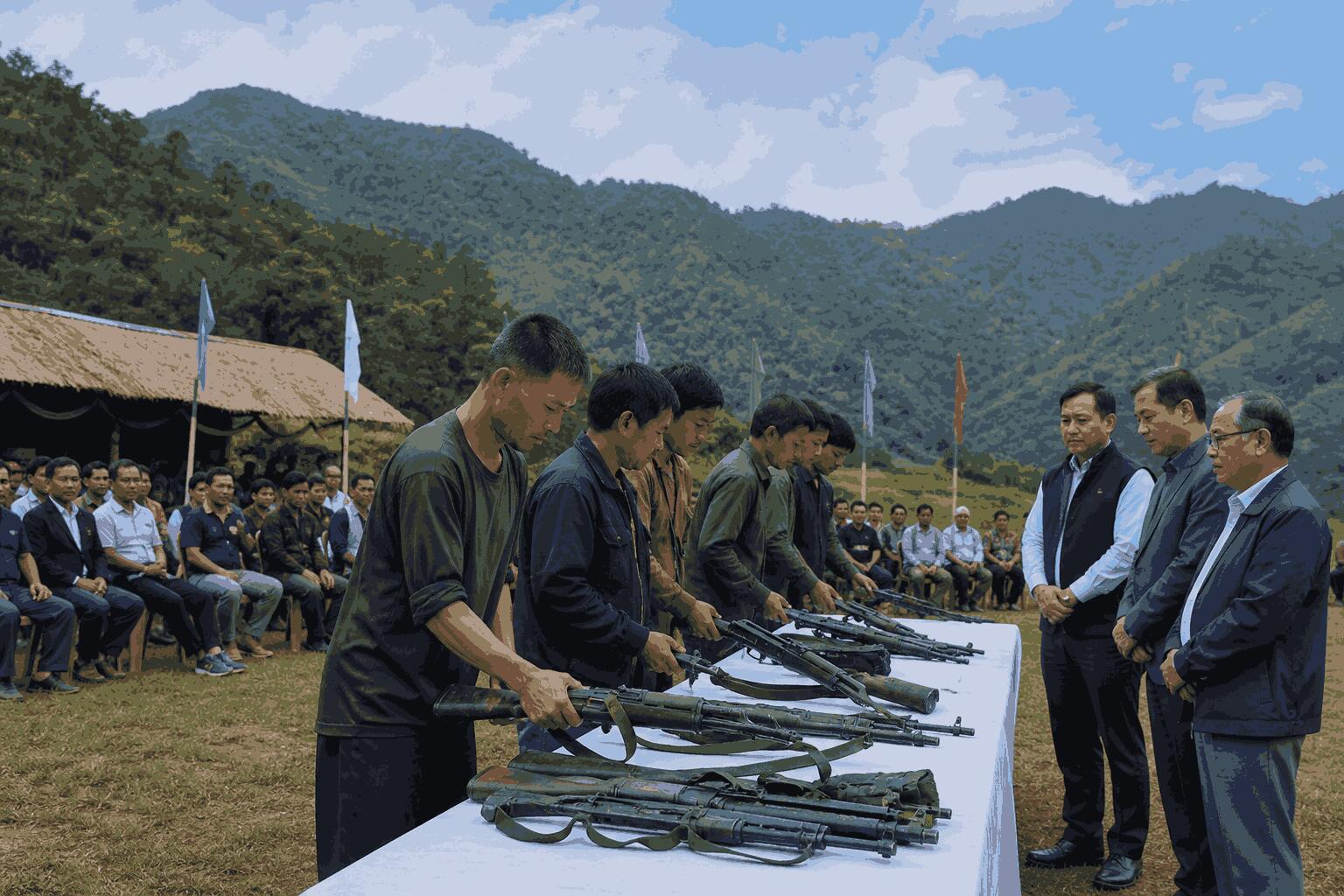
The milestone was achieved after 43 members of the Lalhmingthanga Sanate faction of the Hmar People’s Convention (Democratic), or HPC(D), laid down their arms in a formal ceremony near Aizawl. Senior state leaders, including Chief Minister Lalduhoma and Home Minister K. Sapdanga, attended the event. Their presence reflected the importance of ending the last visible remnant of Mizo insurgency and restoring complete peace in the hill state.
Officials stated that the group had been largely inactive in recent years, though it was occasionally associated with isolated criminal incidents. Even so, it remained symbolically important because it was considered the final underground outfit operating in the region. With its surrender, authorities believe the state has finally moved beyond the shadow of Mizo insurgency that lingered for generations.
The surrender followed a peace agreement signed in April between the Mizoram government and the faction. That accord focused on rehabilitation, return to civilian life, and peaceful reintegration of former cadres. Analysts say the speed with which the agreement translated into surrender demonstrates how dialogue and trust-building can succeed where armed confrontation often fails. It also shows how the final stages of Mizo insurgency were resolved through negotiation rather than violence.
To understand the importance of this development, one must look back at Mizoram’s troubled past. The roots of unrest go back to the 1960s, when famine, administrative dissatisfaction, and demands for political autonomy led to the rise of the Mizo National Front under Laldenga. In 1966, the movement launched an armed uprising, prompting years of conflict and counterinsurgency operations. That period became the defining phase of Mizo insurgency in modern history.
A decisive turning point came in 1986 with the signing of the Mizoram Peace Accord between the Government of India and the Mizo National Front. The agreement is widely regarded as one of the most successful peace settlements in independent India. Former rebels entered democratic politics, development accelerated, and Mizoram gradually emerged as one of the country’s most peaceful states. Yet smaller splinter factions and ethnic militant groups continued to surface from time to time, preventing a complete end to Mizo insurgency.
Among those later groups was the HPC(D), which primarily sought greater autonomy for sections of the Hmar community. Although it never matched the scale or influence of earlier militant movements, its continued underground presence served as a reminder that unresolved grievances could persist. The latest surrender therefore carries significance far beyond numbers. It signals that the final loose ends of Mizo insurgency have now been tied up through peaceful means.
The benefits of this achievement could be substantial. An insurgency-free image can attract investment, tourism, and stronger infrastructure growth. Mizoram is already known for its high literacy rate, disciplined civic culture, and scenic natural beauty. With peace firmly established, the state can now market itself as a secure destination for industry, education, and eco-tourism. Government resources that were once devoted to security can be redirected toward roads, healthcare, jobs, and rural development.
This development is also significant for the wider Northeast. Several insurgent groups in the region have entered ceasefires or peace talks in recent years. Mizoram’s example offers an important lesson: long-term stability is often built through patience, dialogue, and respect for local aspirations. The peaceful conclusion of Mizo insurgency may inspire similar approaches elsewhere.
Chief Minister Lalduhoma described the moment as historic, and many citizens are likely to agree. Few Indian states have travelled so far—from rebellion and uncertainty to stability and confidence. Mizoram’s journey stands as proof that conflict need not define a society forever.
The surrender of 43 cadres may appear small in numerical terms, but in historical perspective it is monumental. It closes one of the last remaining chapters of armed unrest in the state. For Mizoram’s younger generation, peace may no longer be a distant hope. It may simply become normal life.