






















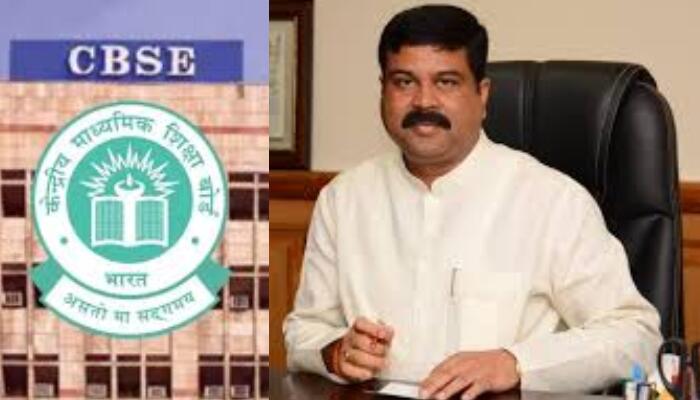
The controversy surrounding the Central Board of Secondary Education’s On-Screen Marking (OSM) system intensified on Thursday after Union Education Minister Dharmendra Pradhan accepted responsibility for the inconvenience faced by students and assured strict action if authorities uncover irregularities in the evaluation process.
Speaking after a high-level review meeting with CBSE officials in New Delhi, Pradhan acknowledged that students encountered difficulties during the re-evaluation and verification process. At the same time, he made it clear that the government would not tolerate negligence or misconduct at any level.
The minister’s intervention came amid complaints over blurred scanned answer sheets, alleged unchecked answers, payment gateway failures and technical glitches during the post-result verification process. The issue has triggered widespread concern among students and parents across the country, particularly during the ongoing verification and re-evaluation cycle.
Centre Defends Transparency Push Through Digital Reform
Despite the controversy, Pradhan strongly defended the broader objective behind the OSM framework and described it as a transformational reform aimed at improving transparency and accountability within India’s examination system.
According to the Education Minister, nearly 17 lakh students appeared for the CBSE Class 12 examinations this year. The process generated around 98 lakh answer books and nearly 40 crore scanned pages. Unlike older opaque systems, the new digital model gives students direct access to scanned answer sheets and allows them to independently verify marks and raise objections.
“So far, around four lakh students have retrieved scanned answer sheets covering nearly 11 lakh answer copies,” Pradhan said while highlighting the massive scale of the exercise.
The government also involved premier institutions such as IIT Kanpur and IIT Madras to supervise the technological framework. Public sector banks including SBI, Indian Bank, Bank of Baroda and Canara Bank integrated payment gateways into the system to support verification and re-evaluation requests.
Supporters of the reform argue that large-scale technological transitions often face initial operational challenges, especially in a country handling one of the world’s largest examination systems. They also point out that the Centre publicly acknowledged the issue instead of suppressing criticism or shifting blame.
Many observers believe the controversy reflects the challenges that accompany major digital reforms involving millions of users and massive data processing systems. They argue that implementation gaps should be corrected firmly without undermining the long-term objective of increasing transparency in examination processes.
Government Promises Corrective Measures
The controversy deepened after questions emerged regarding the digital evaluation infrastructure and the role of Coempt Edutech, the company awarded the evaluation contract.
CBSE rejected allegations of any breach in the live evaluation infrastructure. The Board clarified that the portal referenced online was merely an internal testing platform containing sample data and not the actual operational system used for board examination assessments.
Pradhan maintained that the government remains fully committed to resolving every genuine student grievance. He stressed that authorities would ensure accountability at every level while also protecting students from unnecessary stress and confusion.
The Education Minister appealed to public figures and political parties not to worsen anxiety among students already dealing with examination-related pressure. He said student welfare must remain the top priority during the ongoing review process.
The OSM controversy has now evolved into a wider debate over India’s digital governance push. For the government, the issue represents a challenge of execution rather than intent. Officials maintain that transparent digital reforms remain essential for reducing opacity and improving accountability in institutions that affect millions of students every year.
The coming weeks will determine whether CBSE can restore confidence among students and parents by resolving pending complaints quickly and ensuring that the ambitious digital reform achieves its intended purpose.