



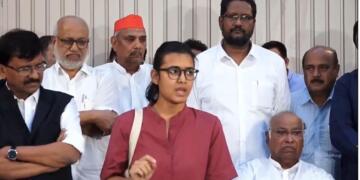


















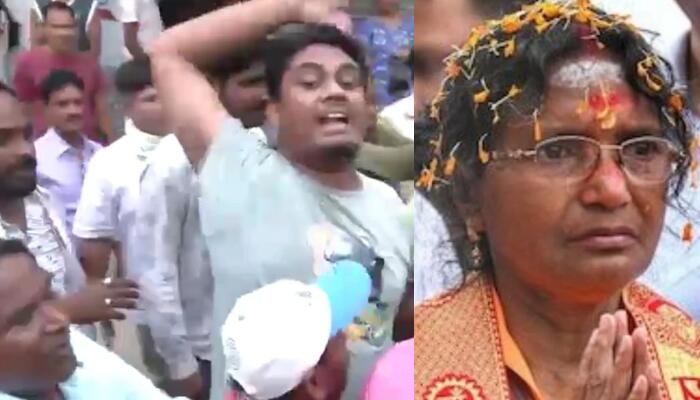
West Bengal’s second-phase election erupted into controversy after BJP candidate Ratna Debnath, mother of the RG Kar rape and murder victim, informed that Trinamool Congress workers blocked her convoy and tried to disrupt peaceful polling in Panihati.
The confrontation broke out in Agarpada New Adarsha Nagar near Booth 165, where protesters reportedly surrounded Debnath’s vehicle and raised “go back”, “Jai Bangla” and, according to BJP allegations, “chor chor” slogans. Her convoy was prevented from moving. The incident quickly became one of the most dramatic episodes of the day.
Debnath accused TMC workers of political intimidation and demanded arrests. She warned free and fair voting would be threatened if such incidents continued.
Reports from the ground suggested the confrontation rattled voters and triggered chaos in the area as rival supporters faced off.
Central Forces Move In
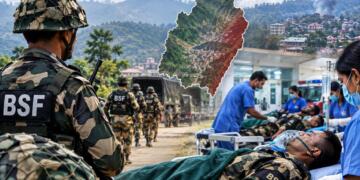
As tensions escalated, central forces intervened to disperse protesters and restore order. Reports suggested security personnel faced resistance while clearing the blockade. Allegations of lathi-charge also surfaced as the clash intensified.
The episode elevated Panihati from a constituency contest into a statewide political talking point.
Supporters of Debnath argued the hostility reflected discomfort over a campaign built around justice for the RG Kar victim. Critics of the ruling dispensation said the confrontation raised larger questions about democratic space in Bengal.
EVM Complaint Deepens Scrutiny
Earlier in the day, Debnath had also raised concerns over a possible Electronic Voting Machine problem after casting her vote. She claimed the button appeared slow to respond and said she would inform election officials.
That complaint sharpened scrutiny around a seat already carrying unusual political weight.
After voting, Debnath made an emotional appeal, recalling that in an earlier election the family had arrived together as three, but this time her daughter was absent. She said people would answer through the ballot box on 4 May.
Her white saree carried the line “Merudanda Bikri Nei”, meaning “The spine is not for sale”. It reinforced the defiant tone of her campaign.
Her father described the contest as a fight forced upon the family by the denial of justice and said the people would deliver their verdict.
Panihati Becomes a Symbol
Panihati has emerged as more than a high-profile seat. It has become a test case where women’s safety, accountability, and political resistance have converged.
Opposition voices said Wednesday’s events reflected unease over a justice-driven campaign gathering momentum. However, the ruling side maintained the protest reflected local anger, not organised intimidation.
Meanwhile, polling continued across seven districts for 142 seats involving 1,448 candidates. More than 3.21 crore electors were eligible to vote, including over 4.12 lakh first-time voters, more than 3,200 centenarian voters, and over 57,000 persons with disabilities.
The Election Commission deployed 41,001 polling stations. Of these, 8,845 were managed entirely by women, 13 by persons with disabilities, and 258 were model booths. Webcasting was arranged across all stations. The first phase had recorded a turnout of 91.78 per cent.
Yet Panihati overshadowed the wider exercise.
For many observers, the political message was stark. When a campaign built around justice enters the electoral arena, resistance often follows.
Consequently, Panihati is being seen not merely as a troubled polling station, but as a test of Bengal’s democratic temperament.
