














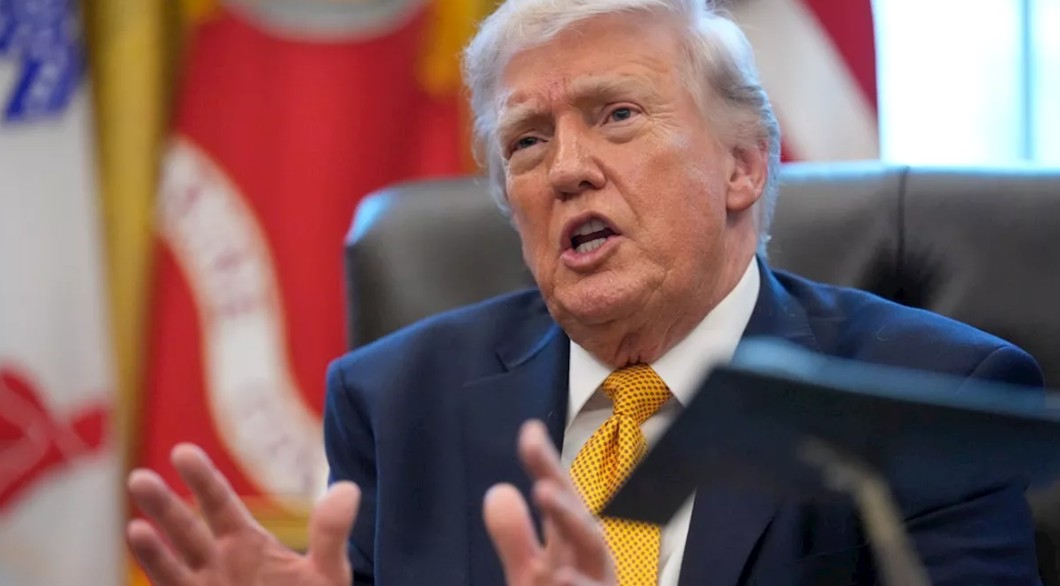
United States President Donald Trump indicated a possible scaling back of military operations against Iran, stating that Washington is “very close” to achieving its objectives after weeks of intense conflict.
At the same time, he called on other countries to take greater responsibility for securing the strategically critical Strait of Hormuz, a vital global energy corridor, adding that while the US could assist, it should not be necessary.
US Claims Strategic Military Gains
In a post on Truth Social, the US president wrote on Friday evening, “We are getting very close to meeting our objectives as we consider winding down our great military efforts in the Middle East with respect to the Terrorist Regime of Iran.”
Trump highlighted a series of military successes, including weakening Iran’s core defence capabilities saying, “Completely degrading Iranian missile capability, launchers, and everything else pertaining to them, destroying Iran’s defense industrial base, eliminating their Navy and Air Force, including Anti Aircraft Weaponry.”
https://truthsocial.com/@realDonaldTrump/posts/116263563453969628
Trump also reiterated Washington’s long-standing position on Iran’s nuclear ambitions, stating that the US would never allow Tehran to develop nuclear weapons and would remain prepared to respond decisively to any such attempt.
Alongside military objectives, Trump emphasised the protection of key regional allies and wrote, “Protecting, at the highest level, our Middle Eastern allies, including Israel, Saudi Arabia, Qatar, the United Arab Emirates, Bahrain, Kuwait, and others.”
Focus Shifts to Strait of Hormuz Security
A notable shift in tone came as Trump urged countries reliant on the Strait of Hormuz to take over responsibility for its security. He suggested that while the US could provide support, primary responsibility should lie with nations that depend on the route.
“The Hormuz Strait will have to be guarded and policed, as necessary, by other Nations who use it, The United States does not! If asked, we will help these Countries in their Hormuz efforts, but it shouldn’t be necessary once Iran’s threat is eradicated. Importantly, it will be an easy Military Operation for them,” he said in the post.
The Strait of Hormuz remains one of the world’s most vital energy corridors, carrying roughly one-fifth of global oil supplies. Around 20 million barrels of crude oil and petroleum products typically pass through the waterway each day.
Economic Impact and Ongoing Pressure
The conflict has significantly disrupted these flows, reducing shipments to a trickle and pushing global crude oil prices above $100 per barrel. The International Energy Agency has described the disruption as the largest in the history of the global oil market, warning that without a swift resolution, the consequences for global energy markets and economies could become increasingly severe.
Despite signalling a potential drawdown, Trump maintained a firm stance on the conflict. “I think we have won,” he told reporters, indicating that Washington may continue to exert pressure on Iran even if frontline military operations are reduced.
At the same time, the US has reportedly increased its military presence in the region, including deploying additional Marines at sea, suggesting a dual approach of possible de-escalation alongside sustained strategic pressure.
Will He Pull Back?
Trump appears poised for a tactical pullback rather than a full retreat and his emphasis on winding down operations and urging regional powers to secure the Strait of Hormuz suggests a measured de-escalation on the frontlines, yet the continued US military presence and firm warnings on Iran’s nuclear ambitions indicate that strategic pressure will persist.
In essence, he may reduce direct combat engagement while maintaining leverage, projecting victory and restraint simultaneously, an approach that balances domestic political messaging, regional reassurance, and global perception, but still leaves significant risks if Tehran tests US resolve or Gulf states struggle to assume responsibility.