







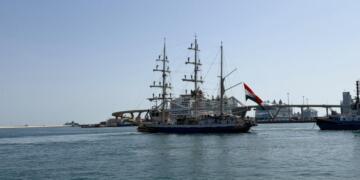















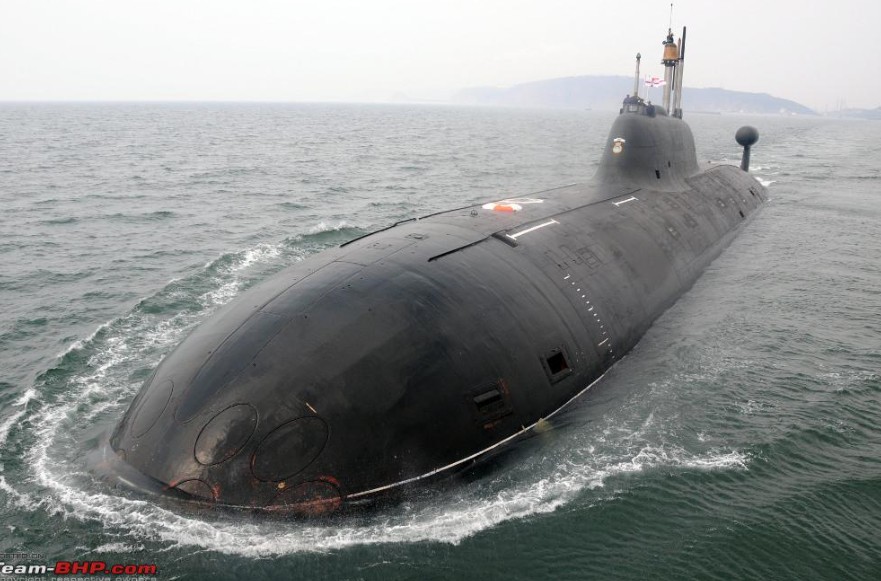
Amid rising naval tensions in the Indian Ocean, India’s growing submarine fleet has emerged as a silent but formidable force, contrasting sharply with the vulnerabilities of surface warships like Iran’s IRIS Dena.
Dena, a Moudge-class frigate, was recently struck by a torpedo near Sri Lanka after participating in India-hosted naval exercises, India’s submarines, both conventional and nuclear-powered operate covertly across the Arabian Sea and the Bay of Bengal, equipped with ballistic and cruise missiles and enhanced stealth capabilities.
The strategic advantage of undersea platforms in safeguarding regional maritime security and highlights why India’s expanding undersea arsenal is central to maintaining balance in the increasingly contested waters of the Indo-Pacific.
The distinction between the two lies in their operational domain and survivability. India’s submarines operate underwater, benefiting from stealth, extended range, and the ability to carry both conventional and nuclear weapons, making them difficult to detect or neutralize.
In contrast, IRIS Dena was a surface warship, visible and vulnerable to attacks from submarines, missiles, or aircraft, as demonstrated by its recent torpedo strike near Sri Lanka.
Comparing the two highlights the inherent strategic advantage of submarines over surface combatants, emphasizing why India’s undersea capabilities are central to maintaining maritime security in a region where naval threats are increasingly sophisticated.
India has built a formidable undersea arsenal that serves as a crucial component of its maritime strategy, blending conventional and nuclear‑powered submarines to deter adversaries and maintain security across the Arabian Sea and the Indian Ocean.
At the same time, the recent sinking of the Iranian warship IRIS Dena, a surface combatant struck by a torpedo in the Indian Ocean has highlighted the strategic advantages of submarine warfare while underscoring the vulnerabilities faced by surface warships in a contested maritime environment.
Submarine Protection: India’s Operational Edge
While submarines are inherently stealthy and difficult to detect, their operational safety and coordinated protection are just as vital as their offensive capabilities.
The sinking of IRIS Dena underscores the vulnerability of surface warships or standalone vessels in contested waters, where a single attack can have catastrophic consequences.
In contrast, India’s submarines are never deployed in isolation. Their operations are supported by surface warships that act as escorts, aerial reconnaissance from maritime patrol aircraft and helicopters, and satellite-based monitoring, creating multiple layers of surveillance and defense.
Strategically positioned bases such as Karwar on the western coast and the INS Varsha facility near Kakinada provide secure deployment points, maintenance, and rapid response options. Submarines can enter or exit these bases covertly, minimizing exposure to potential threats.
Additionally, India’s submarines undergo rigorous training exercises that simulate hostile conditions, ensuring crews are prepared to respond to both conventional and asymmetric threats.
This comprehensive system of protection not only enhances survivability but also acts as a force multiplier, allowing submarines to project power, gather intelligence, and patrol extended maritime zones without undue risk.
The coordinated support network ensures that even high-value, nuclear-capable vessels like INS Arihant or INS Arighat can operate in international waters with reduced vulnerability.
Ultimately, this integrated approach gives India a decisive operational edge, ensuring its undersea fleet can deter adversaries, maintain maritime dominance, and respond effectively to threats while navigating the complex and increasingly contested waters of the Indo-Pacific.
India’s Expanding Submarine Fleet
India’s submarine force is a mix of modern diesel‑electric attack submarines (SSKs) and potent nuclear‑powered ballistic missile submarines (SSBNs), designed to perform a range of roles from stealth patrols and intelligence gathering to strategic deterrence.
Under Project 75 and related initiatives, the Indian Navy operates Kalvari‑class Scorpène‑type submarines, alongside older Kilo‑class and Shishumar‑class vessels sourced from Russia and Germany.
These conventional submarines provide India with significant underwater combat capability across multiple maritime theatres.
At the strategic level, India has commissioned nuclear‑powered SSBNs, starting with INS Arihant, followed by INS Arighat, both capable of carrying submarine‑launched ballistic missiles (SLBMs) as part of India’s nuclear deterrent.
The next addition, INS Aridhaman (S4), has completed sea trials and is expected to be commissioned in 2026, expanding India’s undersea nuclear capability further.
Beyond conventional and SSBN platforms, India is advancing plans for nuclear‑powered attack submarines (SSNs) and next‑generation SSBNs with enhanced missile payloads, while also upgrading diesel‑electric submarines with air‑independent propulsion (AIP) systems to extend submerged endurance and stealth.
The Indian Navy is also pursuing international collaboration and indigenous construction, including deals to build new submarines with German and French partnerships.
Strategically sited submarine bases such as Karwar on the western coast and INS Varsha near Kakinada on the eastern coast enable India to deploy and support its submarine fleet across key maritime zones, spanning from the Pakistan‑bordering Arabian Sea to the Bay of Bengal and beyond.
These undersea assets enhance India’s ability to monitor and, if necessary, counter rising maritime challenges from regional powers, including China’s expanding naval footprint.
The IRIS Dena Incident: A Surface Combatant’s Fate
In a dramatic turn of events in early March 2026, the Iranian warship IRIS Dena was torpedoed and sunk by a US Navy submarine in the Indian Ocean off the southern coast of Sri Lanka.
The Dena, a Moudge‑class frigate commissioned in 2021 with a crew of roughly 140, was returning from participation in India’s International Fleet Review and the multilateral naval exercise MILAN‑2026 when it was struck in international waters.
The Sri Lankan navy responded to distress calls from the frigate, rescuing dozens of survivors and recovering numerous bodies in the aftermath.
Iranian officials have condemned the attack as an “atrocity at sea,” while the US Department of Defense described the engagement as a rare submarine action, marking one of the first such sinkings by torpedo since World War II, reported Reuters.
Diplomatic tensions have since escalated, with Iranian authorities asserting that Dena was unarmed while operating in a ceremonial capacity after visiting India, and warning that the US will “bitterly regret” its actions.
Disputes over whether the vessel was carrying weapons have added complexity to the incident and raised global questions about the rules of engagement in international waters, reported Economic Times.