


















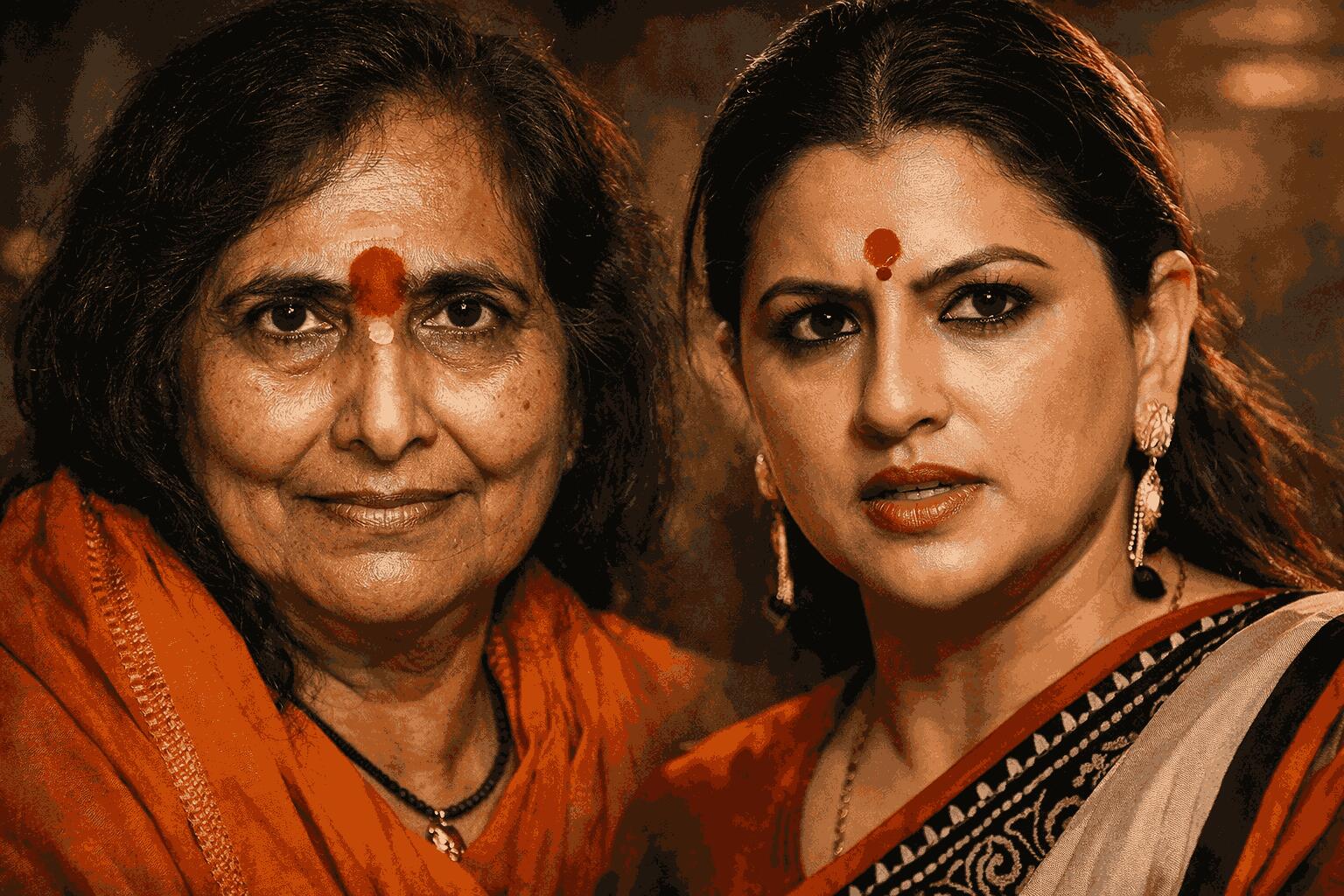
A fresh debate has erupted across social media and political circles after comments by Hindu activist Kajal Hindustani and spiritual leader Sadhvi Ritambhara sparked a wider conversation about caste, policy, and the larger idea of Hindu Unity. The discussion gained momentum after a public exchange related to University Grants Commission (UGC) guidelines became viral online, prompting supporters and critics to weigh in on the broader implications of the issue.
The controversy stems from differing interpretations of policies and narratives that some activists believe could affect social cohesion within the Hindu community. While Kajal Hindustani raised concerns about perceived injustices related to policy discussions and representation, Sadhvi Ritambhara emphasized the importance of maintaining Hindu Unity despite disagreements within the community.
During a public interaction, Sadhvi Ritambhara urged Hindus not to allow ideological or caste-based debates to fracture their collective identity. She reportedly used a metaphor to explain her perspective, suggesting that social challenges should be addressed carefully rather than allowing them to weaken the entire community. According to her remarks, internal differences should be treated as issues to be resolved, not reasons to abandon the larger goal of Hindu Unity.
Kajal Hindustani, on the other hand, has been vocal about the need to address concerns raised by sections of society who feel that certain institutional frameworks may disadvantage them. Her arguments resonated with some individuals who believe that policy debates must include discussions about fairness and representation. For these supporters, questioning such issues is not a rejection of Hindu Unity, but rather a call to strengthen it by addressing grievances openly.
The exchange between the two figures quickly spread across social media platforms, where clips, posts, and commentary amplified the discussion. Many users interpreted the debate as a sign that ideological differences exist even among those who broadly support Hindu causes. Others argued that such disagreements are natural in any large community and can ultimately contribute to a stronger understanding of Hindu Unity.
Observers note that Sadhvi Ritambhara has long been a prominent voice in Hindu activism. She rose to national prominence during the Ram Janmabhoomi movement and later founded social initiatives focused on welfare and service. Over the decades, her speeches and public engagements have frequently emphasized cultural identity, social cohesion, and the importance of unity among Hindus.
The present debate also reflects a larger trend in contemporary Indian discourse where social media rapidly amplifies ideological discussions. Statements that might previously have remained within limited audiences now reach millions of users in a matter of hours. In this environment, the conversation about Hindu Unity has expanded beyond the original exchange between Kajal Hindustani and Sadhvi Ritambhara to include commentators, activists, and ordinary users across the country.
Some analysts suggest that the controversy highlights the complex balance between addressing internal concerns and maintaining a shared identity. For them, debates like this demonstrate that discussions about policy, representation, and social justice are taking place within the broader framework of Hindu Unity, rather than outside it.
Supporters of Sadhvi Ritambhara argue that her appeal was primarily a warning against external narratives that might exploit internal divisions. According to this perspective, maintaining Hindu Unity requires vigilance against attempts to deepen social fractures. Others believe that open debates such as the one sparked by Kajal Hindustani are necessary to ensure that legitimate grievances are acknowledged and resolved.
Despite the intensity of the online reactions, some commentators have suggested that both viewpoints ultimately converge on a similar objective: preserving cohesion within the community while addressing contemporary challenges. In that sense, the controversy may reflect not a fundamental disagreement about Hindu Unity, but rather different strategies for achieving it.
As the discussion continues across social media and public forums, the episode underscores the evolving nature of political and social debates in India. The exchange between Kajal Hindustani and Sadhvi Ritambhara illustrates how ideological disagreements can coexist with shared cultural goals, even as the meaning and direction of Hindu Unity remain subjects of ongoing conversation.