























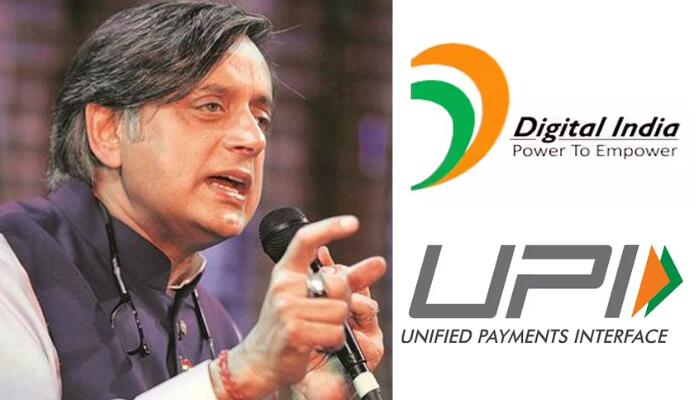
India’s Unified Payments Interface (UPI) has surged onto the global stage, becoming the world’s most widely used real-time digital payments system and now powering over half of all instant transactions worldwide, according to the International Monetary Fund. Congress MP Shashi Tharoor hailed this achievement at the Global Confluence 2026, hosted by the National Association of Software and Service Companies, calling it a milestone that elevates India to the status of a “techno-diplomatic leader.”
UPI’s growing international footprint is remarkable. Now accepted for merchant payments in 19 countries, including France, the UAE, Singapore, Nepal, Bhutan, Mauritius, Sri Lanka, and Qatar, the platform allows Indian travellers to scan local QR codes for immediate, secure transactions, often eliminating foreign exchange fees. Tharoor emphasised that India is leveraging its homegrown technological innovation to expand its influence abroad, remarking that everyday digital payments, from a chaiwala’s QR code to international merchant systems, illustrate India’s modern technological prowess.
“Through the adoption of UPI by multiple nations, we have turned a domestic payment tool into a global instrument of influence,” Tharoor said. “It demonstrates that India is not just keeping pace with global technology but setting new standards, surpassing systems developed in the United States long regarded as benchmarks.” He added that the widespread international use of UPI has reshaped global perceptions of India’s tech capabilities, blending efficiency with everyday usability.
The Mechanics of UPI
Launched in 2016 by the National Payments Corporation of India, UPI is built on the Immediate Payment Service framework but offers far greater convenience. Unlike traditional bank transfers, UPI requires no beneficiary account details or IFSC codes. Transactions are completed using a Virtual Payment Address, and multiple bank accounts can be linked on a single platform. Its interoperability across apps and banks, coupled with 24×7 availability and QR-based payments, has driven adoption in both urban centres and rural communities.
The system’s simplicity and security have made it a preferred choice for both individuals and businesses. In practical terms, users can transfer funds instantly without sharing sensitive banking information. This innovation has helped India advance its goal of a cashless economy while projecting technological soft power globally.
India’s Expanding Digital Diplomacy
Tharoor’s remarks underscore the broader implications of UPI’s international success. By exporting a domestic financial technology, India is creating a new model of digital diplomacy, enhancing its economic and cultural influence. “People around the world now see India as a technology leader,” Tharoor observed. “We have shown that innovation developed for everyday citizens can also become a tool of global engagement.”
The adoption of UPI aligns with India’s vision of integrating technology into international commerce, reducing barriers for travellers, and fostering trust in Indian digital solutions. As more countries embrace the platform, India is not just exporting payments infrastructure; it is exporting a narrative of progress, reliability, and global connectivity.
With the world increasingly relying on instant digital transactions, UPI stands as a testament to India’s capability to shape international norms, merge convenience with innovation, and assert itself as a global technology leader.