














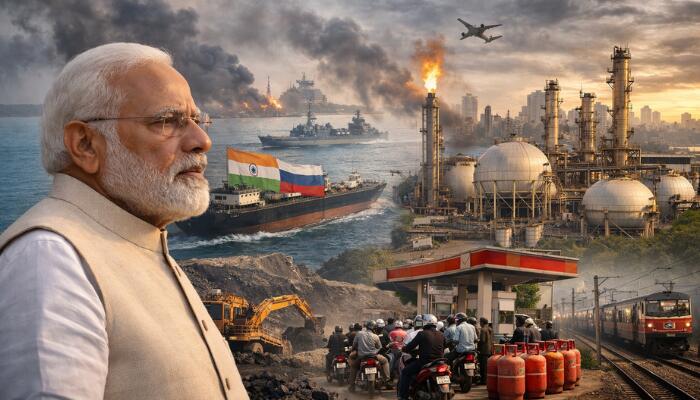
Prime Minister Narendra Modi asserted that India remains economically resilient and energy-secure despite the escalating United States-Israel-Iran conflict, stating that the country has adequate reserves of petroleum, fertilisers and coal to withstand disruptions triggered by the crisis that began last month.
Addressing the Lok Sabha, Modi described the situation in West Asia as “worrisome” and said it has created unprecedented challenges not only for India but for the global economy, impacting livelihoods, trade routes and energy supplies. He pointed to the near-closure of the Strait of Hormuz, a critical corridor through which nearly 40 per cent of India’s crude oil imports pass, noting that cargo movement has become increasingly difficult. The conflict has disrupted multiple sectors, including air travel, shipping and gas supply chains.
Strategic buffers and diversification drive resilience
The Prime Minister emphasised that India’s strategic petroleum reserves currently exceed 5.3 million metric tonnes, with plans underway to expand capacity by over 6.5 million metric tonnes. These reserves, alongside stockpiles held by oil companies, form a crucial buffer against supply shocks.
He highlighted a significant shift in India’s energy strategy, with imports now sourced from 41 countries, up from 27 earlier, strengthening resilience against geopolitical volatility. The government remains in constant dialogue with global suppliers to ensure uninterrupted access to oil and gas.
Russia has emerged as a key supplier during the crisis, helping bridge supply gaps from the Middle East, while India has also increased LPG procurement from the United States and Argentina. Diplomatic engagement with Iran has facilitated the safe transit of some Indian tankers through the Strait of Hormuz, with more expected to return.
Domestic measures have also reduced import dependence. Modi noted that ethanol blending has cut crude oil imports by approximately 4.5 crore barrels annually. Railway electrification has significantly lowered diesel consumption, saving an estimated 180 crore litres each year. The country’s metro network has expanded from less than 250 km in 2014 to over 1,100 km, further easing fuel demand. Additionally, India’s refining capacity has increased substantially over the past 11 years.
Managing demand and protecting critical sectors
Acknowledging that India imports around 60 per cent of its LPG requirements, Modi said the government is prioritising domestic supply while ramping up production to minimise public hardship. He stressed that authorities remain alert, responsive and prepared to extend all necessary support to citizens.
Adequate arrangements have been made to ensure fertiliser availability for the upcoming sowing season beginning June-July, while sufficient coal supplies have been secured to meet rising electricity demand during the summer months. Despite rapid growth in renewable energy, coal continues to account for nearly three-fourths of India’s electricity generation.
An inter-ministerial group has been established to monitor developments daily and coordinate policy responses. Modi expressed confidence that coordinated efforts between the government and industry will help India navigate the crisis effectively.
Citizens’ safety and diplomatic balancing at the forefront
With nearly one crore Indians residing and working in the Gulf region, the Prime Minister underscored that their safety remains the government’s foremost priority. He confirmed that he has spoken with multiple West Asian leaders in two rounds of calls, all of whom have assured the safety of Indian nationals.
Evacuation efforts are ongoing, with nearly 1,000 Indians already brought back safely, including over 700 medical students. In total, 3.75 lakh citizens have been repatriated since the conflict began. Several Indian vessels stranded in the Strait of Hormuz have also returned.
Modi emphasised the importance of keeping maritime routes open and secure, while urging Parliament to present a unified stance to the global community. He reiterated India’s consistent call for dialogue and diplomacy to resolve the conflict, even as it maintains ties with Iran, Israel and Arab nations.
Growth outlook steady, but risks of prolonged crisis remain
India’s economy is estimated to grow by 7.6 per cent in the fiscal year ending March 2026, with projections of 7 to 7.4 per cent for the following year. However, Modi cautioned that a prolonged conflict in the Gulf could dampen growth through rising energy costs and supply chain disruptions.
Warning that the global situation may remain difficult for an extended period, he urged vigilance and unity, drawing parallels with India’s collective response during the coronavirus pandemic. He also cautioned against misinformation, noting that some may attempt to spread rumours to exploit the situation.
“The inherent strength of India’s economic fundamentals has provided significant support during this period,” Modi said, expressing confidence that the country is well-prepared to face the evolving challenges.