


















Lin Mei-ling was hanging laundry on the roof of her apartment in Taipei when a neighbour called up to her. “Turn on the television,” he said. “Beijing just passed a law to take us by force.”
She did not fully understand the legal language scrolling across the news ticker, but she understood enough. That evening, she called her daughter, who was studying in Taichung.
“Come home this weekend,” she said. No further explanation was needed.
Across the strait, in a single afternoon in Beijing, China’s parliament had passed a law that permanently altered the legal landscape of one of Asia’s most volatile flashpoints. It codified, in black and white, the conditions under which China was prepared to go to war with its democratic neighbour.
The world, distracted by other crises, barely paused. In Taiwan, nobody forgot.
The Vote
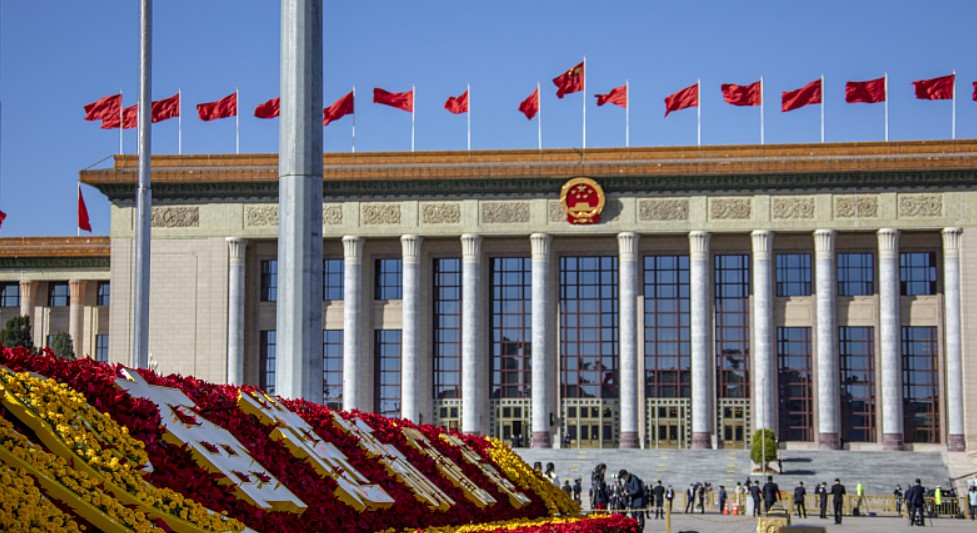
On 14 March 2005, China formally codified its long-standing threat to use force against Taiwan when the National People’s Congress, the country’s top legislative body, passed the Anti-Secession Law in Beijing.
The legislation declared Taiwan to be an inseparable part of China and authorised the use of “non-peaceful means” if the island moved toward formal independence or if prospects for peaceful reunification were exhausted.
Signed into effect the same day by Chinese President Hu Jintao, the law marked a significant moment in cross-Strait relations, providing a legal framework for Beijing’s stance on Taiwan and drawing widespread international attention.
The session lasted less than two weeks from introduction to passage, a timeline that signalled this was not a deliberative exercise but a political declaration with legal teeth. The law contained ten articles. Most were procedural. Article 8 was the one that mattered.
What Article 8 Said
Article 8 authorised the Chinese government to use “non-peaceful means and other necessary measures” against Taiwan under three conditions: if Taiwan formally declared independence, if a “major incident” occurred that would lead to Taiwan’s separation, or if possibilities for peaceful reunification were “completely exhausted.”
Each condition was deliberately undefined. Beijing alone would determine when any of them had been met. In effect, China had legislated itself a justification for military action — on its own terms, at a time of its own choosing.
Why Beijing Did It, And Why Then
The timing was deliberate and Taiwan’s then-President Chen Shui-bian had been making increasingly assertive statements about Taiwan’s separate identity and floating the idea of a new constitution. Beijing viewed this as edging toward a formal declaration of independence and wanted a legal instrument to signal its red lines — both to Taipei and to Washington.
The law was also partly domestic theatre. Chinese leadership needed to demonstrate resolve to nationalist audiences at home, where Taiwan remains a deeply emotional issue tied to national pride and historical grievance.
Taiwan’s Reaction
The response in Taipei was swift and furious. Within days, an estimated one million people took to the streets, one of the largest demonstrations in Taiwan’s history. Among them was Lin Mei-ling, who had taken the day off work. She had never been to a protest before. “I’m not a political person,” she later told a local reporter. “But this was about whether my children have a future they choose for themselves.”
Protesters carried signs rejecting Beijing’s claim to sovereignty and demanding international recognition of Taiwan’s democratic status. President Chen called the law “a law of aggression.” The march revealed something important: that ordinary Taiwanese people, regardless of political affiliation, were unified in rejecting Beijing’s framing of their future.
The International Response
The United States expressed “concern” but stopped short of outright condemnation, careful not to destabilise its complex relationship with Beijing. The European Union, which had been considering lifting an arms embargo on China, faced fresh pressure to maintain it, and ultimately did. Japan called the law “regrettable.”
No major government formally condemned it. The law stood.
Why It Still Matters
The Anti-Secession Law has never been repealed. It remains on the books today, a standing legal authorisation for military force against a democratic government of 23 million people. It has shaped every military exercise, every diplomatic standoff, and every arms procurement decision in the Taiwan Strait in the two decades since.
For people like Lin Mei-ling, now a grandmother, it is not an abstract geopolitical document. It is the reason she watches the news every morning before her grandchildren wake up.
March 14, 2005, was the day Beijing stopped merely claiming Taiwan and started legislating what it would do to take it.