










TFIPOST हिन्दी
TFIPOST Global
Tfipost.com
Tfipost.com
No Result
View All Result
  • Premium
  • Politics
    • All
    • Analysis
    • Opinions
    • Trending
    India and US Poised to Seal Critical Minerals Deal, Ambassador Sergio Gor Confirms

    India and US Poised to Seal Critical Minerals Deal, Ambassador Sergio Gor Confirms

    Modi Holds Crucial Call with Iran’s President as West Asia Conflict Escalates, Flags Safety of Indians and Energy Routes

    Modi Holds Crucial Call with Iran’s President as West Asia Conflict Escalates, Flags Safety of Indians and Energy Routes

    Iran’s New Supreme Leader Mojtaba Khamenei in Coma, Loses Leg After Airstrike: Report

    Iran’s New Supreme Leader Mojtaba Khamenei in Coma, Loses Leg After Airstrike: Report

    “SunRisers Hyd Boycott Row”: SRH Owner Kavya Maran Faces Backlash After Buying Pakistani Cricketer Abrar Ahmed for Rs 2.34 Cr

    “SunRisers Hyd Boycott Row”: SRH Owner Kavya Maran Faces Backlash After Buying Pakistani Cricketer Abrar Ahmed for Rs 2.34 Cr

    • Analysis
    • Opinions
    • Trending
  • Economy
    • All
    • Business
    • Economy1
    • Finance
    India Joins 135 Nations at UN to Condemn Iran’s Strikes on Gulf States; Find Out Why?

    India Joins 135 Nations at UN to Condemn Iran’s Strikes on Gulf States; Find Out Why?

    Indian Army Tests Counter-Drone Defences in Pokhran Drill as Swarm Warfare Lessons Emerge from Iran Conflict

    Indian Army Tests Counter-Drone Defences in Pokhran Drill as Swarm Warfare Lessons Emerge from Iran Conflict

    Two Indian Ships Cross Strait of Hormuz as Iran–US War Strands Most Vessels

    Two Indian Ships Cross Strait of Hormuz as Iran–US War Strands Most Vessels

    Confused by Choices? How to Select the Right Health Insurance Policy

    Confused by Choices? How to Select the Right Health Insurance Policy

    • Business
    • Finance
  • Defense
    • All
    • Defence
    • Strategy
    • Weaponry
    India Joins 135 Nations at UN to Condemn Iran’s Strikes on Gulf States; Find Out Why?

    India Joins 135 Nations at UN to Condemn Iran’s Strikes on Gulf States; Find Out Why?

    Indian Army Tests Counter-Drone Defences in Pokhran Drill as Swarm Warfare Lessons Emerge from Iran Conflict

    Indian Army Tests Counter-Drone Defences in Pokhran Drill as Swarm Warfare Lessons Emerge from Iran Conflict

    Two Indian Ships Cross Strait of Hormuz as Iran–US War Strands Most Vessels

    Two Indian Ships Cross Strait of Hormuz as Iran–US War Strands Most Vessels

    After Oil, Fertiliser Supply Becomes India’s Next Concern Amid Iran’s Hormuz Tensions

    After Oil, Fertiliser Supply Becomes India’s Next Concern Amid Iran’s Hormuz Tensions

    • Defence
    • Strategy
    • Weaponry
  • Geopolitics
    • All
    • Africa
    • Americas
    • Asia Pacific
    • Europe
    • South Asia
    • West Asia
    India and US Poised to Seal Critical Minerals Deal, Ambassador Sergio Gor Confirms

    India and US Poised to Seal Critical Minerals Deal, Ambassador Sergio Gor Confirms

    Iran’s New Supreme Leader Mojtaba Khamenei in Coma, Loses Leg After Airstrike: Report

    Iran’s New Supreme Leader Mojtaba Khamenei in Coma, Loses Leg After Airstrike: Report

    Global Oil Crisis? Iran’s Suicide Boat Attacks Several US-Owned Tankers to Push Oil Prices to $200

    Global Oil Crisis? Iran’s Suicide Boat Attacks Several US-Owned Tankers to Push Oil Prices to $200

    India Joins 135 Nations at UN to Condemn Iran’s Strikes on Gulf States; Find Out Why?

    India Joins 135 Nations at UN to Condemn Iran’s Strikes on Gulf States; Find Out Why?

    • Africa
    • Americas
    • Asia Pacific
    • Europe
    • South Asia
    • West Asia
  • Knowledge
    • All
    • Culture
    • Education
    • History
    • Indology
    1993 Mumbai Blasts and Transformation of India’s Urban Security

    1993 Mumbai Blasts and Transformation of India’s Urban Security

    Silenced and Forgotten: How China Suppressed Justice for Xiao Huamei and Zhang Zhan

    Silenced and Forgotten: How China Suppressed Justice for Xiao Huamei and Zhang Zhan

    Tibetans and Unbroken Cry of Tibet: Memory, Resistance, Weight of Silence

    Tibetans and Unbroken Cry of Tibet: Memory, Resistance, Weight of Silence

    International Women’s Day

    International Women’s Day: Could the West Match the Rights Women Had in the Vedic Era?

    • Culture
    • History
    • Indology
  • Law
  • Lounge
    • All
    • Books
    • Cinema
    • Entertainment
    • Food
    • Games
    • Health
    • Lifestyle
    • Satire
    • Sports
    • technology
    • Travel
    Comparison of the Stake App (PWA) and the Mobile Website

    Comparison of the Stake App (PWA) and the Mobile Website

    Benefits and Challenges of Using Home Hemodialysis Equipment

    Benefits and Challenges of Using Home Hemodialysis Equipment

    First Steps to Start Using Nagad88

    First Steps to Start Using Nagad88

    Electric Bike vs Petrol Bike: Charging, Cost, and Maintenance Differences of Owning an Electric Bike in India

    Electric Bike vs Petrol Bike: Charging, Cost, and Maintenance Differences of Owning an Electric Bike in India

    • Books
    • Cinema
    • Food
    • Health
    • Sports
    • technology
    • Travel
    • Satire
Tfipost.com
  • Premium
  • Politics
    • All
    • Analysis
    • Opinions
    • Trending
    India and US Poised to Seal Critical Minerals Deal, Ambassador Sergio Gor Confirms

    India and US Poised to Seal Critical Minerals Deal, Ambassador Sergio Gor Confirms

    Modi Holds Crucial Call with Iran’s President as West Asia Conflict Escalates, Flags Safety of Indians and Energy Routes

    Modi Holds Crucial Call with Iran’s President as West Asia Conflict Escalates, Flags Safety of Indians and Energy Routes

    Iran’s New Supreme Leader Mojtaba Khamenei in Coma, Loses Leg After Airstrike: Report

    Iran’s New Supreme Leader Mojtaba Khamenei in Coma, Loses Leg After Airstrike: Report

    “SunRisers Hyd Boycott Row”: SRH Owner Kavya Maran Faces Backlash After Buying Pakistani Cricketer Abrar Ahmed for Rs 2.34 Cr

    “SunRisers Hyd Boycott Row”: SRH Owner Kavya Maran Faces Backlash After Buying Pakistani Cricketer Abrar Ahmed for Rs 2.34 Cr

    • Analysis
    • Opinions
    • Trending
  • Economy
    • All
    • Business
    • Economy1
    • Finance
    India Joins 135 Nations at UN to Condemn Iran’s Strikes on Gulf States; Find Out Why?

    India Joins 135 Nations at UN to Condemn Iran’s Strikes on Gulf States; Find Out Why?

    Indian Army Tests Counter-Drone Defences in Pokhran Drill as Swarm Warfare Lessons Emerge from Iran Conflict

    Indian Army Tests Counter-Drone Defences in Pokhran Drill as Swarm Warfare Lessons Emerge from Iran Conflict

    Two Indian Ships Cross Strait of Hormuz as Iran–US War Strands Most Vessels

    Two Indian Ships Cross Strait of Hormuz as Iran–US War Strands Most Vessels

    Confused by Choices? How to Select the Right Health Insurance Policy

    Confused by Choices? How to Select the Right Health Insurance Policy

    • Business
    • Finance
  • Defense
    • All
    • Defence
    • Strategy
    • Weaponry
    India Joins 135 Nations at UN to Condemn Iran’s Strikes on Gulf States; Find Out Why?

    India Joins 135 Nations at UN to Condemn Iran’s Strikes on Gulf States; Find Out Why?

    Indian Army Tests Counter-Drone Defences in Pokhran Drill as Swarm Warfare Lessons Emerge from Iran Conflict

    Indian Army Tests Counter-Drone Defences in Pokhran Drill as Swarm Warfare Lessons Emerge from Iran Conflict

    Two Indian Ships Cross Strait of Hormuz as Iran–US War Strands Most Vessels

    Two Indian Ships Cross Strait of Hormuz as Iran–US War Strands Most Vessels

    After Oil, Fertiliser Supply Becomes India’s Next Concern Amid Iran’s Hormuz Tensions

    After Oil, Fertiliser Supply Becomes India’s Next Concern Amid Iran’s Hormuz Tensions

    • Defence
    • Strategy
    • Weaponry
  • Geopolitics
    • All
    • Africa
    • Americas
    • Asia Pacific
    • Europe
    • South Asia
    • West Asia
    India and US Poised to Seal Critical Minerals Deal, Ambassador Sergio Gor Confirms

    India and US Poised to Seal Critical Minerals Deal, Ambassador Sergio Gor Confirms

    Iran’s New Supreme Leader Mojtaba Khamenei in Coma, Loses Leg After Airstrike: Report

    Iran’s New Supreme Leader Mojtaba Khamenei in Coma, Loses Leg After Airstrike: Report

    Global Oil Crisis? Iran’s Suicide Boat Attacks Several US-Owned Tankers to Push Oil Prices to $200

    Global Oil Crisis? Iran’s Suicide Boat Attacks Several US-Owned Tankers to Push Oil Prices to $200

    India Joins 135 Nations at UN to Condemn Iran’s Strikes on Gulf States; Find Out Why?

    India Joins 135 Nations at UN to Condemn Iran’s Strikes on Gulf States; Find Out Why?

    • Africa
    • Americas
    • Asia Pacific
    • Europe
    • South Asia
    • West Asia
  • Knowledge
    • All
    • Culture
    • Education
    • History
    • Indology
    1993 Mumbai Blasts and Transformation of India’s Urban Security

    1993 Mumbai Blasts and Transformation of India’s Urban Security

    Silenced and Forgotten: How China Suppressed Justice for Xiao Huamei and Zhang Zhan

    Silenced and Forgotten: How China Suppressed Justice for Xiao Huamei and Zhang Zhan

    Tibetans and Unbroken Cry of Tibet: Memory, Resistance, Weight of Silence

    Tibetans and Unbroken Cry of Tibet: Memory, Resistance, Weight of Silence

    International Women’s Day

    International Women’s Day: Could the West Match the Rights Women Had in the Vedic Era?

    • Culture
    • History
    • Indology
  • Law
  • Lounge
    • All
    • Books
    • Cinema
    • Entertainment
    • Food
    • Games
    • Health
    • Lifestyle
    • Satire
    • Sports
    • technology
    • Travel
    Comparison of the Stake App (PWA) and the Mobile Website

    Comparison of the Stake App (PWA) and the Mobile Website

    Benefits and Challenges of Using Home Hemodialysis Equipment

    Benefits and Challenges of Using Home Hemodialysis Equipment

    First Steps to Start Using Nagad88

    First Steps to Start Using Nagad88

    Electric Bike vs Petrol Bike: Charging, Cost, and Maintenance Differences of Owning an Electric Bike in India

    Electric Bike vs Petrol Bike: Charging, Cost, and Maintenance Differences of Owning an Electric Bike in India

    • Books
    • Cinema
    • Food
    • Health
    • Sports
    • technology
    • Travel
    • Satire
No Result
View All Result
Tfipost.com
Tfipost.com
No Result
View All Result
  • Premium
  • Politics
  • Economy
  • Defense
  • Geopolitics
  • Knowledge
  • Law
  • Lounge

The Constitutional Fiction of “Minority” and Institutionalised Asymmetry

The Indian Constitution invented special protections for an undefined “minority” while denying parity to Hindus, creating structural religious bias

TFI Desk by TFI Desk
3 January 2026
in Trending
The Constitutional Fiction of “Minority” and Institutionalised Asymmetry

The Constitutional Fiction of “Minority” and Institutionalised Asymmetry

Share on FacebookShare on X

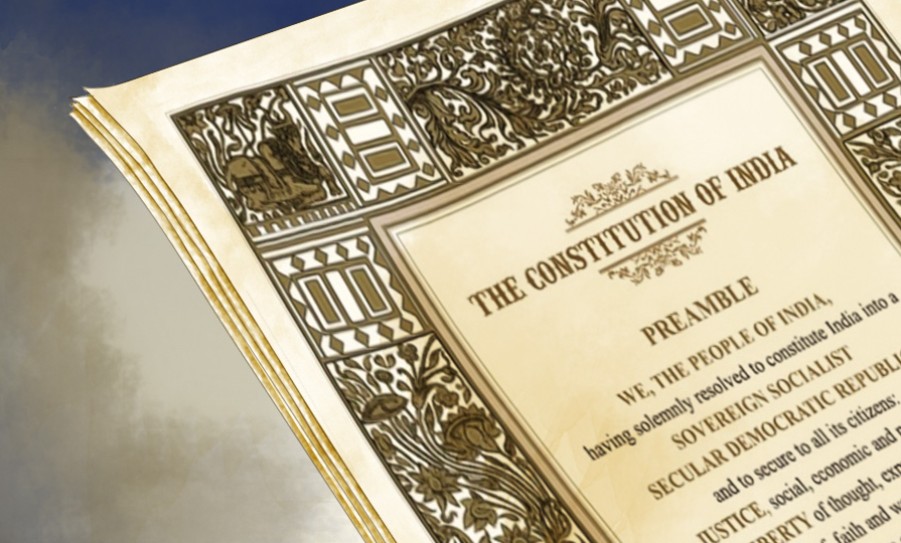
The Indian Constitution presents itself as a charter of equality, secularism, and justice, yet embedded within its framework is a structural imbalance that has endured for more than seven decades. The extension of special constitutional protections to an undefined category called “minority,” most prominently through Article 30, alongside the systematic denial of parity to Hindu institutions.

This is not a peripheral inconsistency, it is a foundational constitutional distortion that has been normalised through judicial interpretation and sustained by political expediency. That which is often defended as secularism has, in practice, operated as selective governance—state restraint for certain religions and state domination for Hinduism. The result is a permanent religious asymmetry built into constitutional practice, despite the Constitution’s formal commitment to equality.

RelatedPosts

Fundamental Rights Are India’s Own: A Legacy from Indian Knowledge Tradition

Amid Security Concerns, Bangladesh Minority Janta Party Gears Up for Electoral Debut

Atrocities Against Minority Hindus in Bangladesh Raised in Canadian Parliament

Load More

The First and Fatal Flaw: “Minority” Does Not Exist in the Constitution

The term “minority” appears in Articles 29 and 30 of the Constitution of India, yet the Constitution nowhere defines it. There is no numerical benchmark, no enumerated list of religions, no geographical or temporal framework, and no criterion based on vulnerability. In constitutional jurisprudence, rights require clearly identifiable subjects. A right that floats without definition lacks legal grounding.

Despite this, Article 30 grants extensive and near-sovereign autonomy in education to “minorities” without first establishing who qualifies as one. In principle, this absence of definition renders the provision constitutionally fragile. What exists today is not a constitutionally articulated category, but a post-constitutional assumption that was later filled in through executive notifications and judicial acceptance.

Article 30: A Right Without a Subject

Article 30 guarantees to “all minorities” the right to establish and administer educational institutions. Yet from a legal standpoint, a right without a defined subject is inherently questionable.

The operation of Article 30 has relied not on constitutional clarity, but on historical assumptions formed during Partition, executive classifications introduced decades after Independence, and judicial deference that declined to interrogate the premise itself.

At no point did Parliament amend the Constitution to define “minority.” At no point did the judiciary develop a constitutional test for minority status. Instead, the label was treated as self-evident. As a result, Article 30 functions today on an unverified presumption of vulnerability—one frozen in 1950 and treated as a permanent constitutional truth.

Constituent Assembly Biases: Fear, Guilt, and Ideology

The Constituent Assembly was not an ideologically neutral body. Its deliberations were shaped by the trauma of Partition, an elite English-educated leadership, colonial intellectual inheritances, and a deep suspicion of Hindu civilizational institutions. The framers broadly assumed that minorities would remain perpetually insecure, that Hindus as a majority would always be socially dominant, and that the State could legitimately act as a neutral proxy for Hindu interests.

All three assumptions proved flawed. Hindu society at Independence was fragmented, lacked centralised authority, and had only recently emerged from centuries of political subjugation. Yet the constitutional framework treated Hindus as if they were a unified and powerful bloc requiring restraint rather than protection. This produced a perverse outcome: minority institutions were constitutionally protected from the State, while Hindu institutions were constitutionally opened to state intervention and reform. This was not neutrality. It was asymmetric control.

Nehruvian Secularism: Not Neutral, but Selective

Under Jawaharlal Nehru, India adopted a distinctive model of secularism that involved extensive state control over Hindu religious and educational institutions, coupled with state non-interference—and often active protection—of minority institutions. This approach was not constitutionally mandated; it was an ideological choice.

Its consequences are visible in governance. Hindu temples were brought under state control, Hindu educational institutions subjected to dense regulation, while minority institutions remained largely insulated under Article 30.

The Constitution thus became a mechanism not of equal distance from all religions, but of selective intervention, disproportionately directed at Hindu civil society.

Judicial Complicity: From Interpretation to Endorsement

The Supreme Court had repeated opportunities to correct this imbalance. It did not. Instead, it accepted executive notifications as sufficient to establish minority status, declared minority identity to be state-specific without addressing the question of parity, and consistently focused on expanding the scope of Article 30 rather than examining its constitutional foundation.

Most importantly, the judiciary never confronted the central contradiction: how special constitutional rights can attach to a group that the Constitution itself does not define. By declining to address this, the courts effectively transformed an assumption into constitutional fact and used it to deny parity to Hindu institutions—even in states where Hindus are numerically a minority.

The Logical Conclusion: Article 30 Is Technically Inapplicable

From a strict constitutional perspective, the implications are clear. If the Constitution does not define “minority,” there is no constitutionally identifiable beneficiary of Article 30.

The provision therefore rests on extra-constitutional scaffolding rather than constitutional text. In any other area of law, such a defect would invite serious scrutiny. Here, it persists largely because questioning it unsettles entrenched ideological and political interests.

The Cost of This Bias

This structural imbalance has produced tangible consequences. It has contributed to educational inequality, institutional discrimination against Hindu organisations, and extensive state intrusion into Hindu civil society. Over time, it has normalised the idea that equality can be suspended through undefined and permanent labels, without review or accountability.

Most dangerously, it has embedded religious asymmetry as a routine feature of governance rather than a temporary safeguard.

What Must Change

A serious constitutional republic cannot operate indefinitely on inherited fears and undefined privileges. At a minimum, the category of “minority” must be constitutionally defined rather than assumed.

Any special protections must be reviewable, time-bound, and based on transparent criteria. Parity must replace asymmetry, and the State must withdraw from selective religious control if secularism is to retain coherence.

The framers erred—not out of malice, but with lasting consequences. That error has since expanded through judicial endorsement and political inertia. Correcting it is not communalism. It is constitutional hygiene, necessary to restore equality, balance, and credibility to the constitutional order.

Tags: ConstitutionConstitutional FictionMinorityNehruvian secularism
ShareTweetSend
Previous Post

In Bangladesh, 1971 is Not Optional: Founding Memory and the Risk of Historical Dilution

Next Post

Iran Anti-Regime Protesters Set Fire to the Statue of Qasem Soleimani

Related Posts

India and US Poised to Seal Critical Minerals Deal, Ambassador Sergio Gor Confirms
Geopolitics

India and US Poised to Seal Critical Minerals Deal, Ambassador Sergio Gor Confirms

13 March 2026

In a major development in India-US economic and trade relations, US Ambassador Sergio Gor announced on Friday that the...

Modi Holds Crucial Call with Iran’s President as West Asia Conflict Escalates, Flags Safety of Indians and Energy Routes
Trending

Modi Holds Crucial Call with Iran’s President as West Asia Conflict Escalates, Flags Safety of Indians and Energy Routes

13 March 2026

Prime Minister Narendra Modi held a telephone conversation with Iranian President Masoud Pezeshkian on Thursday night to discuss the...

Iran’s New Supreme Leader Mojtaba Khamenei in Coma, Loses Leg After Airstrike: Report
Geopolitics

Iran’s New Supreme Leader Mojtaba Khamenei in Coma, Loses Leg After Airstrike: Report

13 March 2026

Iran’s newly appointed Supreme Leader, Mojtaba Khamenei, is reportedly in a coma and has lost at least one leg...

Load More

Leave a Reply Cancel reply

Your email address will not be published. Required fields are marked *

I agree to the Terms of use and Privacy Policy.
This site is protected by reCAPTCHA and the Google Privacy Policy and Terms of Service apply.

Currently Playing

Truth of IRIS Dena: 8 Days That Changed Narrative | War zone Reality, Not an Indian Navy Exercise

Truth of IRIS Dena: 8 Days That Changed Narrative | War zone Reality, Not an Indian Navy Exercise

00:08:02

300 Million Euros for SCALP: Strategic Necessity or Costly Dependency on France300

00:04:06

Tejas Mk1A: 19th aircraft coupled but Not Delivered: What Is Holding Back the IAF Induction?

00:07:21

Agni-3 Launch Decoded: Why Test an Active Nuclear Missile That’s Already Deployed?

00:05:05

India’s Swadesi ‘Meteor’: World’s Most Lethal BVR Missile | Gandiv| SFDR | DRDO

00:06:48
Facebook Twitter Instagram Youtube
tfipostTfipost.com
Right Wing | News Analysis | Indian Opinion
  • About us
  • Contact Us
  • Careers
  • Brand Partnerships
  • Terms of use
  • Privacy Policy
  • Sitemap

©2026 TFI Media Private Limited

No Result
View All Result
  • Premium
  • Politics
    • Analysis
    • Opinions
    • Trending
  • Economy
    • Business
    • Finance
  • Defense
    • Defence
    • Strategy
    • Weaponry
  • Geopolitics
    • Africa
    • Americas
    • Asia Pacific
    • Europe
    • South Asia
    • West Asia
  • Knowledge
    • Culture
    • History
    • Indology
  • Law
  • Lounge
    • Books
    • Cinema
    • Food
    • Health
    • Sports
    • technology
    • Travel
    • Satire
TFIPOST हिन्दी
TFIPOST Global

©2026 TFI Media Private Limited