





















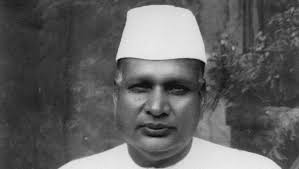
As India remembers Jamnalal Bajaj on his 83rd death anniversary, the nation celebrates not merely an industrialist, but a patriot, reformer, and philanthropist who bridged commerce and conscience. Dubbed the “Merchant Prince”, Bajaj was a rare figure in India’s struggle for freedom a businessman whose moral compass aligned fully with nation’s ideals. In an age when many sought profit under colonial patronage, Bajaj chose sacrifice, ethics, and service to the nation.
Born on 4 November 1889 in a modest Marwari family in Rajasthan, Jamnalal Bajaj’s life took a turn at the age of five when he was adopted by a prosperous business family in Wardha. His adoptive parents, Seth Bachhraj and Ganga Bai, introduced him to trade and enterprise. Despite limited formal education, Jamnalal demonstrated extraordinary business acumen early on.
By 17, he was managing the family’s operations, and his entrepreneurial instinct led to the founding of multiple ventures that would later evolve into the Bajaj Group one of India’s largest industrial conglomerates today. However, Jamnalal’s ambitions went far beyond profit. His journey from a trader to a national icon reflected his deep conviction that wealth must serve society, not enslave it.
Jamnalal’s defining transformation came after Mahatma Gandhi’s return from South Africa in 1915. Deeply inspired by Gandhi’s philosophy of truth, non-violence, and self-reliance, Bajaj not only became his close associate but was considered Gandhi’s “fifth son.” To facilitate Gandhi’s national movement, Jamnalal donated 20 acres of land in Wardha, which later became the nerve centre of the freedom struggle.
While many wealthy businessmen of the era maintained cordial ties with the British to safeguard their assets, Bajaj chose a different path. He renounced the title of ‘Rai Bahadur’ and the honorary magistrate post conferred upon him by the colonial government during World War I. He joined the Non-Cooperation Movement (1920–22) and was at the forefront of the Nagpur Flag Satyagraha (1923), Boycott of the Simon Commission (1928), and the Dandi March (1930).
For his participation, Jamnalal was imprisoned for two years at Nasik Central Jail, but his spirit remained unbroken. Gandhi, in a 1942 issue of Harijan, wrote, “There was no work of mine in which I did not receive his fullest cooperation in body, mind and wealth.” Their bond was not political but spiritual both believed that true politics was constructive work for the upliftment of people.
Bajaj’s patriotism found expression not only through activism but through financing the freedom struggle. As noted historian Bipan Chandra wrote in India’s Struggle for Independence, Jamnalal was among a few industrialists who not only supported the national movement but personally endured its hardships.
In 1921, he played a key role in mobilising funds for the All India Tilak Memorial Fund, raising ₹1 crore for the promotion of khadi and self-reliance. Throughout his life, Bajaj is said to have donated nearly ₹25 lakh an enormous sum for that era to various nationalist and social causes. For almost two decades, he also served as a financial backbone of the Indian National Congress, ensuring that resources never became a constraint in the fight for independence.
What made Jamnalal exceptional was his belief in the Gandhian concept of trusteeship that the rich must act as caretakers of their wealth for the welfare of society. His life became a model of ethical capitalism, blending enterprise with empathy.
Beyond politics and business, Jamnalal Bajaj was a tireless social reformer. He campaigned against untouchability long before it became a national concern, opening his family temple to Dalits in Wardha a radical act for its time. He also championed women’s education, inter-caste marriages, and child welfare, believing social progress was integral to India’s freedom.
As the founder-president of the Gandhi Seva Sangh, Bajaj travelled extensively across the country promoting khadi and village industries. He also played a pivotal role in advocating Hindi as the national language, viewing it as a unifying force for India’s diverse population. His efforts reflected his conviction that independence was incomplete without social and moral regeneration.
Jamnalal Bajaj passed away on 11 February 1942, leaving behind a legacy of courage, compassion, and conscience. Gandhi’s tribute to him remains timeless: “Whenever I wrote of wealthy men becoming trustees of their wealth for the common good, I always had this merchant prince principally in mind.”
More than eight decades later, Bajaj’s life still stands as a rare blend of wealth and virtue a reminder that capitalism and compassion need not be at odds. His journey from a Marwari trader to a Gandhian statesman continues to inspire generations to believe that business, when guided by ethics and purpose, can become a tool of national transformation.