















TFIPOST हिन्दी
TFIPOST Global
Tfipost.com
Tfipost.com
No Result
View All Result
  • Premium
  • Politics
    • All
    • Analysis
    • Opinions
    • Trending
    Rajiv Tuli’s family lived in Shakargarh (now in Pakistan), where they had a thriving business. But after Partition, they were forced to leave everything behind and cross over to the Indian side of the border.

    A Partition Memoir: The Story of a Family Forced to Leave Everything Behind

    Sukhbir Singh Badal: The Man Punjab Can’t Ignore. A Second Brush With Death

    Sukhbir Singh Badal: The Man Punjab Can’t Ignore. A Second Brush With Death

    PM Modi Warns of “Ideological Naxals” Embedded in India’s Institutions in 80th Independence Day Address

    PM Modi Warns of “Ideological Naxals” Embedded in India’s Institutions in 80th Independence Day Address

    Indus Waters Row: Pakistan Draws Another ‘Red Line,’ But What Happens When the Rhetoric Runs Dry?

    Indus Waters Row: Pakistan Draws Another ‘Red Line,’ But What Happens When the Rhetoric Runs Dry?

    • Analysis
    • Opinions
    • Trending
  • Economy
    • All
    • Business
    • Economy1
    • Finance
    Digital Payments Fueling Economic Growth

    Digital Payments Fueling Economic Growth

    National Handloom Day 2026: PM Modi Salutes India’s Weavers, Ministry Confers Awards at Rashtrapati Bhavan

    National Handloom Day 2026: PM Modi Salutes India’s Weavers, Ministry Confers Awards at Rashtrapati Bhavan

    How to Start Trading Forex and Crypto in India: A Beginner’s Roadmap

    How to Start Trading Forex and Crypto in India: A Beginner’s Roadmap

    Small-Ticket EMIs Are Turning Into India’s New Credit Habit

    Small-Ticket EMIs Are Turning Into India’s New Credit Habit

    • Business
    • Finance
  • Defense
    • All
    • Defence
    • Strategy
    • Weaponry
    Five Army Personnel Missing After Flash Flood Sweeps Away Camp Shelters in Arunachal Pradesh

    Five Army Personnel Missing After Flash Flood Sweeps Away Camp Shelters in Arunachal Pradesh

    Indus Waters Row: Pakistan Draws Another ‘Red Line,’ But What Happens When the Rhetoric Runs Dry?

    Indus Waters Row: Pakistan Draws Another ‘Red Line,’ But What Happens When the Rhetoric Runs Dry?

    No Flag Without a Fleet: India’s 2047 Ambition Runs Through the Sea

    No Flag Without a Fleet: India’s 2047 Ambition Runs Through the Sea

    Why CRPF suicides are at a five-year high

    Why CRPF suicides are at a five-year high

    • Defence
    • Strategy
    • Weaponry
  • Geopolitics
    • All
    • Africa
    • Americas
    • Asia Pacific
    • Europe
    • South Asia
    • West Asia
    Indus Waters Row: Pakistan Draws Another ‘Red Line,’ But What Happens When the Rhetoric Runs Dry?

    Indus Waters Row: Pakistan Draws Another ‘Red Line,’ But What Happens When the Rhetoric Runs Dry?

    Why Moscow is looking past the sea for a route to India

    Why Moscow is looking past the sea for a route to India

    Hiroshima Peace Memorial on 81st atomic bombing anniversary amid rising global nuclear tensions

    Hiroshima at 81: how close is the world to a nuclear crisis?

    Modi-Takaichi Summit Signals India-Japan’s Strategic Pivot Towards a Stronger Indo-Pacific Alliance

    Modi-Takaichi Summit Signals India-Japan’s Strategic Pivot Towards a Stronger Indo-Pacific Alliance

    • Africa
    • Americas
    • Asia Pacific
    • Europe
    • South Asia
    • West Asia
  • Knowledge
    • All
    • Culture
    • Education
    • History
    • Indology
    Unsung South Indian Freedom Fighters Remembered on 79th Independence Day

    Independence Day: Remembering South India’s Unsung Freedom Warriors

    National Handloom Day 2026: PM Modi Salutes India’s Weavers, Ministry Confers Awards at Rashtrapati Bhavan

    National Handloom Day 2026: PM Modi Salutes India’s Weavers, Ministry Confers Awards at Rashtrapati Bhavan

    Flags of India and Pakistan with the United Nations emblem, representing the Kashmir dispute and UN resolutions on plebiscite and troop withdrawal.

    Selective Invocation: Pakistan’s Plebiscite-Only Narrative

    Why Choose an MBA After B.Com? Here’s the Case

    Why Choose an MBA After B.Com? Here’s the Case

    • Culture
    • History
    • Indology
  • Law
  • Lounge
    • All
    • Books
    • Cinema
    • Entertainment
    • Food
    • Games
    • Health
    • Lifestyle
    • Satire
    • Sports
    • technology
    • Travel
    A Bully’s Reckoning, Handled with Care in Chaudhari’s Stories for Children

    A Bully’s Reckoning, Handled with Care in Chaudhari’s Stories for Children

    Red Teaming Services: The Ultimate Test of Your Organization’s Cyber Defences

    Red Teaming Services: The Ultimate Test of Your Organization’s Cyber Defences

    Films and Shows on the Partition to Watch This Independence Day

    Films and Shows on the Partition to Watch This Independence Day

    • Books
    • Cinema
    • Food
    • Health
    • Sports
    • technology
    • Travel
    • Satire
Tfipost.com
  • Premium
  • Politics
    • All
    • Analysis
    • Opinions
    • Trending
    Rajiv Tuli’s family lived in Shakargarh (now in Pakistan), where they had a thriving business. But after Partition, they were forced to leave everything behind and cross over to the Indian side of the border.

    A Partition Memoir: The Story of a Family Forced to Leave Everything Behind

    Sukhbir Singh Badal: The Man Punjab Can’t Ignore. A Second Brush With Death

    Sukhbir Singh Badal: The Man Punjab Can’t Ignore. A Second Brush With Death

    PM Modi Warns of “Ideological Naxals” Embedded in India’s Institutions in 80th Independence Day Address

    PM Modi Warns of “Ideological Naxals” Embedded in India’s Institutions in 80th Independence Day Address

    Indus Waters Row: Pakistan Draws Another ‘Red Line,’ But What Happens When the Rhetoric Runs Dry?

    Indus Waters Row: Pakistan Draws Another ‘Red Line,’ But What Happens When the Rhetoric Runs Dry?

    • Analysis
    • Opinions
    • Trending
  • Economy
    • All
    • Business
    • Economy1
    • Finance
    Digital Payments Fueling Economic Growth

    Digital Payments Fueling Economic Growth

    National Handloom Day 2026: PM Modi Salutes India’s Weavers, Ministry Confers Awards at Rashtrapati Bhavan

    National Handloom Day 2026: PM Modi Salutes India’s Weavers, Ministry Confers Awards at Rashtrapati Bhavan

    How to Start Trading Forex and Crypto in India: A Beginner’s Roadmap

    How to Start Trading Forex and Crypto in India: A Beginner’s Roadmap

    Small-Ticket EMIs Are Turning Into India’s New Credit Habit

    Small-Ticket EMIs Are Turning Into India’s New Credit Habit

    • Business
    • Finance
  • Defense
    • All
    • Defence
    • Strategy
    • Weaponry
    Five Army Personnel Missing After Flash Flood Sweeps Away Camp Shelters in Arunachal Pradesh

    Five Army Personnel Missing After Flash Flood Sweeps Away Camp Shelters in Arunachal Pradesh

    Indus Waters Row: Pakistan Draws Another ‘Red Line,’ But What Happens When the Rhetoric Runs Dry?

    Indus Waters Row: Pakistan Draws Another ‘Red Line,’ But What Happens When the Rhetoric Runs Dry?

    No Flag Without a Fleet: India’s 2047 Ambition Runs Through the Sea

    No Flag Without a Fleet: India’s 2047 Ambition Runs Through the Sea

    Why CRPF suicides are at a five-year high

    Why CRPF suicides are at a five-year high

    • Defence
    • Strategy
    • Weaponry
  • Geopolitics
    • All
    • Africa
    • Americas
    • Asia Pacific
    • Europe
    • South Asia
    • West Asia
    Indus Waters Row: Pakistan Draws Another ‘Red Line,’ But What Happens When the Rhetoric Runs Dry?

    Indus Waters Row: Pakistan Draws Another ‘Red Line,’ But What Happens When the Rhetoric Runs Dry?

    Why Moscow is looking past the sea for a route to India

    Why Moscow is looking past the sea for a route to India

    Hiroshima Peace Memorial on 81st atomic bombing anniversary amid rising global nuclear tensions

    Hiroshima at 81: how close is the world to a nuclear crisis?

    Modi-Takaichi Summit Signals India-Japan’s Strategic Pivot Towards a Stronger Indo-Pacific Alliance

    Modi-Takaichi Summit Signals India-Japan’s Strategic Pivot Towards a Stronger Indo-Pacific Alliance

    • Africa
    • Americas
    • Asia Pacific
    • Europe
    • South Asia
    • West Asia
  • Knowledge
    • All
    • Culture
    • Education
    • History
    • Indology
    Unsung South Indian Freedom Fighters Remembered on 79th Independence Day

    Independence Day: Remembering South India’s Unsung Freedom Warriors

    National Handloom Day 2026: PM Modi Salutes India’s Weavers, Ministry Confers Awards at Rashtrapati Bhavan

    National Handloom Day 2026: PM Modi Salutes India’s Weavers, Ministry Confers Awards at Rashtrapati Bhavan

    Flags of India and Pakistan with the United Nations emblem, representing the Kashmir dispute and UN resolutions on plebiscite and troop withdrawal.

    Selective Invocation: Pakistan’s Plebiscite-Only Narrative

    Why Choose an MBA After B.Com? Here’s the Case

    Why Choose an MBA After B.Com? Here’s the Case

    • Culture
    • History
    • Indology
  • Law
  • Lounge
    • All
    • Books
    • Cinema
    • Entertainment
    • Food
    • Games
    • Health
    • Lifestyle
    • Satire
    • Sports
    • technology
    • Travel
    A Bully’s Reckoning, Handled with Care in Chaudhari’s Stories for Children

    A Bully’s Reckoning, Handled with Care in Chaudhari’s Stories for Children

    Red Teaming Services: The Ultimate Test of Your Organization’s Cyber Defences

    Red Teaming Services: The Ultimate Test of Your Organization’s Cyber Defences

    Films and Shows on the Partition to Watch This Independence Day

    Films and Shows on the Partition to Watch This Independence Day

    • Books
    • Cinema
    • Food
    • Health
    • Sports
    • technology
    • Travel
    • Satire
No Result
View All Result
Tfipost.com
Tfipost.com
No Result
View All Result
  • Premium
  • Politics
  • Economy
  • Defense
  • Geopolitics
  • Knowledge
  • Law
  • Lounge

The Fall of Empires: Universal Patterns, Modern Decline, and India’s Path of Stability

The Thoughtful Indian by The Thoughtful Indian
14 November 2025
in Analysis
The Fall of Empires: Universal Patterns, Modern Decline, and India’s Path of Stability
Share on FacebookShare on X

Empires rot from within—overreach, debt addiction, hollow economies, collapsing currencies, and fractured societies. Europe imploded after losing its stolen wealth; America is now crumbling under wars, tariffs, BRICS pressure, and internal chaos. India must rise differently—disciplined, stable, rooted in Vasudhaiva Kutumbakam—never repeating the suicidal arrogance that destroyed the West. Empires rarely crumble in a sudden moment of catastrophe. Their fall is usually the end point of a long, slow internal erosion—an accumulation of structural weaknesses that disguise themselves as stability until the final shock exposes the decay beneath. From ancient empires to the colonial West and the post-war United States, decline follows a recognisable pattern rooted not in external defeat but in internal imbalance. The outward symptoms appear different in every era, yet the underlying mechanism remains constant: overreach, economic distortion, social fragmentation, loss of global trust, and finally, a rapid shift from gradual weakening to visible crisis. Understanding this pattern is the key to avoiding it.

The Seven Universal Stages of Imperial Decline

Decline begins with Imperial Overreach, when ambition outstrips capacity and a state commits resources everywhere—militarily, economically, and diplomatically. This strains finances and institutions, creating an illusion of global power while hollowing out internal strength. The second stage is Currency Erosion, where the financial core of the empire begins to destabilise through monetary manipulation, unchecked money creation, or inflationary pressures that quietly reduce the real value of national wealth. The third stage, The Debt Spiral, emerges when borrowing shifts from strategy to habit, forcing governments to borrow simply to service old debt, gradually surrendering budgetary space to interest payments.

RelatedPosts

Indus Waters Row: Pakistan Draws Another ‘Red Line,’ But What Happens When the Rhetoric Runs Dry?

National Handloom Day 2026: PM Modi Salutes India’s Weavers, Ministry Confers Awards at Rashtrapati Bhavan

Donald Trump Hits India With Fresh Tariffs

Load More

The fourth stage is Loss of Productive Capacity, where the real economy weakens even if GDP continues to grow. Manufacturing declines, skilled labour erodes, and the state increasingly depends on imports, services, and financial engineering. This hollowing-out forms the economic backdrop for the fifth stage: Social Decay and Inequality. Wealth begins to concentrate, institutions lose trust, social cohesion weakens, and the middle class collapses. Internal fracture becomes more damaging than any enemy abroad.

The sixth stage is Loss of Global Privilege, where the world no longer accepts the empire’s leadership unquestioningly. Rivals emerge, alliances shift, alternative currencies or coalitions rise, and the empire’s former dominance becomes a liability. Finally comes The Tipping Point, when accumulated weaknesses converge—economic shocks, political paralysis, military embarrassment, or social unrest—triggering rapid decline. Collapse appears sudden, but it is only the visible end of an invisible decades-long weakening.

The Decline of European Colonial Empires

European colonial empires collapsed under the weight of their own overextension. Their global military commitments, combined with costly colonial administrations, stretched national capacity far beyond sustainability. The World Wars destroyed their industrial base and forced them into financial dependency on the United States, collapsing the economic foundation that had supported imperial projection. The British pound, once the global reserve currency, lost credibility through repeated devaluations, symbolizing Europe’s diminishing authority. Meanwhile, rising nationalism in Asia, Africa, and the Middle East made colonial rule politically impossible. Costly wars in Indochina, Algeria, Kenya, and elsewhere further drained resources. After 1945, rapid decolonisation stripped Europe of captive markets, cheap raw materials, and strategic outposts, leading to a permanent contraction in economic and geopolitical power.

The Decline of the American Empire

The United States followed a different but structurally similar path. Permanent Cold War mobilisation created a vast security architecture—military bases across the world, trillion-dollar defence budgets, and multiple foreign interventions—locking America into chronic overreach. Industrial decline accelerated as manufacturing moved overseas, replaced by financialisation, consumption-led growth, and dependence on global supply chains. This hollowing-out fed social inequality, with much of the population facing stagnation, debt, and declining trust in institutions. Meanwhile, unlimited money-printing and rising federal debt weakened long-term confidence in the dollar. Geopolitically, unpredictable alliances, tariff wars, sanctions, and unilateral foreign policy pushed many countries to seek alternatives. The emergence of BRICS+, dedicated de-dollarisation efforts, and stronger multipolar blocs reflects this growing resistance. The combination of internal fragmentation, economic fragility, and external pushback has moved the United States into a phase of accelerated decline, where internal instability and global scepticism reinforce each other.

Lessons Learnt from Historical Decline

Across all major historical and modern examples, four core lessons emerge. First, overreach is fatal; when states attempt to dominate more than they can sustainably govern or finance, the resulting strain shatters internal stability. Second, economic illusions are dangerous. Empires typically mask weakness with financial engineering, debt-fuelled expansion, or currency manipulation, but these strategies magnify collapse instead of preventing it. Third, social cohesion is indispensable. Inequality, identity fractures, and mistrust in institutions weaken states far more effectively than foreign armies. Fourth, global legitimacy matters. Empires lose power not only when they become weak but also when others stop believing in their moral, political, or economic right to lead. Decline is therefore a combined failure of domestic foundations and international trust. Any rising power that ignores these lessons inevitably repeats the same trajectory.

India’s Strategy for Its Rise

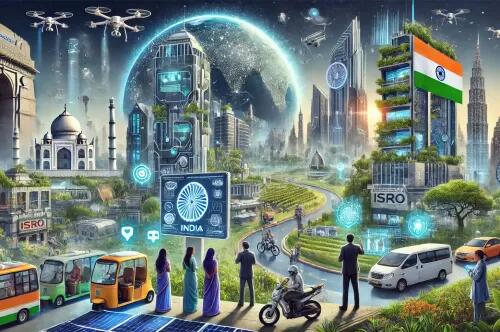
India’s rise stands apart from traditional empire-building for one fundamental reason: it is rooted not in expansion but in civilizational revival, economic strength, and cooperative diplomacy. India is not seeking territorial dominance or resource extraction; instead, it is building influence through technology, development partnerships, economic integration, and cultural outreach. Its strategy is anchored in strategic autonomy, avoiding military overextension while strengthening regional leadership through diplomacy, connectivity, and capacity-building. Internally, India is focusing on manufacturing revival, digital governance, infrastructure expansion, and a growing middle class—prioritising domestic strength before external ambition. Unlike Western empires, India promotes multipolarity and mutual growth, guided by the principle of Vasudhaiva Kutumbakam—seeing global engagement as co-development, not conquest. This civilizational approach gives India a structural advantage in avoiding the typical imperial trap.

Ensuring India Stays True to Vasudhaiva Kutumbakam

For India to avoid drifting into the classic cycle of empire-building and decline, its future strategy must remain anchored to restraint, balance, and long-term stability. India must first ensure that domestic capacity always exceeds ambition. Military expansion or diplomatic commitments should never outpace economic strength or administrative capability. Second, India must protect the integrity of its economy—focusing on manufacturing, technological self-reliance, stable currency management, and disciplined borrowing. Third, social cohesion must remain a national priority; economic inclusion, equal opportunity, and shared cultural identity are essential to prevent the internal fragmentation that destroys great powers. Fourth, India must continue building trust globally by acting as a predictable, cooperative partner rather than a coercive hegemon. Its strength must come from credibility, not compulsion. Finally, India must internalise that civilizational influence is more enduring than territorial dominance. If India stays aligned with Vasudhaiva Kutumbakam, rising as a facilitator rather than an empire, it can avoid the fate that befell past global powers.
Tags: #USAEUGlobal PowerIndiastabilitywestern Countries
ShareTweetSend
Previous Post

Association of Indian Universities Suspends Al Falah University’s Membership Over Alleged Links to Red Fort Blast

Next Post

How Identity Politics Backfired: Why the ‘Bhura Baal’ Legacy Is Haunting India’s Opposition in 2025

Related Posts

Can PM Modi’s Free Coaching Push Disrupt India’s Multi-Billion-Rupee Exam Economy?
Analysis

Can PM Modi’s Free Coaching Push Disrupt India’s Multi-Billion-Rupee Exam Economy?

15 August 2026

In India, cracking a government job or a major entrance examination is no longer just about studying hard and...

Unsung South Indian Freedom Fighters Remembered on 79th Independence Day
Analysis

Independence Day: Remembering South India’s Unsung Freedom Warriors

15 August 2026

India’s independence was won through the sacrifices of countless men and women, many of whom remain unknown to the...

The picture shows the CRPF’s Tiranga Yatra rally held at Dal Lake.
Analysis

Seven years since Article 370: what has changed in Jammu and Kashmir, and what has not

5 August 2026

Tuesday marks seven years since the Indian government revoked Jammu and Kashmir's special constitutional status under Article 370, splitting...

Load More

Leave a Reply Cancel reply

Your email address will not be published. Required fields are marked *

I agree to the Terms of use and Privacy Policy.
This site is protected by reCAPTCHA and the Google Privacy Policy and Terms of Service apply.

Currently Playing

India’s Fighter Force Needs More Than Jets | Here’s Why 150 Trainers Matter ? IAF | HAWK | HAL

India’s Fighter Force Needs More Than Jets | Here’s Why 150 Trainers Matter ? IAF | HAWK | HAL

00:04:44

RAW Chief’s Dhaka Visit: Is India Rebuilding Security Ties With Bangladesh? Reset or Routine?

00:03:30

Kargil From the Sky: Inside IAF’s Operation Safed Sagar

00:05:36

India Eyes Sixth-Generation Fighters: Why FCAS Matters Beyond AMCA

00:05:03

Beyond S-400: Why India's Indigenous Kusha Missile Could Change Air Defence

00:03:42
Facebook Twitter Instagram Youtube
tfipostTfipost.com
Right Wing | News Analysis | Indian Opinion
  • About us
  • Contact Us
  • Careers
  • Brand Partnerships
  • Terms of use
  • Privacy Policy
  • Sitemap

©2026 TFI Media Private Limited

No Result
View All Result
  • Premium
  • Politics
    • Analysis
    • Opinions
    • Trending
  • Economy
    • Business
    • Finance
  • Defense
    • Defence
    • Strategy
    • Weaponry
  • Geopolitics
    • Africa
    • Americas
    • Asia Pacific
    • Europe
    • South Asia
    • West Asia
  • Knowledge
    • Culture
    • History
    • Indology
  • Law
  • Lounge
    • Books
    • Cinema
    • Food
    • Health
    • Sports
    • technology
    • Travel
    • Satire
TFIPOST हिन्दी
TFIPOST Global

©2026 TFI Media Private Limited