




















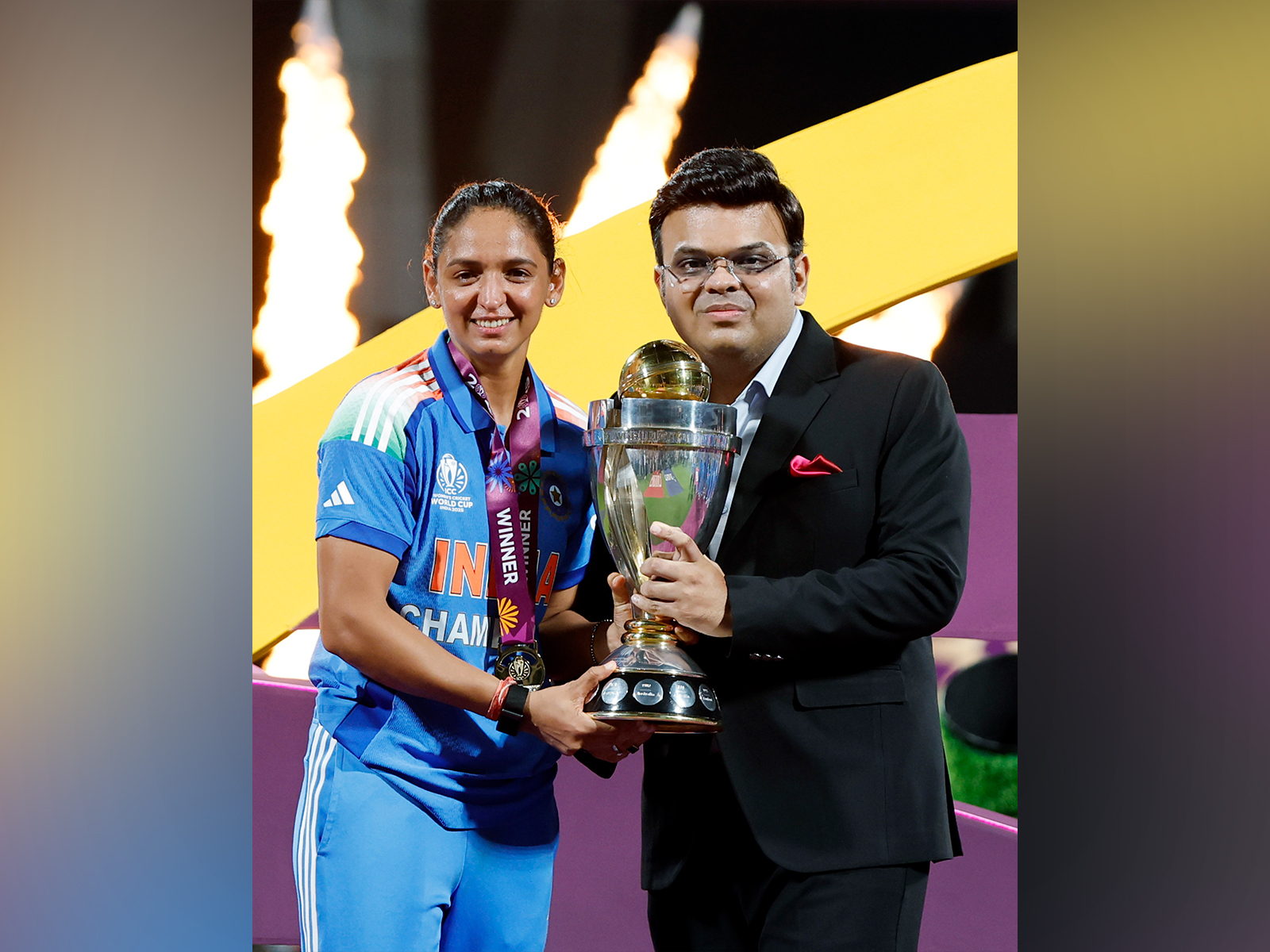
Over the past few years, the landscape of women’s cricket in India has transformed dramatically — and a major part of that change can be traced back to the administrative reforms driven by Jay Shah during his tenure as Secretary of the Board of Control for Cricket in India (BCCI) and now as Chair of the International Cricket Council (ICC). What once was a sport struggling for infrastructure and recognition is now making headlines — and these changes didn’t happen by accident: they were crafted, planned and executed.
From shadows to spotlight
For decades, Indian women’s cricket operated on the margins. Even with spirited performances, women players often lacked professional contracts, consistent fixtures and dedicated support structures. As one retrospective put it: “Until recently, women’s cricket in India lived in the shadows… The infrastructure was sparse, player contracts modest and domestic tournaments few.”
When Shah assumed administrative influence, that began to change. He and his team reframed women’s cricket not as a side-note but as a key pillar of Indian cricket’s growth strategy.
Key Reforms & Their Impact
Here are some of the major structural steps taken under Shah’s watch, and how they lifted the game:
- Pay equity in match-fees: In October 2022, the BCCI announced that women cricketers representing India would receive the same match-fees as their male counterparts (Test ₹15 lakh, ODI ₹6 lakh, T20 ₹3 lakh).
- This was a landmark move: “Pay equity was my commitment to our women cricketers.” said Shah.
- Launch of the Women’s Premier League (WPL): In early 2023, the BCCI under Shah announced and executed the franchising of India’s first major women’s domestic T20 league. The bidding crossed significant numbers, signalling commercial faith in women’s cricket. Shah called the WPL “going to revolutionise the way we look at women’s cricket.”
- Investment and infrastructure growth: It wasn’t just pay and leagues. Reports say investment in women’s cricket increased “16-fold” during his five-year stewardship, with improvements in grassroots pathways, under-19 tournaments, specialist coaching, and better travel/accommodation for players.
- Global-stage ambitions: When India won the inaugural Under-19 Women’s T20 World Cup in 2023, Shah announced a ₹5 crore reward for the team and staff — a signal of serious investment and recognition. Meanwhile as ICC Chair he declared that women’s cricket would be a “cornerstone” of his global growth strategy.
Results — and Mindset Shift
These reforms have translated into tangible outcomes. The elevated status of women’s cricket in India is now visible in multiple dimensions:
- The increased financial security and professionalisation mean women cricketers can now view the sport as a viable career, not just an amateur passion.
- With more competitive domestic leagues, better exposure and high-performance structures, the talent pool has deepened.
- Commercially and culturally, women’s cricket has begun to command mainstream respect and viewership. Former men’s great Sachin Tendulkar has specifically credited Shah’s role: “A lot of credit must go to Jay Shah … he laid the foundation for the WPL … these steps change lives.”
- Eliminating the pay-gap is more than financial: it sends a social and symbolic message about equality, value and opportunity.
- Finally — and perhaps most importantly — the recent success of the Indian women’s team has become a self-reinforcing cycle: better support leads to better performance, which in turn draws more attention, investment and inspiration for the next generation.
Why Shah’s timing and approach mattered
Some key contextual points that amplified the impact:
- Institutional readiness: The BCCI had the resources and organisational muscle. Shah’s administration managed to channel that into the women’s game in a structured way.
- Cultural moment: Globally, women’s sport was gaining traction. The idea of a professional league for women had precedent- though not always success- in other countries. India’s scale meant that when launched, the WPL had the potential to be transformational.
- Sustained rather than piecemeal change: The reforms were not one-off announcements. From pay equity, league creation, grassroots restructuring — there was a sequence of actions and follow-through.
- Performance delivering credibility: Good policies only count if they start producing on-field results. The success at youth and senior levels has given legitimacy to the structural changes.
Challenges that still remain
It would be inaccurate to say the job is done. Some of the outstanding issues:
- While the elite Indian women’s set-up has improved dramatically, many domestic women players at the state or local level still face limited annual contracts or inadequate exposure.
- The domestic pyramid is still narrower than some leading cricket nations; expanding it will be critical for long-term depth.
- The commercial viability of women’s leagues, long-term franchise sustainability and broadcast rights monetisation remain developmental.
- Ensuring that the progress for Indian women’s cricket also translates into broader benefits for global women’s cricket is a wider challenge for the ICC era, which Shah now influences.
The legacy underway
In sum, impact of Jay Shah on Indian women’s cricket is not just about one or two headline moves; it is a systemic shift. By redefining women’s cricket as integral (not peripheral), ensuring that economic, competitive and structural support matched the ambition, and aligning the groundwork with big-event success, the reform path has changed the game.
To quote former India captain Mithali Raj: “When Jay Shah was the BCCI Secretary … the BCCI introduced initiatives that changed the course of women’s cricket … from equal match fees and the WPL to a stronger domestic structure …”
Deccan Chronicle
If there was skepticism that women’s cricket could ever break through the men-dominated structures, the recent trajectory in India offers proof that it can — when backed by will, policy and institution. The story now is one of real momentum.
Final thought
Change is often incremental in sport, but occasionally there comes a pivot. The transformation of Indian women’s cricket through Jay Shah’s administrative leadership is arguably one such pivot. A combination of policy, funding, opportunity and recognition has opened doors. For every young girl picking up a bat now, the message is clearer: this isn’t just possible — it’s supported. And that is perhaps the most lasting change of all.