



















TFIPOST हिन्दी
TFIPOST Global
Tfipost.com
Tfipost.com
No Result
View All Result
  • Premium
  • Politics
    • All
    • Analysis
    • Opinions
    • Trending
    India Witnesses Resurgence of Islamist Terrorism: Renewed Crackdown in Kashmir Signals Return of Old Threats

    India Witnesses Resurgence of Islamist Terrorism: Renewed Crackdown in Kashmir Signals Return of Old Threats

    When Faith Turns to Fury: How Islam’s Violent Defiance of Law Replays Itself in Somnath’s Streets

    When Faith Turns to Fury: How Islam’s Violent Defiance of Law Replays Itself in Somnath’s Streets

    “India stopped doing it”: Trump Signals Tariff Cut for India, Claims New Delhi Has “Stopped Doing the Russian Oil” as Trade Talks Advance

    Islamabad Blast: Diversion Tactic or Genuine Terror Attack?

    Islamabad Blast: Diversion Tactic or Genuine Terror Attack?

    • Analysis
    • Opinions
    • Trending
  • Economy
    • All
    • Business
    • Economy1
    • Finance
    Why NISM Mock Test is Essential for Clearing Certification Exams

    Why NISM Mock Test is Essential for Clearing Certification Exams

    India-EU Free Trade Talks Enter Final Phase: How A New Economic Front Is Emerging Amid US Tariffs?

    India-EU Free Trade Talks Enter Final Phase: How A New Economic Front Is Emerging Amid US Tariffs?

    Durability Meets Design: Why Architects Prefer Godrej Enterprises Glass Patch Fittings?

    Durability Meets Design: Why Architects Prefer Godrej Enterprises Glass Patch Fittings?

    Sign up and get a $500 bonus | Open Miner cloud mining helps you easily earn daily crypto income

    Sign up and get a $500 bonus | Open Miner cloud mining helps you easily earn daily crypto income

    • Business
    • Finance
  • Defense
    • All
    • Defence
    • Strategy
    • Weaponry
    Why AH-64 Apaches Made a Mysterious Return To U.S. On Their Delivery Flight To India?

    Why AH-64 Apaches Made a Mysterious Return To U.S. On Their Delivery Flight To India?

    India – Armenia Defence Pact Set to Transform South Caucasus Security Equation

    India – Armenia Defence Pact Set to Transform South Caucasus Security Equation

    Why India’s $1 Billion Deal with General Electric for Tejas Engines Is a Boost to Indigenous Fighter Fleet

    Why India’s $1 Billion Deal with General Electric for Tejas Engines Is a Boost to Indigenous Fighter Fleet

    How the New Military Garrisons Fortifying ‘Chicken Neck’ Will Mark a Turning Point in India’s Eastern Frontier Border Defence

    How the New Military Garrisons Fortifying ‘Chicken Neck’ Will Mark a Turning Point in India’s Eastern Frontier Border Defence

    • Defence
    • Strategy
    • Weaponry
  • Geopolitics
    • All
    • Africa
    • Americas
    • Asia Pacific
    • Europe
    • South Asia
    • West Asia

    “India stopped doing it”: Trump Signals Tariff Cut for India, Claims New Delhi Has “Stopped Doing the Russian Oil” as Trade Talks Advance

    Khawaja Asif’s War Threat on Afghan, Forgets That Pakistan’s Own Snakes Are Biting Back: How Islamabad’s Double Game Has Come Home To Haunt It

    Khawaja Asif’s War Threat on Afghan, Forgets That Pakistan’s Own Snakes Are Biting Back: How Islamabad’s Double Game Has Come Home To Haunt It

    Women Under Control: The Gendered Face of Uyghur Repression

    Women Under Control: The Gendered Face of Uyghur Repression

    PM Modi’s Bhutan Visit: How is This Spiritually and Culturally Significant?

    PM Modi’s Bhutan Visit: How is This Spiritually and Culturally Significant?

    • Africa
    • Americas
    • Asia Pacific
    • Europe
    • South Asia
    • West Asia
  • Knowledge
    • All
    • Culture
    • Education
    • History
    • Indology
    How Did The Armistice End The First World War and Treaty of Versailles set the stage for World War 2?

    How Did The Armistice End The First World War and Treaty of Versailles set the stage for World War 2?

    Swiss International University Expands Student Opportunities with Global Corporate Partnerships

    Swiss International University Expands Student Opportunities with Global Corporate Partnerships

    From Indian Laboratory to Martian Landscapes: How Sir C.V. Raman Has Given A Timeless Legacy For The World

    From Indian Laboratory to Martian Landscapes: How Sir C.V. Raman Has Given A Timeless Legacy For The World

    The Incident That Led To The Creation of National Song: How Bankim Chandra’s Pain Created ‘Vande Mataram’

    The Incident That Led To The Creation of National Song: How Bankim Chandra’s Pain Created ‘Vande Mataram’

    • Culture
    • History
    • Indology
  • Law
  • Lounge
    • All
    • Books
    • Cinema
    • Entertainment
    • Food
    • Games
    • Health
    • Lifestyle
    • Satire
    • Sports
    • technology
    • Travel
    How AI in Test Management Could Change the Way We Trust Software

    How AI in Test Management Could Change the Way We Trust Software

    The Hidden Power of ‘How-To’ Guides in India’s Digital Entertainment Scene

    The Hidden Power of ‘How-To’ Guides in India’s Digital Entertainment Scene

    How India’s Card-Game Tradition Moved Online

    How India’s Card-Game Tradition Moved Online

    Differences Between 888Starz Mobile App and Website

    Differences Between 888Starz Mobile App and Website

    • Books
    • Cinema
    • Food
    • Health
    • Sports
    • technology
    • Travel
    • Satire
Tfipost.com
  • Premium
  • Politics
    • All
    • Analysis
    • Opinions
    • Trending
    India Witnesses Resurgence of Islamist Terrorism: Renewed Crackdown in Kashmir Signals Return of Old Threats

    India Witnesses Resurgence of Islamist Terrorism: Renewed Crackdown in Kashmir Signals Return of Old Threats

    When Faith Turns to Fury: How Islam’s Violent Defiance of Law Replays Itself in Somnath’s Streets

    When Faith Turns to Fury: How Islam’s Violent Defiance of Law Replays Itself in Somnath’s Streets

    “India stopped doing it”: Trump Signals Tariff Cut for India, Claims New Delhi Has “Stopped Doing the Russian Oil” as Trade Talks Advance

    Islamabad Blast: Diversion Tactic or Genuine Terror Attack?

    Islamabad Blast: Diversion Tactic or Genuine Terror Attack?

    • Analysis
    • Opinions
    • Trending
  • Economy
    • All
    • Business
    • Economy1
    • Finance
    Why NISM Mock Test is Essential for Clearing Certification Exams

    Why NISM Mock Test is Essential for Clearing Certification Exams

    India-EU Free Trade Talks Enter Final Phase: How A New Economic Front Is Emerging Amid US Tariffs?

    India-EU Free Trade Talks Enter Final Phase: How A New Economic Front Is Emerging Amid US Tariffs?

    Durability Meets Design: Why Architects Prefer Godrej Enterprises Glass Patch Fittings?

    Durability Meets Design: Why Architects Prefer Godrej Enterprises Glass Patch Fittings?

    Sign up and get a $500 bonus | Open Miner cloud mining helps you easily earn daily crypto income

    Sign up and get a $500 bonus | Open Miner cloud mining helps you easily earn daily crypto income

    • Business
    • Finance
  • Defense
    • All
    • Defence
    • Strategy
    • Weaponry
    Why AH-64 Apaches Made a Mysterious Return To U.S. On Their Delivery Flight To India?

    Why AH-64 Apaches Made a Mysterious Return To U.S. On Their Delivery Flight To India?

    India – Armenia Defence Pact Set to Transform South Caucasus Security Equation

    India – Armenia Defence Pact Set to Transform South Caucasus Security Equation

    Why India’s $1 Billion Deal with General Electric for Tejas Engines Is a Boost to Indigenous Fighter Fleet

    Why India’s $1 Billion Deal with General Electric for Tejas Engines Is a Boost to Indigenous Fighter Fleet

    How the New Military Garrisons Fortifying ‘Chicken Neck’ Will Mark a Turning Point in India’s Eastern Frontier Border Defence

    How the New Military Garrisons Fortifying ‘Chicken Neck’ Will Mark a Turning Point in India’s Eastern Frontier Border Defence

    • Defence
    • Strategy
    • Weaponry
  • Geopolitics
    • All
    • Africa
    • Americas
    • Asia Pacific
    • Europe
    • South Asia
    • West Asia

    “India stopped doing it”: Trump Signals Tariff Cut for India, Claims New Delhi Has “Stopped Doing the Russian Oil” as Trade Talks Advance

    Khawaja Asif’s War Threat on Afghan, Forgets That Pakistan’s Own Snakes Are Biting Back: How Islamabad’s Double Game Has Come Home To Haunt It

    Khawaja Asif’s War Threat on Afghan, Forgets That Pakistan’s Own Snakes Are Biting Back: How Islamabad’s Double Game Has Come Home To Haunt It

    Women Under Control: The Gendered Face of Uyghur Repression

    Women Under Control: The Gendered Face of Uyghur Repression

    PM Modi’s Bhutan Visit: How is This Spiritually and Culturally Significant?

    PM Modi’s Bhutan Visit: How is This Spiritually and Culturally Significant?

    • Africa
    • Americas
    • Asia Pacific
    • Europe
    • South Asia
    • West Asia
  • Knowledge
    • All
    • Culture
    • Education
    • History
    • Indology
    How Did The Armistice End The First World War and Treaty of Versailles set the stage for World War 2?

    How Did The Armistice End The First World War and Treaty of Versailles set the stage for World War 2?

    Swiss International University Expands Student Opportunities with Global Corporate Partnerships

    Swiss International University Expands Student Opportunities with Global Corporate Partnerships

    From Indian Laboratory to Martian Landscapes: How Sir C.V. Raman Has Given A Timeless Legacy For The World

    From Indian Laboratory to Martian Landscapes: How Sir C.V. Raman Has Given A Timeless Legacy For The World

    The Incident That Led To The Creation of National Song: How Bankim Chandra’s Pain Created ‘Vande Mataram’

    The Incident That Led To The Creation of National Song: How Bankim Chandra’s Pain Created ‘Vande Mataram’

    • Culture
    • History
    • Indology
  • Law
  • Lounge
    • All
    • Books
    • Cinema
    • Entertainment
    • Food
    • Games
    • Health
    • Lifestyle
    • Satire
    • Sports
    • technology
    • Travel
    How AI in Test Management Could Change the Way We Trust Software

    How AI in Test Management Could Change the Way We Trust Software

    The Hidden Power of ‘How-To’ Guides in India’s Digital Entertainment Scene

    The Hidden Power of ‘How-To’ Guides in India’s Digital Entertainment Scene

    How India’s Card-Game Tradition Moved Online

    How India’s Card-Game Tradition Moved Online

    Differences Between 888Starz Mobile App and Website

    Differences Between 888Starz Mobile App and Website

    • Books
    • Cinema
    • Food
    • Health
    • Sports
    • technology
    • Travel
    • Satire
No Result
View All Result
Tfipost.com
Tfipost.com
No Result
View All Result
  • Premium
  • Politics
  • Economy
  • Defense
  • Geopolitics
  • Knowledge
  • Law
  • Lounge

Trump’s 100% Tariffs on China : Why This Is Seen as The Beginning of A New Cold War?

TFI Desk by TFI Desk
11 October 2025
in Analysis
Trump’s 100% Tariffs on China : Why This Is Seen as The Beginning of A New Cold War?
Share on FacebookShare on X

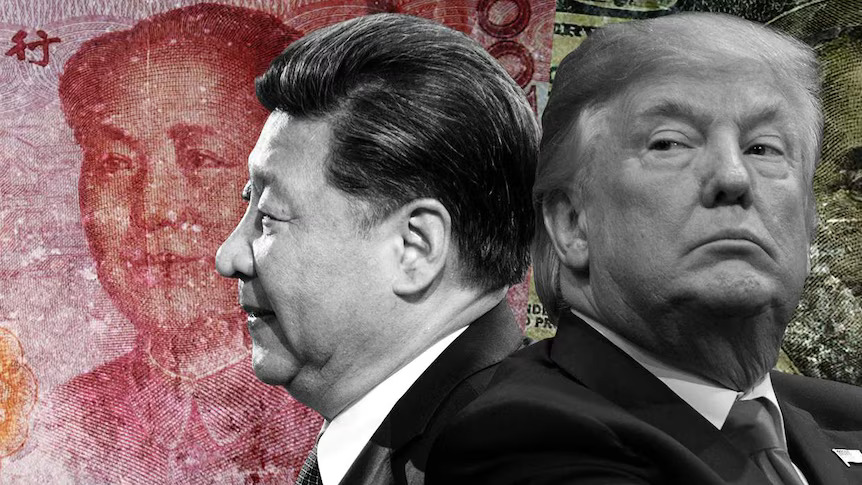
In a move that has reignited one of the most contentious economic rivalries of the century, US President Donald Trump has announced a sweeping 100 percent tariff on Chinese imports, while also threatening to cancel his scheduled meeting with Chinese President Xi Jinping at the upcoming APEC summit in South Korea. The decision marks the most dramatic escalation yet in Trump’s renewed trade confrontation with Beijing, driven by growing U.S. concerns over China’s tightening grip on rare earth mineral exports materials critical to everything from semiconductors to fighter jet engines. Trump’s declaration came through a post on his social media platform, Truth Social, where he accused China of “holding the world captive” through aggressive export controls. He described the new restrictions as “sinister” and “hostile,” suggesting that Beijing’s moves were deliberately aimed at undermining global manufacturing supply chains. “It is impossible to believe that China would have taken such an action, but they have, and the rest is history,” Trump wrote, vowing to respond with a “massive increase” in tariffs and a range of countermeasures.

The tariffs, which come into effect from November 1, will be coupled with new U.S. export controls on critical software used in technology and defense applications. The announcement immediately rattled global markets with the Nasdaq dropping 3.6 percent and the S&P 500 sliding 2.7 percent reflecting investor anxiety over the revival of a full-scale U.S.-China trade war that could destabilize global supply chains and energy markets once again.

RelatedPosts

“India stopped doing it”: Trump Signals Tariff Cut for India, Claims New Delhi Has “Stopped Doing the Russian Oil” as Trade Talks Advance

Women Under Control: The Gendered Face of Uyghur Repression

The Law as a Cage: China’s Administrative Detention and the Erosion of Assembly Rights

Load More

China’s Rare Earth Monopoly and the Strategic Leverage

China’s influence over rare earth elements has long been a source of geopolitical tension. These 17 metallic elements, indispensable to the production of electric vehicles, smartphones, lasers, missiles, wind turbines, and semiconductors, give Beijing a strategic tool that few nations can match. The U.S. and its allies depend heavily on Chinese exports of these minerals with China controlling roughly 70 percent of global mining and over 90 percent of magnet production capacity.

This dominance allows Beijing to exert significant leverage in trade negotiations. When the Chinese Ministry of Commerce announced on October 9 that it was expanding export restrictions to include five additional rare earth elements, the move was widely interpreted as a direct response to U.S. tariffs and tech sanctions. The new curbs also targeted foreign companies using Chinese refining or recycling technologies, effectively preventing defense-linked firms from routine access to essential materials.

In its statement, Beijing justified the restrictions as necessary for “national security,” but the timing just weeks before the planned Trump-Xi summit sent a clear political message. The Chinese announcement also introduced a licensing regime requiring exporters to seek approval for any product containing rare earths valued above 0.1 percent of the total good, adding another bureaucratic choke point to an already strained supply chain.

By tightening control over this critical sector, China signaled that it was willing to weaponize its industrial advantage at a time when Washington is striving to rebuild its domestic capacity in critical minerals.

The U.S. Response: Economic Retaliation and Strategic Realignment

US President Donald Trump’s reaction was immediate and characteristically forceful. Calling China’s decision “an act of trade hostility,” he declared that the U.S. would respond with “a financial counterstrike.” Trump announced that his administration was preparing a new tariff package, potentially doubling existing rates on over $400 billion worth of Chinese goods with specific focus on sectors linked to electronics, electric vehicles, and defense technologies.

He further revealed that the U.S. was considering additional countermeasures, including restrictions on Chinese companies operating within American markets and further curbs on high-end software exports to Chinese industries. “There is no way that China should be allowed to hold the world captive,” Trump wrote. “For every element that they have monopolized, we have two.”

The statement came as part of a broader policy shift that began in April under Trump’s universal 10 percent tariff regime, enacted under the International Emergency Economic Powers Act (IEEPA). Initially justified as a means of addressing “non-reciprocal trade deficits,” the policy has evolved into a comprehensive reconfiguration of U.S. trade relations, targeting even long-standing partners like India, the EU, and Canada.

The cumulative result has been a global tariff environment not seen since the early 1930s one that Trump argues is necessary to “restore American fairness” but that critics warn could fragment international trade systems beyond repair.

Rare Earths: The New Battleground for Global Technology Dominance

The confrontation over rare earth elements represents more than a trade dispute; it is a struggle for technological supremacy. These minerals are critical to the defense and renewable energy sectors, forming the backbone of modern innovation. From stealth aircrafts and precision-guided munitions to AI processors and EV batteries, rare earths are the hidden engines of 21st-century power.

By moving to restrict exports, Beijing is signaling a readiness to use its resource dominance as leverage in negotiations, potentially choking the flow of essential materials to Western manufacturers. Analysts say this could severely affect global production chains, particularly in sectors like electric mobility and microelectronics, where alternative sources remain limited.

In Washington, this has triggered a renewed sense of urgency. The U.S. Department of Defense, anticipating this risk, struck a strategic deal in July with MP Materials, the largest rare earth miner in the United States, to accelerate domestic processing capabilities. Still, the U.S. remains dependent on China for many downstream products such as magnets and refined alloys, which require technologies and facilities that have yet to be fully developed in America.

The European Union and Japan face similar vulnerabilities, with both regions heavily reliant on Chinese exports to sustain their green and defense industries. The European Union Chamber of Commerce in China recently warned that Beijing’s new export measures “add further complexity” to an already fragile global supply chain, calling for coordinated international diversification efforts.

Markets React and Geopolitical Ripples Spread

The announcement from both Washington and Beijing sent shockwaves across global markets. Shares of U.S. rare earth miners like MP Materials surged by over 8 percent, while USA Rare Earth and Energy Fuels rose more than 5 percent each. The sudden uptick reflected investor expectations of a U.S. policy shift toward greater self-reliance in critical minerals, as well as speculative momentum in anticipation of future government incentives.

Conversely, broader equity markets tumbled amid fears of prolonged trade instability. Tech and manufacturing giants reliant on Chinese supply chains including major chipmakers and EV manufacturers saw their stocks fall sharply. Analysts caution that if the tariff escalation continues into early 2026, it could have a ripple effect across industries, raising consumer prices and slowing down innovation cycles globally.

Geopolitically, the confrontation has implications far beyond trade. The U.S.-China standoff is reshaping global alignments, with middle powers such as India, Australia, and Vietnam emerging as potential beneficiaries of Western supply chain diversification efforts. India, in particular, has been positioning itself as an alternative hub for rare earth processing under its Critical Minerals Mission, with growing collaboration from the United States, Japan, and the European Union.

At the same time, China’s tightening of export controls could push developing nations further into its orbit, as Beijing continues to fund resource extraction projects in Africa and Latin America, expanding its influence through infrastructure and mining investments.

Diplomatic Fallout: The APEC Summit in Jeopardy

Perhaps the most immediate political casualty of this trade escalation is the planned meeting between US President Donald Trump and President Xi Jinping at the Asia-Pacific Economic Cooperation (APEC) summit in Seoul. Trump has publicly questioned “whether there’s any reason” to meet Xi following the rare earth export announcement, calling the move “an open act of aggression.”

The summit, which was expected to focus on post-pandemic trade recovery and digital economy cooperation, now risks being overshadowed by escalating tensions. Diplomatic insiders say that both sides have kept communication channels open, but that Beijing’s response so far has been muted, reflecting a cautious strategy to avoid immediate escalation while retaining leverage for future negotiations.

Adding to the complexity, Trump hinted that the timing of China’s move coinciding with a ceasefire announcement in Gaza may not be coincidental, suggesting Beijing sought to “divert global attention” from his diplomatic success in the Middle East. While no evidence supports this claim, it underscores the broader geo-strategic lens through which Washington views Chinese actions: as part of a larger contest for influence across multiple regions, from West Asia to the Pacific.

The Global Stakes: Supply Chains, Security, and Strategic Autonomy

Beyond the immediate tariff war, the implications of this conflict reach into the heart of global security and economic sovereignty. As nations race to secure access to critical minerals, the rare earth standoff could redefine alliances and reshape trade architecture for decades.

For the U.S., this confrontation is about reducing dependency and protecting the technological foundations of its defense and industrial base. For China, it is about asserting its strategic leverage and deterring what it perceives as containment policies led by Washington. Both sides appear unwilling to back down, and their contest is increasingly spilling into arenas like AI regulation, maritime security, and energy transition technologies.

The broader question for the world’s economies is whether they can adapt to a fractured trade landscape where supply chains are driven less by efficiency and more by strategic alignment. The battle over rare earths may thus represent not just a trade dispute, but the first phase of a deeper economic realignment one where resilience replaces interdependence as the new global paradigm.

The latest escalation between US President Donald Trump and China marks more than a temporary policy clash it symbolizes the start of a new era in global trade politics, one defined by competition for control over the fundamental materials that power modern civilization. Trump’s decision to impose 100 percent tariffs underscores a broader American strategy to reclaim manufacturing independence, while China’s rare earth export controls reveal how resource dominance can be transformed into geopolitical leverage.

As both powers harden their economic positions, the world stands at the edge of a new trade cold war one fought not with armies or missiles, but through minerals, tariffs, and technology. Whether the outcome leads to a more resilient global order or deeper fragmentation will depend on how nations navigate the narrow path between economic sovereignty and cooperative stability.

For now, the message from Washington and Beijing is unmistakable: the age of economic interdependence has ended, and the battle for strategic autonomy has begun.

Tags: ChinaChina Xi JinpingDonald TrumpRare Earth Mineralstrade warus presidentUS-China rivalry
ShareTweetSend
Previous Post

From Gold Loot To Illegal Constructions & Temple Misuse Now Madras HC Acts Against DMK Government

Next Post

From Campus to Country: 1,000 Workshops Planned to Boost Youth Support for the Army and Defence Awareness

Related Posts

Khawaja Asif’s War Threat on Afghan, Forgets That Pakistan’s Own Snakes Are Biting Back: How Islamabad’s Double Game Has Come Home To Haunt It
Analysis

Khawaja Asif’s War Threat on Afghan, Forgets That Pakistan’s Own Snakes Are Biting Back: How Islamabad’s Double Game Has Come Home To Haunt It

12 November 2025

Pakistan Defence Minister Khawaja Asif’s latest outburst against Afghanistan and India once again exposes Islamabad’s long history of denial,...

Women Under Control: The Gendered Face of Uyghur Repression
Analysis

Women Under Control: The Gendered Face of Uyghur Repression

12 November 2025

In Xinjiang, the Chinese state has built a system that polices women’s bodies as tightly as it monitors their...

Chhattogram’s Looming Crisis: ISI and ARSA’s Covert Operations for Territorial Control
Analysis

Chhattogram’s Looming Crisis: ISI and ARSA’s Covert Operations for Territorial Control

11 November 2025

The Inter-Services Intelligence (ISI) of Pakistan is reportedly deepening its nexus with the Arakan Rohingya Salvation Army (ARSA) and...

Load More

Leave a Reply Cancel reply

Your email address will not be published. Required fields are marked *

I agree to the Terms of use and Privacy Policy.
This site is protected by reCAPTCHA and the Google Privacy Policy and Terms of Service apply.

Currently Playing

Why AH-64 Apaches Made a Mysterious Return To U.S. On Their Delivery Flight To India?

Why AH-64 Apaches Made a Mysterious Return To U.S. On Their Delivery Flight To India?

00:06:07

‘White Collar Terror’: Is The 0.5 Front Within The Country Activated?

00:10:07

Why India’s “Chicken’s Neck” Defence Strategy Is a Warning to Dhaka & Islamabad

00:06:48

How Trump’s Numbers Reveal the Hidden Story of Pakistan’s Lost Jets?

00:05:17

How an Unverified US Shoplifting Incident Is Turned Into A Political Attack Against India & Modi

00:07:47
Facebook Twitter Instagram Youtube
tfipostTfipost.com
Right Wing | News Analysis | Indian Opinion
  • About us
  • Contact Us
  • Careers
  • Brand Partnerships
  • Terms of use
  • Privacy Policy
  • Sitemap

©2025 TFI Media Private Limited

No Result
View All Result
  • Premium
  • Politics
    • Analysis
    • Opinions
    • Trending
  • Economy
    • Business
    • Finance
  • Defense
    • Defence
    • Strategy
    • Weaponry
  • Geopolitics
    • Africa
    • Americas
    • Asia Pacific
    • Europe
    • South Asia
    • West Asia
  • Knowledge
    • Culture
    • History
    • Indology
  • Law
  • Lounge
    • Books
    • Cinema
    • Food
    • Health
    • Sports
    • technology
    • Travel
    • Satire
TFIPOST हिन्दी
TFIPOST Global

©2025 TFI Media Private Limited