













TFIPOST हिन्दी
TFIPOST Global
Tfipost.com
Tfipost.com
No Result
View All Result
  • Premium
  • Politics
    • All
    • Analysis
    • Opinions
    • Trending
    Gujarat ATS arrests two in radicalisation case

    Gujarat ATS Busts Online Radical Network Linked to ‘Ghazwa-e-Hind’, Two Arrested

    Char Dham Yatra 2026: Lord Kedar’s Portals to Reopen Tomorrow as Himalayan Peaks Resound with ‘Har Har Mahadev’

    Char Dham Yatra 2026: Lord Kedar’s Portals to Reopen Tomorrow as Himalayan Peaks Resound with ‘Har Har Mahadev’

    The Fuel Miracle: How India Frozen Petrol Prices Amidst a Global Inferno

    The Fuel Miracle: How India Frozen Petrol Prices Amidst a Global Inferno

    Port Under Siege: Gwadar Faces Threats from All Sides

    Port Under Siege: Gwadar Faces Threats from All Sides

    • Analysis
    • Opinions
    • Trending
  • Economy
    • All
    • Business
    • Economy1
    • Finance
    The Fuel Miracle: How India Frozen Petrol Prices Amidst a Global Inferno

    The Fuel Miracle: How India Frozen Petrol Prices Amidst a Global Inferno

    From Sapta Sindhu to Statecraft: Inaugural ‘Sindhu Samvad’ Links Indus Past with Policy Present

    From Sapta Sindhu to Statecraft: Inaugural ‘Sindhu Samvad’ Links Indus Past with Policy Present

    The beginner’s guide to tracking silver rates in India

    The beginner’s guide to tracking silver rates in India

    “I Was Honking”: BJP MLA’s Son Rams Thar Into 5 in MP’s Shivpuri; Victims Allege Threats Following Crash

    “I Was Honking”: BJP MLA’s Son Rams Thar Into 5 in MP’s Shivpuri; Victims Allege Threats Following Crash

    • Business
    • Finance
  • Defense
    • All
    • Defence
    • Strategy
    • Weaponry
    Precision Strike: Indian Army Approves Procurement of Indigenous MPATGM to Modernise Infantry Wings

    Precision Strike: Indian Army Approves Procurement of Indigenous MPATGM to Modernise Infantry Wings

    Amit Shah on sensitive Gorkha land issue

    Shah Assures Constitutional Path for Gorkha Issue, Intensifies Attack on TMC at Bengal Rally

    Historic Leap for ‘Aatmanirbhar Bharat’ as First India-Made BrahMos Missiles from Lucknow Join Indian Army

    Historic Leap for ‘Aatmanirbhar Bharat’ as First India-Made BrahMos Missiles from Lucknow Join Indian Army

    Historic Leap for ‘Aatmanirbhar Bharat’ as First India-Made BrahMos Missiles from Lucknow Join Indian Army

    The Lion of Ladakh: Kargil War Hero Colonel Sonam Wangchuk and the Brotherhood of Soldiers

    • Defence
    • Strategy
    • Weaponry
  • Geopolitics
    • All
    • Africa
    • Americas
    • Asia Pacific
    • Europe
    • South Asia
    • West Asia
    The Fuel Miracle: How India Frozen Petrol Prices Amidst a Global Inferno

    The Fuel Miracle: How India Frozen Petrol Prices Amidst a Global Inferno

    Port Under Siege: Gwadar Faces Threats from All Sides

    Port Under Siege: Gwadar Faces Threats from All Sides

    Modi, Lee Jae Myung hold talks to reset India–South Korea economic ties

    India–South Korea Agree to $50 Billion Trade Target in Major Economic Upgrade

    Doval in Riyadh, reinforcing India’s strategic stakes in West Asia

    Ajit Doval Engages Saudi Leadership in Riyadh as India Strengthens Strategic and Energy Ties

    • Africa
    • Americas
    • Asia Pacific
    • Europe
    • South Asia
    • West Asia
  • Knowledge
    • All
    • Culture
    • Education
    • History
    • Indology
    Char Dham Yatra 2026: Lord Kedar’s Portals to Reopen Tomorrow as Himalayan Peaks Resound with ‘Har Har Mahadev’

    Char Dham Yatra 2026: Lord Kedar’s Portals to Reopen Tomorrow as Himalayan Peaks Resound with ‘Har Har Mahadev’

    Sardar Patel and Amit Shah

    Sardar Patel’s 1947 Blueprint on Minority Quotas Resurfaces as Reservation Debate Returns to Centre Stage

    The 1973 Constitution and ‘Bhutto’ the Man Who Made It: What Pakistan Owes and What It Destroyed

    The 1973 Constitution and ‘Bhutto’ the Man Who Made It: What Pakistan Owes and What It Destroyed

    Future-Ready Learning: CBSE Launches AI Curriculum for Classes 3–8 to Boost Digital Readiness in Young Learners

    Future-Ready Learning: CBSE Launches AI Curriculum for Classes 3–8 to Boost Digital Readiness in Young Learners

    • Culture
    • History
    • Indology
  • Law
  • Lounge
    • All
    • Books
    • Cinema
    • Entertainment
    • Food
    • Games
    • Health
    • Lifestyle
    • Satire
    • Sports
    • technology
    • Travel
    AI in healthcare

    AI is Recasting Healthcare, Reshaping How Medicine is Practised

    Delhi-Dehradun Expressway

    Modi Launches ₹12,000-Crore Delhi–Dehradun Expressway, Cutting Journey Time to Around 2.5 Hours

    Asha Bhosle last rites

    India Bids Farewell to Asha Bhosle: State Honours Mark Final Journey of a Musical Legend

    Can Gym-Goers Start Calisthenics Easily? Here’s What to Know

    Can Gym-Goers Start Calisthenics Easily? Here’s What to Know

    • Books
    • Cinema
    • Food
    • Health
    • Sports
    • technology
    • Travel
    • Satire
Tfipost.com
  • Premium
  • Politics
    • All
    • Analysis
    • Opinions
    • Trending
    Gujarat ATS arrests two in radicalisation case

    Gujarat ATS Busts Online Radical Network Linked to ‘Ghazwa-e-Hind’, Two Arrested

    Char Dham Yatra 2026: Lord Kedar’s Portals to Reopen Tomorrow as Himalayan Peaks Resound with ‘Har Har Mahadev’

    Char Dham Yatra 2026: Lord Kedar’s Portals to Reopen Tomorrow as Himalayan Peaks Resound with ‘Har Har Mahadev’

    The Fuel Miracle: How India Frozen Petrol Prices Amidst a Global Inferno

    The Fuel Miracle: How India Frozen Petrol Prices Amidst a Global Inferno

    Port Under Siege: Gwadar Faces Threats from All Sides

    Port Under Siege: Gwadar Faces Threats from All Sides

    • Analysis
    • Opinions
    • Trending
  • Economy
    • All
    • Business
    • Economy1
    • Finance
    The Fuel Miracle: How India Frozen Petrol Prices Amidst a Global Inferno

    The Fuel Miracle: How India Frozen Petrol Prices Amidst a Global Inferno

    From Sapta Sindhu to Statecraft: Inaugural ‘Sindhu Samvad’ Links Indus Past with Policy Present

    From Sapta Sindhu to Statecraft: Inaugural ‘Sindhu Samvad’ Links Indus Past with Policy Present

    The beginner’s guide to tracking silver rates in India

    The beginner’s guide to tracking silver rates in India

    “I Was Honking”: BJP MLA’s Son Rams Thar Into 5 in MP’s Shivpuri; Victims Allege Threats Following Crash

    “I Was Honking”: BJP MLA’s Son Rams Thar Into 5 in MP’s Shivpuri; Victims Allege Threats Following Crash

    • Business
    • Finance
  • Defense
    • All
    • Defence
    • Strategy
    • Weaponry
    Precision Strike: Indian Army Approves Procurement of Indigenous MPATGM to Modernise Infantry Wings

    Precision Strike: Indian Army Approves Procurement of Indigenous MPATGM to Modernise Infantry Wings

    Amit Shah on sensitive Gorkha land issue

    Shah Assures Constitutional Path for Gorkha Issue, Intensifies Attack on TMC at Bengal Rally

    Historic Leap for ‘Aatmanirbhar Bharat’ as First India-Made BrahMos Missiles from Lucknow Join Indian Army

    Historic Leap for ‘Aatmanirbhar Bharat’ as First India-Made BrahMos Missiles from Lucknow Join Indian Army

    Historic Leap for ‘Aatmanirbhar Bharat’ as First India-Made BrahMos Missiles from Lucknow Join Indian Army

    The Lion of Ladakh: Kargil War Hero Colonel Sonam Wangchuk and the Brotherhood of Soldiers

    • Defence
    • Strategy
    • Weaponry
  • Geopolitics
    • All
    • Africa
    • Americas
    • Asia Pacific
    • Europe
    • South Asia
    • West Asia
    The Fuel Miracle: How India Frozen Petrol Prices Amidst a Global Inferno

    The Fuel Miracle: How India Frozen Petrol Prices Amidst a Global Inferno

    Port Under Siege: Gwadar Faces Threats from All Sides

    Port Under Siege: Gwadar Faces Threats from All Sides

    Modi, Lee Jae Myung hold talks to reset India–South Korea economic ties

    India–South Korea Agree to $50 Billion Trade Target in Major Economic Upgrade

    Doval in Riyadh, reinforcing India’s strategic stakes in West Asia

    Ajit Doval Engages Saudi Leadership in Riyadh as India Strengthens Strategic and Energy Ties

    • Africa
    • Americas
    • Asia Pacific
    • Europe
    • South Asia
    • West Asia
  • Knowledge
    • All
    • Culture
    • Education
    • History
    • Indology
    Char Dham Yatra 2026: Lord Kedar’s Portals to Reopen Tomorrow as Himalayan Peaks Resound with ‘Har Har Mahadev’

    Char Dham Yatra 2026: Lord Kedar’s Portals to Reopen Tomorrow as Himalayan Peaks Resound with ‘Har Har Mahadev’

    Sardar Patel and Amit Shah

    Sardar Patel’s 1947 Blueprint on Minority Quotas Resurfaces as Reservation Debate Returns to Centre Stage

    The 1973 Constitution and ‘Bhutto’ the Man Who Made It: What Pakistan Owes and What It Destroyed

    The 1973 Constitution and ‘Bhutto’ the Man Who Made It: What Pakistan Owes and What It Destroyed

    Future-Ready Learning: CBSE Launches AI Curriculum for Classes 3–8 to Boost Digital Readiness in Young Learners

    Future-Ready Learning: CBSE Launches AI Curriculum for Classes 3–8 to Boost Digital Readiness in Young Learners

    • Culture
    • History
    • Indology
  • Law
  • Lounge
    • All
    • Books
    • Cinema
    • Entertainment
    • Food
    • Games
    • Health
    • Lifestyle
    • Satire
    • Sports
    • technology
    • Travel
    AI in healthcare

    AI is Recasting Healthcare, Reshaping How Medicine is Practised

    Delhi-Dehradun Expressway

    Modi Launches ₹12,000-Crore Delhi–Dehradun Expressway, Cutting Journey Time to Around 2.5 Hours

    Asha Bhosle last rites

    India Bids Farewell to Asha Bhosle: State Honours Mark Final Journey of a Musical Legend

    Can Gym-Goers Start Calisthenics Easily? Here’s What to Know

    Can Gym-Goers Start Calisthenics Easily? Here’s What to Know

    • Books
    • Cinema
    • Food
    • Health
    • Sports
    • technology
    • Travel
    • Satire
No Result
View All Result
Tfipost.com
Tfipost.com
No Result
View All Result
  • Premium
  • Politics
  • Economy
  • Defense
  • Geopolitics
  • Knowledge
  • Law
  • Lounge

Strategic Signalling, Not Bombast: Reassessing Military Rhetoric in Modern Warfare

In democracies, visible coherence between the Political and Military echelons strengthens deterrence.

Shashwat Gupta Ray by Shashwat Gupta Ray
23 October 2025
in Analysis, Defense
Strategic Signalling, Not Bombast: Reassessing Military Rhetoric in Modern Warfare
Share on FacebookShare on X

Recent criticism of senior Military leaders’ public statements often derided as unprofessional or “political bombast” betrays a limited understanding of modern strategic communication. In an era defined by hybrid warfare, perception management, and information dominance, rhetoric is not mere speech; it is strategy. What some dismiss as grandstanding is, in truth, calibrated deterrence a projection of will, capability, and national resolve.

Public messaging has long been an integral part of deterrence theory. Strength of conviction, when articulated by a nation’s Military leadership, signals both intent and capability. To adversaries, it conveys not recklessness but readiness. During the Cold War, bold pronouncements by U.S. and Soviet commanders were deliberate psychological manoeuvres designed to reinforce deterrence credibility.

RelatedPosts

Operation Sindoor: India’s Precision Doctrine Exposes Pakistan’s False Flag Narrative at the UN

Indian Navy Was “Minutes Away” from Striking Pakistan From Sea During Operation Sindoor, Says Admiral

Jaish Chief Masood Azhar’s Brother Dies Under Mysterious Circumstances in Pakistan

Load More

The same principle applies today. When an Indian Military leader speaks of the ability to “change history and geography,” the message is not to domestic audiences alone. It is heard across borders a warning that the Indian state’s will to act is not to be tested. Far from being political, such rhetoric aligns with national security objectives by reducing ambiguity and reinforcing deterrent posture.

Unity of Political and Military Messaging

In democracies, visible coherence between the political and Military echelons strengthens deterrence. Fragmented signals whether in tone or intent invite miscalculation. When the political leadership projects firmness, and the military echoes that determination, the result is strategic clarity.

India’s adversaries, particularly Pakistan and China, watch this alignment closely. Disunity or excessive caution could be mistaken for hesitation. A synchronised message, by contrast, communicates institutional cohesion assuring citizens and deterring enemies alike.

Historic precedent bears this out. During the 1999 Kargil conflict, the synergy between Prime Minister Atal Bihari Vajpayee’s government and General Ved Prakash Malik’s leadership unified the nation and sustained morale. Similarly, John F. Kennedy’s resolute rhetoric during the Cuban Missile Crisis was reinforced by military preparedness a balance that compelled the Soviet Union to back down. Rhetoric and readiness, working together, have always been the twin pillars of deterrence.

The Nuclear Constraint: A Myth of Paralysis

Critics often argue that talk of large-scale conventional operations is implausible in a nuclearised environment. This view misreads deterrence dynamics. Nuclear weapons limit escalation, but they do not render conventional force obsolete. On the contrary, credible conventional capability, coupled with political resolve, is what makes nuclear thresholds meaningful.

The 1999 Kargil War demonstrated that India could wage a high-intensity conventional campaign under a nuclear shadow without triggering atomic retaliation. Restraint and dominance were exercised simultaneously. Similarly, the 2016 surgical strikes and the 2019 Balakot air operations showed India’s capacity to impose calibrated costs without breaching the nuclear ceiling.

Effective deterrence lies not in self-censorship but in signalling controlled willingness to escalate. Silence, or rhetorical timidity, risks encouraging the very adventurism deterrence seeks to prevent.

Beyond Symbolism: Defining Victory in Modern Conflict

Another misinterpretation is that modern limited wars should focus on “psychological paralysis” or symbolic gestures. Symbolism may satisfy domestic audiences, but it rarely compels adversaries to change behaviour. Durable deterrence requires the imposition of measurable costs destruction of enemy infrastructure, attrition of assets, and denial of operational confidence.

The 1971 Indo-Pak War proved that decisive conventional success culminating in the creation of Bangladesh transformed regional realities far more than symbolic posturing ever could. Likewise, the early phases of the 2003 Iraq War demonstrated that overwhelming conventional force, not mere rhetoric, secures deterrence longevity.

Tangible military outcomes reinforce psychological dominance. Without real damage, the psychological effect dissipates. Thus, deterrence is best sustained when the adversary suffers both mental and material defeat.

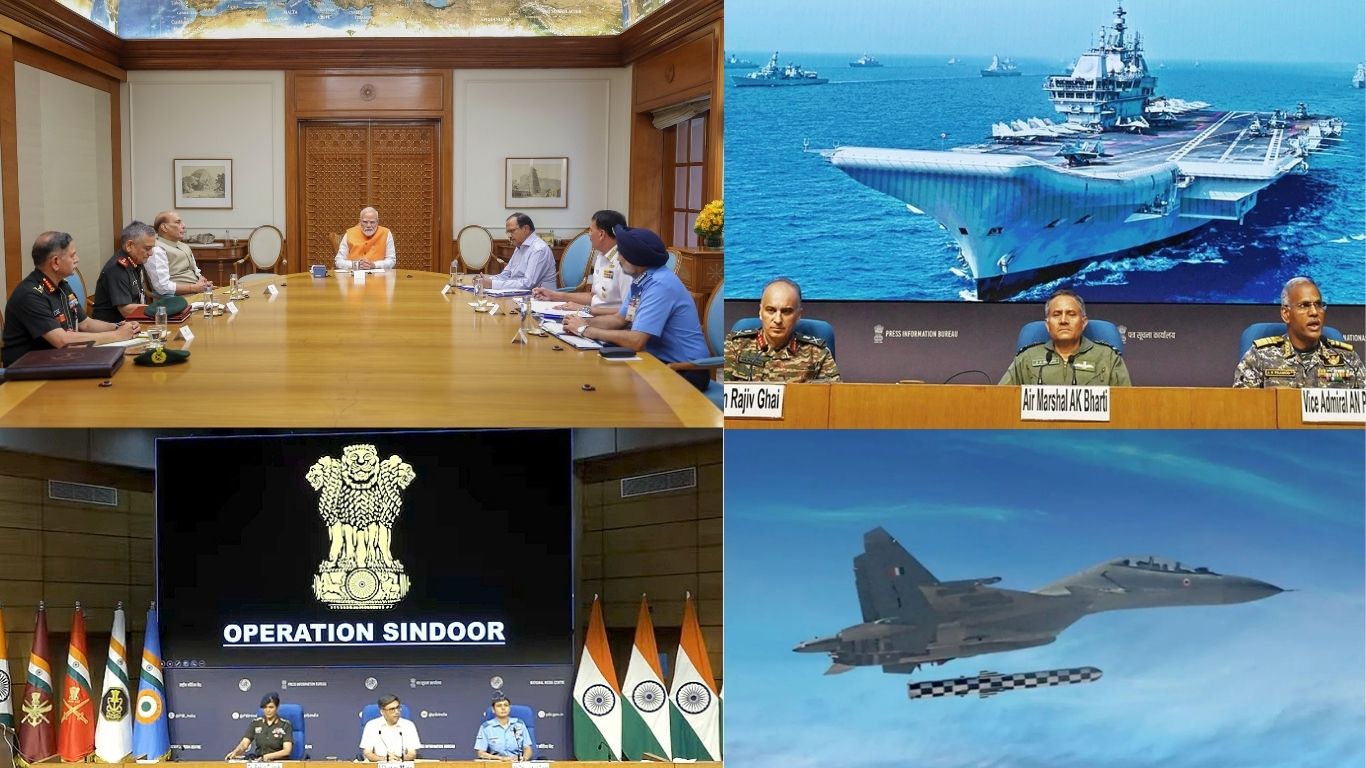
Political–Military Synchrony in Target Selection: The Case of ‘Operation Sindoor’

Critics who question the rationale behind targeting priorities in operations such as Sindoor misunderstand the logic of hybrid conflict. Choosing to strike terrorist infrastructure instead of conventional military targets was not an operational lapse but a deliberate act of strategic calibration.

In asymmetric warfare, the immediate imperative is to neutralise imminent threats while preserving escalation control. By focusing on terrorist camps deep inside hostile territory, India delegitimised the adversary’s use of proxies and avoided international backlash. The outcome was twofold: dismantling of the terror network’s logistics and reinforcement of India’s right to self-defence in global perception.

Such precision targeting mirrors the U.S. response to 9/11, where neutralising Al-Qaeda’s infrastructure in Afghanistan served both operational and narrative purposes. Far from being politically driven, these decisions exemplify the convergence of military logic and diplomatic foresight.

The Modern Military Chief: From Custodian to Communicator

The expectation that military chiefs should remain silent custodians of policy is an anachronism. In the information age, strategic communication is inseparable from military professionalism. Senior commanders are not only warfighters but also public educators and custodians of morale.

Their calibrated public statements shape deterrence credibility, manage expectations, and maintain psychological balance during crises. Silence, in such circumstances, can be misconstrued as confusion or weakness. Engagement, by contrast, reassures both the ranks and the citizenry.

Globally, this evolution is well-established. U.S., U.K., and Israeli military leaders routinely engage the public to clarify strategic posture. India’s chiefs operate under firm civilian oversight; their public communication reflects confidence, not partisanship. As General Bipin Rawat often demonstrated, responsible articulation can strengthen public understanding without compromising operational secrecy.

Civil–Military Unity as Strategic Strength

Visible unity between the government and the armed forces does not undermine democracy; it reinforces it. Civilian authority remains supreme, but alignment in tone and intent between policymakers and the military assures both the nation and its allies of India’s coherence.

During the Falklands War (1982), Prime Minister Margaret Thatcher’s unequivocal backing of the British military amplified deterrence and morale. Similarly, in India’s Kargil campaign, political-military harmony projected national resolve abroad and stability at home. Unity of purpose, not rigid separation, defines mature democracies in conflict.

Conclusion: Expression as Strategy

The world India inhabits is one of constant perception battles where influence, morale, and deterrence are fought as fiercely in the information sphere as on the battlefield. In such an environment, rhetoric is not a lapse of professionalism but an essential arm of statecraft.

Strong, unified statements by military leaders reinforce deterrence, sustain morale, and signal resolve. Far from being political, they reflect a modern understanding of warfare one that values strategic communication as much as kinetic capability.

India’s evolving military discourse represents the professional maturity of a confident democracy a state secure enough to speak with strength, unity, and purpose.


(Shashwat Gupta Ray is a multiple award-winning defence and strategic affairs journalist with over 20 years of experience in print and digital media. Previously Deputy Editor at Herald Group of Publications and Resident Editor at Gomantak Times, he has extensively covered major events, including the 26/11 Mumbai terror attacks and Maoist insurgencies. He is also the creator of the award-winning YouTube channel Uncovering India, which focuses on impactful social and developmental documentaries.)

Tags: Modern WarfareNuclear Constraint MythOperation SindoorPolitical–Military Synchrony
ShareTweetSend
Previous Post

Maa Kali’s Desecration Exposes the Dark Face of Mamata’s “Appeasement Raj” in West Bengal

Next Post

Queen Who Dared the Empire: ‘Rani Chennamma’ A Warrior Who Defied the British Before 1857

Related Posts

Precision Strike: Indian Army Approves Procurement of Indigenous MPATGM to Modernise Infantry Wings
Defence

Precision Strike: Indian Army Approves Procurement of Indigenous MPATGM to Modernise Infantry Wings

16 April 2026

The Indian Army has formally greenlit the procurement of the Man-Portable Anti-Tank Guided Missile (MPATGM), a decision that resonates...

Amit Shah on sensitive Gorkha land issue
Defence

Shah Assures Constitutional Path for Gorkha Issue, Intensifies Attack on TMC at Bengal Rally

14 April 2026

Union Home Minister Amit Shah said the Bharatiya Janata Party would address the long-pending Gorkha issue in the Darjeeling...

Historic Leap for ‘Aatmanirbhar Bharat’ as First India-Made BrahMos Missiles from Lucknow Join Indian Army
Defence

Historic Leap for ‘Aatmanirbhar Bharat’ as First India-Made BrahMos Missiles from Lucknow Join Indian Army

13 April 2026

In a landmark moment for India’s defense sector, the first batch of BrahMos missiles manufactured at the Lucknow facility...

Load More

Leave a Reply Cancel reply

Your email address will not be published. Required fields are marked *

I agree to the Terms of use and Privacy Policy.
This site is protected by reCAPTCHA and the Google Privacy Policy and Terms of Service apply.

Currently Playing

From Runways to Warships: India’s Firefighting Warrior Built for Bases & Battles| IAF | VayuShakti

From Runways to Warships: India’s Firefighting Warrior Built for Bases & Battles| IAF | VayuShakti

00:05:40

Ethanol, EVs and Solar- How India’s Energy Game Is Changing | Modi on LPG & Crude Oil | war| Hormuz

00:05:21

Truth of IRIS Dena: 8 Days That Changed Narrative | War zone Reality, Not an Indian Navy Exercise

00:08:02

300 Million Euros for SCALP: Strategic Necessity or Costly Dependency on France300

00:04:06

Tejas Mk1A: 19th aircraft coupled but Not Delivered: What Is Holding Back the IAF Induction?

00:07:21
Facebook Twitter Instagram Youtube
tfipostTfipost.com
Right Wing | News Analysis | Indian Opinion
  • About us
  • Contact Us
  • Careers
  • Brand Partnerships
  • Terms of use
  • Privacy Policy
  • Sitemap

©2026 TFI Media Private Limited

No Result
View All Result
  • Premium
  • Politics
    • Analysis
    • Opinions
    • Trending
  • Economy
    • Business
    • Finance
  • Defense
    • Defence
    • Strategy
    • Weaponry
  • Geopolitics
    • Africa
    • Americas
    • Asia Pacific
    • Europe
    • South Asia
    • West Asia
  • Knowledge
    • Culture
    • History
    • Indology
  • Law
  • Lounge
    • Books
    • Cinema
    • Food
    • Health
    • Sports
    • technology
    • Travel
    • Satire
TFIPOST हिन्दी
TFIPOST Global

©2026 TFI Media Private Limited