












TFIPOST हिन्दी
TFIPOST Global
Tfipost.com
Tfipost.com
No Result
View All Result
  • Premium
  • Politics
    • All
    • Analysis
    • Opinions
    • Trending
    Army Chief General Dhiraj Seth Reviews Central Command’s Combat Readiness, Pushes for Future-Ready Force

    Army Chief General Dhiraj Seth Reviews Central Command’s Combat Readiness, Pushes for Future-Ready Force

    Bengal Chief Minister Targeted in Alleged JeM Plot

    Bengal Chief Minister Targeted in Alleged JeM Plot

    PoK Protests Intensify as Pakistan Faces Scrutiny Over Media Curbs

    PoK Protests Intensify as Pakistan Faces Scrutiny Over Media Curbs

    Commonwealth Games 2026: India’s Campaign Beyond Medals

    Commonwealth Games 2026: India’s Campaign Beyond Medals

    • Analysis
    • Opinions
    • Trending
  • Economy
    • All
    • Business
    • Economy1
    • Finance
    How to Start Trading Forex and Crypto in India: A Beginner’s Roadmap

    How to Start Trading Forex and Crypto in India: A Beginner’s Roadmap

    Small-Ticket EMIs Are Turning Into India’s New Credit Habit

    Small-Ticket EMIs Are Turning Into India’s New Credit Habit

    Borrowing in the US and India: Their Economic Effects

    Borrowing in the US and India: Their Economic Effects

    ULIP Fund Switching Explained: When, Why, and How to Boost Returns

    ULIP Fund Switching Explained: When, Why, and How to Boost Returns

    • Business
    • Finance
  • Defense
    • All
    • Defence
    • Strategy
    • Weaponry
    Army Chief General Dhiraj Seth Reviews Central Command’s Combat Readiness, Pushes for Future-Ready Force

    Army Chief General Dhiraj Seth Reviews Central Command’s Combat Readiness, Pushes for Future-Ready Force

    INS Nipun, India's second indigenous Diving Support Vessel built by Hindustan Shipyard Limited for the Indian Navy.

    Here’s What Nipun’s Delivery Actually Tells Us About Aatmanirbhar Bharat

    Flags of India and Pakistan with the United Nations emblem, representing the Kashmir dispute and UN resolutions on plebiscite and troop withdrawal.

    Selective Invocation: Pakistan’s Plebiscite-Only Narrative

    From Shipbuilder to Maritime Capability Partner: Navy Outlines Bigger Vision for Defence PSU HSL With Dy Chief of Navy’s visit

    From Shipbuilder to Maritime Capability Partner: Navy Outlines Bigger Vision for Defence PSU HSL With Dy Chief of Navy’s visit

    • Defence
    • Strategy
    • Weaponry
  • Geopolitics
    • All
    • Africa
    • Americas
    • Asia Pacific
    • Europe
    • South Asia
    • West Asia
    Modi-Takaichi Summit Signals India-Japan’s Strategic Pivot Towards a Stronger Indo-Pacific Alliance

    Modi-Takaichi Summit Signals India-Japan’s Strategic Pivot Towards a Stronger Indo-Pacific Alliance

    PoK Leadership Explodes at Islamabad as Khawaja Asif’s Kashmir Remark Sparks Rare Public Break and Identity Showdown

    PoK Leadership Explodes at Islamabad as Khawaja Asif’s Kashmir Remark Sparks Rare Public Break and Identity Showdown

    Canada’s Khalistan Blowback: After 41 Years, Ottawa Finally Admits Canada-Based Khalistani Extremists Blew Up Air India’s Kanishka

    Canada’s Khalistan Blowback: After 41 Years, Ottawa Finally Admits Canada-Based Khalistani Extremists Blew Up Air India’s Kanishka

    From Cells To Networks: NIA Maps Affiliate Terror Structure In JMB–IMK Case, Chargesheets 11 Linked To Northeast Bengal Module

    From Cells To Networks: NIA Maps Affiliate Terror Structure In JMB–IMK Case, Chargesheets 11 Linked To Northeast Bengal Module

    • Africa
    • Americas
    • Asia Pacific
    • Europe
    • South Asia
    • West Asia
  • Knowledge
    • All
    • Culture
    • Education
    • History
    • Indology
    Flags of India and Pakistan with the United Nations emblem, representing the Kashmir dispute and UN resolutions on plebiscite and troop withdrawal.

    Selective Invocation: Pakistan’s Plebiscite-Only Narrative

    Why Choose an MBA After B.Com? Here’s the Case

    Why Choose an MBA After B.Com? Here’s the Case

    Shankaracharya, Dharma, and Politics: The Avimukteshwaranand Question

    Can a Shankaracharya Be Political? The Avimukteshwaranand Debate Through the Lens of Dharma

    ‘Not Refugees, But Warriors’: Mohan Bhagwat Seeks to Redefine the Legacy of Partition Migrants

    ‘Not Refugees, But Warriors’: Mohan Bhagwat Seeks to Redefine the Legacy of Partition Migrants

    • Culture
    • History
    • Indology
  • Law
  • Lounge
    • All
    • Books
    • Cinema
    • Entertainment
    • Food
    • Games
    • Health
    • Lifestyle
    • Satire
    • Sports
    • technology
    • Travel
    The Importance of Personalised Care in IVF Treatment

    The Importance of Personalised Care in IVF Treatment

    Surat to Delhi Flight vs Train: Which One Makes More Sense?

    Surat to Delhi Flight vs Train: Which One Makes More Sense?

    Why Gen Z Travellers Are Choosing Hostels in Rishikesh Over Hotels

    Why Gen Z Travellers Are Choosing Hostels in Rishikesh Over Hotels

    How RajBet’s VIP Program Actually Works

    How RajBet’s VIP Program Actually Works

    • Books
    • Cinema
    • Food
    • Health
    • Sports
    • technology
    • Travel
    • Satire
Tfipost.com
  • Premium
  • Politics
    • All
    • Analysis
    • Opinions
    • Trending
    Army Chief General Dhiraj Seth Reviews Central Command’s Combat Readiness, Pushes for Future-Ready Force

    Army Chief General Dhiraj Seth Reviews Central Command’s Combat Readiness, Pushes for Future-Ready Force

    Bengal Chief Minister Targeted in Alleged JeM Plot

    Bengal Chief Minister Targeted in Alleged JeM Plot

    PoK Protests Intensify as Pakistan Faces Scrutiny Over Media Curbs

    PoK Protests Intensify as Pakistan Faces Scrutiny Over Media Curbs

    Commonwealth Games 2026: India’s Campaign Beyond Medals

    Commonwealth Games 2026: India’s Campaign Beyond Medals

    • Analysis
    • Opinions
    • Trending
  • Economy
    • All
    • Business
    • Economy1
    • Finance
    How to Start Trading Forex and Crypto in India: A Beginner’s Roadmap

    How to Start Trading Forex and Crypto in India: A Beginner’s Roadmap

    Small-Ticket EMIs Are Turning Into India’s New Credit Habit

    Small-Ticket EMIs Are Turning Into India’s New Credit Habit

    Borrowing in the US and India: Their Economic Effects

    Borrowing in the US and India: Their Economic Effects

    ULIP Fund Switching Explained: When, Why, and How to Boost Returns

    ULIP Fund Switching Explained: When, Why, and How to Boost Returns

    • Business
    • Finance
  • Defense
    • All
    • Defence
    • Strategy
    • Weaponry
    Army Chief General Dhiraj Seth Reviews Central Command’s Combat Readiness, Pushes for Future-Ready Force

    Army Chief General Dhiraj Seth Reviews Central Command’s Combat Readiness, Pushes for Future-Ready Force

    INS Nipun, India's second indigenous Diving Support Vessel built by Hindustan Shipyard Limited for the Indian Navy.

    Here’s What Nipun’s Delivery Actually Tells Us About Aatmanirbhar Bharat

    Flags of India and Pakistan with the United Nations emblem, representing the Kashmir dispute and UN resolutions on plebiscite and troop withdrawal.

    Selective Invocation: Pakistan’s Plebiscite-Only Narrative

    From Shipbuilder to Maritime Capability Partner: Navy Outlines Bigger Vision for Defence PSU HSL With Dy Chief of Navy’s visit

    From Shipbuilder to Maritime Capability Partner: Navy Outlines Bigger Vision for Defence PSU HSL With Dy Chief of Navy’s visit

    • Defence
    • Strategy
    • Weaponry
  • Geopolitics
    • All
    • Africa
    • Americas
    • Asia Pacific
    • Europe
    • South Asia
    • West Asia
    Modi-Takaichi Summit Signals India-Japan’s Strategic Pivot Towards a Stronger Indo-Pacific Alliance

    Modi-Takaichi Summit Signals India-Japan’s Strategic Pivot Towards a Stronger Indo-Pacific Alliance

    PoK Leadership Explodes at Islamabad as Khawaja Asif’s Kashmir Remark Sparks Rare Public Break and Identity Showdown

    PoK Leadership Explodes at Islamabad as Khawaja Asif’s Kashmir Remark Sparks Rare Public Break and Identity Showdown

    Canada’s Khalistan Blowback: After 41 Years, Ottawa Finally Admits Canada-Based Khalistani Extremists Blew Up Air India’s Kanishka

    Canada’s Khalistan Blowback: After 41 Years, Ottawa Finally Admits Canada-Based Khalistani Extremists Blew Up Air India’s Kanishka

    From Cells To Networks: NIA Maps Affiliate Terror Structure In JMB–IMK Case, Chargesheets 11 Linked To Northeast Bengal Module

    From Cells To Networks: NIA Maps Affiliate Terror Structure In JMB–IMK Case, Chargesheets 11 Linked To Northeast Bengal Module

    • Africa
    • Americas
    • Asia Pacific
    • Europe
    • South Asia
    • West Asia
  • Knowledge
    • All
    • Culture
    • Education
    • History
    • Indology
    Flags of India and Pakistan with the United Nations emblem, representing the Kashmir dispute and UN resolutions on plebiscite and troop withdrawal.

    Selective Invocation: Pakistan’s Plebiscite-Only Narrative

    Why Choose an MBA After B.Com? Here’s the Case

    Why Choose an MBA After B.Com? Here’s the Case

    Shankaracharya, Dharma, and Politics: The Avimukteshwaranand Question

    Can a Shankaracharya Be Political? The Avimukteshwaranand Debate Through the Lens of Dharma

    ‘Not Refugees, But Warriors’: Mohan Bhagwat Seeks to Redefine the Legacy of Partition Migrants

    ‘Not Refugees, But Warriors’: Mohan Bhagwat Seeks to Redefine the Legacy of Partition Migrants

    • Culture
    • History
    • Indology
  • Law
  • Lounge
    • All
    • Books
    • Cinema
    • Entertainment
    • Food
    • Games
    • Health
    • Lifestyle
    • Satire
    • Sports
    • technology
    • Travel
    The Importance of Personalised Care in IVF Treatment

    The Importance of Personalised Care in IVF Treatment

    Surat to Delhi Flight vs Train: Which One Makes More Sense?

    Surat to Delhi Flight vs Train: Which One Makes More Sense?

    Why Gen Z Travellers Are Choosing Hostels in Rishikesh Over Hotels

    Why Gen Z Travellers Are Choosing Hostels in Rishikesh Over Hotels

    How RajBet’s VIP Program Actually Works

    How RajBet’s VIP Program Actually Works

    • Books
    • Cinema
    • Food
    • Health
    • Sports
    • technology
    • Travel
    • Satire
No Result
View All Result
Tfipost.com
Tfipost.com
No Result
View All Result
  • Premium
  • Politics
  • Economy
  • Defense
  • Geopolitics
  • Knowledge
  • Law
  • Lounge

Pakistan – Taliban Peace Talks Collapsed in Istanbul Over US Drone Deal, But Islamabad Resorts To The ‘Blame India’ Distraction

TFI Desk by TFI Desk
29 October 2025
in Analysis
Pakistan – Taliban Peace Talks Collapsed in Istanbul Over US Drone Deal, But Islamabad Resorts To The ‘Blame India’ Distraction
Share on FacebookShare on X

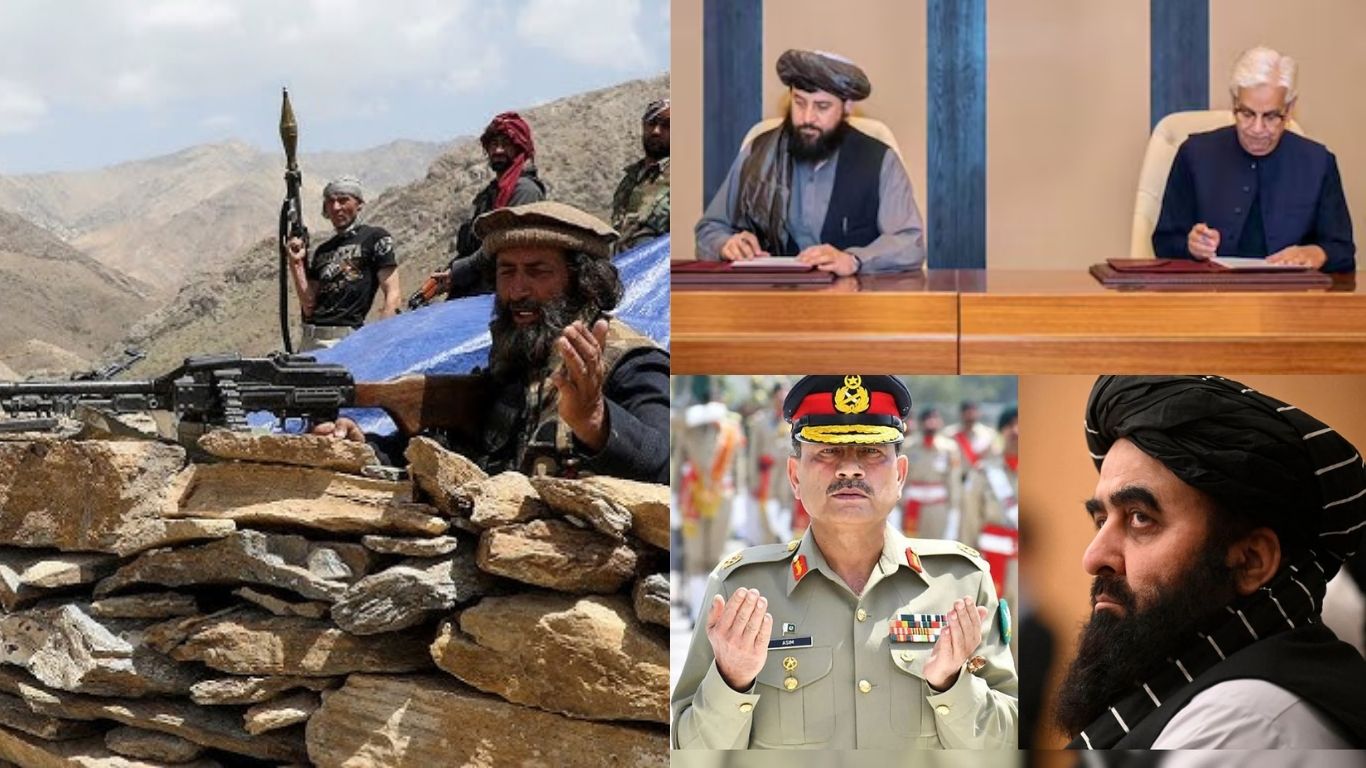
What began as a high-profile attempt at reconciliation between Pakistan and the Afghan Taliban has ended in yet another diplomatic disaster. The much-anticipated Pakistan-Afghanistan peace talks in Istanbul, facilitated by Turkey and Qatar, collapsed dramatically exposing the deep-rooted mistrust, hypocrisy, and internal chaos that plague Islamabad’s foreign policy.

According to diplomatic sources, the talks broke down after Pakistan admitted for the first time that it has a standing agreement with the United States to permit drone operations from its soil a revelation that enraged the Afghan delegation. This rare acknowledgment laid bare the duplicity of Pakistan’s military establishment, which has long denied such collaboration while accusing others of violating its sovereignty. What was meant to be a step toward regional peace instead became a theatre of exposed secrets, shifting loyalties, and political humiliation.

RelatedPosts

Selective Invocation: Pakistan’s Plebiscite-Only Narrative

‘Not Refugees, But Warriors’: Mohan Bhagwat Seeks to Redefine the Legacy of Partition Migrants

PoK Leadership Explodes at Islamabad as Khawaja Asif’s Kashmir Remark Sparks Rare Public Break and Identity Showdown

Load More

Drone Deal Exposed, Talks in Free Fall

The Istanbul dialogue had started with cautious optimism. Mediators from Qatar and Turkey had reportedly finalized most agenda points, leaving only a few clauses for negotiation. But within hours, that optimism dissolved. Eyewitnesses described the Pakistani delegation’s behaviour as “disorderly and confrontational,” with heated verbal exchanges directed at Afghan officials and mediators alike.

The breaking point came when Pakistan’s representatives confirmed, under diplomatic questioning, that U.S. drone operations were indeed being conducted with Islamabad’s consent. This statement instantly drew a furious response from the Taliban-led Afghan delegation, which accused Pakistan of “betraying the region” and undermining Afghanistan’s sovereignty.

When pressed for guarantees that Pakistan would not allow its territory to be used for U.S. drone strikes inside Afghanistan, Islamabad initially appeared agreeable. However, after an “urgent phone call” from Rawalpindi  believed to be from top army leadership the delegation reversed its position, claiming it had “no control” over American drones or the presence of ISIS (Daesh) elements in the region. That abrupt U-turn ended any remaining hope of reconciliation.

Pakistan’s Habitual Blame Game: Turning Failure into Propaganda

Rather than owning up to its failed policies and double games, Islamabad quickly reverted to its favourite diversionary tactic blaming India. In the aftermath of the Istanbul collapse, Pakistani officials began floating the narrative that India is waging a “proxy war” to destabilize Pakistan through Afghanistan.

However, the international community and even sections within Pakistan see through this smokescreen. For decades, it is Pakistan’s own military establishment and the ISI that have sponsored, trained, and armed terror groups like the Tehreek-e-Taliban Pakistan (TTP), Lashkar-e-Taiba, and Jaish-e-Mohammed to wage proxy wars against India. Some of the very terror outfits, once Islamabad’s “strategic assets,” have now turned their guns on their masters.

As one Afghan diplomat told mediators, “Pakistan created these monsters to control Afghanistan. Now those monsters are devouring Pakistan.”

Indeed, the TTP originally nurtured by Pakistan’s intelligence network to counter India’s presence in Afghanistan has become one of Islamabad’s worst nightmares. After the Taliban’s return to power in Kabul, the TTP found safe haven across the border and launched deadly attacks inside Pakistan. The very snake that Pakistan fed for decades is now biting back viciously.

Munir’s Army Under Pressure: Desperate to Distract

The timing of Pakistan’s blame-India rhetoric also coincides with its military’s growing embarrassment under Army Chief General Asim Munir. In recent months, Pakistan’s army has faced humiliating setbacks both at home and abroad. On the eastern border, Indian forces have responded with unprecedented precision to Pakistani provocations, inflicting significant damage on forward positions and terror launch pads during Operation Sindoor.

On the western frontier, the Taliban’s increasing aggression and cross-border attacks have left the Pakistani army demoralized. Clashes in North Waziristan and Kurram have exposed Pakistan’s waning control over the tribal belt areas once touted as the “nerve centers” of ISI operations.

According to regional analysts, the collapse of the Istanbul talks is not an isolated diplomatic incident but part of a larger pattern of strategic confusion within Pakistan’s military establishment. Unable to contain the Taliban threat or justify continued U.S. cooperation on drones, the army has resorted to creating external villains  and India remains its favourite target.

Every time Pakistan’s internal security implodes, Rawalpindi blames India. It’s a reflex, not a strategy.

Qatari and Turkish mediators, who had invested significant diplomatic capital in facilitating the talks, were reportedly shocked by the Pakistani delegation’s behaviour. One observer described the scene as “unprecedented in diplomatic circles”, with the Pakistani representatives “losing composure and resorting to insults”. The breakdown was so severe that one source called it “sabotage by design.”

The head of the Pakistani team, identified as Major General Shahab Aslam, who is head of the Special Operations Division of the ISI, reportedly demanded that the Afghan Taliban “summon and control” all violent groups operating against Pakistan – including the Tehrik-i-Taliban Pakistan (TTP). The Afghan side countered sharply, noting that the TTP members are Pakistani nationals, not Afghans, and that it was beyond Kabul’s authority to “control Pakistan’s own citizens”.

ISI’s Major General Aslam is the same Pakistan Army officer who had been earlier accused of coordinating and monitoring the Pahalgam terror attack by Pakistan’s Lashkar e Tayyiba terror group in India’s Jammu & Kashmir, in which 26 innocent civilians were killed.

The Afghan representatives maintained that they are committed to ensuring no attacks on Pakistan originate from Afghan soil, reiterating the Islamic Emirate’s official stance that the TTP issue is Pakistan’s internal problem. In return, they requested that Pakistan guarantee the integrity of Afghan airspace and stop hosting or supporting US drone missions.

At one point, sources say, the debate escalated into a direct confrontation when Major General Aslam dismissed the drone issue as “off the table”. The Qatari ambassador reportedly intervened, reminding him that Afghan concerns deserved to be heard. In a tense exchange, the Pakistani general retorted that American drones operate from a US airbase in Qatar and questioned why Doha did not halt them – to which the ambassador responded, “We have an agreement with the US” Major General Aslam’s reply – “So do we” – effectively confirmed Pakistan’s formal cooperation with US drone operations.

The failure of the Istanbul talks has not only frozen the peace process but also escalated the risk of military confrontation at the Af-Pak border. Afghan sources have warned that any future Pakistani strikes will be met with “reciprocal action”, stating that if Afghan territory is bombed, “Islamabad will be targeted.”

The Afghan side insists it attended the talks “in good faith”, while accusing Pakistan of using the platform to shift blame and seek unrealistic concessions. Pakistani disunity, particularly between civilian officials in KPK and the powerful military establishment, appears to have crippled Islamabad’s ability to negotiate consistently.

Meanwhile, analysts note that Pakistan’s internal instability, its contentious relationship with Washington, and its controversial use of drones against both Afghan and Pashtun civilians have compounded mistrust.

The collapse in Istanbul represents not just a diplomatic failure but a setback for regional stability. The talks had been viewed as a rare chance to reset relations between the two neighbours, which share a long, porous, and often violent border. Instead, the meeting ended in acrimony and mutual recrimination, leaving the future of Pakistan-Afghanistan relations more uncertain than ever.

For now, dialogue appears to be off the table. Both sides are retreating into hardened positions and the mediators, caught in the crossfire, are left wondering if peace between Islamabad and Kabul was ever truly within reach.
Tags: afghnaitsnIstanbulPakistanPeace talksTalibanTehreek-e-Taliban Pakistan (TTP)US drone deal
ShareTweetSend
Previous Post

The Lion of Nowshera, Brigadier Mohammad Usman: The Soldier Who Refused Jinnah’s Offer and Gave His Life for India

Next Post

Karnataka High Court Stays Congress Govt Anti-RSS Order Says It Violates Citizens Rights

Related Posts

The picture shows the CRPF’s Tiranga Yatra rally held at Dal Lake.
Analysis

Seven years since Article 370: what has changed in Jammu and Kashmir, and what has not

5 August 2026

Tuesday marks seven years since the Indian government revoked Jammu and Kashmir's special constitutional status under Article 370, splitting...

Flags of India and Pakistan with the United Nations emblem, representing the Kashmir dispute and UN resolutions on plebiscite and troop withdrawal.
Analysis

Selective Invocation: Pakistan’s Plebiscite-Only Narrative

30 July 2026

Pakistan's statements on Jammu and Kashmir at the United Nations have, across seven decades, referred to the plebiscite provision...

Shankaracharya, Dharma, and Politics: The Avimukteshwaranand Question
Analysis

Can a Shankaracharya Be Political? The Avimukteshwaranand Debate Through the Lens of Dharma

20 July 2026

सदा शिव समारमभां शङ्कराचार्य मध्यमाम्॥ अस्मदाचार्य पर्यन्तां वन्दे गुरु परम्पराम्॥ Transliteration sadā śiva samāramabhāṃ śaṅkarācārya madhyamām.. asmadācārya paryantāṃ vande...

Load More

Leave a Reply Cancel reply

Your email address will not be published. Required fields are marked *

I agree to the Terms of use and Privacy Policy.
This site is protected by reCAPTCHA and the Google Privacy Policy and Terms of Service apply.

Currently Playing

INS NIPUN: MEET INDIA’S NEW DSV

INS NIPUN: MEET INDIA’S NEW DSV

00:03:05

POJK ERUPTS IN PROTEST

00:02:53

The Indian Air Force Mission That Broke Pakistan's Backbone at Tiger Hill | Op Safed Sagar

00:58:34

Pakistan’s Plebiscite Claim: The Missing Context of the UN Framework

00:03:23

TRUMP'S PHARMA TARIFF SHOCK

00:03:54
Facebook Twitter Instagram Youtube
tfipostTfipost.com
Right Wing | News Analysis | Indian Opinion
  • About us
  • Contact Us
  • Careers
  • Brand Partnerships
  • Terms of use
  • Privacy Policy
  • Sitemap

©2026 TFI Media Private Limited

No Result
View All Result
  • Premium
  • Politics
    • Analysis
    • Opinions
    • Trending
  • Economy
    • Business
    • Finance
  • Defense
    • Defence
    • Strategy
    • Weaponry
  • Geopolitics
    • Africa
    • Americas
    • Asia Pacific
    • Europe
    • South Asia
    • West Asia
  • Knowledge
    • Culture
    • History
    • Indology
  • Law
  • Lounge
    • Books
    • Cinema
    • Food
    • Health
    • Sports
    • technology
    • Travel
    • Satire
TFIPOST हिन्दी
TFIPOST Global

©2026 TFI Media Private Limited