
















TFIPOST हिन्दी
TFIPOST Global
Tfipost.com
Tfipost.com
No Result
View All Result
  • Premium
  • Politics
    • All
    • Analysis
    • Opinions
    • Trending
    Auroville Annapurna Dispute Intensifies Over Eviction, IIT Madras Sustainability Campus

    Auroville Annapurna Dispute Intensifies Over Eviction, IIT Madras Sustainability Campus

    CJP Narrative Faces Questions Over Assam-Punjab Safety Response

    CJP Narrative Faces Questions Over Assam-Punjab Safety Response

    Etah Police Ordered to Probe Children’s Political Videos

    Etah Police Ordered to Probe Children’s Political Videos

    “Shiva for the poor, Ram for the rich”: Revanth Reddy’s remark opens a new north-south, class and faith fault line

    “Shiva for the poor, Ram for the rich”: Revanth Reddy’s remark opens a new north-south, class and faith fault line

    • Analysis
    • Opinions
    • Trending
  • Economy
    • All
    • Business
    • Economy1
    • Finance
    Bank strike deferred: why unions called it off, and what happens next

    Bank strike deferred: why unions called it off, and what happens next

    Can a Sweep-In FD Remove Your Need to Borrow?

    Can a Sweep-In FD Remove Your Need to Borrow?

    Term Insurance Calculator: How to Estimate Your Ideal Premium

    Term Insurance Calculator: How to Estimate Your Ideal Premium

    How to apply for a personal loan with minimal documentation

    How to apply for a personal loan with minimal documentation

    • Business
    • Finance
  • Defense
    • All
    • Defence
    • Strategy
    • Weaponry
    Ten years on: how political resolve and military execution came together for the 2016 surgical strikes

    Ten years on: how political resolve and military execution came together for the 2016 surgical strikes

    Indian contingent leaves for Kazakhstan for KAZIND-2026, with counter-terror and drone warfare in focus

    Indian contingent leaves for Kazakhstan for KAZIND-2026, with counter-terror and drone warfare in focus

    An Army outreach event at India’s “first village” becomes a test of civil-military coordination

    An Army outreach event at India’s “first village” becomes a test of civil-military coordination

    Fifth-gen in the sky, fourth-gen on the ground: how the Tarang Shakti jets stack up against Pakistan’s and China’s frontline fighters

    Fifth-gen in the sky, fourth-gen on the ground: how the Tarang Shakti jets stack up against Pakistan’s and China’s frontline fighters

    • Defence
    • Strategy
    • Weaponry
  • Geopolitics
    • All
    • Africa
    • Americas
    • Asia Pacific
    • Europe
    • South Asia
    • West Asia
    Pakistan defence minister’s throat gesture at Afghan woman journalist draws condemnation

    Pakistan defence minister’s throat gesture at Afghan woman journalist draws condemnation

    When Solidarity Backfires: Wangchuk’s Tibet Remark and the CTA’s Sharp Rejection

    When Solidarity Backfires: Wangchuk’s Tibet Remark and the CTA’s Sharp Rejection

    The Jugular Vein That Bleeds Itself

    The Jugular Vein That Bleeds Itself

    US Ambassador Sergio Gor Hails Indo-US Troops Training Together at Mahajan Range, Calls Yudh Abhyas a Sign of Deepening Defence Ties

    US Ambassador Sergio Gor Hails Indo-US Troops Training Together at Mahajan Range, Calls Yudh Abhyas a Sign of Deepening Defence Ties

    • Africa
    • Americas
    • Asia Pacific
    • Europe
    • South Asia
    • West Asia
  • Knowledge
    • All
    • Culture
    • Education
    • History
    • Indology
    How to Choose the Right Online Degree at Apna Advantage for Your Career Goals

    How to Choose the Right Online Degree at Apna Advantage for Your Career Goals

    What Skills Will You Gain from a Strategic Leadership Course

    What Skills Will You Gain from a Strategic Leadership Course

    Young Indian Gen Z exploring Sanatan Dharma through smartphones, social media and the Bhagavad Gita

    Ancient Roots, Digital Minds: The Rise of Sanatani Gen Z

    Break into QA Jobs Faster with Automation Testing Course from StarAgile

    Break into QA Jobs Faster with Automation Testing Course from StarAgile

    • Culture
    • History
    • Indology
  • Law
  • Lounge
    • All
    • Books
    • Cinema
    • Entertainment
    • Food
    • Games
    • Health
    • Lifestyle
    • Satire
    • Sports
    • technology
    • Travel
    Tech-Driven Growth Tactics Every Content Creator Should Know in 2026

    Tech-Driven Growth Tactics Every Content Creator Should Know in 2026

    Dev Anand Remembered on His 103rd Birth Anniversary

    Dev Anand Remembered on His 103rd Birth Anniversary

    Veteran actor Mushtaq Khan dies at 75; leaves behind decades of memorable supporting roles

    Veteran actor Mushtaq Khan dies at 75; leaves behind decades of memorable supporting roles

    TOP 9 Red Flags in Overseas Job Offers Promising Free Visas and Flights

    TOP 9 Red Flags in Overseas Job Offers Promising Free Visas and Flights

    • Books
    • Cinema
    • Food
    • Health
    • Sports
    • technology
    • Travel
    • Satire
Tfipost.com
  • Premium
  • Politics
    • All
    • Analysis
    • Opinions
    • Trending
    Auroville Annapurna Dispute Intensifies Over Eviction, IIT Madras Sustainability Campus

    Auroville Annapurna Dispute Intensifies Over Eviction, IIT Madras Sustainability Campus

    CJP Narrative Faces Questions Over Assam-Punjab Safety Response

    CJP Narrative Faces Questions Over Assam-Punjab Safety Response

    Etah Police Ordered to Probe Children’s Political Videos

    Etah Police Ordered to Probe Children’s Political Videos

    “Shiva for the poor, Ram for the rich”: Revanth Reddy’s remark opens a new north-south, class and faith fault line

    “Shiva for the poor, Ram for the rich”: Revanth Reddy’s remark opens a new north-south, class and faith fault line

    • Analysis
    • Opinions
    • Trending
  • Economy
    • All
    • Business
    • Economy1
    • Finance
    Bank strike deferred: why unions called it off, and what happens next

    Bank strike deferred: why unions called it off, and what happens next

    Can a Sweep-In FD Remove Your Need to Borrow?

    Can a Sweep-In FD Remove Your Need to Borrow?

    Term Insurance Calculator: How to Estimate Your Ideal Premium

    Term Insurance Calculator: How to Estimate Your Ideal Premium

    How to apply for a personal loan with minimal documentation

    How to apply for a personal loan with minimal documentation

    • Business
    • Finance
  • Defense
    • All
    • Defence
    • Strategy
    • Weaponry
    Ten years on: how political resolve and military execution came together for the 2016 surgical strikes

    Ten years on: how political resolve and military execution came together for the 2016 surgical strikes

    Indian contingent leaves for Kazakhstan for KAZIND-2026, with counter-terror and drone warfare in focus

    Indian contingent leaves for Kazakhstan for KAZIND-2026, with counter-terror and drone warfare in focus

    An Army outreach event at India’s “first village” becomes a test of civil-military coordination

    An Army outreach event at India’s “first village” becomes a test of civil-military coordination

    Fifth-gen in the sky, fourth-gen on the ground: how the Tarang Shakti jets stack up against Pakistan’s and China’s frontline fighters

    Fifth-gen in the sky, fourth-gen on the ground: how the Tarang Shakti jets stack up against Pakistan’s and China’s frontline fighters

    • Defence
    • Strategy
    • Weaponry
  • Geopolitics
    • All
    • Africa
    • Americas
    • Asia Pacific
    • Europe
    • South Asia
    • West Asia
    Pakistan defence minister’s throat gesture at Afghan woman journalist draws condemnation

    Pakistan defence minister’s throat gesture at Afghan woman journalist draws condemnation

    When Solidarity Backfires: Wangchuk’s Tibet Remark and the CTA’s Sharp Rejection

    When Solidarity Backfires: Wangchuk’s Tibet Remark and the CTA’s Sharp Rejection

    The Jugular Vein That Bleeds Itself

    The Jugular Vein That Bleeds Itself

    US Ambassador Sergio Gor Hails Indo-US Troops Training Together at Mahajan Range, Calls Yudh Abhyas a Sign of Deepening Defence Ties

    US Ambassador Sergio Gor Hails Indo-US Troops Training Together at Mahajan Range, Calls Yudh Abhyas a Sign of Deepening Defence Ties

    • Africa
    • Americas
    • Asia Pacific
    • Europe
    • South Asia
    • West Asia
  • Knowledge
    • All
    • Culture
    • Education
    • History
    • Indology
    How to Choose the Right Online Degree at Apna Advantage for Your Career Goals

    How to Choose the Right Online Degree at Apna Advantage for Your Career Goals

    What Skills Will You Gain from a Strategic Leadership Course

    What Skills Will You Gain from a Strategic Leadership Course

    Young Indian Gen Z exploring Sanatan Dharma through smartphones, social media and the Bhagavad Gita

    Ancient Roots, Digital Minds: The Rise of Sanatani Gen Z

    Break into QA Jobs Faster with Automation Testing Course from StarAgile

    Break into QA Jobs Faster with Automation Testing Course from StarAgile

    • Culture
    • History
    • Indology
  • Law
  • Lounge
    • All
    • Books
    • Cinema
    • Entertainment
    • Food
    • Games
    • Health
    • Lifestyle
    • Satire
    • Sports
    • technology
    • Travel
    Tech-Driven Growth Tactics Every Content Creator Should Know in 2026

    Tech-Driven Growth Tactics Every Content Creator Should Know in 2026

    Dev Anand Remembered on His 103rd Birth Anniversary

    Dev Anand Remembered on His 103rd Birth Anniversary

    Veteran actor Mushtaq Khan dies at 75; leaves behind decades of memorable supporting roles

    Veteran actor Mushtaq Khan dies at 75; leaves behind decades of memorable supporting roles

    TOP 9 Red Flags in Overseas Job Offers Promising Free Visas and Flights

    TOP 9 Red Flags in Overseas Job Offers Promising Free Visas and Flights

    • Books
    • Cinema
    • Food
    • Health
    • Sports
    • technology
    • Travel
    • Satire
No Result
View All Result
Tfipost.com
Tfipost.com
No Result
View All Result
  • Premium
  • Politics
  • Economy
  • Defense
  • Geopolitics
  • Knowledge
  • Law
  • Lounge

How Bursting Firecrackers on Diwali Is an Ancient Hindu Tradition & Not a Foreign Import

That is the real meaning of Diwali — and firecrackers are not a recent addition but a proud continuation of this ancient dharmic tradition

TFI Desk by TFI Desk
18 October 2025
in History
How Bursting Firecrackers on Diwali Is an Ancient Hindu Tradition & Not a Foreign Import
Share on FacebookShare on X

RelatedPosts

Fundamental Rights through the Lens of Sanatan Darshan: A Constitutional Interpretation from Indian Knowledge Tradition

Mahua Moitra’s Anti-Hindu Rant Exposes Her True Face Yet Again: How Mamata’s TMC Has Normalized Hatred Against Hindus?

Gujarat: Two Hindu brothers attacked over Bursting Diwali firecrackers in Bhavnagar; Accused Aslam Pathan and Sameer Syed arrested

Load More

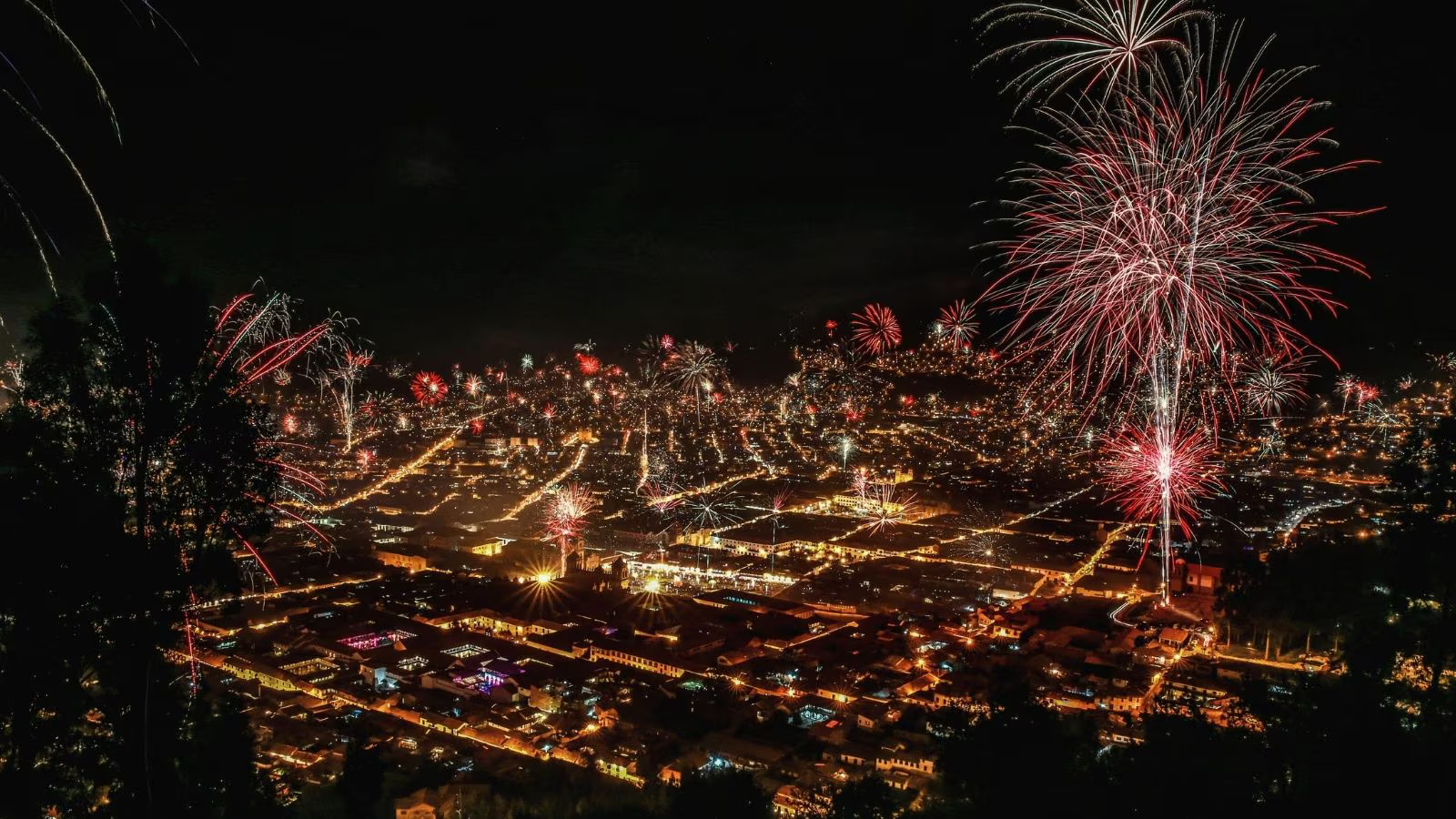
For years, a myth has been repeated that the tradition of bursting firecrackers during Diwali is a modern invention brought by foreign rulers, and that gunpowder came to India from China in the medieval era. But when we look at historical sources, Sanskrit texts, archaeological evidence, and civilizational memory, a very different story emerges. The truth is simple bursting firecrackers, or using fire and light to celebrate Deepavali, is an ancient Bharatiya tradition deeply rooted in Hindu belief, ritual, and culture.

Let us understand how.

At the heart of this myth is the claim that gunpowder was discovered in China in the 9th century and that fireworks were later introduced to India through Muslim invaders. Chinese sources themselves, however, do not fully support this story. In fact, they mention that a Buddhist monk from India brought with him the knowledge of gunpowder to China around 664 CE. He discovered certain soils in China containing saltpetre — the primary ingredient in gunpowder. The earliest Chinese studies on saltpetre chemistry also show strong Indic connections. Even Roger Pauly, a noted Western scholar known for his admiration of China, acknowledges that there was “Indian inspiration” in the making of gunpowder.

This should not surprise anyone familiar with Hindu literature. Long before the 7th century, Hindu texts referred to substances and compounds identical to those used in making gunpowder. The Atharva Rahasya clearly mentions the combination of charcoal, sulphur, and saltpetre — the three key ingredients of gunpowder. Similarly, in the Mahabharata, sage Vaisampayana describes the preparation of smoke balls made using such compounds. Later commentators explicitly identify them as early forms of gunpowder.

These references show that ancient Bharatiyas had deep chemical knowledge and used such materials in religious, ritualistic, and even protective purposes.

Even today, traditional fireworks in India — especially those made in Sivakasi, Tamil Nadu, and parts of Andhra Pradesh — are made using the same ingredients: sulphur (gandhaka), saltpetre (suryakara), and sand. The very word suryakara is Sanskritic in origin, while the Persian word for saltpetre, shora, is never used in these native industries. This linguistic continuity itself is evidence that the knowledge and terminology are indigenous, not borrowed.

To assume that Hindus — who had mastered metallurgy, chemistry, astronomy, and surgery thousands of years ago — were incapable of creating basic fireworks until foreigners arrived, reflects a deeply colonized mindset. It ignores centuries of indigenous innovation and cultural continuity.

Now, let us come to Deepavali itself. Why do Hindus light lamps, burn firebrands, and burst crackers on this night?

At the core of Diwali is the belief that our departed ancestors — the Pitrs — return to their realm after their annual visit during Pitru Paksha. It is believed that on the night of Chaturdashi and Amavasya, they begin their journey back. The light and sound created on this night help show them the path in the darkness. That is why Hindus illuminate their homes, light lamps, and make celebratory sounds.

The Skanda Purana, one of the 18 major Puranas, describes this tradition. In its Vaishnava Khanda, it explicitly says that Diwali should be celebrated by holding ulkas — or firebrands — in one’s hands. The word ulka in Sanskrit originally meant a meteor — something bright, fiery, and illuminating that makes both light and noise. Scholars like Dr. G.V. Raghavan and Indologist Tracy Pintchman have explained that this ritual symbolically represents lighting up the path for the ancestors and driving away darkness and negative forces.

So, when we burst crackers and light fireworks on Diwali, it is not merely for amusement — it has spiritual and cultural meaning rooted in Sanatana Dharma. It symbolizes illumination, divine energy, and the connection between the living and the departed.

There are also textual references beyond the Puranas. The Ananda Ramayana, which elaborates on Valmiki’s Ramayana, mentions Diwali celebrations involving light, sound, and firebrands. Critics have tried to downplay this by saying the Ananda Ramayana is a later work, perhaps from the 15th century. But in Hindu tradition, the age of a text does not decide its authenticity — its acceptance by various sampradayas does. The Ananda Ramayana is accepted across traditions, and that makes it part of the living Hindu canon.

Moreover, Medhātithi, an 11th-century commentator on the Manusmriti, explained that any act performed by learned persons with a spiritual purpose becomes authoritative. By that logic, the practice of bursting firecrackers — done with religious intent and ancient symbolism — holds the same traditional legitimacy as any other ritual act in Sanatana Dharma.

Now, let’s look at material and artistic evidence. While India’s tropical climate and constant habitation mean fewer ancient artifacts survive, there are enough hints. In the Thyagaraja Temple of Tamil Nadu, murals dating back to the 9th century depict festival scenes that include firebrands and luminous celebrations. The Bogar Sattakandam, attributed to the Tamil Siddha Saint Bogar (dated by some to 500 BCE and others to around the 7th century CE), describes in detail how to prepare vediuppu cheyanir — or saltpetre solution — used in making gunpowder and fireworks.

This textual and linguistic continuity shows that the art of making combustible fireworks existed in ancient Tamil culture long before any foreign influence.

Civilizational memory also reinforces this. Across India, there are countless traditional paintings and folk art depictions showing Lord Krishna celebrating Deepavali with fireworks. In Maharashtra, the great saint Eknath in the 16th century described in his writings how firecrackers were used in the wedding of Rukmini and Krishna — mentioning types such as Agniyantra, Havai, Sumanmala, and Chichundari.

Similarly, Samarth Ramdas, the spiritual guide of Chhatrapati Shivaji Maharaj, referred to firework-like celebrations in his own Ramayana. He mentioned phula (phuljhari), ghosha, and other types of fireworks burst by Sri Rama’s army. These are not modern inventions — they are cultural memories preserved through verse, art, and practice.

When we connect all these dots, the conclusion is clear. If one claims that fireworks were introduced in India only after the medieval era, then one must also believe that every Hindu saint, poet, artist, and scholar from the last thousand years was collectively mistaken. That, of course, is absurd.

The Ulkas described in ancient texts were likely simple firebrands — predecessors of today’s fireworks. They made noise, they produced light, and they served both religious and social purposes. Even today, in Odisha, during Diwali, people use Kaunriya Kathi — a traditional firebrand that makes a crackling noise and emits sparks, just like ancient Ulkas.

Yes, the design and technology of firecrackers have evolved with time. But that does not mean the concept itself is foreign or recent. Just as the chairs or lamps we use today are modern forms of ancient furniture, modern crackers are simply advanced versions of what our ancestors once used. The essence remains the same — using fire and sound to celebrate light over darkness.

In Sanskrit, the word Ulkā means a meteor — a streak of fiery light shooting through the sky. It is not a coincidence that ancient Hindus chose this very word to describe what we today call firecrackers. It captures the visual and spiritual essence perfectly — a burst of light piercing the darkness, symbolic of dharma triumphing over adharma.

So, the next time someone says that bursting crackers on Deepavali is a modern, imported, or non-Hindu practice — remember this. The tradition of using fire, sound, and light to celebrate Deepavali is older than recorded history. It is deeply embedded in Hindu scriptures, rituals, and collective memory.

For millennia, Hindus have lit the night of Deepavali with lamps and firebrands — not just to rejoice, but to guide the ancestors, to honour the gods, and to celebrate the eternal light of truth.

That is the real meaning of Diwali — and firecrackers are not a recent addition but a proud continuation of this ancient dharmic tradition.
Tags: DiwaliFire CrackersHindu festivalTradition
ShareTweetSend
Previous Post

Ukraine’s Extreme Psychological Colonisation

Next Post

Top 10 Alternative Investment Platforms for Risk-Takers in 2025

Related Posts

Pakistan to award two Mumbai-born Parsi doctors for keeping Jinnah’s illness secret
History

Pakistan to award two Mumbai-born Parsi doctors for keeping Jinnah’s illness secret

18 August 2026

Pakistan plans to confer its highest civilian award on two doctors from Mumbai, nearly 80 years after they chose...

Unsung South Indian Freedom Fighters Remembered on 79th Independence Day
Analysis

Independence Day: Remembering South India’s Unsung Freedom Warriors

15 August 2026

India’s independence was won through the sacrifices of countless men and women, many of whom remain unknown to the...

Flags of India and Pakistan with the United Nations emblem, representing the Kashmir dispute and UN resolutions on plebiscite and troop withdrawal.
Analysis

Selective Invocation: Pakistan’s Plebiscite-Only Narrative

30 July 2026

Pakistan's statements on Jammu and Kashmir at the United Nations have, across seven decades, referred to the plebiscite provision...

Load More

Leave a Reply Cancel reply

Your email address will not be published. Required fields are marked *

I agree to the Terms of use and Privacy Policy.
This site is protected by reCAPTCHA and the Google Privacy Policy and Terms of Service apply.

Currently Playing

F-35 vs Rafale? Inside India’s Biggest Air Exercise

F-35 vs Rafale? Inside India’s Biggest Air Exercise

00:05:54

China and the Philippines Are Fighting a War With Maps, Not Missiles

00:05:55

ONGC finds gas off Odisha: Can the Mahanadi basin fuel India’s energy future?

00:07:22

India-Russia Relations: Putin की रणनीति और भारत के लिए आगे क्या? | Maj Gen Deepak Mehra (Retd)

00:12:10

The Su-57 Question: Is India Taking a Huge Risk by Waiting for AMCA only ? IAF | Stealth fighter

00:05:37
Facebook Twitter Instagram Youtube
tfipostTfipost.com
Right Wing | News Analysis | Indian Opinion
  • About us
  • Contact Us
  • Careers
  • Brand Partnerships
  • Terms of use
  • Privacy Policy
  • Sitemap

©2026 TFI Media Private Limited

No Result
View All Result
  • Premium
  • Politics
    • Analysis
    • Opinions
    • Trending
  • Economy
    • Business
    • Finance
  • Defense
    • Defence
    • Strategy
    • Weaponry
  • Geopolitics
    • Africa
    • Americas
    • Asia Pacific
    • Europe
    • South Asia
    • West Asia
  • Knowledge
    • Culture
    • History
    • Indology
  • Law
  • Lounge
    • Books
    • Cinema
    • Food
    • Health
    • Sports
    • technology
    • Travel
    • Satire
TFIPOST हिन्दी
TFIPOST Global

©2026 TFI Media Private Limited