

















When Bollywood superstar Salman Khan casually mentioned “Balochistan” and “Pakistan” as separate entities at an international entertainment conference in Riyadh, few could have predicted the storm it would unleash. His remark—made during the Joy Forum 2025 while speaking about the global popularity of Indian films—was neither overtly political nor accusatory. Yet, in a region where history has left deep scars, even a few words can ignite old embers.
The incident underlines a simple but powerful truth: history’s course, once set in motion, cannot be changed by accident or denial. Salman’s statement did not create a debate about Balochistan—it merely reminded the world that the question has been alive for decades.
A Remark that Echoed Through History
During his panel discussion, Salman Khan highlighted how Hindi films have a massive audience in Saudi Arabia, saying, “There are people from Balochistan, there are people from Afghanistan, there are people from Pakistan… everyone is working here.” The inclusion of “Balochistan” as a distinct entity from Pakistan was enough to send social media into overdrive.
Supporters of the Baloch independence movement seized on the remark as an acknowledgment of their distinct identity. Others argued it was likely a slip of the tongue, devoid of political intent. But the impact of his words had little to do with what he meant—and everything to do with what Balochistan represents historically.
The Weight of History
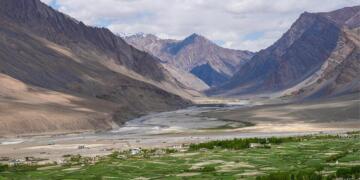
Balochistan, Pakistan’s largest and most resource-rich province, has long been at the heart of a political and human rights struggle. Though now part of Pakistan, it was historically an independent entity under the Khan of Kalat. After British withdrawal in 1947, Balochistan signed a Standstill Agreement recognizing its independence. Just months later, in March 1948, Pakistan forcibly annexed it.
Since then, Balochistan has been the site of five major insurgencies—in 1948, 1958, 1962, 1973–77, and from the early 2000s to today. Each uprising has been driven by a sense of betrayal, political marginalization, and economic exploitation. No single government policy or military operation has erased that history. It continues to shape the identity and aspirations of millions of Baloch.
A Struggle Rooted in Inequality
Despite contributing vast natural resources to Pakistan’s economy—natural gas, coal, gold, and copper—Balochistan remains the country’s most underdeveloped province. While gas from the Sui fields has powered Pakistan for decades, most Baloch households still lack basic utilities. Projects like the China-Pakistan Economic Corridor (CPEC) and the Gwadar Port have generated billions in investment, yet local people have seen little benefit.
Politically, Baloch representatives often claim their elections are manipulated, their governments replaced, and their voices silenced. Islamabad’s approach has leaned heavily on security measures rather than meaningful dialogue. Human rights organizations have documented thousands of enforced disappearances, torture, and extrajudicial killings—a grim reality that has turned “missing persons” into a daily phrase in Balochistan.
Cultural Identity and Resistance
Beyond politics and economics, the Baloch struggle is also about preserving identity. For decades, their language, history, and culture have been marginalized under a state-driven narrative of religious and national unity. To many young Baloch, resistance is not merely political—it is existential.
This is why Salman Khan’s seemingly offhand remark resonated. It tapped into a historical memory that refuses to be erased. When he listed “Balochistan” separately, he unconsciously echoed what millions of Baloch have felt for generations: that their land and identity are distinct, shaped by a past no speech or policy can undo.
The Immutable Flow of History
History is not a script that can be rewritten at will. Political maps can be redrawn, regimes can change, and narratives can be silenced—but the lived memory of a people persists. Salman Khan did not create a controversy; he inadvertently reminded the world that the Baloch question remains unresolved.
Nations can try to suppress, reframe, or ignore historical truths, but they cannot erase them. History, like a river, may bend and twist, but its course remains imprinted in the land it crosses. Balochistan’s story is a testament to that unchanging truth.
In the end, one comment from a film star became a mirror reflecting decades of conflict, suppression, and identity. It is not the power of celebrity that made this debate resurface, but the power of history itself—a history that refuses to be forgotten.