





















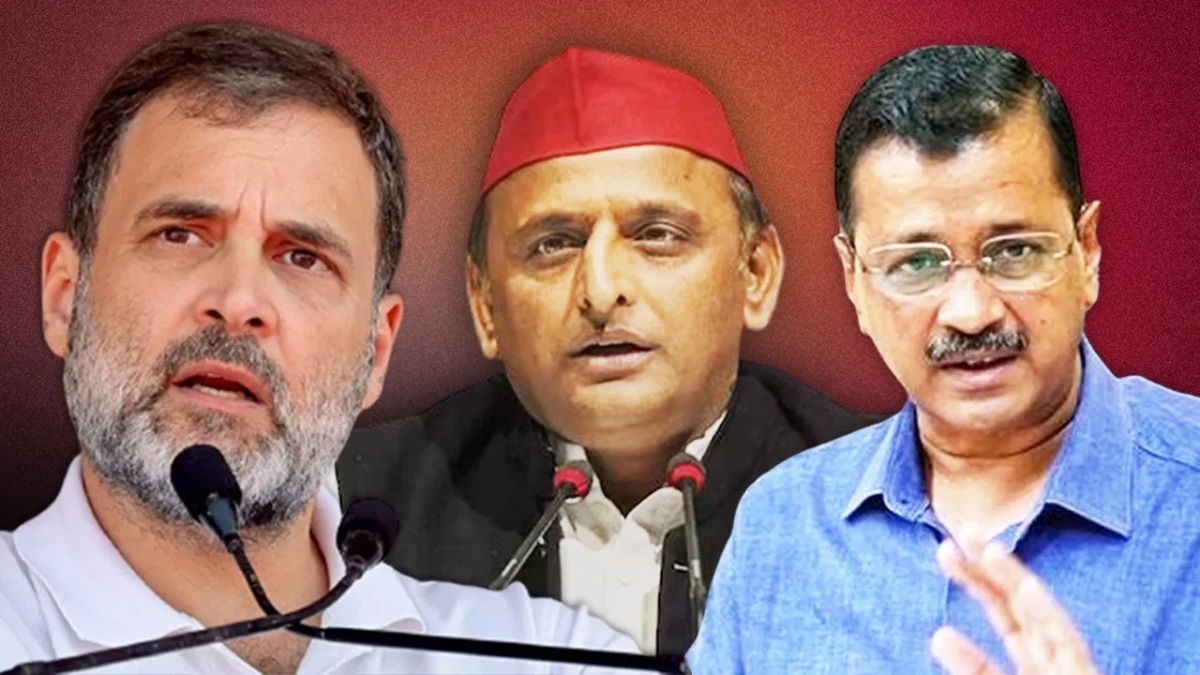
The Aam Aadmi Party’s (AAP) decision to contest the upcoming Bihar Assembly elections independently, explicitly ruling out any alliance with the Congress, has thrown into sharp relief the cracks widening within the opposition’s INDI bloc. AAP leader Arvind Kejriwal’s assertive stance signals that the alliance, once hailed as a united front against the BJP, is rapidly losing its cohesion.
Formed in mid-2023 as a counterweight to the ruling NDA, the INDI alliance brought together a diverse group of opposition parties. But from the outset, it lacked a shared ideological framework and was held together primarily by the goal of unseating Prime Minister Narendra Modi. Now, with the Lok Sabha elections over and the BJP still the largest party in Parliament, the alliance appears to be losing its reason to exist.
Kejriwal’s remarks were particularly revealing. By accusing the Congress of fielding candidates to sabotage AAP’s chances in Gujarat and suggesting that it acted at the BJP’s behest, he highlighted the deep mistrust that continues to plague the relationship between key opposition players. For AAP, the Congress is no longer a partner—it is competition.
The Splintering
The INDI bloc’s failure to evolve into a coordinated opposition front at the state level has exposed its limitations. Regional players like the Trinamool Congress, AAP, and Samajwadi Party have already charted their own course, often sidelining Congress in the process. Each party seems more focused on protecting its turf than building a united electoral strategy.
Kejriwal’s latest announcement echoes Mamata Banerjee’s approach in West Bengal, where she kept Congress and Left parties out of her alliance during state polls. The message is clear: cooperation at the national level doesn’t automatically translate into partnership in state elections.
AAP’s Strategic Expansion
For AAP, entering the Bihar political space is part of a broader strategy to shed its image as a Delhi-centric party. After mixed results in Delhi and Punjab and modest showings in Gujarat and Goa, the party is trying to establish a national presence. Recent bypoll victories in Gujarat and Punjab have boosted its confidence.
However, the decision to go solo in Bihar is a high-stakes move. It could help AAP tap into dissatisfaction with both the NDA and the RJD-Congress alliance, but it also risks dividing the anti-BJP vote—potentially aiding the very party it opposes.
INDI Bloc: A Fading Experiment?
The INDI alliance was built as an electoral tool rather than a long-term political platform. Without mutual respect, seat-sharing agreements, or a common minimum program, it now seems unsustainable. As parties retreat into regional silos, the idea of a cohesive opposition front is fast losing credibility.
Unless a new political consensus emerges among opposition parties, one that goes beyond temporary electoral tie-ups, the INDIA bloc may fade into political irrelevance. Kejriwal’s Bihar plan may just be the first in a series of moves by alliance partners to go their separate ways.
Arvind Kejriwal’s announcement is more than a routine political statement, it is a clear signal that the INDIA alliance is splintering. With regional ambitions taking precedence and old rivalries resurfacing, the bloc’s future looks increasingly uncertain.
The upcoming Bihar Assembly elections, likely to take place between October and November 2025, are anticipated to be among the most closely contested and divided in recent memory. Voters will elect representatives for all 243 legislative seats, with any party or coalition needing at least 122 seats to secure a majority. This election arrives amid growing friction within established alliances and the rising presence of new political contenders eager to make their mark on the state’s political landscape.