





















TFIPOST हिन्दी
TFIPOST Global
Tfipost.com
Tfipost.com
No Result
View All Result
  • Premium
  • Politics
    • All
    • Analysis
    • Opinions
    • Trending
    Leftists Approach NHRC Action In Faisal Case

    Leftists Approach NHRC Action In Faisal Case

    Claude AI Misused in Alarming Houthi Missile Development Bid

    Claude AI Misused in Alarming Houthi Missile Development Bid

    Hindu Monk Faces Brutal Persecution in Bangladesh

    Hindu Monk Faces Brutal Persecution in Bangladesh

    BRICS

    The 18th BRICS Summit: India’s Chairship, Themes and Key Issues

    • Analysis
    • Opinions
    • Trending
  • Economy
    • All
    • Business
    • Economy1
    • Finance
    Money Back Plan for Parents: A Smart Way to Plan for Your Child’s Future

    Money Back Plan for Parents: A Smart Way to Plan for Your Child’s Future

    Need a bank account today? Open one online in minutes

    Need a bank account today? Open one online in minutes

    Do You Still Need Term Insurance If You Have ₹50 Lakh Employer Cover?

    Do You Still Need Term Insurance If You Have ₹50 Lakh Employer Cover?

    What the UAE’s 2026 Corporate Tax Rules Actually Mean for a Free Zone Company

    What the UAE’s 2026 Corporate Tax Rules Actually Mean for a Free Zone Company

    • Business
    • Finance
  • Defense
    • All
    • Defence
    • Strategy
    • Weaponry
    The Missing Layer: How Russia’s Pantsir-S1M Would Plug India’s S-400 Gap

    The Missing Layer: How Russia’s Pantsir-S1M Would Plug India’s S-400 Gap

    Russia’s UAC Showcases Homegrown Airliners, Signs Deals for 85 Il-114 Aircraft at Innoprom.India

    Armenian Military Delegation Visits Indian Air Force Station, Boosting Bilateral Defence Ties

    Indian Navy Warship Reaches Malaysia for Joint Exercise with Royal Malaysian Navy

    Indian Navy Warship Reaches Malaysia for Joint Exercise with Royal Malaysian Navy

    “Won’t Let Our Soil Be Used Against India”: Sri Lankan President Assures Rajnath Singh As Colombo Signs Three Defence Pacts

    “Won’t Let Our Soil Be Used Against India”: Sri Lankan President Assures Rajnath Singh As Colombo Signs Three Defence Pacts

    • Defence
    • Strategy
    • Weaponry
  • Geopolitics
    • All
    • Africa
    • Americas
    • Asia Pacific
    • Europe
    • South Asia
    • West Asia
    First Visit, Loaded Agenda: Pezeshkian Lands in Delhi Seeking India’s Help on the War

    First Visit, Loaded Agenda: Pezeshkian Lands in Delhi Seeking India’s Help on the War

    Xi Jinping to make historic return to India for BRICS Summit, first visit in nearly seven years

    Xi Jinping to make historic return to India for BRICS Summit, first visit in nearly seven years

    Putin lands in New Delhi ahead of BRICS Summit, set to join Modi at INNOPROM

    Putin lands in New Delhi ahead of BRICS Summit, set to join Modi at INNOPROM

    India Condemns Houthi Attacks On Saudi Arabia, Calls Them “Unacceptable” Threat To Regional Security

    • Africa
    • Americas
    • Asia Pacific
    • Europe
    • South Asia
    • West Asia
  • Knowledge
    • All
    • Culture
    • Education
    • History
    • Indology
    Young Indian Gen Z exploring Sanatan Dharma through smartphones, social media and the Bhagavad Gita

    Ancient Roots, Digital Minds: The Rise of Sanatani Gen Z

    Break into QA Jobs Faster with Automation Testing Course from StarAgile

    Break into QA Jobs Faster with Automation Testing Course from StarAgile

    Which JEE Online Coaching Is Best for JEE Mains 2027?

    Which JEE Online Coaching Is Best for JEE Mains 2027?

    “Bond of trust, unbreakable”: Modi’s Raksha Bandhan wishes — and the legends behind the festival

    “Bond of trust, unbreakable”: Modi’s Raksha Bandhan wishes — and the legends behind the festival

    • Culture
    • History
    • Indology
  • Law
  • Lounge
    • All
    • Books
    • Cinema
    • Entertainment
    • Food
    • Games
    • Health
    • Lifestyle
    • Satire
    • Sports
    • technology
    • Travel
    How Sports Betting Changed My Understanding of Risk in Indian Politics

    How Sports Betting Changed My Understanding of Risk in Indian Politics

    How Mobile Proxies Engine Global Media Monitoring and International OSINT Pipelines

    How Mobile Proxies Engine Global Media Monitoring and International OSINT Pipelines

    Digital Sovereignty and Telecommunications Privacy: Safeguarding Personal Identifiers in Modern Geopolitics

    Digital Sovereignty and Telecommunications Privacy: Safeguarding Personal Identifiers in Modern Geopolitics

    Why Sports Betting Exploded Among Cricket Fans in India

    Why Sports Betting Exploded Among Cricket Fans in India

    • Books
    • Cinema
    • Food
    • Health
    • Sports
    • technology
    • Travel
    • Satire
Tfipost.com
  • Premium
  • Politics
    • All
    • Analysis
    • Opinions
    • Trending
    Leftists Approach NHRC Action In Faisal Case

    Leftists Approach NHRC Action In Faisal Case

    Claude AI Misused in Alarming Houthi Missile Development Bid

    Claude AI Misused in Alarming Houthi Missile Development Bid

    Hindu Monk Faces Brutal Persecution in Bangladesh

    Hindu Monk Faces Brutal Persecution in Bangladesh

    BRICS

    The 18th BRICS Summit: India’s Chairship, Themes and Key Issues

    • Analysis
    • Opinions
    • Trending
  • Economy
    • All
    • Business
    • Economy1
    • Finance
    Money Back Plan for Parents: A Smart Way to Plan for Your Child’s Future

    Money Back Plan for Parents: A Smart Way to Plan for Your Child’s Future

    Need a bank account today? Open one online in minutes

    Need a bank account today? Open one online in minutes

    Do You Still Need Term Insurance If You Have ₹50 Lakh Employer Cover?

    Do You Still Need Term Insurance If You Have ₹50 Lakh Employer Cover?

    What the UAE’s 2026 Corporate Tax Rules Actually Mean for a Free Zone Company

    What the UAE’s 2026 Corporate Tax Rules Actually Mean for a Free Zone Company

    • Business
    • Finance
  • Defense
    • All
    • Defence
    • Strategy
    • Weaponry
    The Missing Layer: How Russia’s Pantsir-S1M Would Plug India’s S-400 Gap

    The Missing Layer: How Russia’s Pantsir-S1M Would Plug India’s S-400 Gap

    Russia’s UAC Showcases Homegrown Airliners, Signs Deals for 85 Il-114 Aircraft at Innoprom.India

    Armenian Military Delegation Visits Indian Air Force Station, Boosting Bilateral Defence Ties

    Indian Navy Warship Reaches Malaysia for Joint Exercise with Royal Malaysian Navy

    Indian Navy Warship Reaches Malaysia for Joint Exercise with Royal Malaysian Navy

    “Won’t Let Our Soil Be Used Against India”: Sri Lankan President Assures Rajnath Singh As Colombo Signs Three Defence Pacts

    “Won’t Let Our Soil Be Used Against India”: Sri Lankan President Assures Rajnath Singh As Colombo Signs Three Defence Pacts

    • Defence
    • Strategy
    • Weaponry
  • Geopolitics
    • All
    • Africa
    • Americas
    • Asia Pacific
    • Europe
    • South Asia
    • West Asia
    First Visit, Loaded Agenda: Pezeshkian Lands in Delhi Seeking India’s Help on the War

    First Visit, Loaded Agenda: Pezeshkian Lands in Delhi Seeking India’s Help on the War

    Xi Jinping to make historic return to India for BRICS Summit, first visit in nearly seven years

    Xi Jinping to make historic return to India for BRICS Summit, first visit in nearly seven years

    Putin lands in New Delhi ahead of BRICS Summit, set to join Modi at INNOPROM

    Putin lands in New Delhi ahead of BRICS Summit, set to join Modi at INNOPROM

    India Condemns Houthi Attacks On Saudi Arabia, Calls Them “Unacceptable” Threat To Regional Security

    • Africa
    • Americas
    • Asia Pacific
    • Europe
    • South Asia
    • West Asia
  • Knowledge
    • All
    • Culture
    • Education
    • History
    • Indology
    Young Indian Gen Z exploring Sanatan Dharma through smartphones, social media and the Bhagavad Gita

    Ancient Roots, Digital Minds: The Rise of Sanatani Gen Z

    Break into QA Jobs Faster with Automation Testing Course from StarAgile

    Break into QA Jobs Faster with Automation Testing Course from StarAgile

    Which JEE Online Coaching Is Best for JEE Mains 2027?

    Which JEE Online Coaching Is Best for JEE Mains 2027?

    “Bond of trust, unbreakable”: Modi’s Raksha Bandhan wishes — and the legends behind the festival

    “Bond of trust, unbreakable”: Modi’s Raksha Bandhan wishes — and the legends behind the festival

    • Culture
    • History
    • Indology
  • Law
  • Lounge
    • All
    • Books
    • Cinema
    • Entertainment
    • Food
    • Games
    • Health
    • Lifestyle
    • Satire
    • Sports
    • technology
    • Travel
    How Sports Betting Changed My Understanding of Risk in Indian Politics

    How Sports Betting Changed My Understanding of Risk in Indian Politics

    How Mobile Proxies Engine Global Media Monitoring and International OSINT Pipelines

    How Mobile Proxies Engine Global Media Monitoring and International OSINT Pipelines

    Digital Sovereignty and Telecommunications Privacy: Safeguarding Personal Identifiers in Modern Geopolitics

    Digital Sovereignty and Telecommunications Privacy: Safeguarding Personal Identifiers in Modern Geopolitics

    Why Sports Betting Exploded Among Cricket Fans in India

    Why Sports Betting Exploded Among Cricket Fans in India

    • Books
    • Cinema
    • Food
    • Health
    • Sports
    • technology
    • Travel
    • Satire
No Result
View All Result
Tfipost.com
Tfipost.com
No Result
View All Result
  • Premium
  • Politics
  • Economy
  • Defense
  • Geopolitics
  • Knowledge
  • Law
  • Lounge

Agriculture Colonisation of India : Corporate Seeds Control

Multinational corporations are aggressively capturing India’s seed systems, turning farmers into dependent consumers and destroying centuries-old traditions.

The Thoughtful Indian by The Thoughtful Indian
25 July 2025
in Analysis, Explainers
The Global Scenario: A Threat to Farmers and Food Sovereignty

Agriculture Colonisation of India

Share on FacebookShare on X

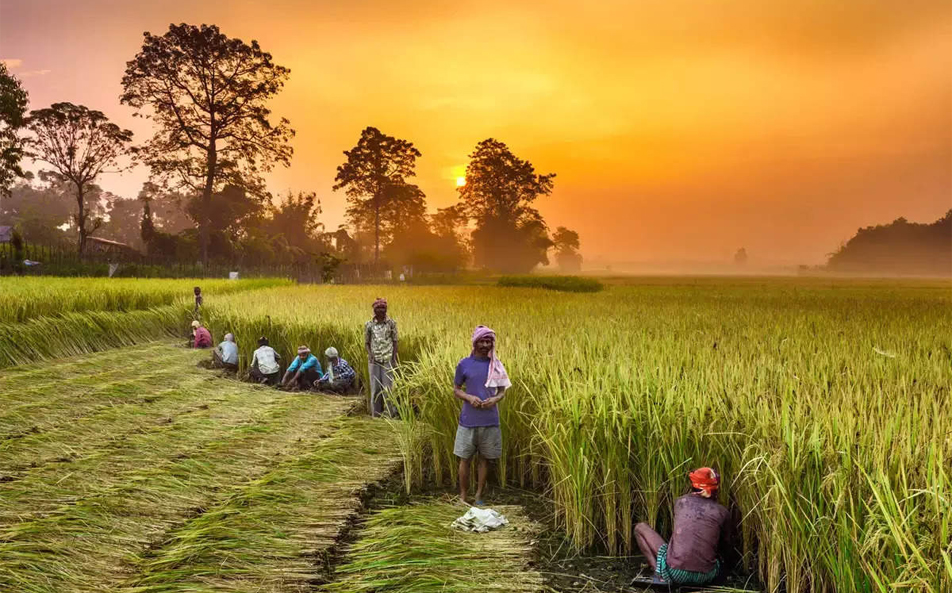
Multinational corporations are aggressively capturing India’s seed systems, turning farmers into dependent consumers and destroying centuries-old traditions. This assault undermines food sovereignty, floods the food chain with toxins, poisons livestock, and fuels a health crisis. Our GDP, food diplomacy, and rural livelihoods are under siege. India’s biodiversity is vanishing, farmer suicides are rising, and corporate-controlled seeds are rewriting our future one patent at a time. This is not agriculture; it’s agricultural colonization.

1. The Global Scenario: A Threat to Farmers and Food Sovereignty

RelatedPosts

‘India Will Never Compromise On The Interests of Farmers’ : PM Modi’s Strong Response After Trump’s Tariff Threat

How Modi Govt Shielded Indian Agriculture and Stopped Foreign Food Invasion Amid Trump’s Tariff Threat

Nominal GDP Growth at 16.1%? National Statistical Office releases India’s Economic accomplishment

Load More

Across the world, multinational agrochemical and biotechnology giants like Bayer (Monsanto), Syngenta, Corteva, and BASF are attempting to monopolize seed production and transform seeds into proprietary products. Their goal is to prevent the free availability of seeds by criminalizing traditional practices like seed-saving and sharing. If these companies succeed globally, farmers would lose autonomy, local biodiversity would shrink, and global food supply would fall under the control of a few corporations—threatening food sovereignty, increasing costs, and heightening farmer distress across continents. This monopolization of genetic material would erase traditional knowledge and put the world’s food systems at risk of systemic failure.

2. Tactics Used: Arm-Twisting, Bribery, and Deception

These corporations employ a variety of tactics to dominate national seed systems. This includes aggressive lobbying to push through international treaties like TRIPS and UPOV 1991, model laws imposed via FTAs (e.g., the so-called “Monsanto Laws” in Honduras and Guatemala), and regional trade agreements like COMESA in Africa. Deceptive marketing—promoting seeds as high-yield without disclosing the long-term costs and dependencies—is widespread. Although direct bribery is hard to confirm, there is well-documented evidence of undue influence through donor-funded “capacity building,” government pressure, and elite-driven policy formation. Countries like Vietnam adopted UPOV-compliant laws leading to seed consolidation, while resistance has flourished in Ethiopia, Guatemala, Indonesia, and parts of India through farmer unions and civil society movements.

3. Consequences Where Control Exists

In countries where corporate seed control has taken hold, farmers face skyrocketing input costs, debt traps, and crop failures due to seed uniformity. Land fertility declines as GM seeds degrade microbial biodiversity and demand heavy chemical inputs. Re-adapting to traditional farming methods becomes difficult, and water usage increases due to high-input cash crops. Health concerns are mounting—pesticide residues in milk and meat are documented, and allergenicity and unknown long-term ecosystem effects remain under-researched. The illusion of high yields fades as pests evolve, prompting even more chemical use. Farmer suicides, especially in India, have correlated with such distress—over 4 lakh since 1995.

4. Global Resistance and Protective Actions

Resistance movements have emerged globally. Guatemala’s indigenous communities and Latin American civil society groups have protested against UPOV-compliant laws. Mexico has banned GM corn through court action. Ethiopia and Tanzania resisted UPOV 1991 adoption, preserving traditional seed rights. Peru and Russia have banned GMOs. Community seed banks, open-source seed licensing, and local biodiversity protection efforts are flourishing in parts of Africa, Southeast Asia, and South America. Civil society coalitions like La Via Campesina and Seed Sovereignty networks have played a pivotal role in defending farmers’ rights and public plant breeding.

5. The Indian Scenario: Multinational Encroachment

India has been a primary target for global seed giants. Monsanto (now Bayer) monopolized Bt cotton via Mahyco Monsanto Biotech, which covered 95% of cotton acreage by 2015. Other global players like Syngenta, Corteva, and BASF, along with domestic companies like Nuziveedu Seeds, Kaveri Seeds, KRIBHCO, Mahyco, JK Agri Genetics, and Advanta, dominate the Indian seed market. These corporations often act in coordination with pesticide and agri-finance firms, pushing “integrated solutions.” India has also witnessed unapproved GM trials in crops like brinjal and rice, with farmers in Gujarat and Maharashtra unknowingly using unapproved seeds. Philanthropic fronts like the Gates Foundation and development arms like USAID further influence Indian seed laws and public-private partnerships.

6. Products, Deception, and Hidden Harms in India

Bt cotton is the only officially approved GM crop in India, but others like GM mustard (DMH-11), hybrid maize, and gene-edited rice (e.g., DRR Dhan 100 “Kamala”) are being pushed. Marketing strategies include inflated yield promises, falsified trials, and fake farmer endorsements. Resistance to Bt cotton by pink bollworm has led to resurging pesticide use. ResearchGate studies show pesticide contamination in milk near GM cotton fields, with endosulfan, cypermethrin, and DDT residues exceeding safety levels. Livestock fed on Bt cottonseed cake reportedly suffered reproductive and metabolic issues, though industry-sponsored reports deny such impacts. Gene-edited rice is being marketed as water-saving, but ecological risks remain unstudied.

7. Indian Government’s Position and Education Efforts

India’s legal framework includes the Protection of Plant Varieties and Farmers’ Rights (PPV&FR) Act, 2001, which protects farmers’ rights to save, use, sow, and exchange seeds. It mandates compensation for underperformance and compulsory licensing. However, newer proposals like the Seed Bill 2020 threaten to erode these rights. The Environment (Protection) Act, 1986 governs GM crops, but enforcement is erratic. The Supreme Court, in a 2024 GM mustard case, invoked the precautionary principle and directed the creation of a national GMO policy. The government’s ₹35,000 crore spent on agri-extension lacks focused seed awareness. Platforms like mKisan and Seed Portal are poorly used due to language, tech, and outreach barriers.

8. Research Institutions and Weak Outreach

Premier institutes like IARI and over 100 agricultural universities have developed hundreds of climate-resilient and high-yielding indigenous seeds. Yet, these remain trapped in labs or bureaucratic pipelines. Despite 700+ Krishi Vigyan Kendras (KVKs), outreach remains dismal. KVKs suffer from poor staffing, weak logistics, inadequate vernacular material, and inconsistent operations. Instead of functioning as technology disseminators, KVKs often act as event managers. Public institutions like PACS (Primary Agricultural Credit Societies) are now being considered for seed distribution, but capacity remains underdeveloped.

9. Failures of Governance and Their Impact

India’s agriculture is in crisis. Input costs rose nearly 35% from 2011 to 2020. Meanwhile, farmers’ share in the consumer rupee has declined. Over 4 lakh farmer suicides have been recorded since 1995, many from Bt cotton belts in Maharashtra and Telangana. Public institutions failed to counter misleading claims by the corporates. Seed replacement rates remain low, and certified seed access is poor for marginal farmers. The failure to create a pro-farmer extension system is deepening agrarian distress and dependency on multinational input systems.

10. Root Causes of Institutional Failures

Several factors drive India’s failures: inadequate public funding in seed development, fragmented and bureaucratic seed dissemination, influence of corporate lobbies, donor-driven research priorities, and poor regulatory enforcement. Traditional seed systems receive little support. Farmers lack awareness of legal protections under the PPV&FR Act. The absence of farmer voices in seed policy decisions further marginalizes them. Extension services remain urban-focused and rarely reach marginal farmers. NGOs like Navdanya and Deccan Development Society have preserved indigenous seeds and created seed banks, but remain underfunded and disconnected from policy.

11. Corrective Measures: What Needs to Be Done

India must:

  • Massively scale up community seed banks and seed festivals across districts.
  • Establish a government-run, AI-powered multilingual seed repository linked to soil, climate, and agronomy profiles—accessible by mobile/voice in vernacular language.
  • Strengthen KVKs and redefine their roles to include crop extension as a major role, and with autonomy, mobile support, digital infrastructure, and seed kits.
  • Launch national seed literacy campaigns in schools, panchayats, and agri colleges.
  • Penalize false seed advertising and concealment of data with strict laws.
  • Promote agro-ecology and reward farmers conserving traditional seeds.
  • Mandate public trials and farmer feedback before seed approvals.

These steps are essential to reclaim biodiversity, autonomy, and resilience in Indian agriculture.

12. Policy Reforms and Enforcement

India needs urgent legal reforms. The Seed Bill must be rewritten to align with the PPV&FR Act and protect farmers’ seed rights. GM crop regulation must follow the Supreme Court’s precautionary guidelines. Public breeding must be prioritized with increased funding and transparency. International seed patents should be banned or heavily restricted. Violators must face jail terms, not just fines. All regulatory panels must include farmer representatives. Corporate funding in public seed research must be transparently declared. A Seed Sovereignty Commission can be created to monitor seed-related laws and their implementation.

13. Conclusion: Protecting Farmers, Preserving Freedom

Seed sovereignty is the cornerstone of India’s food sovereignty. Letting multinational corporations dictate what seeds our farmers can grow undermines democracy, endangers biodiversity, and erodes the nation’s ability to feed itself. India’s rich agricultural traditions, developed over millennia, must not be replaced by lab-engineered dependency. It is time to protect the rights of those who feed the nation. Aatmanirbhar Bharat begins with Aatmanirbhar Beej—self-reliant seeds in the hands of sovereign farmers.

Tags: Agriculture ColonisationAgriculture in IndiaCorporate SeedsFarmers' RightsIndian Farmersindigenous seedsKrishi Vigyan KendrasPlant Varieties
ShareTweetSend
Previous Post

Chinmoy Krishna Das Denied Bail Again Amid Growing Persecution of Hindus in Bangladesh

Next Post

Bengaluru Court Sentences Ikramuddin, Atif, Mohammed to 7 years Imprisonment in August 2020 Riot Case

Related Posts

Can PM Modi’s Free Coaching Push Disrupt India’s Multi-Billion-Rupee Exam Economy?
Analysis

Can PM Modi’s Free Coaching Push Disrupt India’s Multi-Billion-Rupee Exam Economy?

15 August 2026

In India, cracking a government job or a major entrance examination is no longer just about studying hard and...

Unsung South Indian Freedom Fighters Remembered on 79th Independence Day
Analysis

Independence Day: Remembering South India’s Unsung Freedom Warriors

15 August 2026

India’s independence was won through the sacrifices of countless men and women, many of whom remain unknown to the...

The picture shows the CRPF’s Tiranga Yatra rally held at Dal Lake.
Analysis

Seven years since Article 370: what has changed in Jammu and Kashmir, and what has not

5 August 2026

Tuesday marks seven years since the Indian government revoked Jammu and Kashmir's special constitutional status under Article 370, splitting...

Load More

Leave a Reply Cancel reply

Your email address will not be published. Required fields are marked *

I agree to the Terms of use and Privacy Policy.
This site is protected by reCAPTCHA and the Google Privacy Policy and Terms of Service apply.

Currently Playing

₹2 Crore Film, ₹143 Crore Hit: The ‘Hanuman Ansh’ Box Office Shock

₹2 Crore Film, ₹143 Crore Hit: The ‘Hanuman Ansh’ Box Office Shock

00:02:46

Who Is Major Rishabh Sambhyal? The Army Officer Who Became a Social Media Sensation

00:03:34

The Missing 54: What Happened to India’s Soldiers After the 1965 & 1971 Wars | POW | Indo-Pak

00:04:43

J-20 vs India: How Super Sukhoi, Rafale & AMCA Could Counter China’s Stealth Fleet | IAF | HAL

00:03:32

QRSAM to Akash NG: India’s Massive Push to Build 2,000 Indigenous Air Defence Missiles | DRDO| IAF

00:04:05
Facebook Twitter Instagram Youtube
tfipostTfipost.com
Right Wing | News Analysis | Indian Opinion
  • About us
  • Contact Us
  • Careers
  • Brand Partnerships
  • Terms of use
  • Privacy Policy
  • Sitemap

©2026 TFI Media Private Limited

No Result
View All Result
  • Premium
  • Politics
    • Analysis
    • Opinions
    • Trending
  • Economy
    • Business
    • Finance
  • Defense
    • Defence
    • Strategy
    • Weaponry
  • Geopolitics
    • Africa
    • Americas
    • Asia Pacific
    • Europe
    • South Asia
    • West Asia
  • Knowledge
    • Culture
    • History
    • Indology
  • Law
  • Lounge
    • Books
    • Cinema
    • Food
    • Health
    • Sports
    • technology
    • Travel
    • Satire
TFIPOST हिन्दी
TFIPOST Global

©2026 TFI Media Private Limited