










TFIPOST हिन्दी
TFIPOST Global
Tfipost.com
Tfipost.com
No Result
View All Result
  • Premium
  • Politics
    • All
    • Analysis
    • Opinions
    • Trending
    Shankar Ghosh casts his ballot as Bengal’s battle for power enters a crucial phase.

    BJP Signals Bengal Breakthrough as Shankar Ghosh Predicts End of TMC Rule

    The Gorakhpur address blended cultural provocation with a direct challenge to the opposition.

    ‘Do People Who Eat Cows Drink Pig’s Milk?’ Yogi Blasts Opposition Over Women’s Quota

    Where fear once shaped the vote, long queues now suggest a different democratic moment.

    Security Grid, Long Queues: How West Bengal’s Poll Day Is Being Redrawn

    Amit Shah addressing a public rally in Saptagram during his West Bengal campaign.

    Shah Flags ‘Love Jihad’ and ‘Land Jihad’ in Sharp Bengal Campaign Attack

    • Analysis
    • Opinions
    • Trending
  • Economy
    • All
    • Business
    • Economy1
    • Finance
    Blood in the Meadows: How the Pahalgam Terror Attack Exposed Calculated Targeting of Civilians in Kashmir

    Blood in the Meadows: How the Pahalgam Terror Attack Exposed Calculated Targeting of Civilians in Kashmir

    Indian economy is stronger than the ranking.

    IMF Ranking Jolt Misread: India’s Economy Strong, Sixth Spot Just a Statistical Glitch

    The Fuel Miracle: How India Frozen Petrol Prices Amidst a Global Inferno

    The Fuel Miracle: How India Frozen Petrol Prices Amidst a Global Inferno

    From Sapta Sindhu to Statecraft: Inaugural ‘Sindhu Samvad’ Links Indus Past with Policy Present

    From Sapta Sindhu to Statecraft: Inaugural ‘Sindhu Samvad’ Links Indus Past with Policy Present

    • Business
    • Finance
  • Defense
    • All
    • Defence
    • Strategy
    • Weaponry
    The scars of Pahalgam endure, even as the nation moves forward

    Pahalgam Anniversary: Modi Signals Firm National Stand as India Reasserts Anti-Terror Resolve

    Precision Strike: Indian Army Approves Procurement of Indigenous MPATGM to Modernise Infantry Wings

    Precision Strike: Indian Army Approves Procurement of Indigenous MPATGM to Modernise Infantry Wings

    Amit Shah on sensitive Gorkha land issue

    Shah Assures Constitutional Path for Gorkha Issue, Intensifies Attack on TMC at Bengal Rally

    Historic Leap for ‘Aatmanirbhar Bharat’ as First India-Made BrahMos Missiles from Lucknow Join Indian Army

    Historic Leap for ‘Aatmanirbhar Bharat’ as First India-Made BrahMos Missiles from Lucknow Join Indian Army

    • Defence
    • Strategy
    • Weaponry
  • Geopolitics
    • All
    • Africa
    • Americas
    • Asia Pacific
    • Europe
    • South Asia
    • West Asia
    Rajnath Singh addresses the possibility of India contributing to peace efforts in West Asia amid ongoing geopolitical tensions.

    Could India Become a Diplomatic Space in the West Asia Crisis? Rajnath Singh Hints at Possibility

    The Fuel Miracle: How India Frozen Petrol Prices Amidst a Global Inferno

    The Fuel Miracle: How India Frozen Petrol Prices Amidst a Global Inferno

    Port Under Siege: Gwadar Faces Threats from All Sides

    Port Under Siege: Gwadar Faces Threats from All Sides

    Modi, Lee Jae Myung hold talks to reset India–South Korea economic ties

    India–South Korea Agree to $50 Billion Trade Target in Major Economic Upgrade

    • Africa
    • Americas
    • Asia Pacific
    • Europe
    • South Asia
    • West Asia
  • Knowledge
    • All
    • Culture
    • Education
    • History
    • Indology
    Kedarnath Dham Portals Open for Devotees After 181 Days Amid Vedic Chants, Traditional Rituals

    Kedarnath Dham Portals Open for Devotees After 181 Days Amid Vedic Chants, Traditional Rituals

    Sardar Patel and Amit Shah

    Sardar Patel’s 1947 Blueprint on Minority Quotas Resurfaces as Reservation Debate Returns to Centre Stage

    The 1973 Constitution and ‘Bhutto’ the Man Who Made It: What Pakistan Owes and What It Destroyed

    The 1973 Constitution and ‘Bhutto’ the Man Who Made It: What Pakistan Owes and What It Destroyed

    Future-Ready Learning: CBSE Launches AI Curriculum for Classes 3–8 to Boost Digital Readiness in Young Learners

    Future-Ready Learning: CBSE Launches AI Curriculum for Classes 3–8 to Boost Digital Readiness in Young Learners

    • Culture
    • History
    • Indology
  • Law
  • Lounge
    • All
    • Books
    • Cinema
    • Entertainment
    • Food
    • Games
    • Health
    • Lifestyle
    • Satire
    • Sports
    • technology
    • Travel
    AI in healthcare

    AI is Recasting Healthcare, Reshaping How Medicine is Practised

    Delhi-Dehradun Expressway

    Modi Launches ₹12,000-Crore Delhi–Dehradun Expressway, Cutting Journey Time to Around 2.5 Hours

    Asha Bhosle last rites

    India Bids Farewell to Asha Bhosle: State Honours Mark Final Journey of a Musical Legend

    Can Gym-Goers Start Calisthenics Easily? Here’s What to Know

    Can Gym-Goers Start Calisthenics Easily? Here’s What to Know

    • Books
    • Cinema
    • Food
    • Health
    • Sports
    • technology
    • Travel
    • Satire
Tfipost.com
  • Premium
  • Politics
    • All
    • Analysis
    • Opinions
    • Trending
    Shankar Ghosh casts his ballot as Bengal’s battle for power enters a crucial phase.

    BJP Signals Bengal Breakthrough as Shankar Ghosh Predicts End of TMC Rule

    The Gorakhpur address blended cultural provocation with a direct challenge to the opposition.

    ‘Do People Who Eat Cows Drink Pig’s Milk?’ Yogi Blasts Opposition Over Women’s Quota

    Where fear once shaped the vote, long queues now suggest a different democratic moment.

    Security Grid, Long Queues: How West Bengal’s Poll Day Is Being Redrawn

    Amit Shah addressing a public rally in Saptagram during his West Bengal campaign.

    Shah Flags ‘Love Jihad’ and ‘Land Jihad’ in Sharp Bengal Campaign Attack

    • Analysis
    • Opinions
    • Trending
  • Economy
    • All
    • Business
    • Economy1
    • Finance
    Blood in the Meadows: How the Pahalgam Terror Attack Exposed Calculated Targeting of Civilians in Kashmir

    Blood in the Meadows: How the Pahalgam Terror Attack Exposed Calculated Targeting of Civilians in Kashmir

    Indian economy is stronger than the ranking.

    IMF Ranking Jolt Misread: India’s Economy Strong, Sixth Spot Just a Statistical Glitch

    The Fuel Miracle: How India Frozen Petrol Prices Amidst a Global Inferno

    The Fuel Miracle: How India Frozen Petrol Prices Amidst a Global Inferno

    From Sapta Sindhu to Statecraft: Inaugural ‘Sindhu Samvad’ Links Indus Past with Policy Present

    From Sapta Sindhu to Statecraft: Inaugural ‘Sindhu Samvad’ Links Indus Past with Policy Present

    • Business
    • Finance
  • Defense
    • All
    • Defence
    • Strategy
    • Weaponry
    The scars of Pahalgam endure, even as the nation moves forward

    Pahalgam Anniversary: Modi Signals Firm National Stand as India Reasserts Anti-Terror Resolve

    Precision Strike: Indian Army Approves Procurement of Indigenous MPATGM to Modernise Infantry Wings

    Precision Strike: Indian Army Approves Procurement of Indigenous MPATGM to Modernise Infantry Wings

    Amit Shah on sensitive Gorkha land issue

    Shah Assures Constitutional Path for Gorkha Issue, Intensifies Attack on TMC at Bengal Rally

    Historic Leap for ‘Aatmanirbhar Bharat’ as First India-Made BrahMos Missiles from Lucknow Join Indian Army

    Historic Leap for ‘Aatmanirbhar Bharat’ as First India-Made BrahMos Missiles from Lucknow Join Indian Army

    • Defence
    • Strategy
    • Weaponry
  • Geopolitics
    • All
    • Africa
    • Americas
    • Asia Pacific
    • Europe
    • South Asia
    • West Asia
    Rajnath Singh addresses the possibility of India contributing to peace efforts in West Asia amid ongoing geopolitical tensions.

    Could India Become a Diplomatic Space in the West Asia Crisis? Rajnath Singh Hints at Possibility

    The Fuel Miracle: How India Frozen Petrol Prices Amidst a Global Inferno

    The Fuel Miracle: How India Frozen Petrol Prices Amidst a Global Inferno

    Port Under Siege: Gwadar Faces Threats from All Sides

    Port Under Siege: Gwadar Faces Threats from All Sides

    Modi, Lee Jae Myung hold talks to reset India–South Korea economic ties

    India–South Korea Agree to $50 Billion Trade Target in Major Economic Upgrade

    • Africa
    • Americas
    • Asia Pacific
    • Europe
    • South Asia
    • West Asia
  • Knowledge
    • All
    • Culture
    • Education
    • History
    • Indology
    Kedarnath Dham Portals Open for Devotees After 181 Days Amid Vedic Chants, Traditional Rituals

    Kedarnath Dham Portals Open for Devotees After 181 Days Amid Vedic Chants, Traditional Rituals

    Sardar Patel and Amit Shah

    Sardar Patel’s 1947 Blueprint on Minority Quotas Resurfaces as Reservation Debate Returns to Centre Stage

    The 1973 Constitution and ‘Bhutto’ the Man Who Made It: What Pakistan Owes and What It Destroyed

    The 1973 Constitution and ‘Bhutto’ the Man Who Made It: What Pakistan Owes and What It Destroyed

    Future-Ready Learning: CBSE Launches AI Curriculum for Classes 3–8 to Boost Digital Readiness in Young Learners

    Future-Ready Learning: CBSE Launches AI Curriculum for Classes 3–8 to Boost Digital Readiness in Young Learners

    • Culture
    • History
    • Indology
  • Law
  • Lounge
    • All
    • Books
    • Cinema
    • Entertainment
    • Food
    • Games
    • Health
    • Lifestyle
    • Satire
    • Sports
    • technology
    • Travel
    AI in healthcare

    AI is Recasting Healthcare, Reshaping How Medicine is Practised

    Delhi-Dehradun Expressway

    Modi Launches ₹12,000-Crore Delhi–Dehradun Expressway, Cutting Journey Time to Around 2.5 Hours

    Asha Bhosle last rites

    India Bids Farewell to Asha Bhosle: State Honours Mark Final Journey of a Musical Legend

    Can Gym-Goers Start Calisthenics Easily? Here’s What to Know

    Can Gym-Goers Start Calisthenics Easily? Here’s What to Know

    • Books
    • Cinema
    • Food
    • Health
    • Sports
    • technology
    • Travel
    • Satire
No Result
View All Result
Tfipost.com
Tfipost.com
No Result
View All Result
  • Premium
  • Politics
  • Economy
  • Defense
  • Geopolitics
  • Knowledge
  • Law
  • Lounge

TFI Series Part 2: Naxalism in India: Rise of biggest internal security threat, influence of global politics

Paurush Gupta by Paurush Gupta
27 January 2025
in Defense, Strategy, Trending
Naxalism

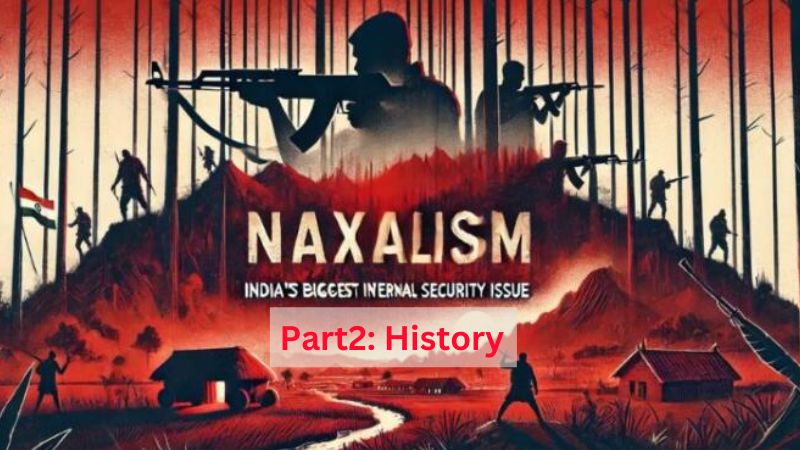
Naxalism TFI Series Part 2: History

Share on FacebookShare on X

In the past few months, the crackdown against the Naxalites has intensified. Union Minister Amit Shah has vowed to eradicate Naxalism from India by March 2026. As defined as India’s biggest internal security threat by former PM Dr Manmohan Singh, Naxalism has its roots from the pre-Independence era, although it started as a violent uprising against the state in 1967. 

Currently, the roots of Naxalism may seem to be weak and on the path of being uprooted, there was a time when it was all pervasive in many parts of India and was the biggest challenge for the nation on the internal front. In the last part, we discussed the esteemed goal of eradicating Naxalism by 2026 and to what extent it is possible. This piece, however, deliberates on the rise of Naxalism in India and how it was associated with farmers but was not influenced by their struggle rather by the global politics. 

RelatedPosts

‘Tamil Nadu Will Not Forgive’: Piyush Goyal Predicts NDA Surge, Intensifies Attack on Stalin

Ukraine Reaches Out to India as War Diplomacy Deepens in New Delhi

Hormuz Reopens, Xi ‘Very Happy’ as Trump Signals Major Shift in US–China Equation

Load More

Also Read: TFI Series on Naxalism Part 1: March 2026 deadline: Forces launch final strike on India’s biggest Internal Security problem

During the British-era, peasantry protests were very common and because of India’s identity of agri-based economy these movements got significant political attention and mileage. The feudal system deprived landless peasants and agri-labourers. It was demanded that these deprived people should be given their own land to cultivate.

Inspired by the October Revolution in the Soviet Union, Indian communists formed Communist Party of India (CPI) in 1920 which consolidated their ideology in India for the first time. The communists too tried to woo farmers for their proletariat-led violent revolution.

By the time Mao came to the centre of contemporary communism, he propagated the idea of peasant-led revolution contrary to earlier communist idea of working class-led revolution as he emphasised the developed countries have no such industrial architecture that working class could bring the revolution and so farmers will bring revolution in developing countries.

This theory moved Indian communists as they saw the violent peasant revolution as more happening in India. In 1951, a CPI delegation visited Moscow and met Joseph Stalin, the stalwart of Communism at that time.

Contrary to their anticipation, Stalin urged them to abandon violent revolution and focus of democratic measures. One of the reasons for Stalin’s suggestion was the emerging global dynamics. At that time India was nascently independent and World War II had ended. Stalin was trying to build new allies as he was sceptical of the West despite fighting alongside them.

He was seeing independent India as a potential ally and thus the idea of supporting violent revolution was obviously a bad gamble.

Stalin’s suggestion got well with a part of the cadre but the younger generation stuck to the idea of violent revolution on the lines of Mao.

Interestingly, this innate difference between Mao and Stalin and accordingly between Soviet and China also influenced Communists of India that gave rise to Naxalism later. More unfortunate was the fact that the peasantry and working class in India had nothing to do with Mao and Stalin. So basically, fanaticism of Indian communists with Soviet and China disillusioned them from seeking desired solutions and pushed them to override popular sentiment for their political ideological tussle.

As a result of Stalin’s blow, CPI ended the Telangana Movement (1946-51) which sought to liberate peasantry from the clutches of feudal landlords. Although the movement was withdrawn, intra CPI division widened.

This culminated into the formation of CPI (Marxist) in 1964. Again, the division had little to do with problems in India. The division took place because China and the Soviet had started antagonising each other.

With the division, the proponents and followers of violent revolutions moved to further ultra-left. By that time Naxalism was running as an undercurrent and was not streamlined into a movement, it needed a trigger.

In 1965, two incidents happened that made the rise of Naxalism in India inevitable. The first one was when Maoist Charu Majumdar wrote 8 essays which became ‘Eight Historic Documents’ against Soviet’s revisionism and in favour of Mao’s idea of peasant led revolution.

Second was the Indo-Pak war. Due to arch rivalry between India and Pakistan, the newly formed CPI-M condemned China for extending support to Pakistan. This didn’t go well with party leaders who had allegiance to China and Mao rather than India.

But the last hammer was the 1967 elections, when CPI-M fought the elections and ousted Congress. After detaching from CPI, CPI (M) was a new front propagating armed struggle as the only path. But as CPI-M swore to the Indian Constitution, the ultra radical members became resolute to carry on the armed struggle by themselves.

These ultra-left comrades antagonised CPI(M) based on Majumdar’s idea that the time was ripe for raising armed struggle as the Chinese Communist Revolution, Vietnam War and Cuban Revolution had already happened.

Since, the Maoists already dominated Naxalbari, Phansidewa, and Kharibari regions with a collective area of over 300 square miles in Darjeeling district of West Bengal, the ‘Siliguri Group,’ led by Majumdar, Kanu Sanyal and Jangal Santhal, called for starting armed struggle which initiated the 1967 Naxalbari Uprising.

On March 3, 1967, just a day after the CPI-M led united front was sworn in West Bengal, some 150 peasants armed with bows and spears, took around 11000 kg of paddy and started seizing land. The peasants were enraged that the CPI(M) did not retain workers in the party.

Within 4 months, peasant committees were set up which pledged to redistribute land to sharecroppers. It was this uprising when the Naxalism as armed conflict entrench in the Indian territory that would hurt India for over next 50 years.

The landlords (jotedar), during the uprising, beat up a sharecropper named Bigul Kisan which led to violence as peasant committees started seizing lands, ration and arms from landlords.

For the first time CPI(M), which was in power, faced the heat of their own aggressive ideology. The govt mobilised police. But little did they know that they were mobilising the police for a protracted guerrilla war.

On May 23, the police arrived at the Jhuragaon village in Naxalbari where the Maoists were trying to seize the land. The peasant group led by Jangal Santhal surrounded the police party and killed inspector Sonam Wangdi. In retaliation, the police forces entered Naxalbari region two days later and after being opposed they opened fire which got 11 people, including women and children, killed.

Also Read: TFI Series on Naxalism Part 3: Operation Steeplechase, the first major crackdown on Naxalites

Later on June 28, Charu Majumdar publicly announced plans to forcibly seize lands which led to attacks on jotedars and police using bows and arrows.

On the same day as Majumdar addressed peasants, Radio Peking (Beijing) announced, “A peel of spring thunder has crushed over the land of India. Revolutionary peasants in the Darjeeling area have risen in rebellion.”

By July, Naxalbari, Phansidewa, and Kharibari came under full control of Naxalites. For the first time on July 19, paramilitary forces were sent to deal with Naxalism.

Being antagonistic, CPI(M) expelled those involved in unrest. Charu, Santhal, Kanyal and others later formed CPI Marxist-Leninist (ML) in 1969.

History tells us that the democratic measures could have been used to get and secure the rights of peasantry but the ultra-left cadre of the communists were more inclined to bring China-like revolution in India. In their hunger for that, they got disillusioned with the ground reality. A little comparative study was enough to understand that situations in India and China were completely different to begin with and hence a same yardstick couldn’t be used. The swings due to global politics, allegiance to Mao and China more than India and its philosophy, and, most importantly, believing in Chinese revolution more than Indian national movement became the premise for this 50 year menace.

In the next part, we will bring the struggle of Indian armed forces and the brief history of the nascent stage of Naxalism after it held the ground. Till then stay tuned!

Tags: Charu MajumdarChinaChinese revolutionCommunistCPICPI(ML)CPIMJangal SanthalKanu SanyalNaxalbariNaxalismRussiaStalin
ShareTweetSend
Previous Post

PM Modi honors Netaji, leaves colonial apologist, Winston Churchill fans in tears

Next Post

Mahakumbh 2025: A Spiritual Convergence of Celebrities, Business Tycoons, and Politicians

Related Posts

Shankar Ghosh casts his ballot as Bengal’s battle for power enters a crucial phase.
Politics

BJP Signals Bengal Breakthrough as Shankar Ghosh Predicts End of TMC Rule

23 April 2026

Siliguri BJP candidate and sitting MLA Shankar Ghosh declared that the BJP was on course to form the government...

Where fear once shaped the vote, long queues now suggest a different democratic moment.
Politics

Security Grid, Long Queues: How West Bengal’s Poll Day Is Being Redrawn

23 April 2026

West Bengal’s polling day is unfolding under a tight security umbrella. Voters are turning out in visible numbers across...

Amit Shah intensifies BJP’s Bengal campaign, targeting TMC over governance, corruption allegations, and the “Babri Masjid-modelled” controversy.
Politics

“Syndicate Raj to Babri Row”: Shah Sharpens BJP’s Bengal Offensive Against TMC

22 April 2026

Union Home Minister Amit Shah stepped up the Bharatiya Janata Party’s campaign in West Bengal, directly targeting Chief Minister...

Load More

Leave a Reply Cancel reply

Your email address will not be published. Required fields are marked *

I agree to the Terms of use and Privacy Policy.
This site is protected by reCAPTCHA and the Google Privacy Policy and Terms of Service apply.

Currently Playing

From Runways to Warships: India’s Firefighting Warrior Built for Bases & Battles| IAF | VayuShakti

From Runways to Warships: India’s Firefighting Warrior Built for Bases & Battles| IAF | VayuShakti

00:05:40

Ethanol, EVs and Solar- How India’s Energy Game Is Changing | Modi on LPG & Crude Oil | war| Hormuz

00:05:21

Truth of IRIS Dena: 8 Days That Changed Narrative | War zone Reality, Not an Indian Navy Exercise

00:08:02

300 Million Euros for SCALP: Strategic Necessity or Costly Dependency on France300

00:04:06

Tejas Mk1A: 19th aircraft coupled but Not Delivered: What Is Holding Back the IAF Induction?

00:07:21
Facebook Twitter Instagram Youtube
tfipostTfipost.com
Right Wing | News Analysis | Indian Opinion
  • About us
  • Contact Us
  • Careers
  • Brand Partnerships
  • Terms of use
  • Privacy Policy
  • Sitemap

©2026 TFI Media Private Limited

No Result
View All Result
  • Premium
  • Politics
    • Analysis
    • Opinions
    • Trending
  • Economy
    • Business
    • Finance
  • Defense
    • Defence
    • Strategy
    • Weaponry
  • Geopolitics
    • Africa
    • Americas
    • Asia Pacific
    • Europe
    • South Asia
    • West Asia
  • Knowledge
    • Culture
    • History
    • Indology
  • Law
  • Lounge
    • Books
    • Cinema
    • Food
    • Health
    • Sports
    • technology
    • Travel
    • Satire
TFIPOST हिन्दी
TFIPOST Global

©2026 TFI Media Private Limited