

















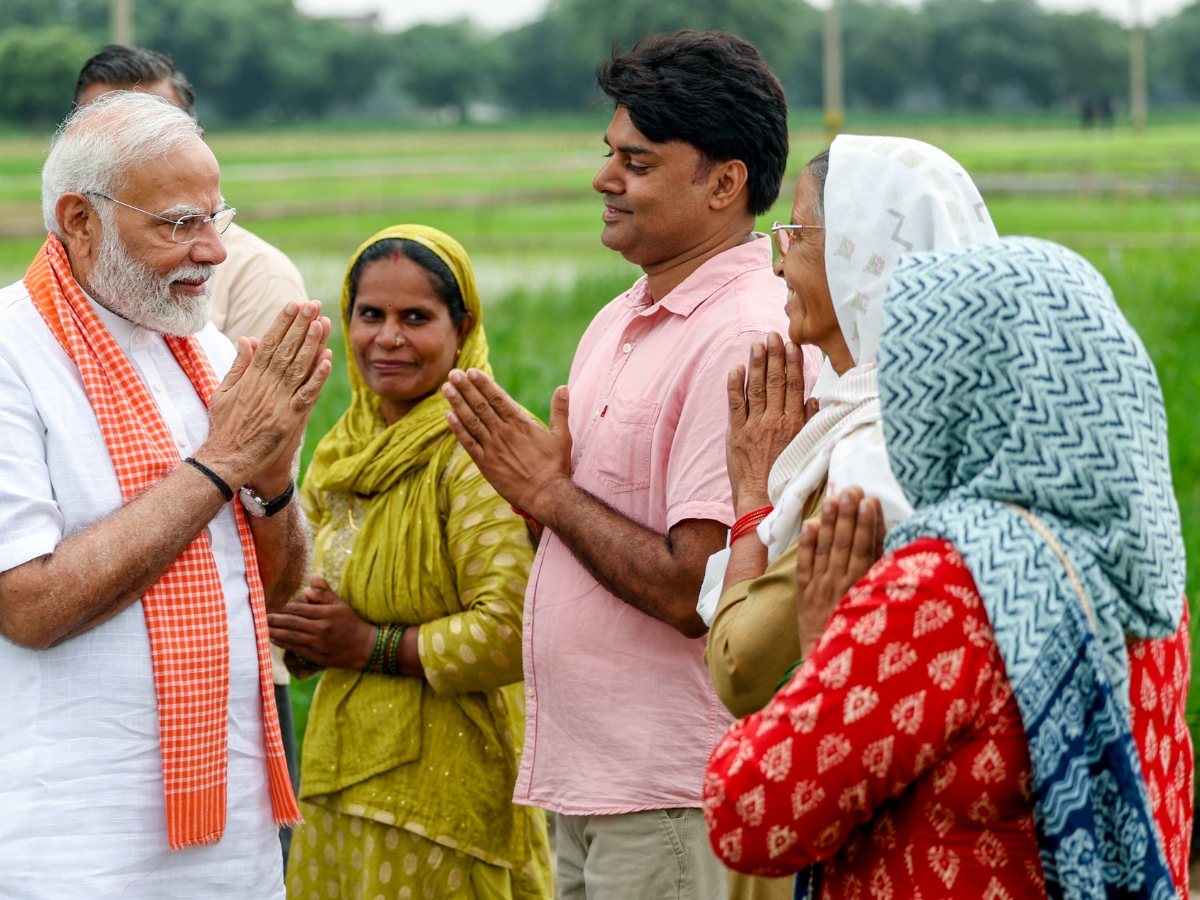
One of the most significant claims made during the conference concerned India’s agricultural growth. According to the Prime Minister, the country recorded an average annual agricultural growth rate exceeding four per cent during the past decade, marking the first such period since Independence. He also referred to a World Bank study which, according to him, indicated that approximately 50 crore people had moved out of poverty over 12 to 13 years, with rural poverty declining substantially. He emphasised that small farmers and agricultural labourers had also benefited from the wider economic transformation.
PM Modi argued that agricultural development must go beyond increasing foodgrain production. For decades, India’s farming system concentrated heavily on ensuring sufficient supplies of wheat and rice. While this approach helped the country achieve food security following the Green Revolution, changing consumer preferences, international markets and environmental pressures now require a more diversified agricultural economy. He urged farmers not to remain excessively dependent on wheat, rice and sugarcane, advocating greater investment in dairy, fisheries, poultry, horticulture and beekeeping.
The Prime Minister also highlighted India’s expanding position in international agricultural markets. He said annual agricultural exports had crossed Rs 4 lakh crore, reflecting the growing capacity of Indian farmers to supply global demand. He cited India’s leading position in the production of milk, pulses, jute, rice and millets, alongside its strong performance in wheat, cotton, fruits, vegetables and fish. These achievements, he argued, demonstrate that Indian agriculture has considerable untapped potential.
Another important focus was the growing role of technology in farming. PM Modi highlighted the Namo Drone Didi initiative, under which rural women are being trained to operate drones for agricultural applications, including spraying fertilisers and pesticides. He challenged the perception that advanced technology cannot be successfully adopted in villages, pointing to the growing participation of women in technology-driven agricultural activities.
He also emphasised the importance of artificial intelligence, sensors, modern machinery and agricultural engineering. Scientists, engineers and young entrepreneurs, he said, should work together to develop affordable equipment that reduces cultivation costs and improves productivity. The concept of ‘Lab to Land’, which involves taking scientific research directly to farmers, was another major theme of his address. He cited the expansion of soil-testing facilities from a few hundred in 2014 to more than 8,400 as an example of improved agricultural infrastructure.
Solar energy was presented as another opportunity to increase rural earnings. Referring to the PM-KUSUM scheme, PM Modi said nearly 12 lakh solar pumps had been provided to farmers. Solar-powered irrigation can reduce electricity expenses while allowing cultivators to generate additional income through surplus power generation. He described this transition as transforming the country’s ‘Annadatas’ into ‘Urjadatas’.
The Prime Minister also highlighted the importance of Farmer Producer Organisations (FPOs), which enable small cultivators to work collectively, access processing facilities and connect with larger markets. The government has established a target of 10,000 FPOs to strengthen farmers’ bargaining power and improve their commercial opportunities. Such organisations can be particularly valuable for small landholders who often struggle to compete independently in increasingly organised agricultural markets.
On the question of input costs, PM Modi said the government had spent approximately Rs 16 lakh crore over 12 years to keep fertilisers affordable despite fluctuations in international prices. He cited the difference between global and domestic prices of DAP and urea as evidence of the financial support extended to cultivators. He also referred to the government’s decision to limit diesel price increases during international energy-market volatility, claiming that a substantial portion of the additional cost had been absorbed rather than passed on to consumers and farmers.
However, the success of agricultural modernisation will ultimately depend on whether farmers experience tangible improvements in their earnings. Technology, diversification and solar infrastructure require investment, training, storage facilities and dependable buyers. Small cultivators, particularly those dependent on seasonal rainfall, need practical support to adopt new methods without exposing themselves to additional financial risks.
The message from the conference was clear: India’s agricultural future cannot depend solely on increasing production. It must focus on productivity, profitability, sustainability and opportunities beyond traditional cultivation. PM Modi’s vision of Viksit Bharat places farmers at the heart of national progress, but its real success will be measured in stronger rural incomes, financially secure farming households and a more resilient agricultural economy.