












TFIPOST हिन्दी
TFIPOST Global
Tfipost.com
Tfipost.com
No Result
View All Result
  • Premium
  • Politics
    • All
    • Analysis
    • Opinions
    • Trending
    India called the shots, not the ceasefire: Rajnath SIngh

    India Chose the Moment, Not the Pressure: Rajnath Singh Says Operation Sindoor Halt Was a Strategic Call

    Chief Minister Yogi Adityanath speaking during the special session of the Uttar Pradesh Assembly

    Yogi Exposes Opposition’s ‘Anti-Women’ Politics as UP Assembly Session on Reservation Turns Into Reality Check for SP-Congress

    Countdown to May 4: NDA Projects Gains Across Crucial States

    BJP Signals Broad NDA Upswing as Poonawalla Foresees Wins Across Key States

    Calcutta High Court Rebuke: Border Fencing Delay Puts Bengal Government Under Fire

    Calcutta High Court Rebuke: Border Fencing Delay Puts Bengal Government Under Fire

    • Analysis
    • Opinions
    • Trending
  • Economy
    • All
    • Business
    • Economy1
    • Finance
    AI, access, and accountability: Goyal’s push to transform India’s procurement system through GeM

    Goyal Speeds Up GeM Revamp, Pushes AI Tools and Wider Access to Reform Procurement System

    What are the Benefits of Critical Health Insurance in Serious Illness Cases?

    What are the Benefits of Critical Health Insurance in Serious Illness Cases?

    How Digital Verification Works In Online Personal Loan Applications

    How Digital Verification Works In Online Personal Loan Applications

    Top Features to Look for in the Best Health Insurance Plan

    Top Features to Look for in the Best Health Insurance Plan

    • Business
    • Finance
  • Defense
    • All
    • Defence
    • Strategy
    • Weaponry
    India called the shots, not the ceasefire: Rajnath SIngh

    India Chose the Moment, Not the Pressure: Rajnath Singh Says Operation Sindoor Halt Was a Strategic Call

    Why is Making a Jet Engine so Hard | The failure of Kaveri

    Why is Making a Jet Engine so Hard | The failure of Kaveri

    Rajnath Singh at SCO, reaffirming India’s zero-tolerance stand on terrorism.

    “No More Double Standards”: Rajnath Singh’s SCO Message Rewrites India’s Terror Response Playbook

    Recovered arms and arrests have intensified scrutiny on a suspected cross-border terror network.

    Pakistan’s Proxy War Faces a Setback as Delhi Terror Plot is Crushed, 18 Weapons Seized

    • Defence
    • Strategy
    • Weaponry
  • Geopolitics
    • All
    • Africa
    • Americas
    • Asia Pacific
    • Europe
    • South Asia
    • West Asia
    Karachi Pact 1949: How Pakistan Cemented Control Over Gilgit-Baltistan Without Its People’s Consent

    Karachi Pact 1949: How Pakistan Cemented Control Over Gilgit-Baltistan Without Its People’s Consent

    When law becomes an instrument of exclusion, persecution moves far beyond the courtroom.

    Ahmadis in Pakistan: From Faith to Marginalisation Under Law and Society

    When uranium becomes strategy, India moves first.

    India’s $4 Billion Uranium Coup with Kazakhstan Rewrites the Global Nuclear Balance

    “Fixing the World”: What a Century of Big Ideas Reveals About Us

    “Fixing the World”: What a Century of Big Ideas Reveals About Us

    • Africa
    • Americas
    • Asia Pacific
    • Europe
    • South Asia
    • West Asia
  • Knowledge
    • All
    • Culture
    • Education
    • History
    • Indology
    Chants of ‘Jai Badri Vishal’ Echo as Badrinath Portals Open; All Four Dhams Now Accessible to Pilgrims

    Chants of ‘Jai Badri Vishal’ Echo as Badrinath Portals Open; All Four Dhams Now Accessible to Pilgrims

    Kedarnath Dham Portals Open for Devotees After 181 Days Amid Vedic Chants, Traditional Rituals

    Kedarnath Dham Portals Open for Devotees After 181 Days Amid Vedic Chants, Traditional Rituals

    Sardar Patel and Amit Shah

    Sardar Patel’s 1947 Blueprint on Minority Quotas Resurfaces as Reservation Debate Returns to Centre Stage

    The 1973 Constitution and ‘Bhutto’ the Man Who Made It: What Pakistan Owes and What It Destroyed

    The 1973 Constitution and ‘Bhutto’ the Man Who Made It: What Pakistan Owes and What It Destroyed

    • Culture
    • History
    • Indology
  • Law
  • Lounge
    • All
    • Books
    • Cinema
    • Entertainment
    • Food
    • Games
    • Health
    • Lifestyle
    • Satire
    • Sports
    • technology
    • Travel
    594 km of speed, scale and connectivity; the Ganga Expressway opens a new development corridor across Uttar Pradesh.

    Modi Opens 594-Km Ganga Expressway, Unveils Uttar Pradesh’s New High-Speed Growth Corridor

    When regulation meets the algorithm

    India Tightens Digital Control as Online Blocking Orders Surge to 24,300 Amid AI Deepfake Trend

    Digital Data Collection In India

    India’s Data Reset Begins: Census 2027 to Become First Fully Digital Population Count

    5 Facilities in Bengaluru Specializing in Mental Health Treatment for Those with Cancer

    5 Facilities in Bengaluru Specializing in Mental Health Treatment for Those with Cancer

    • Books
    • Cinema
    • Food
    • Health
    • Sports
    • technology
    • Travel
    • Satire
Tfipost.com
  • Premium
  • Politics
    • All
    • Analysis
    • Opinions
    • Trending
    India called the shots, not the ceasefire: Rajnath SIngh

    India Chose the Moment, Not the Pressure: Rajnath Singh Says Operation Sindoor Halt Was a Strategic Call

    Chief Minister Yogi Adityanath speaking during the special session of the Uttar Pradesh Assembly

    Yogi Exposes Opposition’s ‘Anti-Women’ Politics as UP Assembly Session on Reservation Turns Into Reality Check for SP-Congress

    Countdown to May 4: NDA Projects Gains Across Crucial States

    BJP Signals Broad NDA Upswing as Poonawalla Foresees Wins Across Key States

    Calcutta High Court Rebuke: Border Fencing Delay Puts Bengal Government Under Fire

    Calcutta High Court Rebuke: Border Fencing Delay Puts Bengal Government Under Fire

    • Analysis
    • Opinions
    • Trending
  • Economy
    • All
    • Business
    • Economy1
    • Finance
    AI, access, and accountability: Goyal’s push to transform India’s procurement system through GeM

    Goyal Speeds Up GeM Revamp, Pushes AI Tools and Wider Access to Reform Procurement System

    What are the Benefits of Critical Health Insurance in Serious Illness Cases?

    What are the Benefits of Critical Health Insurance in Serious Illness Cases?

    How Digital Verification Works In Online Personal Loan Applications

    How Digital Verification Works In Online Personal Loan Applications

    Top Features to Look for in the Best Health Insurance Plan

    Top Features to Look for in the Best Health Insurance Plan

    • Business
    • Finance
  • Defense
    • All
    • Defence
    • Strategy
    • Weaponry
    India called the shots, not the ceasefire: Rajnath SIngh

    India Chose the Moment, Not the Pressure: Rajnath Singh Says Operation Sindoor Halt Was a Strategic Call

    Why is Making a Jet Engine so Hard | The failure of Kaveri

    Why is Making a Jet Engine so Hard | The failure of Kaveri

    Rajnath Singh at SCO, reaffirming India’s zero-tolerance stand on terrorism.

    “No More Double Standards”: Rajnath Singh’s SCO Message Rewrites India’s Terror Response Playbook

    Recovered arms and arrests have intensified scrutiny on a suspected cross-border terror network.

    Pakistan’s Proxy War Faces a Setback as Delhi Terror Plot is Crushed, 18 Weapons Seized

    • Defence
    • Strategy
    • Weaponry
  • Geopolitics
    • All
    • Africa
    • Americas
    • Asia Pacific
    • Europe
    • South Asia
    • West Asia
    Karachi Pact 1949: How Pakistan Cemented Control Over Gilgit-Baltistan Without Its People’s Consent

    Karachi Pact 1949: How Pakistan Cemented Control Over Gilgit-Baltistan Without Its People’s Consent

    When law becomes an instrument of exclusion, persecution moves far beyond the courtroom.

    Ahmadis in Pakistan: From Faith to Marginalisation Under Law and Society

    When uranium becomes strategy, India moves first.

    India’s $4 Billion Uranium Coup with Kazakhstan Rewrites the Global Nuclear Balance

    “Fixing the World”: What a Century of Big Ideas Reveals About Us

    “Fixing the World”: What a Century of Big Ideas Reveals About Us

    • Africa
    • Americas
    • Asia Pacific
    • Europe
    • South Asia
    • West Asia
  • Knowledge
    • All
    • Culture
    • Education
    • History
    • Indology
    Chants of ‘Jai Badri Vishal’ Echo as Badrinath Portals Open; All Four Dhams Now Accessible to Pilgrims

    Chants of ‘Jai Badri Vishal’ Echo as Badrinath Portals Open; All Four Dhams Now Accessible to Pilgrims

    Kedarnath Dham Portals Open for Devotees After 181 Days Amid Vedic Chants, Traditional Rituals

    Kedarnath Dham Portals Open for Devotees After 181 Days Amid Vedic Chants, Traditional Rituals

    Sardar Patel and Amit Shah

    Sardar Patel’s 1947 Blueprint on Minority Quotas Resurfaces as Reservation Debate Returns to Centre Stage

    The 1973 Constitution and ‘Bhutto’ the Man Who Made It: What Pakistan Owes and What It Destroyed

    The 1973 Constitution and ‘Bhutto’ the Man Who Made It: What Pakistan Owes and What It Destroyed

    • Culture
    • History
    • Indology
  • Law
  • Lounge
    • All
    • Books
    • Cinema
    • Entertainment
    • Food
    • Games
    • Health
    • Lifestyle
    • Satire
    • Sports
    • technology
    • Travel
    594 km of speed, scale and connectivity; the Ganga Expressway opens a new development corridor across Uttar Pradesh.

    Modi Opens 594-Km Ganga Expressway, Unveils Uttar Pradesh’s New High-Speed Growth Corridor

    When regulation meets the algorithm

    India Tightens Digital Control as Online Blocking Orders Surge to 24,300 Amid AI Deepfake Trend

    Digital Data Collection In India

    India’s Data Reset Begins: Census 2027 to Become First Fully Digital Population Count

    5 Facilities in Bengaluru Specializing in Mental Health Treatment for Those with Cancer

    5 Facilities in Bengaluru Specializing in Mental Health Treatment for Those with Cancer

    • Books
    • Cinema
    • Food
    • Health
    • Sports
    • technology
    • Travel
    • Satire
No Result
View All Result
Tfipost.com
Tfipost.com
No Result
View All Result
  • Premium
  • Politics
  • Economy
  • Defense
  • Geopolitics
  • Knowledge
  • Law
  • Lounge

Syria Marks the Latest Chapter: The Arab Spring’s Dark Legacy of Perpetual Bloodshed and Tyranny

TFI Desk by TFI Desk
12 December 2024
in Geopolitics, Opinions
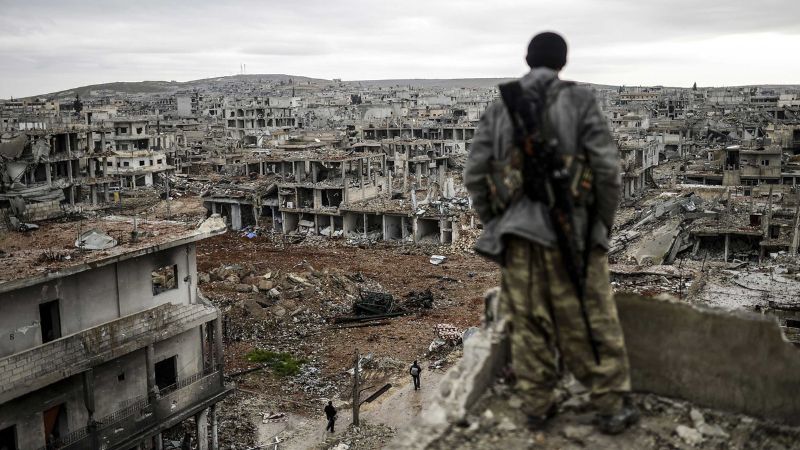
Syria Marks the Latest Chapter: The Arab Spring's Dark Legacy of Perpetual Bloodshed and Tyranny

Syria Marks the Latest Chapter: The Arab Spring's Dark Legacy of Perpetual Bloodshed and Tyranny (Image Credit - History.com)

Share on FacebookShare on X

The Arab Spring, which began in late 2010, was a moment of hope for many people in West Asia and North Africa. It symbolized a powerful call for change in a region long dominated by autocratic rulers who denied basic freedoms and rights. What started as a grassroots movement for Democracy and justice soon showed how complex and challenging it is to transform political systems.

The movement that started in Tunisia a decade back can be considered at an end this month when the rebels finally materialized in Syria over the weekend. In a lightning offensive launched this month, the rebel forces led by a terror outfit named Hayat Tahrir al-Sham (HTS) overthrew 24 years of Assad regime in Syria. 

RelatedPosts

Ahmadis in Pakistan: From Faith to Marginalisation Under Law and Society

Pakistan Tried to Bury an NYT Report. It Only Exposed Asim Munir’s Panic

Indian Army Joins Egypt for Fourth Edition of Special Forces Exercise Cyclone

Load More

The spark for the Arab Spring came from Tunisia. Mohamed Bouazizi, a street vendor, set himself on fire to stage protest against corruption and government oppression. This tragic act of self-immolation ignited protests across the country, leading to the removal of Tunisia’s long-time president. The events in Tunisia galvanised people in other countries like Egypt, Libya, Yemen, and Syria to protest against their governments, demanding freedom, Democracy, and better living conditions.

With Assad’s ouster, Assad has become the latest head of the state in West Asia and North Africa to be overthrown since the Arab Spring began in 2010. Before him, Tunisia’s Zine al-Abidine Ben Ali, Egypt’s Hosni Mubarak, and Libya’s Muammar Gaddafi met similar fates. The fall of these leaders led to either new autocrats, such as in Egypt, or plunged these nations into years of political instability and conflict, such as in Libya and Yemen.

The other part of the Arab Spring is that it brought chaos and violence, giving rise to extremist ideologies and terrorism in West Asia, which has long repercussions on society. It also brought global and regional players to indulge more militarily and prolonged the conflict. For example, Syria, Yemen and somehow Egypt. 

The Challenges of Building Democracy

As we all know, destroying something is very easy, but building a new one is tough. The same is true for Arab Spring. Removing a dictator turned out to be the easy part. Building a stable and democratic system afterwards proved far more difficult. Each country experienced its own unique challenges:

Tunisia initially showed promise. After overthrowing its dictator, the country held free elections in 2014 and wrote a new constitution the same year. Many saw it as a success story. Unfortunately, the dream didn’t last. Over time, President Kais Saied consolidated power, undermining democratic progress, and reverted to autocratic ways soon after his election. He sacked the government in 2021 and suspended the parliament. He reigned by decree until 2022 when he overturned a new constitution through a vote in which only 30% of the population participated. The new referendum increased the president’s powers significantly. 

Since taking power, Saied has imprisoned several major politicians, and the democratic norms that the Arab Spring wanted are still lacking in spirit, if not in letter. This is how the spirit of revolution was killed in 10 years. 

Also Read: Regime Change and Shadow Wars: America’s Silent Strategy in West Asia

Egypt was another dramatic case. After ousting President Hosni Mubarak, who had ruled Egypt since 1981, was forced to quit after a massive protest at Freedom Square in Cairo. Then, the country elected Mohamed Morsi, a member of the dreaded outfit Muslim Brotherhood, in its first free elections in 2012. But his government was short-lived. The military, led by Abdel Fattah al-Sisi, staged a coup and took control, bringing back a repressive regime that was even stricter than Mubarak’s.

Libya faced one of the worst outcomes. It is considered that the demonstrations and protests were ignited by global powers such as the US. In February 2011, anti-government rallies against Muammar al-Gaddafi’s four-decade-long leadership devolved into a civil war that resulted in his deposition and death. As government forces pounded demonstrators on Gaddafi’s instructions for weeks, even the military’s support for the regime dwindled. The Transitional National Council (TNC), an opposition body, was formed. As Gaddafi’s forces continued to kill demonstrators, the UN authorized military action, and as a result, the US, British, and French soldiers bombed Libyan forces, crippling much of Gaddafi’s air force.

Once, Libya’s economy was leading in the African continent. The per-capita income was the highest, and the economy was growing at a wonderful pace. After the violent overthrow of Muammar Gaddafi, the country descended into chaos. Various groups fought for control, turning Libya into a fractured state with ongoing violence and instability. International interventions, while aimed at helping, only made things worse.

Yemen saw similar turmoil. The removal of President Ali Abdullah Saleh didn’t lead to peace. Instead, the country plunged into a brutal civil war involving regional and international powers. A confrontation between Iran-backed Houthis and the internationally recognized government, which is supported by Saudi Arabia and the United Arab Emirates. According to the United Nations, the conflict in Yemen has resulted in the world’s worst humanitarian crisis.

Today, Yemen suffers one of the worst humanitarian crises in the world, with millions of people facing starvation and displacement. According to the UN, by 2023, the war has displaced around 4.5 million people in Yemen, with approximately 24.1 million, or roughly 80% of the population, in need of humanitarian aid.

Syria experienced the most prolonged and devastating conflict. Protests against President Bashar al-Assad were met with brutal violence, sparking a civil war that lasted over a decade. In the early years of the war, Assad’s regime lost control of more than half of the country, but Russian military intervention in 2015 reversed the tide. With the support of Russia, Iran, and Iran-backed terror outfits, notably Hezbollah, Assad’s army used brutal force to retake control of the majority of the country.

The war became a complex mess involving global powers and regional actors, while terrorist groups like ISIS added to the destruction. Millions of Syrians were killed, displaced, or left to live in unimaginable hardship.

The civil unrest in Syria was being considered as Frozen; different forces were ruling the different parts of the country. However, the geopolitical change in West Asia following the Israel and Hamas war. The terror outfit HTS received possible support from the US and its allies and suddenly brought Syrian forces to their knees, which resulted in the end of a long conflict in Syria. 

As a result, the Israel Defence Forces have taken advantage of the situation and captured Syrian land, destroying the military and naval capabilities of Syria in the name of creating a buffer zone. 

Lessons from the Arab Spring

The Arab Spring taught us some hard lessons about political change:

Removing a dictator is not enough. True Democracy requires strong institutions, political unity, and a culture of compromise. Without these, revolutions often lead to more chaos or a return to autocracy. Without a democratic political culture in society, democratic institutions can not function, and if democratic institutions are not functioning, then Democracy will not flourish.

Entrenched power structures are hard to dismantle. In many countries, the military and other elites quickly regained control, reversing the gains of the uprisings.

International involvement often complicates things. Foreign powers intervened in places like Libya and Syria, but their actions were often driven by their own interests rather than a genuine desire to help the native people. 

The people’s desire for change remains strong. Despite the setbacks, the Arab Spring showed the power of ordinary citizens to challenge even the most repressive regimes. The hope for dignity, rights, and justice has not disappeared. However, the different ethnic and sectarian forces fooled people of being their Massiah, but the truth is that they want power in their hands. 

The Tragedy and the Hope

The greatest tragedy of the Arab Spring is the disillusionment it caused. Many people who believed in the possibility of change saw their hopes crushed by new dictatorships or ongoing violence. This has left many skeptical about whether peaceful change is even possible.

The story of the Arab Spring highlights the challenges of building Democracy in societies with deep-rooted authoritarian traditions and complex social dynamics. Real change takes time, patience, and effort. The outcomes of the Arab Spring have been disappointing to say the least. 


Tags: Arab SpringBashar Al AsadegyptHosni MubarakLibyaMuammar GaddafiMuslim
ShareTweetSend
Previous Post

How a ‘false’ rape case probe bust a mega money laundering nexus involving corrupt IAS officer and RJD MLA

Next Post

The Impact of Mobile Connectivity on Real-Time Digital Entertainment

Related Posts

Karachi Pact 1949: How Pakistan Cemented Control Over Gilgit-Baltistan Without Its People’s Consent
Geopolitics

Karachi Pact 1949: How Pakistan Cemented Control Over Gilgit-Baltistan Without Its People’s Consent

29 April 2026

The story of Pakistan's control over Gilgit-Baltistan begins not with the will of its people, but with a secret...

When law becomes an instrument of exclusion, persecution moves far beyond the courtroom.
Geopolitics

Ahmadis in Pakistan: From Faith to Marginalisation Under Law and Society

28 April 2026

The troubles of Ahmadis in Pakistan are not merely those of a religious minority. Their story is about how...

When uranium becomes strategy, India moves first.
Geopolitics

India’s $4 Billion Uranium Coup with Kazakhstan Rewrites the Global Nuclear Balance

28 April 2026

India has secured a landmark uranium supply agreement worth more than US$4 billion with Kazakhstan’s state-run mining giant Kazatomprom....

Load More

Leave a Reply Cancel reply

Your email address will not be published. Required fields are marked *

I agree to the Terms of use and Privacy Policy.
This site is protected by reCAPTCHA and the Google Privacy Policy and Terms of Service apply.

Currently Playing

From Runways to Warships: India’s Firefighting Warrior Built for Bases & Battles| IAF | VayuShakti

From Runways to Warships: India’s Firefighting Warrior Built for Bases & Battles| IAF | VayuShakti

00:05:40

Ethanol, EVs and Solar- How India’s Energy Game Is Changing | Modi on LPG & Crude Oil | war| Hormuz

00:05:21

Truth of IRIS Dena: 8 Days That Changed Narrative | War zone Reality, Not an Indian Navy Exercise

00:08:02

300 Million Euros for SCALP: Strategic Necessity or Costly Dependency on France300

00:04:06

Tejas Mk1A: 19th aircraft coupled but Not Delivered: What Is Holding Back the IAF Induction?

00:07:21
Facebook Twitter Instagram Youtube
tfipostTfipost.com
Right Wing | News Analysis | Indian Opinion
  • About us
  • Contact Us
  • Careers
  • Brand Partnerships
  • Terms of use
  • Privacy Policy
  • Sitemap

©2026 TFI Media Private Limited

No Result
View All Result
  • Premium
  • Politics
    • Analysis
    • Opinions
    • Trending
  • Economy
    • Business
    • Finance
  • Defense
    • Defence
    • Strategy
    • Weaponry
  • Geopolitics
    • Africa
    • Americas
    • Asia Pacific
    • Europe
    • South Asia
    • West Asia
  • Knowledge
    • Culture
    • History
    • Indology
  • Law
  • Lounge
    • Books
    • Cinema
    • Food
    • Health
    • Sports
    • technology
    • Travel
    • Satire
TFIPOST हिन्दी
TFIPOST Global

©2026 TFI Media Private Limited