













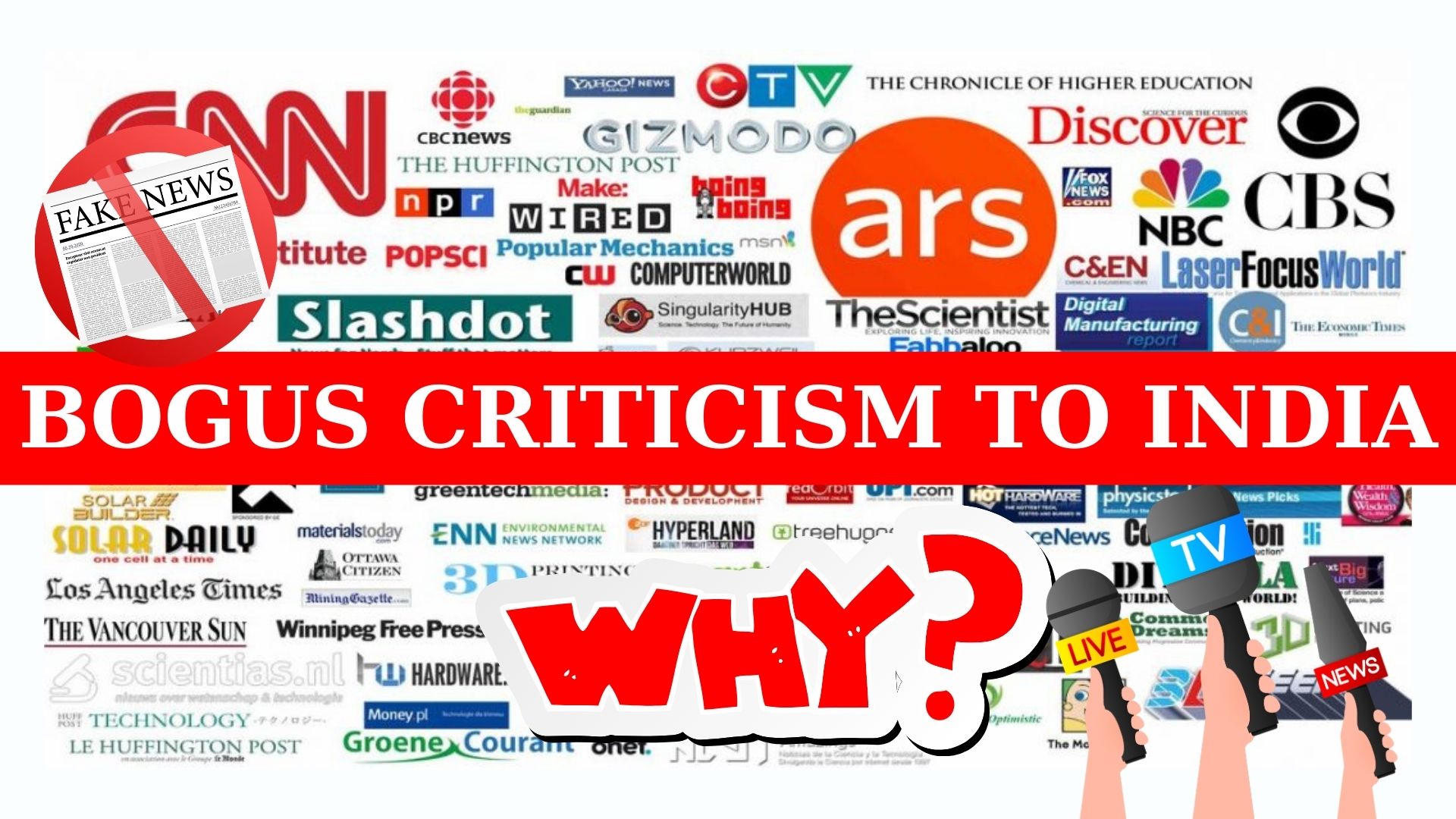
Recent instances of Western media coverage on India have sparked controversy, with reports often timed to coincide with significant events like national elections or state visits. For example, “exclusive” articles by outlets like The Washington Post and The Guardian have alleged Indian involvement in extraterritorial killings and human rights violations. These reports raise questions about the motivations behind Western media’s portrayal of India and its potential implications.
Western Media’s Hostility
The Washington Post, The Guardian, and The New York Times, among other prominent Western media outlets, have often been criticized for their negative portrayal of India, particularly under the leadership of Prime Minister Narendra Modi. These outlets have published articles and reports that highlight alleged human rights violations, political controversies, and societal unrest within India.
For instance, The Washington Post published an “exclusive” report titled ‘An assassination plot on American soil reveals a darker side of Modi’s India’ during India’s national elections. This timing raises questions about the intention behind the report, suggesting a possible attempt to influence public opinion during a crucial political moment in India.
Similarly, The Guardian released its own “exclusive” story claiming India’s involvement in “20 assassinations” in Pakistan since 2020. Again, the timing of this report coincides with significant political events in India, indicating a deliberate effort to shape the narrative surrounding India’s actions on the global stage.
Even during Prime Minister Modi’s state visit to Washington DC, The New York Times published an article titled ‘In Hosting Modi, Biden Pushes Democracy Concerns to the Background’, which seemed to downplay the significance of the visit and instead focused on perceived shortcomings in India’s democracy.
Analyzing Timing
The timing of these reports in relation to significant events in India is not coincidental. National elections, state visits, or other political milestones present opportune moments for Western media to highlight issues within India, often portraying them in a negative light. This timing suggests a strategic effort to influence public opinion both within India and internationally.
By releasing reports during such critical moments, Western media outlets can potentially impact electoral outcomes or shape perceptions of India’s government and its policies. This tactic may be driven by various motivations, including ideological differences, financial interests, or a desire to assert Western influence in global affairs.
Motivations Behind Hostility
The Western media’s hostility towards India can be attributed to several factors, including Western exceptionalism, financial influences from various sources, and the growing influence of wokeism.
Western Exceptionalism
It refers to the belief that Western nations, particularly the United States and European countries, possess unique qualities or values that make them superior to other nations. This mindset can manifest in biased media coverage that portrays non-Western countries, like India, through a negative lens.
Western media outlets may perceive themselves as guardians of democracy, human rights, and liberal values, leading them to scrutinize countries like India more harshly.
This bias is evident in the selective highlighting of India’s flaws while downplaying similar issues within Western countries.
The portrayal of India as a “problematic” democracy or as a hindrance to Western values can serve to reinforce Western superiority and justify interventionist attitudes.
Financial Influences
Western media outlets may be influenced by financial interests, including investments or partnerships from countries like Qatar, Saudi Arabia, or China. These financial ties can shape editorial decisions and coverage to align with the interests of their investors.
Qatar, Saudi Arabia, and China have significant investments in Western media companies, which could influence editorial content to avoid criticism of these countries or their allies.
Media outlets may prioritize narratives that do not jeopardize lucrative business deals or advertising revenue from these countries.
The financial influence of these nations may contribute to a biased portrayal of India, particularly if it conflicts with their geopolitical interests or alliances.
Influence of Wokeism
Wokeism, a cultural and political movement advocating for social justice and awareness of systemic inequalities, has gained traction in Western societies. This movement can influence media coverage by emphasizing issues related to identity politics, colonialism, and historical injustices.
Western media outlets influenced by woke ideology may frame coverage of India through the lens of colonial history, caste discrimination, or religious tensions.
The focus on social justice issues may lead to exaggerated or sensationalized narratives that portray India as inherently oppressive or regressive.
Wokeism’s emphasis on intersectionality may prioritize certain groups’ perspectives while marginalizing others, contributing to biased portrayals of complex issues within India.
Also Read; “Controversial, What about Babri, and more” How Foreign media portrayed Shree Ram Mandir
Selective Liberalism and Double Standards
Western media coverage of India often reveals a pattern of selective liberalism and double standards, wherein similar issues are treated differently depending on whether they occur in India or the West. This discrepancy highlights inherent biases within Western media and raises questions about the consistency and impartiality of their reporting.
Treatment of Human Rights Abuses
Western media outlets may extensively cover human rights abuses in India, such as alleged violations in Kashmir or incidents of religious violence.
However, they may downplay or ignore comparable human rights abuses in Western countries, such as police brutality, mass incarceration, or systemic racism.
This selective focus suggests a bias against India, where incidents are amplified to portray the country in a negative light, while similar issues within Western countries receive less scrutiny.
Western media’s failure to hold their own governments and institutions accountable undermines their credibility and reinforces perceptions of double standards.
Scrutiny of Democratic Processes
Western media often scrutinize India’s democratic processes, including elections, political controversies, and freedom of speech issues.
However, they may overlook or downplay democratic shortcomings in Western countries, such as voter suppression, corporate influence in politics, or attacks on press freedom.
This disparity suggests a tendency to apply different standards when evaluating democratic practices based on the country in question.
By disproportionately focusing on democratic challenges in India while glossing over similar issues in the West, Western media perpetuate a narrative of Indian exceptionalism and reinforce stereotypes of “backwardness” or “chaos” in non-Western democracies.
Representation of Social Movements
Western media may amplify social movements and protests in India, such as farmer protests or movements for minority rights.
However, they may underreport or misrepresent social movements in Western countries, such as Black Lives Matter protests or labor strikes.
This discrepancy reflects a bias in the portrayal of social activism, where movements in India are often framed as heroic struggles against authoritarianism, while similar movements in the West are sometimes portrayed as disruptive or divisive.
By prioritizing certain narratives over others, Western media perpetuate stereotypes and distortions that shape global perceptions of social and political movements.
Also Read: The Fallout of Pro-Khalistan Slogans at Trudeau’s Event and India’s Summon to Canadian Diplomat
The Khalistani Narrative
The portrayal of Khalistani activists and militants in Western media is a complex issue that often reflects broader biases and geopolitical interests. The term “Khalistan” refers to a proposed independent Sikh state in Punjab, India, which gained traction during the 1980s due to perceived discrimination against Sikhs and demands for greater autonomy. However, the movement also saw the rise of militant groups advocating for separatism through violent means, leading to a period of insurgency and terrorism in Punjab.
Portrayal in Western Media
Khalistani activists and militants are often portrayed differently in Western media compared to other terrorist organizations. While groups like Al-Qaeda or ISIS are unequivocally labeled as terrorist organizations, Khalistani militants may be depicted as “activists” or “freedom fighters” in some contexts, particularly within Sikh diaspora communities in Western countries.
This portrayal can be influenced by several factors, including historical grievances, perceptions of religious persecution, and political sympathies. Additionally, Khalistani narratives often emphasize Sikh identity and grievances against the Indian state, framing the movement within the context of self-determination and human rights.
Canada has played a significant role in harboring Khalistani militants and providing a platform for their activities. During the 1980s and 1990s, Canada became a hub for Khalistani separatist movements, with some Canadian politicians and Sikh community leaders openly supporting the cause of Khalistan.
One of the most infamous incidents associated with Khalistani terrorism was the 1985 bombing of Air India Flight 182, which killed 329 people, primarily Canadian citizens of Indian descent. The mastermind behind the attack, Talwinder Singh Parmar, operated freely in Canada despite being wanted by Indian authorities for his involvement in terrorist activities.
Despite evidence linking Khalistani militants to acts of terrorism, some elements within the Canadian government and media have downplayed or ignored the threat posed by these groups, contributing to a narrative that legitimizes their activities.
Parallels with Other Terrorist Organizations
The treatment of Khalistani militants in Western media raises questions about double standards and inconsistencies in labeling terrorist organizations. While groups like ISIS or Al-Qaeda are universally condemned as terrorist organizations, Khalistani militants may receive more sympathetic treatment in some Western circles.
This disparity in labeling can be attributed to various factors, including cultural sensitivities, geopolitical considerations, and historical alliances. Additionally, the portrayal of Khalistani militants as “activists” or “freedom fighters” may reflect attempts to contextualize their actions within broader narratives of colonialism, religious persecution, and self-determination.
Impact on India-West Relations
Negative media coverage of India in Western countries can have significant implications for India-West relations, affecting perceptions, diplomatic ties, and cooperation on various fronts. The portrayal of India in a negative light can shape public opinion in Western countries, influencing policymakers and decision-makers and potentially impacting bilateral relations in the following ways
Diplomatic Strain
Negative media coverage may strain diplomatic relations between India and Western countries, leading to tensions and misunderstandings.
Public perception influenced by biased reporting can create mistrust and hinder effective communication between governments.
Economic and Trade Relations
Negative perceptions of India fueled by media coverage may deter Western investors and businesses from engaging with the Indian market.
Trade relations may suffer as a result of diminished confidence in India’s stability and economic prospects.
Security Cooperation
Biased media portrayals can undermine security cooperation between India and Western countries, particularly in areas such as counterterrorism and defense.
Mutual trust and intelligence-sharing may be compromised, hampering efforts to address shared security challenges.
Soft Power and Cultural Exchange
Negative media coverage can tarnish India’s image as a vibrant democracy and cultural powerhouse, undermining its soft power and influence in the West.
People-to-people exchanges and cultural diplomacy may be hindered, limiting opportunities for mutual understanding and collaboration.
Fostering a Positive Narrative
Fostering a positive narrative about India is essential for strengthening India-West relations and countering authoritarian influences, such as those emanating from China. Here’s why
India and Western countries share common values of democracy, rule of law, and human rights, making them natural partners in addressing global challenges.
Promoting a positive narrative about India reinforces the importance of this strategic partnership and highlights areas of mutual interest and cooperation.
Counterbalancing Authoritarianism
Positive media coverage of India helps counterbalance authoritarian narratives propagated by countries like China, which seek to undermine democratic values and norms.
Emphasizing India’s democratic credentials and commitment to pluralism strengthens the case for a rules-based international order and defends against authoritarian encroachments.
Enhancing Mutual Understanding
A positive narrative fosters mutual understanding and goodwill between India and Western countries, laying the groundwork for deeper engagement and collaboration.
By highlighting India’s achievements, contributions, and potential, positive media coverage promotes a more nuanced and balanced understanding of the country’s role in the world.
Western media’s portrayal of India often reflects biases influenced by factors like Western exceptionalism, financial interests, and woke ideology. Double standards in coverage underscore inconsistencies in labeling and reporting on issues like human rights and terrorism. These portrayals can strain bilateral relations, impacting diplomacy, trade, and security cooperation. A call for a more balanced and nuanced approach is imperative to foster mutual understanding and cooperation between India and the West, promoting a fairer representation of India’s complexities and contributions on the global stage.
Also Read: Western Media’s Art of Distortion in Portraying India