















TFIPOST हिन्दी
TFIPOST Global
Tfipost.com
Tfipost.com
No Result
View All Result
  • Premium
  • Politics
    • All
    • Analysis
    • Opinions
    • Trending
    New address, old controversy as “Sheesh Mahal 2”

    From Flagstaff Road To Lodhi Estate: Kejriwal’s New Bungalow Triggers Fresh “Sheesh Mahal 2” Political Controversy

    The Bengal campaign takes a more aggressive turn.

    “Bengal Under Mafia Grip”: Yogi Adityanath Escalates Attack On TMC, Flags ‘Identity Crisis’ In Rally

    From AAP dissenter to BJP rebel, Swati Maliwal sharpens her attack on Kejriwal

    Did Swati Maliwal Just Puncture AAP’s Politics of Virtue?

    Ahmadis in Pakistan: From Faith to Marginalisation Under Law and Society

    Ahmadis in Pakistan: From Faith to Marginalisation Under Law and Society

    • Analysis
    • Opinions
    • Trending
  • Economy
    • All
    • Business
    • Economy1
    • Finance
    Ahmadis in Pakistan: From Faith to Marginalisation Under Law and Society

    Ahmadis in Pakistan: From Faith to Marginalisation Under Law and Society

    Open Demat Account with Zero Annual Maintenance Charges What to Look For

    Open Demat Account with Zero Annual Maintenance Charges What to Look For

    Blood in the Meadows: How the Pahalgam Terror Attack Exposed Calculated Targeting of Civilians in Kashmir

    Blood in the Meadows: How the Pahalgam Terror Attack Exposed Calculated Targeting of Civilians in Kashmir

    Indian economy is stronger than the ranking.

    IMF Ranking Jolt Misread: India’s Economy Strong, Sixth Spot Just a Statistical Glitch

    • Business
    • Finance
  • Defense
    • All
    • Defence
    • Strategy
    • Weaponry
    The scars of Pahalgam endure, even as the nation moves forward

    Pahalgam Anniversary: Modi Signals Firm National Stand as India Reasserts Anti-Terror Resolve

    Precision Strike: Indian Army Approves Procurement of Indigenous MPATGM to Modernise Infantry Wings

    Precision Strike: Indian Army Approves Procurement of Indigenous MPATGM to Modernise Infantry Wings

    Amit Shah on sensitive Gorkha land issue

    Shah Assures Constitutional Path for Gorkha Issue, Intensifies Attack on TMC at Bengal Rally

    Historic Leap for ‘Aatmanirbhar Bharat’ as First India-Made BrahMos Missiles from Lucknow Join Indian Army

    Historic Leap for ‘Aatmanirbhar Bharat’ as First India-Made BrahMos Missiles from Lucknow Join Indian Army

    • Defence
    • Strategy
    • Weaponry
  • Geopolitics
    • All
    • Africa
    • Americas
    • Asia Pacific
    • Europe
    • South Asia
    • West Asia
    Pakistan Tried to Bury an NYT Report. It Only Exposed Asim Munir’s Panic

    Pakistan Tried to Bury an NYT Report. It Only Exposed Asim Munir’s Panic

    The Strategic Double-Game: Pakistan’s Fatal Gambit in the US-Iran War

    The Strategic Double-Game: Pakistan’s Fatal Gambit in the US-Iran War

    When a repost became a foreign policy problem

    Trump’s India ‘Hellhole’ Insult Triggers Backlash as New Delhi Hits Back, US Scrambles for Damage Control

    PLA Navy Day Spectacle vs South China Sea Reality: How Beijing’s Naval Pageantry Masks Maritime Coercion

    PLA Navy Day Spectacle vs South China Sea Reality: How Beijing’s Naval Pageantry Masks Maritime Coercion

    • Africa
    • Americas
    • Asia Pacific
    • Europe
    • South Asia
    • West Asia
  • Knowledge
    • All
    • Culture
    • Education
    • History
    • Indology
    Chants of ‘Jai Badri Vishal’ Echo as Badrinath Portals Open; All Four Dhams Now Accessible to Pilgrims

    Chants of ‘Jai Badri Vishal’ Echo as Badrinath Portals Open; All Four Dhams Now Accessible to Pilgrims

    Kedarnath Dham Portals Open for Devotees After 181 Days Amid Vedic Chants, Traditional Rituals

    Kedarnath Dham Portals Open for Devotees After 181 Days Amid Vedic Chants, Traditional Rituals

    Sardar Patel and Amit Shah

    Sardar Patel’s 1947 Blueprint on Minority Quotas Resurfaces as Reservation Debate Returns to Centre Stage

    The 1973 Constitution and ‘Bhutto’ the Man Who Made It: What Pakistan Owes and What It Destroyed

    The 1973 Constitution and ‘Bhutto’ the Man Who Made It: What Pakistan Owes and What It Destroyed

    • Culture
    • History
    • Indology
  • Law
  • Lounge
    • All
    • Books
    • Cinema
    • Entertainment
    • Food
    • Games
    • Health
    • Lifestyle
    • Satire
    • Sports
    • technology
    • Travel
    Digital Data Collection In India

    India’s Data Reset Begins: Census 2027 to Become First Fully Digital Population Count

    5 Facilities in Bengaluru Specializing in Mental Health Treatment for Those with Cancer

    5 Facilities in Bengaluru Specializing in Mental Health Treatment for Those with Cancer

    UNESCO World Book Day and Copyright Day

    World Book Day 2026: UNESCO’s Multilingual Push Aligns with India’s Deep Literary Continuum

    Fashion Fusion Accessory Pairings That Modernize Your Look

    Fashion Fusion Accessory Pairings That Modernize Your Look

    • Books
    • Cinema
    • Food
    • Health
    • Sports
    • technology
    • Travel
    • Satire
Tfipost.com
  • Premium
  • Politics
    • All
    • Analysis
    • Opinions
    • Trending
    New address, old controversy as “Sheesh Mahal 2”

    From Flagstaff Road To Lodhi Estate: Kejriwal’s New Bungalow Triggers Fresh “Sheesh Mahal 2” Political Controversy

    The Bengal campaign takes a more aggressive turn.

    “Bengal Under Mafia Grip”: Yogi Adityanath Escalates Attack On TMC, Flags ‘Identity Crisis’ In Rally

    From AAP dissenter to BJP rebel, Swati Maliwal sharpens her attack on Kejriwal

    Did Swati Maliwal Just Puncture AAP’s Politics of Virtue?

    Ahmadis in Pakistan: From Faith to Marginalisation Under Law and Society

    Ahmadis in Pakistan: From Faith to Marginalisation Under Law and Society

    • Analysis
    • Opinions
    • Trending
  • Economy
    • All
    • Business
    • Economy1
    • Finance
    Ahmadis in Pakistan: From Faith to Marginalisation Under Law and Society

    Ahmadis in Pakistan: From Faith to Marginalisation Under Law and Society

    Open Demat Account with Zero Annual Maintenance Charges What to Look For

    Open Demat Account with Zero Annual Maintenance Charges What to Look For

    Blood in the Meadows: How the Pahalgam Terror Attack Exposed Calculated Targeting of Civilians in Kashmir

    Blood in the Meadows: How the Pahalgam Terror Attack Exposed Calculated Targeting of Civilians in Kashmir

    Indian economy is stronger than the ranking.

    IMF Ranking Jolt Misread: India’s Economy Strong, Sixth Spot Just a Statistical Glitch

    • Business
    • Finance
  • Defense
    • All
    • Defence
    • Strategy
    • Weaponry
    The scars of Pahalgam endure, even as the nation moves forward

    Pahalgam Anniversary: Modi Signals Firm National Stand as India Reasserts Anti-Terror Resolve

    Precision Strike: Indian Army Approves Procurement of Indigenous MPATGM to Modernise Infantry Wings

    Precision Strike: Indian Army Approves Procurement of Indigenous MPATGM to Modernise Infantry Wings

    Amit Shah on sensitive Gorkha land issue

    Shah Assures Constitutional Path for Gorkha Issue, Intensifies Attack on TMC at Bengal Rally

    Historic Leap for ‘Aatmanirbhar Bharat’ as First India-Made BrahMos Missiles from Lucknow Join Indian Army

    Historic Leap for ‘Aatmanirbhar Bharat’ as First India-Made BrahMos Missiles from Lucknow Join Indian Army

    • Defence
    • Strategy
    • Weaponry
  • Geopolitics
    • All
    • Africa
    • Americas
    • Asia Pacific
    • Europe
    • South Asia
    • West Asia
    Pakistan Tried to Bury an NYT Report. It Only Exposed Asim Munir’s Panic

    Pakistan Tried to Bury an NYT Report. It Only Exposed Asim Munir’s Panic

    The Strategic Double-Game: Pakistan’s Fatal Gambit in the US-Iran War

    The Strategic Double-Game: Pakistan’s Fatal Gambit in the US-Iran War

    When a repost became a foreign policy problem

    Trump’s India ‘Hellhole’ Insult Triggers Backlash as New Delhi Hits Back, US Scrambles for Damage Control

    PLA Navy Day Spectacle vs South China Sea Reality: How Beijing’s Naval Pageantry Masks Maritime Coercion

    PLA Navy Day Spectacle vs South China Sea Reality: How Beijing’s Naval Pageantry Masks Maritime Coercion

    • Africa
    • Americas
    • Asia Pacific
    • Europe
    • South Asia
    • West Asia
  • Knowledge
    • All
    • Culture
    • Education
    • History
    • Indology
    Chants of ‘Jai Badri Vishal’ Echo as Badrinath Portals Open; All Four Dhams Now Accessible to Pilgrims

    Chants of ‘Jai Badri Vishal’ Echo as Badrinath Portals Open; All Four Dhams Now Accessible to Pilgrims

    Kedarnath Dham Portals Open for Devotees After 181 Days Amid Vedic Chants, Traditional Rituals

    Kedarnath Dham Portals Open for Devotees After 181 Days Amid Vedic Chants, Traditional Rituals

    Sardar Patel and Amit Shah

    Sardar Patel’s 1947 Blueprint on Minority Quotas Resurfaces as Reservation Debate Returns to Centre Stage

    The 1973 Constitution and ‘Bhutto’ the Man Who Made It: What Pakistan Owes and What It Destroyed

    The 1973 Constitution and ‘Bhutto’ the Man Who Made It: What Pakistan Owes and What It Destroyed

    • Culture
    • History
    • Indology
  • Law
  • Lounge
    • All
    • Books
    • Cinema
    • Entertainment
    • Food
    • Games
    • Health
    • Lifestyle
    • Satire
    • Sports
    • technology
    • Travel
    Digital Data Collection In India

    India’s Data Reset Begins: Census 2027 to Become First Fully Digital Population Count

    5 Facilities in Bengaluru Specializing in Mental Health Treatment for Those with Cancer

    5 Facilities in Bengaluru Specializing in Mental Health Treatment for Those with Cancer

    UNESCO World Book Day and Copyright Day

    World Book Day 2026: UNESCO’s Multilingual Push Aligns with India’s Deep Literary Continuum

    Fashion Fusion Accessory Pairings That Modernize Your Look

    Fashion Fusion Accessory Pairings That Modernize Your Look

    • Books
    • Cinema
    • Food
    • Health
    • Sports
    • technology
    • Travel
    • Satire
No Result
View All Result
Tfipost.com
Tfipost.com
No Result
View All Result
  • Premium
  • Politics
  • Economy
  • Defense
  • Geopolitics
  • Knowledge
  • Law
  • Lounge

Modi@8 – 8 things that PM Modi should do immediately

Abhishek Kumar Singh by Abhishek Kumar Singh
24 June 2022
in Opinions
Modi@8 – 8 things that PM Modi should do immediately
Share on FacebookShare on X

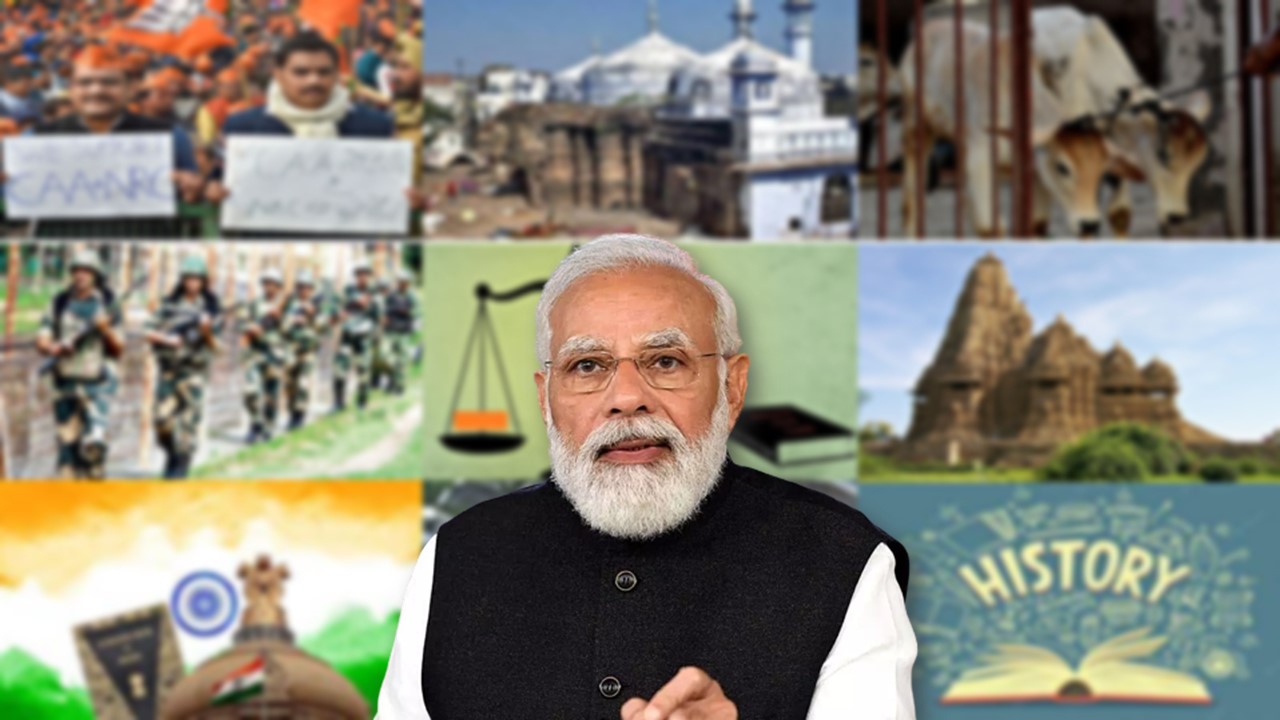
Since becoming the Prime Minister in 2014, PM Modi has established his credentials as a reformer and has proved to be a prime minister worth a salt. Under his able leadership, India is slowly breaking the shackles of the colonial ‘hangover’ steeped in the socialist era of Nehruvianism.

His promise of ‘Acche Din‘ and his dream for a new India rests on his vision of India as a young nation that is developing into a millennium-old civilization. Even after this, a lot of work remains to be done. If done at the earliest, these initiatives will establish India as a complete, strong and religious nation. Let’s see which are those 8 tasks that PM Modi should do immediately.

RelatedPosts

The Two-Thirds Manoeuvre: How AAP MPs Legalised Their Switch To BJP

Trump’s India ‘Hellhole’ Insult Triggers Backlash as New Delhi Hits Back, US Scrambles for Damage Control

Record Voter Turnout in Bengal and Tamil Nadu Redefines Electoral Mood as Poll Battle Builds Toward May 4 Verdict

Load More

 Doing away with Places of Worship Act

The Places of Worship (Special Provisions) Act was passed by the Parliament with a view to prohibit the conversion of any place of worship and to maintain the religious character of any place of worship. The cut-off date was considered as August 15, 1947. The Places of Worship Act is applicable to all religious places except in the case of Ram Janmabhoomi.

Today, the Places of Worship Act violates the rights of Hindus, who are demanding rightful ownership of their holy Mandirs, including Kashi and Mathura. After a survey of the disputed Gyanvapi structure, it has become clear that the present-day Masjid rests on the earlier temple of Vishweshwar.

Read more: Places of Worship Act is riddled with loopholes and inherently biased against Hindus

The ruins of a Hindu Mandir are also proof of this. But still, the Hindus cannot demand the handing over of the Mandirs of their deities because the Place of Worship Act is the biggest obstacle in this. The government should repeal it as soon as possible.

Implementing NEP and changing History textbooks

 The educational system in India is still a slave to the colonial prejudices that have misleadingly documented India’s journey as a nation. The Indian education system must evolve to be more experiential, holistic, integrated with the core values ​​of the land, inquiry-driven, learner-centred, communicative, flexible and enjoyable.

For example, history courses in India often glorify invaders and downplay the role of Indian dynasties in the curriculum. Rebel voices have been raised  in the past and historians have repeatedly sought to overthrow the hegemony of the Left by embodying the idea of ​​a unified and united India.

However, the COVID-19 pandemic was one of the main reasons for non-implementation of NEP. One of the major policy demands before the Narendra Modi government was to make Indian textbooks truthful and factual and to make them mirror a continuous civilization in the context of Indian culture, in which the truth of Islamic barbarism should be told.

The kings and leaders who led the Hindu civilization and the civilization of India should also get a place. Due to the pandemic, this holy work got delayed but there should be no more delay.

Putting an end to Conversion

Demands for an anti-conversion law have been raised at many levels.  Time and again, statements regarding the national anti-conversion law in Parliament and other houses have been made. The Vishwa Hindu Parishad has also demanded an anti-conversion law at the national level. According to a US Library of Congress (LOC) research paper, laws restricting religious conversions were originally introduced by princely states headed by Hindu royal families during the British colonial period – especially during the late 1930s and 1940s.

These states enacted laws “in an attempt to preserve the Hindu religious identity before the British missionaries”. The LOC research paper indicates that there were over a dozen princely states, including Kota, Bikaner, Jodhpur, Raigarh, Patna, Surguja, Udaipur and Kalahandi, which had such laws.

After India’s independence, Parliament introduced several anti-conversion bills, but none were enacted. First, the Indian Conversions (Regulation and Registration) Bill, introduced in 1954, sought to implement the “licensing of missionaries and registration of conversions with government officials”. The bill failed to garner majority support in the Lok Sabha.

This was followed by the Backward Communities (Religious Protection) Bill in 1960, which aimed to check the conversion of Hindus to ‘non-Indian religions’. Later, The Freedom of Religion Bill was also introduced in the Parliament in 1979. It sought an “official ban on inter-religious conversion”. These bills were not even passed by the Parliament due to lack of political support.

Read more: Understanding Ajit Doval’s “India has always been a civilizational state” statement

In 2015, the Union Law Ministry was of the opinion that a law against forced and fraudulent conversions cannot be made at the national level, as law and order is a state subject under the Constitution. However, state governments can make such laws.

Odisha and Madhya Pradesh have the oldest conversion laws, which prescribe one year (the lowest) imprisonment for forced conversions. In Himachal Pradesh and Uttarakhand, there is a provision of imprisonment of up to five years for forced conversion. In the case of a minor or a woman, the punishment is higher in all the states.

Implementation of CAA and NRC

 In December 2019, Parliament passed the Citizenship Amendment Act which allows persecuted religious minorities living in Pakistan, Bangladesh and Afghanistan to obtain Indian citizenship on a fast-track basis. Under the Act, people belonging to Hindu, Buddhist, Sikh, Jain, Parsi and Christian communities who fled to India before December 31, 2014, will be given Indian citizenship.

According to the Parliamentary Business Manual, the ‘rules’ of any law brought in the Parliament must be framed within six months of the President’s assent. During the pandemic, the Union Home Ministry was not in a position to frame rules within six months of the implementation of the CAA. But, now it can and it should. Since June 2020, the parliamentary committee has asked for time four times. Home Ministry should act on war-footing now.

Along with the CAA, it is also necessary to take steps to drive out illegal immigrants, especially Bangladeshis and Rohingya Muslims, from the country. As explained many times before, both the classes are a significant threat to the nation.

 Freeing Mandirs from government’s clutches

Since the country’s independence, the government has controlled and administered Hindu places of worship through a network of laws. The state of Karnataka alone has five separate laws that institutionalize governmental control of Hindu temples, unlike places of worship for other religions. The Hindu Religious and Charitable Endowments Department in Tamil Nadu controls over thirty-six thousand temples, 56 monasteries, 1,721 specific endowments and over 189 religious trusts.

When state governments forcefully control only Hindu temples and make other religions an exception, the much-awaited promise of a secular state becomes futile. Western-style secularism proves itself one-sided and contradictory, with the state interfering in the personal affairs of the majority religion. Furthermore, it reflects a protectionist mindset along with the belief that Hindus are unfit to run their own religious institutions.

By giving freedom to Mandirs, they will also be able to set up institutions like hospitals, schools, orphanages and old age homes under their control. BJP-ruled states such as Uttarakhand and Karnataka have taken initial steps in this direction, but there is still a need for a nationwide change on the issue. An understanding of Mandir tradition requires a relevant, ritual-specific, state-approved law to limit government control of Mandirs with fidelity.

Strengthening internal Security and curbing anti-national forces

One of the biggest challenges facing the Indian state is to strike a balance between civil liberties, the right to dissent and anarchy on the other. Protests in recent years have seen a rapid spread of riots – be it the anti-Hindu Delhi riots, fueled by dissent built on the CAA/NRC in 2020, or the Republic Day violence, which was justified as the dissent if farming comunity against the farm laws in 2021.

Public properties and rights of way were held hostage in the name of protest. The intervention of the Supreme Court was also sidelined. There was chaos from Shaheen Bagh to Singhu border. The activists had blocked highways and roads. Everyone will remember the violent movement against agricultural laws on Republic Day in Delhi on 26 January 2021.

In this regard, the organizations and non-governmental organizations still engaged in chaotic activities in the name of protest are yet to be identified by the government. The government should ensure that these anti-national entities do not get FCRA license or visa to work in India.

Judicial reforms

The need for judicial reforms has been increasing in India over the years. Cases pending before courts, lack of interaction between courts, judicial redundancies have been some of the difficult issues before the Indian judiciary which continues to operate under a restrictive framework. The justice system in India has to evolve into a modern day institution which provides timely justice. At the same time, democratization of judicial processes in terms of appointments, powers delegated to judges and timely delivery of decisions remains an issue.

India needs to pave the way for the modernization of the judiciary by allocating dedicated funds in the process. There is a need to level the infrastructure gap with the Centrally Sponsored Scheme for Judicial Structure, under which the government has released Rs 5,266 crores in the last eight years. The issue of under-utilisation of funds and poor planning of judicial infrastructure also needs to be addressed.

Presently, Indian High Courts have a list of 5.8 million pending cases and the backlog of challenging cases is one of the biggest challenges for any public institution in India. The reason for this is the huge increase in new cases, which is a result of the wide jurisdiction given to the judiciary in the Indian Constitution.

The Union Law Ministry should work with the courts to rework the Civil and Criminal Procedure Codes which hinder speedy disposal of cases. Also, a case should be made to restrict the excessive jurisdiction given to the court to take suo motu cognizance of the events  daily .

Absolute ban on killing of Cow

 About 70 years ago, the Constituent Assembly witnessed a lively debate on 24 November 1948 regarding the ban on cow slaughter. There were different opinions on whether to make it a part of fundamental rights or to include it in the Directive Principles of State Policy. After much persuasion, the majority agreed to make it a part of the Directive Principles.

Cow is considered sacred by Hindus. Cattle slaughter is a sensitive political topic, which has attracted a lot of attention since the current government came to power in 2014. After gaining power, the current government has enacted strict laws that hold individuals criminally liable for animal slaughter. It is not restricted to cows only, but also includes all types of cattle such as buffaloes, bulls, heifers, calves and camels.

A bench headed by Justice KS Radhakrishnan said that animals also have respect which cannot be arbitrarily deprived and its rights and privacy should be respected and protected from unlawful attacks. It further states that it is the duty of the court to take care of the rights of animals as they are incapable of taking care of themselves unlike human beings.

Article 48A of the Constitution of India mandates that the State make laws for the protection and improvement of the environment and to make provisions for the protection of the forests and wildlife of the country. The Constitution, under Article 51A(g), places a fundamental duty on every citizen of India to protect and improve the natural environment and to have compassion for living beings.

Apart from these, there are many other things which are included in the core principles of BJP like cleaning the Ganga, promoting the Bhagwad Geeta, full development of Northeast and bringing Uniform Civil Code into fruition etc. But BJP must first clear its old backlog otherwise all these things will turn into cancer for in country in times to come.

Support TFI:

Support us to strengthen the ‘Right’ ideology of cultural nationalism by purchasing the best quality garments from TFI-STORE.COM.

Also Watch:

Tags: GovernmentHinduIndiaIndianLawNarendra Modi
ShareTweetSend
Previous Post

This is why we need Droupadi Murmu as the President of India

Next Post

Sanjay Dutt has played the most irritating and over-the-top characters in the last 5 years

Related Posts

Resolve of a Changing Bengal: Youth, Potential, and Call for Transformation
Opinions

Resolve of a Changing Bengal: Youth, Potential, and Call for Transformation

21 April 2026

The yearning for change in the soil of Bengal is not a sudden wave, it is a convergence of...

Redefining Terms of Truly Mutual Trade Deal: Sovereignty and Strategy in the US–Bangladesh Framework
Economy

Redefining Terms of Truly Mutual Trade Deal: Sovereignty and Strategy in the US–Bangladesh Framework

15 April 2026

The debate around Bangladesh’s emerging trade framework with the United States cannot be reduced to a binary choice of...

Race Against Iran Deadline: Was Pakistan’s Ceasefire Bid Driven by the White House?
Geopolitics

Race Against Iran Deadline: Was Pakistan’s Ceasefire Bid Driven by the White House?

9 April 2026

Pakistan attempted to position itself as a peacemaker in the escalating tensions involving Iran, but the reality behind the...

Load More

Leave a Reply Cancel reply

Your email address will not be published. Required fields are marked *

I agree to the Terms of use and Privacy Policy.
This site is protected by reCAPTCHA and the Google Privacy Policy and Terms of Service apply.

Currently Playing

From Runways to Warships: India’s Firefighting Warrior Built for Bases & Battles| IAF | VayuShakti

From Runways to Warships: India’s Firefighting Warrior Built for Bases & Battles| IAF | VayuShakti

00:05:40

Ethanol, EVs and Solar- How India’s Energy Game Is Changing | Modi on LPG & Crude Oil | war| Hormuz

00:05:21

Truth of IRIS Dena: 8 Days That Changed Narrative | War zone Reality, Not an Indian Navy Exercise

00:08:02

300 Million Euros for SCALP: Strategic Necessity or Costly Dependency on France300

00:04:06

Tejas Mk1A: 19th aircraft coupled but Not Delivered: What Is Holding Back the IAF Induction?

00:07:21
Facebook Twitter Instagram Youtube
tfipostTfipost.com
Right Wing | News Analysis | Indian Opinion
  • About us
  • Contact Us
  • Careers
  • Brand Partnerships
  • Terms of use
  • Privacy Policy
  • Sitemap

©2026 TFI Media Private Limited

No Result
View All Result
  • Premium
  • Politics
    • Analysis
    • Opinions
    • Trending
  • Economy
    • Business
    • Finance
  • Defense
    • Defence
    • Strategy
    • Weaponry
  • Geopolitics
    • Africa
    • Americas
    • Asia Pacific
    • Europe
    • South Asia
    • West Asia
  • Knowledge
    • Culture
    • History
    • Indology
  • Law
  • Lounge
    • Books
    • Cinema
    • Food
    • Health
    • Sports
    • technology
    • Travel
    • Satire
TFIPOST हिन्दी
TFIPOST Global

©2026 TFI Media Private Limited