







TFIPOST हिन्दी
TFIPOST Global
Tfipost.com
Tfipost.com
No Result
View All Result
  • Premium
  • Politics
    • All
    • Analysis
    • Opinions
    • Trending
    Despite Nehru’s objection, Rajendra Prasad became India’s first President !

    How Nehru Resisted Dr. Rajendra Prasad—from Presidency to Somnath visit  and Beyond

    Nehru’s Erasure of RC Majumdar Stands as a Stark Warning about Power over History

    Nehru’s Erasure of RC Majumdar Stands as a Stark Warning about Power over History

    India Cannot Be Broken and Peace in Bangladesh Cannot Be Built Upon Delusion

    India Cannot Be Broken and Peace in Bangladesh Cannot Be Built Upon Delusion

    Maniben’s Diary: Nehru Proposed Babri Masjid Funding, Patel Said No

    Maniben’s Diary: Nehru Proposed Babri Masjid Funding, Patel Said No

    • Analysis
    • Opinions
    • Trending
  • Economy
    • All
    • Business
    • Economy1
    • Finance
    From Paper-Mandates to eNACH Registration: How Digital Mandates Are Changing Cash Flow

    From Paper-Mandates to eNACH Registration: How Digital Mandates Are Changing Cash Flow

    What is the financial management cycle?

    What is the financial management cycle?

    Smart Investment Planning: Calculating Mutual Fund SIP Growth Easily

    Smart Investment Planning: Calculating Mutual Fund SIP Growth Easily

    Convert ETH to USD Using Price Statistics for Better Trading Decisions

    Convert ETH to USD Using Price Statistics for Better Trading Decisions

    • Business
    • Finance
  • Defense
    • All
    • Defence
    • Strategy
    • Weaponry
    Veterans Deserve More Than Promises: The System Must Match the Soldier’s Sacrifice

    Veterans Deserve More Than Promises: The System Must Match the Soldier’s Sacrifice

    How Ukraine Uses Psychological and Information Warfare to ‘Win,’ and What India Can Learn From This Strategy

    How Ukraine ‘Wins’ the Psychological and Informatiaon War Despite Destruction — Lessons India Cannot Afford to Ignore

    Pakistan’s ‘ship-launched ASBM’ claim doesn’t withstand technical or industrial scrutiny

    Pakistan’s ‘ship-launched ASBM’ claim doesn’t withstand technical or industrial scrutinys

    Borders Can Change: Why Rajnath Singh’s Sindh Remark is India’s New Message to Pakistan

    Borders Can Change: Why Rajnath Singh’s Sindh Remark is India’s New Message to Pakistan

    • Defence
    • Strategy
    • Weaponry
  • Geopolitics
    • All
    • Africa
    • Americas
    • Asia Pacific
    • Europe
    • South Asia
    • West Asia
    Europe’s Slow Descent Into Weakness

    Europe: A Continent Happily Committing a Long-Drawn Suicide

    End of NATO? US Secretary of State Marco Rubio May Skip Foreign Ministers’ Meet in Brussels for First Time in Two Decades

    End of NATO? US Secretary of State Marco Rubio May Skip Foreign Ministers’ Meet in Brussels for First Time in Two Decades

    ‘Best Fighter In the World’ Dmitry Peskov Pitches For Sukhoi-57 Fighter Jet Ahead of Putin’s Visit to India

    ‘Best Fighter In the World’ Dmitry Peskov Pitches For Sukhoi-57 Fighter Jet Ahead of Putin’s Visit to India

    ‘We Are Ready to Go As Far As India Is’: Ahead of Putin Visit, Kremlin Says India-Russia Partnership Has No Limits

    ‘We Are Ready to Go As Far As India Is’: Ahead of Putin Visit, Kremlin Says India-Russia Partnership Has No Limits

    • Africa
    • Americas
    • Asia Pacific
    • Europe
    • South Asia
    • West Asia
  • Knowledge
    • All
    • Culture
    • Education
    • History
    • Indology
    Despite Nehru’s objection, Rajendra Prasad became India’s first President !

    How Nehru Resisted Dr. Rajendra Prasad—from Presidency to Somnath visit  and Beyond

    Talom Rukbo Initiated the Donyi–Polo Movement: Bringing Tribal Youth Back to Their Roots

    Talom Rukbo: The Forgotten Hero Who Shielded Arunachal’s Tribal Communities from Religious Conversion

    How Guru Tegh Bahadur The Ninth Sikh Guru Became a Martyr for Religious Freedom

    How Guru Tegh Bahadur The Ninth Sikh Guru Became a Martyr for Religious Freedom

    21 November 1962: Looking Back at the Indo-China war and How it Redefined the Border Equation

    21 November 1962: Looking Back at the Indo-China war and How it Redefined the Border Equation

    • Culture
    • History
    • Indology
  • Law
  • Lounge
    • All
    • Books
    • Cinema
    • Entertainment
    • Food
    • Games
    • Health
    • Lifestyle
    • Satire
    • Sports
    • technology
    • Travel
    감정을 가진 로봇의 시대가 오고 있다

    감정을 가진 로봇의 시대가 오고 있다

    Is AISaver Face Swap the Best Tool for Face Swap Video Online Free in 2025?

    Is AISaver Face Swap the Best Tool for Face Swap Video Online Free in 2025?

    Why Fat Analysis Matters in the Food and Feed  Industry?

    Why Fat Analysis Matters in the Food and Feed Industry?

    Heart Surgery Hospital in Delhi: What to Expect During Your Procedure

    Heart Surgery Hospital in Delhi: What to Expect During Your Procedure

    • Books
    • Cinema
    • Food
    • Health
    • Sports
    • technology
    • Travel
    • Satire
Tfipost.com
  • Premium
  • Politics
    • All
    • Analysis
    • Opinions
    • Trending
    Despite Nehru’s objection, Rajendra Prasad became India’s first President !

    How Nehru Resisted Dr. Rajendra Prasad—from Presidency to Somnath visit  and Beyond

    Nehru’s Erasure of RC Majumdar Stands as a Stark Warning about Power over History

    Nehru’s Erasure of RC Majumdar Stands as a Stark Warning about Power over History

    India Cannot Be Broken and Peace in Bangladesh Cannot Be Built Upon Delusion

    India Cannot Be Broken and Peace in Bangladesh Cannot Be Built Upon Delusion

    Maniben’s Diary: Nehru Proposed Babri Masjid Funding, Patel Said No

    Maniben’s Diary: Nehru Proposed Babri Masjid Funding, Patel Said No

    • Analysis
    • Opinions
    • Trending
  • Economy
    • All
    • Business
    • Economy1
    • Finance
    From Paper-Mandates to eNACH Registration: How Digital Mandates Are Changing Cash Flow

    From Paper-Mandates to eNACH Registration: How Digital Mandates Are Changing Cash Flow

    What is the financial management cycle?

    What is the financial management cycle?

    Smart Investment Planning: Calculating Mutual Fund SIP Growth Easily

    Smart Investment Planning: Calculating Mutual Fund SIP Growth Easily

    Convert ETH to USD Using Price Statistics for Better Trading Decisions

    Convert ETH to USD Using Price Statistics for Better Trading Decisions

    • Business
    • Finance
  • Defense
    • All
    • Defence
    • Strategy
    • Weaponry
    Veterans Deserve More Than Promises: The System Must Match the Soldier’s Sacrifice

    Veterans Deserve More Than Promises: The System Must Match the Soldier’s Sacrifice

    How Ukraine Uses Psychological and Information Warfare to ‘Win,’ and What India Can Learn From This Strategy

    How Ukraine ‘Wins’ the Psychological and Informatiaon War Despite Destruction — Lessons India Cannot Afford to Ignore

    Pakistan’s ‘ship-launched ASBM’ claim doesn’t withstand technical or industrial scrutiny

    Pakistan’s ‘ship-launched ASBM’ claim doesn’t withstand technical or industrial scrutinys

    Borders Can Change: Why Rajnath Singh’s Sindh Remark is India’s New Message to Pakistan

    Borders Can Change: Why Rajnath Singh’s Sindh Remark is India’s New Message to Pakistan

    • Defence
    • Strategy
    • Weaponry
  • Geopolitics
    • All
    • Africa
    • Americas
    • Asia Pacific
    • Europe
    • South Asia
    • West Asia
    Europe’s Slow Descent Into Weakness

    Europe: A Continent Happily Committing a Long-Drawn Suicide

    End of NATO? US Secretary of State Marco Rubio May Skip Foreign Ministers’ Meet in Brussels for First Time in Two Decades

    End of NATO? US Secretary of State Marco Rubio May Skip Foreign Ministers’ Meet in Brussels for First Time in Two Decades

    ‘Best Fighter In the World’ Dmitry Peskov Pitches For Sukhoi-57 Fighter Jet Ahead of Putin’s Visit to India

    ‘Best Fighter In the World’ Dmitry Peskov Pitches For Sukhoi-57 Fighter Jet Ahead of Putin’s Visit to India

    ‘We Are Ready to Go As Far As India Is’: Ahead of Putin Visit, Kremlin Says India-Russia Partnership Has No Limits

    ‘We Are Ready to Go As Far As India Is’: Ahead of Putin Visit, Kremlin Says India-Russia Partnership Has No Limits

    • Africa
    • Americas
    • Asia Pacific
    • Europe
    • South Asia
    • West Asia
  • Knowledge
    • All
    • Culture
    • Education
    • History
    • Indology
    Despite Nehru’s objection, Rajendra Prasad became India’s first President !

    How Nehru Resisted Dr. Rajendra Prasad—from Presidency to Somnath visit  and Beyond

    Talom Rukbo Initiated the Donyi–Polo Movement: Bringing Tribal Youth Back to Their Roots

    Talom Rukbo: The Forgotten Hero Who Shielded Arunachal’s Tribal Communities from Religious Conversion

    How Guru Tegh Bahadur The Ninth Sikh Guru Became a Martyr for Religious Freedom

    How Guru Tegh Bahadur The Ninth Sikh Guru Became a Martyr for Religious Freedom

    21 November 1962: Looking Back at the Indo-China war and How it Redefined the Border Equation

    21 November 1962: Looking Back at the Indo-China war and How it Redefined the Border Equation

    • Culture
    • History
    • Indology
  • Law
  • Lounge
    • All
    • Books
    • Cinema
    • Entertainment
    • Food
    • Games
    • Health
    • Lifestyle
    • Satire
    • Sports
    • technology
    • Travel
    감정을 가진 로봇의 시대가 오고 있다

    감정을 가진 로봇의 시대가 오고 있다

    Is AISaver Face Swap the Best Tool for Face Swap Video Online Free in 2025?

    Is AISaver Face Swap the Best Tool for Face Swap Video Online Free in 2025?

    Why Fat Analysis Matters in the Food and Feed  Industry?

    Why Fat Analysis Matters in the Food and Feed Industry?

    Heart Surgery Hospital in Delhi: What to Expect During Your Procedure

    Heart Surgery Hospital in Delhi: What to Expect During Your Procedure

    • Books
    • Cinema
    • Food
    • Health
    • Sports
    • technology
    • Travel
    • Satire
No Result
View All Result
Tfipost.com
Tfipost.com
No Result
View All Result
  • Premium
  • Politics
  • Economy
  • Defense
  • Geopolitics
  • Knowledge
  • Law
  • Lounge

The living hell that communism birthed.

Shalabh Tewari by Shalabh Tewari
3 April 2018
in History
gulag prisoners
Share on FacebookShare on X

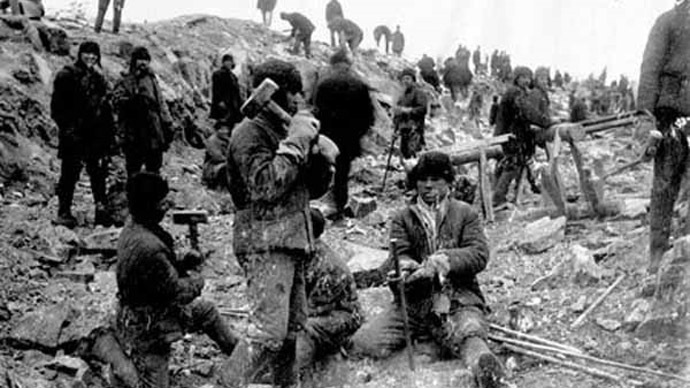
What is hell? Where is it? More often than not you would have contemplated the concept of hell, but if you were in the Soviet Union during the Russian Revolution and on the wrong side (counter revolutionary forces) then surely you would have witnessed hell on earth. The hell I am talking about is the Soviet forced labor camps also known as GULAG which is the acronym for the Main Administration of Corrective Labor Camps. Most of these camps were located in Siberia. Long before the Bolsheviks came to power in 1917, the Tsar regime had used the vast area that stretches from the Ural Mountains to the Pacific and Arctic Oceans as a place of exile and forced labor for dissidents, political prisoners, and ordinary criminals. The prisoners who were exiled lived in isolated villages, could hunt, read and write, and maintain correspondence with their friends. Political prisoners sent into exile were considered to be above the common criminal, people of ideology who were to be treated differently. When Lenin and Stalin (four years exile in Turukhansk) were ordered into exile by the Russian tsar, they traveled to their respective places of exile on their own with the help of government railway passes.

Having dedicated their lives for Marxist cause in Siberian exile under the tsar regime, the Bolsheviks knew the strengths and weaknesses of the prison and exile systems of the Russian Empire. When they came to power after overthrowing Nicholas-II, they soon introduced their own system of prisons and forced-labor camps .The exile like the one Bolsheviks had lived through under the tsars would enable their opponents to maintain and extend their opposition to Soviet power. Thus the new prison system that became the Gulag was designed to prevent and destroy any ability for enemies of the communist regime to continue their resistance. Under the brutal regime of Stalin, the Gulag was turned into a vast slave system to provide limitless human resources for building a Socialist state. To know the first hand experience of life in Gulag labor camps you do not need any time machine. The only thing you need to do is read One day in the life of Ivan Denisovich, by Alexander Solzhenitsyn.

RelatedPosts

Tracing the Anti-India Legacy of India’s Communist Movement

TFI Series on Naxalism Part 4: The Fall of Charu Majumdar and the Rise of a New Naxal Era

NATO’s dirty secret: Operation Gladio

Load More

Alexander Solzhenitsyn spent most of the time suffering the pain which the previous century had to offer. After studying mathematics and physics for ten years he was drafted into the Soviet Army at the beginning of World War II to defend his nation against Nazi aggression. On the front he was awarded the ‘Order of the Red Star’ on 8 July 1944 for destroying two German artillery batteries. In February 1945, while serving in East Prussia, Solzhenitsyn was arrested by SMERSH ( counter-intelligence agency of Soviet army ) for writing derogatory comments in private letters to a friend, Nikolai Vitkevich, about the conduct of the war by Joseph Stalin, whom he called “Khozyain” (‘the boss’), and “Balabos” (“master of the house”). Because of this, he was accused of anti-Soviet propaganda under Article 58 paragraph 10 of the Soviet criminal code. On 7th July 1945, he was sentenced by Special Council of the NKVD (Secret police of USSR) to an eight-year term in a labor camp. This was the normal sentence for most crimes under Article 58 at the time.

In the novel ‘One day in the life of Ivan Denisovich’ Alexander Solzhenitsyn describes a day of one such victim of Stalin’s forced industrialization and intensification of totalitarian control in the camp. The protagonist Ivan Denisovich Shukhov is sentenced to ten years in a special Siberian labor camp. He is accused of being a spy after escaping from German occupied territory. Like Solzhenitsyn himself, Ivan Denisovich is also discharged dishonorably from the Army. It is estimated that about four million people died in the labor camps between 1927 and 1940, not by premeditated genocide but from disease, fatigue, and starvation, which Ivan Denisovich suffers in every one of his three thousand six hundred and fifty three days. Like Ivan, Solzhenitsyn worked as a foundry man and a bricklayer during his sentence, and was the member of the 104th squad. The living and working conditions in the camp were nearly intolerable. Mattresses did not have sheets, prisoners could eat only two hundred grams of bread per meal and guards forced prisoners to undress for body searches at temperatures of forty below zero. The labor camp also degraded its prisoners mentally and spiritually. By replacing prisoners’ names with some combinations of letters and numbers, the camp erased all traces of individuality. In the novel, the camp guards refer to Ivan as “Shcha-854.” Solzhenitsyn describes the prisoners’ state of helplessness by alternating between descriptions of bodily pain that causes suffering and emphasizing on the miniscule events that bring relief from it. For example, Ivan finds a hacksaw blade, gets a little tobacco, and uses his favorite spoon. All these moments in Ivan’s day deviate from the bleak narrative description of camp routine.

An important aspect of the Gulag labor camp that the novel describes is that many characters have been convicted of activities that are not of criminal nature. For example, Gopchik (inmate) took milk to Romanian freedom fighters hiding in the woods; Ivan was Prisoner of War but when he escaped, the Russians accused him of being a German spy; Tyurin (inmate) belonged to a rich peasant family (Kulak) and he was punished for it. Stalin vowed to eliminate the Kulak class from the Soviet Union after coming to power. The gravity of the crime is dwarfed by the punishment awarded by the Soviet regime. The prisoners’ back-breaking labor in subzero temperature for minor crimes would be deemed injustice by any sane person. In the camp too, inmates got punished in case they violated any rule. In fact, the situation is so grim that anyone could land in the hole without any wrongdoing. Ivan Denisovich is threatened with three days in the hole (worst punishment within camp) simply for being ill and Buynovsky received ten days in the hole for trying to keep warm with a flannel vest. Ivan Sukhov Denisovich is trapped in jail, a fate from which he cannot escape (return home).

After reading the novel you can just think about the atrocities committed by the Soviet Union on its own citizens. The very people who promised a socialist heaven created something worse than hell. In a totalitarian regime, ‘freedom of speech’ is the first thing to go. The free flow of information is suppressed and people’s mouths are stuffed with propaganda instead of food. This is what Socialism did in the USSR and continues to do today (best example is North Korea). It is for the courage of men like Aleksandr Solzhenitsyn that truth can’t be hidden for long. When Stalin died in 1953, Nikita Khrushchev became the head of state after a three year struggle with the Stalinist hard-liners in the government. In 1956, Khrushchev delivered a speech to a closed session of the Twentieth Party Congress, in which he condemned Stalin’s personality cult and the human rights abuses under his regime. As a result, thousands of prisoners in labor camps were exonerated and Solzhenitsyn was one of them. After returning from exile, Solzhenitsyn taught at a secondary school during the day and spent his nights secretly writing the horrors of Gulag. After Krushchev’s removal in 1964, the tide again turned in favor of hardliners and the Soviet regime became more oppressive. Publishing of Solzhenitsyn’s work quickly stopped but he continued writing secretly and completed one of his masterpieces ‘The Gulag Archipelago’.

From 1958 to 1967 Solzhenitsyn worked on The Gulag Archipelago. It is a three-volume, seven part work on the Soviet prison camp system. The magnum opus is based upon Solzhenitsyn’s own experience as well as the testimony of 256 former prisoners, and Solzhenitsyn’s own research into the history of the Russian penal system. It discusses the denigration of the Communist regime into a totalitarian state. He examines the role of Vladimir Lenin, gives a chilling account of interrogation procedures, discusses prison camp in which almost everyone was a spy, and the practice of internal exile. According to Solzhenitsyn, the prison camp administrators often took advantage of their positions and governed camp areas as if they were kings and the prisoners were to mindlessly obey them. The guards behaved as savages and exploited prisoners for their own purposes and benefit. Among the prisoners there was power hierarchy, some were more privileged than others. Prisoners were lured to become informers. Rape and prostitution were part of camp life. The children born and raised in the camps were treated the same as adults. The prisoners were worked to death, starved to death, beaten to death and shot for disobedience. There was violation of human rights at a large scale. The book became popular with in no time and sold over thirty million copies in thirty-five languages. 

In 1970, Aleksandr Solzhenitsyn was awarded the Nobel Prize in Literature but he could not receive the prize personally in Stockholm at that time because he was afraid that he would not be let back into the Soviet Union. He received his prize in the 1974 ceremony only after he had been expelled from the Soviet Union.
In his Nobel Prize acceptance speech, he wrote that “…during all the years until 1961, not only was I convinced I should never see a single line of mine in print in my lifetime, but, also, I scarcely dared allow any of my close acquaintances to read anything I had written because I feared this would become known.”May be the Soviet Union does not exist anymore but the ideology that was its soul continues to exist even today and thrives in universities. The Red flag has absorbed the blood of millions of innocent people around the world. So, next time whenever you see any Lenin Statue toppling, don’t be surprised. They have no place in civil society.

“In keeping silent about evil, in burying it so deep within us that no sign of it appears on the surface, we are implanting it, and it will rise up a thousand fold in the future. When we neither punish nor reproach evildoers, we are not simply protecting their trivial old age, we are thereby ripping the foundations of justice from beneath new generations.” ― Aleksandr Solzhenitsyn

One should never forget this.
Tags: CommunismgulagUSSR
ShareTweetSend
Previous Post

Protests over SC/ST Act dilution – Is the opposition behind it?

Next Post

Smriti Irani takes a tough stand against fake news, irks liberal journalists

Related Posts

Despite Nehru’s objection, Rajendra Prasad became India’s first President !
History

How Nehru Resisted Dr. Rajendra Prasad—from Presidency to Somnath visit  and Beyond

4 December 2025

The birth anniversary of former President Dr Rajendra Prasad sparked a word of words between the ruling BJP and...

How Guru Tegh Bahadur The Ninth Sikh Guru Became a Martyr for Religious Freedom
History

How Guru Tegh Bahadur The Ninth Sikh Guru Became a Martyr for Religious Freedom

24 November 2025

Between a church and a masjid in the heart of New Delhi stands the historic Gurdwara Rakab Ganj Sahib...

21 November 1962: Looking Back at the Indo-China war and How it Redefined the Border Equation
History

21 November 1962: Looking Back at the Indo-China war and How it Redefined the Border Equation

21 November 2025

It is on this same day on 21 November 1962, the month-long India – China war came to an...

Load More

Leave a Reply Cancel reply

Your email address will not be published. Required fields are marked *

I agree to the Terms of use and Privacy Policy.
This site is protected by reCAPTCHA and the Google Privacy Policy and Terms of Service apply.

Currently Playing

A War Won From Above: The Air Campaign That Changed South Asia Forever

A War Won From Above: The Air Campaign That Changed South Asia Forever

00:07:37

‘Mad Dog’ The EX CIA Who Took Down Pakistan’s A.Q. Khan Nuclear Mafia Reveals Shocking Details

00:06:59

Dhurandar: When a Film’s Reality Shakes the Left’s Comfortable Myths

00:06:56

Tejas Under Fire — The Truth Behind the Crash, the Propaganda, and the Facts

00:07:45

Why Rahul Gandhi’s US Outreach Directs to a Web of Shadow Controversial Islamist Networks?

00:08:04
Facebook Twitter Instagram Youtube
tfipostTfipost.com
Right Wing | News Analysis | Indian Opinion
  • About us
  • Contact Us
  • Careers
  • Brand Partnerships
  • Terms of use
  • Privacy Policy
  • Sitemap

©2025 TFI Media Private Limited

No Result
View All Result
  • Premium
  • Politics
    • Analysis
    • Opinions
    • Trending
  • Economy
    • Business
    • Finance
  • Defense
    • Defence
    • Strategy
    • Weaponry
  • Geopolitics
    • Africa
    • Americas
    • Asia Pacific
    • Europe
    • South Asia
    • West Asia
  • Knowledge
    • Culture
    • History
    • Indology
  • Law
  • Lounge
    • Books
    • Cinema
    • Food
    • Health
    • Sports
    • technology
    • Travel
    • Satire
TFIPOST हिन्दी
TFIPOST Global

©2025 TFI Media Private Limited