













TFIPOST हिन्दी
TFIPOST Global
Tfipost.com
Tfipost.com
No Result
View All Result
  • Premium
  • Politics
    • All
    • Analysis
    • Opinions
    • Trending
    New address, old controversy as “Sheesh Mahal 2”

    From Flagstaff Road To Lodhi Estate: Kejriwal’s New Bungalow Triggers Fresh “Sheesh Mahal 2” Political Controversy

    The Bengal campaign takes a more aggressive turn.

    “Bengal Under Mafia Grip”: Yogi Adityanath Escalates Attack On TMC, Flags ‘Identity Crisis’ In Rally

    From AAP dissenter to BJP rebel, Swati Maliwal sharpens her attack on Kejriwal

    Did Swati Maliwal Just Puncture AAP’s Politics of Virtue?

    Ahmadis in Pakistan: From Faith to Marginalisation Under Law and Society

    Ahmadis in Pakistan: From Faith to Marginalisation Under Law and Society

    • Analysis
    • Opinions
    • Trending
  • Economy
    • All
    • Business
    • Economy1
    • Finance
    Ahmadis in Pakistan: From Faith to Marginalisation Under Law and Society

    Ahmadis in Pakistan: From Faith to Marginalisation Under Law and Society

    Open Demat Account with Zero Annual Maintenance Charges What to Look For

    Open Demat Account with Zero Annual Maintenance Charges What to Look For

    Blood in the Meadows: How the Pahalgam Terror Attack Exposed Calculated Targeting of Civilians in Kashmir

    Blood in the Meadows: How the Pahalgam Terror Attack Exposed Calculated Targeting of Civilians in Kashmir

    Indian economy is stronger than the ranking.

    IMF Ranking Jolt Misread: India’s Economy Strong, Sixth Spot Just a Statistical Glitch

    • Business
    • Finance
  • Defense
    • All
    • Defence
    • Strategy
    • Weaponry
    The scars of Pahalgam endure, even as the nation moves forward

    Pahalgam Anniversary: Modi Signals Firm National Stand as India Reasserts Anti-Terror Resolve

    Precision Strike: Indian Army Approves Procurement of Indigenous MPATGM to Modernise Infantry Wings

    Precision Strike: Indian Army Approves Procurement of Indigenous MPATGM to Modernise Infantry Wings

    Amit Shah on sensitive Gorkha land issue

    Shah Assures Constitutional Path for Gorkha Issue, Intensifies Attack on TMC at Bengal Rally

    Historic Leap for ‘Aatmanirbhar Bharat’ as First India-Made BrahMos Missiles from Lucknow Join Indian Army

    Historic Leap for ‘Aatmanirbhar Bharat’ as First India-Made BrahMos Missiles from Lucknow Join Indian Army

    • Defence
    • Strategy
    • Weaponry
  • Geopolitics
    • All
    • Africa
    • Americas
    • Asia Pacific
    • Europe
    • South Asia
    • West Asia
    Pakistan Tried to Bury an NYT Report. It Only Exposed Asim Munir’s Panic

    Pakistan Tried to Bury an NYT Report. It Only Exposed Asim Munir’s Panic

    The Strategic Double-Game: Pakistan’s Fatal Gambit in the US-Iran War

    The Strategic Double-Game: Pakistan’s Fatal Gambit in the US-Iran War

    When a repost became a foreign policy problem

    Trump’s India ‘Hellhole’ Insult Triggers Backlash as New Delhi Hits Back, US Scrambles for Damage Control

    PLA Navy Day Spectacle vs South China Sea Reality: How Beijing’s Naval Pageantry Masks Maritime Coercion

    PLA Navy Day Spectacle vs South China Sea Reality: How Beijing’s Naval Pageantry Masks Maritime Coercion

    • Africa
    • Americas
    • Asia Pacific
    • Europe
    • South Asia
    • West Asia
  • Knowledge
    • All
    • Culture
    • Education
    • History
    • Indology
    Chants of ‘Jai Badri Vishal’ Echo as Badrinath Portals Open; All Four Dhams Now Accessible to Pilgrims

    Chants of ‘Jai Badri Vishal’ Echo as Badrinath Portals Open; All Four Dhams Now Accessible to Pilgrims

    Kedarnath Dham Portals Open for Devotees After 181 Days Amid Vedic Chants, Traditional Rituals

    Kedarnath Dham Portals Open for Devotees After 181 Days Amid Vedic Chants, Traditional Rituals

    Sardar Patel and Amit Shah

    Sardar Patel’s 1947 Blueprint on Minority Quotas Resurfaces as Reservation Debate Returns to Centre Stage

    The 1973 Constitution and ‘Bhutto’ the Man Who Made It: What Pakistan Owes and What It Destroyed

    The 1973 Constitution and ‘Bhutto’ the Man Who Made It: What Pakistan Owes and What It Destroyed

    • Culture
    • History
    • Indology
  • Law
  • Lounge
    • All
    • Books
    • Cinema
    • Entertainment
    • Food
    • Games
    • Health
    • Lifestyle
    • Satire
    • Sports
    • technology
    • Travel
    Digital Data Collection In India

    India’s Data Reset Begins: Census 2027 to Become First Fully Digital Population Count

    5 Facilities in Bengaluru Specializing in Mental Health Treatment for Those with Cancer

    5 Facilities in Bengaluru Specializing in Mental Health Treatment for Those with Cancer

    UNESCO World Book Day and Copyright Day

    World Book Day 2026: UNESCO’s Multilingual Push Aligns with India’s Deep Literary Continuum

    Fashion Fusion Accessory Pairings That Modernize Your Look

    Fashion Fusion Accessory Pairings That Modernize Your Look

    • Books
    • Cinema
    • Food
    • Health
    • Sports
    • technology
    • Travel
    • Satire
Tfipost.com
  • Premium
  • Politics
    • All
    • Analysis
    • Opinions
    • Trending
    New address, old controversy as “Sheesh Mahal 2”

    From Flagstaff Road To Lodhi Estate: Kejriwal’s New Bungalow Triggers Fresh “Sheesh Mahal 2” Political Controversy

    The Bengal campaign takes a more aggressive turn.

    “Bengal Under Mafia Grip”: Yogi Adityanath Escalates Attack On TMC, Flags ‘Identity Crisis’ In Rally

    From AAP dissenter to BJP rebel, Swati Maliwal sharpens her attack on Kejriwal

    Did Swati Maliwal Just Puncture AAP’s Politics of Virtue?

    Ahmadis in Pakistan: From Faith to Marginalisation Under Law and Society

    Ahmadis in Pakistan: From Faith to Marginalisation Under Law and Society

    • Analysis
    • Opinions
    • Trending
  • Economy
    • All
    • Business
    • Economy1
    • Finance
    Ahmadis in Pakistan: From Faith to Marginalisation Under Law and Society

    Ahmadis in Pakistan: From Faith to Marginalisation Under Law and Society

    Open Demat Account with Zero Annual Maintenance Charges What to Look For

    Open Demat Account with Zero Annual Maintenance Charges What to Look For

    Blood in the Meadows: How the Pahalgam Terror Attack Exposed Calculated Targeting of Civilians in Kashmir

    Blood in the Meadows: How the Pahalgam Terror Attack Exposed Calculated Targeting of Civilians in Kashmir

    Indian economy is stronger than the ranking.

    IMF Ranking Jolt Misread: India’s Economy Strong, Sixth Spot Just a Statistical Glitch

    • Business
    • Finance
  • Defense
    • All
    • Defence
    • Strategy
    • Weaponry
    The scars of Pahalgam endure, even as the nation moves forward

    Pahalgam Anniversary: Modi Signals Firm National Stand as India Reasserts Anti-Terror Resolve

    Precision Strike: Indian Army Approves Procurement of Indigenous MPATGM to Modernise Infantry Wings

    Precision Strike: Indian Army Approves Procurement of Indigenous MPATGM to Modernise Infantry Wings

    Amit Shah on sensitive Gorkha land issue

    Shah Assures Constitutional Path for Gorkha Issue, Intensifies Attack on TMC at Bengal Rally

    Historic Leap for ‘Aatmanirbhar Bharat’ as First India-Made BrahMos Missiles from Lucknow Join Indian Army

    Historic Leap for ‘Aatmanirbhar Bharat’ as First India-Made BrahMos Missiles from Lucknow Join Indian Army

    • Defence
    • Strategy
    • Weaponry
  • Geopolitics
    • All
    • Africa
    • Americas
    • Asia Pacific
    • Europe
    • South Asia
    • West Asia
    Pakistan Tried to Bury an NYT Report. It Only Exposed Asim Munir’s Panic

    Pakistan Tried to Bury an NYT Report. It Only Exposed Asim Munir’s Panic

    The Strategic Double-Game: Pakistan’s Fatal Gambit in the US-Iran War

    The Strategic Double-Game: Pakistan’s Fatal Gambit in the US-Iran War

    When a repost became a foreign policy problem

    Trump’s India ‘Hellhole’ Insult Triggers Backlash as New Delhi Hits Back, US Scrambles for Damage Control

    PLA Navy Day Spectacle vs South China Sea Reality: How Beijing’s Naval Pageantry Masks Maritime Coercion

    PLA Navy Day Spectacle vs South China Sea Reality: How Beijing’s Naval Pageantry Masks Maritime Coercion

    • Africa
    • Americas
    • Asia Pacific
    • Europe
    • South Asia
    • West Asia
  • Knowledge
    • All
    • Culture
    • Education
    • History
    • Indology
    Chants of ‘Jai Badri Vishal’ Echo as Badrinath Portals Open; All Four Dhams Now Accessible to Pilgrims

    Chants of ‘Jai Badri Vishal’ Echo as Badrinath Portals Open; All Four Dhams Now Accessible to Pilgrims

    Kedarnath Dham Portals Open for Devotees After 181 Days Amid Vedic Chants, Traditional Rituals

    Kedarnath Dham Portals Open for Devotees After 181 Days Amid Vedic Chants, Traditional Rituals

    Sardar Patel and Amit Shah

    Sardar Patel’s 1947 Blueprint on Minority Quotas Resurfaces as Reservation Debate Returns to Centre Stage

    The 1973 Constitution and ‘Bhutto’ the Man Who Made It: What Pakistan Owes and What It Destroyed

    The 1973 Constitution and ‘Bhutto’ the Man Who Made It: What Pakistan Owes and What It Destroyed

    • Culture
    • History
    • Indology
  • Law
  • Lounge
    • All
    • Books
    • Cinema
    • Entertainment
    • Food
    • Games
    • Health
    • Lifestyle
    • Satire
    • Sports
    • technology
    • Travel
    Digital Data Collection In India

    India’s Data Reset Begins: Census 2027 to Become First Fully Digital Population Count

    5 Facilities in Bengaluru Specializing in Mental Health Treatment for Those with Cancer

    5 Facilities in Bengaluru Specializing in Mental Health Treatment for Those with Cancer

    UNESCO World Book Day and Copyright Day

    World Book Day 2026: UNESCO’s Multilingual Push Aligns with India’s Deep Literary Continuum

    Fashion Fusion Accessory Pairings That Modernize Your Look

    Fashion Fusion Accessory Pairings That Modernize Your Look

    • Books
    • Cinema
    • Food
    • Health
    • Sports
    • technology
    • Travel
    • Satire
No Result
View All Result
Tfipost.com
Tfipost.com
No Result
View All Result
  • Premium
  • Politics
  • Economy
  • Defense
  • Geopolitics
  • Knowledge
  • Law
  • Lounge

A short history of Communism in India: The Early Days

Kunal Sangwan by Kunal Sangwan
10 October 2016
in History
Communism India
Share on FacebookShare on X

For a movement that was almost eradicated four decades ago, Naxalism managing to hold a place in Indian textbooks is nothing short of an achievement, especially considering it was formulated based upon lofty ambition, not much different from the ideology it was inspired by – communism.

Today, the movement is on the fringes, barely kept alive by those still willing to disrupt internal affairs for the sake of installing a communist government at the centre.

RelatedPosts

Trump’s India ‘Hellhole’ Insult Triggers Backlash as New Delhi Hits Back, US Scrambles for Damage Control

World Book Day 2026: UNESCO’s Multilingual Push Aligns with India’s Deep Literary Continuum

Kedarnath Dham Portals Open for Devotees After 181 Days Amid Vedic Chants, Traditional Rituals

Load More

But their time might be up too, for the Maharashtra police announced in September that a coalition of various state government police forces would undertake a major sweeping operation through multiple remote areas and forests across Central India.

Yet, the movement once laid claim to relevance throughout the nation, and its history might be worth exploring, before its remnants too are eviscerated.

But Naxalism has always been inextricably linked to communism itself, making it extremely important to understand the origins of the party which was the ideology’s flag-bearer in India.

Of course, communism itself came to limelight after the Bolshevik Revolution managed to overthrow the provisional government of the Russian Republic that came into being after the abdication of Emperor Nicholas II.

This altered the course of World War I, for the Bolsheviks signed an armistice and brought about an end to their official participation. The effective deployment of an ideology to garner supporters and take over a nation, and that too in the midst of the Great War, attracted the interest of millions, while inspiring both fear and adulation at the same time.

Vladimir Lenin had expected this, and hoped to capitalize on the awe his brainchild had inspired throughout the world.

Thus, the Communist International or Comintern was conceptualized by Lenin and other Bolsheviks as a platform for the effective proliferation of communist agenda, and help establish communist parties across the globe to expand their nation’s influence.

With time, the personality cults of communist leaders grew in size, and so did the amount of parties that adhered to their ideology throughout the globe.

The second of the Comintern’s congresses in 1920 happened to be the first where discussions were truly rife. Delegates were invited from all over, and one of them happened to be Indian.

M.N Roy, a Bengali liberal communist hardliner, had travelled the length and breadth of Mexico before forming the Socialist Party of Mexico.

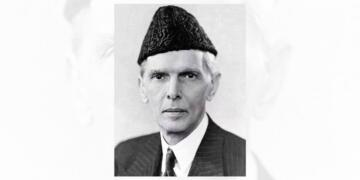
Roy became a busy man after the second Comintern congress, for he converted his socialist party into Mexico’s communist party, regularly wrote columns for comintern’ s magazines, and began to be favored by Lenin, who assigned him the task of spreading communism in Southeast Asia. While in Tashkent, Roy came in contact with Indian communists and established the Communist Party of India (CPI) in late 1920, though only in name.

Roy’s wealth of experience automatically transformed him into a leader among fledgling communists upon his return to India, and he looked to cement the CPI’s existence and make it an actual organization, but not before British paranoia landed him and his contemporaries in prison.

The British were determined to curtail the spread of communism no matter what, and lodged court cases against suspected communists for all reasons possible or plausible, which spawned dozens of lawsuits. Roy himself was captured in Bombay and imprisoned in the Bareilly Central Jail, that too after having received no trial. But by far the most infamous of these lawsuits was the Meerut Conspiracy Case of 1930, which indicted multiple members of the CPI, for they staged a railway strike in association with trade union leaders.

With an aged Roy’s health steadily declining, and most of the young CPI leaders captured, the British thought the job to be done, although their decisions would return to haunt them.

The Meerut conspiracy case stimulated the public’s imagination like none other, and received widespread media coverage throughout the court trials, introducing millions of literate Indians to communism, many of whom were in favor of its policies.

The Meerut prisoners were referred to as Bolsheviks by the British, and although they were Marxists, they’re impact on Indian public opinion was certainly on the level of Lenin and his comrades had on the first world.

With the 30’s coming to an end, each member of the budding CPI was liberated. Brand new public interest and a reduction in British scrutiny meant that the members could finally unite the nation’s communists under one banner.

The CPI began to search far and wide for areas where they could expand their influence and gain their foothold in, and ironically, the region they targeted upon first wasn’t even a part of independent India, for it was the princely state of Hyderabad.

In Hyderabad, traditional methods of collecting money were utilized by landowners, for the Nizam, Asif Jah VII, owned nearly 45% of the state’s land, which was then awarded to landlords known as jagirdars.

They weren’t, though, controlled by the Nizam, for he had long relinquished totalitarian control over the Muslim elite’s holdings in favor of retaining their support.

This meant that the landowners’ treatment of their peasants wouldn’t be regulated, who were completely dependent on their lords for life’s needs and amenities. The dependency ensured that fair treatment wouldn’t be given to farmers unless their employers happened to be altruistic, and wages were, sometimes, non-existent.

These factors weighed in to ensure that the peasants of Hyderabad had it much tougher than even other similarly downtrodden farmers throughout India.

For the CPI, realization dawned that the farmer’s emotional energy could be channelized to create an endemic revolution exclusive to the princely state, although that would be straying from the Communists’ ultimate goal of overthrowing the Indian government.

The communists interacted with the peasants and educated them on their ideology, which led to the rebellion quickly spreading through Hyderabad for it enamored farmers, who were readily provided with weapons and equipment by the CPI to form miniature militias which could war against the landowners and the Nizam’s authorities.

The CPI’s supporters managed to overthrow landowners throughout the Telangana region, and although they were now emancipated, the peasants still pledged their loyalty to the communists and left administrative matters in their hands. Hence, the CPI had an entire stretch of land in Hyderabad under their control, one which would display the real world consequences of their policies and actions.

The CPI did what even Indian state governments couldn’t do at the time, successfully distributing land and resources such as livestock among the farmers, while increasing wages and eradicating norms to attempt and bring about egalitarianism.

The farmers had benefited greatly under the CPI, and banded with them to further revolt and emancipate others in the farming community from their landlords. But, that would require confrontation, and with a greater enemy than they had come across before.

Concentrated funding from the Muslim elite in Hyderabad helped establish the private military comprised of the so-called Razakars, highly equipped (and bigoted) professional soldiers who would engage in conflict against the communists and peasants.

Fighting between the Nizam’s Razakars and the farmers took the shape of a regional turf war within weeks, with the authorities frequently raiding villages and capturing their populations in a bid to contain the communists’ rising influence, crushing potential supporters and allies before their conversion.

The farmers too eliminated all jagirdars and lords in their path, while employing a method to survive against the Razakars that’s the hallmark for modern day Naxalites – guerilla warfare.

The lack of direct conflict and frequent raids meant that the fighting would be kept covert and keep raging. The Razakars’ failure to eradicate the communists resulted in the entire state’s peasants gathering together to launch a greater revolt against the Nizam himself, and the path to defeat him led the CPI supported peasants to the capital of Hyderabad, where the rebellion got truly ugly.

The peasants purged the homes of the elite and enacted their own justice in the form of cold blooded murder, while the Razakars came to oppress Hindus and progressive Muslims, while raping thousands of women too, ensuring that the violence became meaningless.

These transpiring events spurned concern in mainland India, for 1948 also happened to be the year when a treaty of importance came to lapse.
Tags: CommunismCPIMHyderbadIndiaNaxalismRazakars
ShareTweetSend
Previous Post

The enigma that Jayalalitha is

Next Post

Is Che Guevara your idol? You have been fooled all your life

Related Posts

Sardar Patel and Amit Shah
History

Sardar Patel’s 1947 Blueprint on Minority Quotas Resurfaces as Reservation Debate Returns to Centre Stage

17 April 2026

Sardar Vallabhbhai Patel’s 1947 intervention on minority representation in India’s Constituent Assembly has returned to the centre of political...

The 1973 Constitution and ‘Bhutto’ the Man Who Made It: What Pakistan Owes and What It Destroyed
Analysis

The 1973 Constitution and ‘Bhutto’ the Man Who Made It: What Pakistan Owes and What It Destroyed

6 April 2026

Pakistan’s constitutional story is built on a contradiction so stark that it still indicts the state nearly half a...

The Fall of Lhasa: How Nine Days in 1959 Changed Tibet Forever
History

The Fall of Lhasa: How Nine Days in 1959 Changed Tibet Forever

26 March 2026

There is a photograph that has never left the minds of those who have seen it. Lhasa, March 1959,...

Load More

Leave a Reply Cancel reply

Your email address will not be published. Required fields are marked *

I agree to the Terms of use and Privacy Policy.
This site is protected by reCAPTCHA and the Google Privacy Policy and Terms of Service apply.

Currently Playing

From Runways to Warships: India’s Firefighting Warrior Built for Bases & Battles| IAF | VayuShakti

From Runways to Warships: India’s Firefighting Warrior Built for Bases & Battles| IAF | VayuShakti

00:05:40

Ethanol, EVs and Solar- How India’s Energy Game Is Changing | Modi on LPG & Crude Oil | war| Hormuz

00:05:21

Truth of IRIS Dena: 8 Days That Changed Narrative | War zone Reality, Not an Indian Navy Exercise

00:08:02

300 Million Euros for SCALP: Strategic Necessity or Costly Dependency on France300

00:04:06

Tejas Mk1A: 19th aircraft coupled but Not Delivered: What Is Holding Back the IAF Induction?

00:07:21
Facebook Twitter Instagram Youtube
tfipostTfipost.com
Right Wing | News Analysis | Indian Opinion
  • About us
  • Contact Us
  • Careers
  • Brand Partnerships
  • Terms of use
  • Privacy Policy
  • Sitemap

©2026 TFI Media Private Limited

No Result
View All Result
  • Premium
  • Politics
    • Analysis
    • Opinions
    • Trending
  • Economy
    • Business
    • Finance
  • Defense
    • Defence
    • Strategy
    • Weaponry
  • Geopolitics
    • Africa
    • Americas
    • Asia Pacific
    • Europe
    • South Asia
    • West Asia
  • Knowledge
    • Culture
    • History
    • Indology
  • Law
  • Lounge
    • Books
    • Cinema
    • Food
    • Health
    • Sports
    • technology
    • Travel
    • Satire
TFIPOST हिन्दी
TFIPOST Global

©2026 TFI Media Private Limited