












TFIPOST हिन्दी
TFIPOST Global
Tfipost.com
Tfipost.com
No Result
View All Result
  • Premium
  • Politics
    • All
    • Analysis
    • Opinions
    • Trending
    Rajiv Singh, a 1993-batch IPS officer, has served in several key positions during his distinguished career.

    Former Manipur DGP Rajiv Singh Takes Charge as Secretary (Security) in Cabinet Secretariat

    Securing the Frontier: Shah Draws a Red Line on Demographic Shifts as Smart Border Project Nears Rollout

    Securing the Frontier: Shah Draws a Red Line on Demographic Shifts as Smart Border Project Nears Rollout

    Did Dawood Ibrahim Want Control Over IPL? Lalit Modi Reveals in Explosive Account of Underworld Pressure

    Did Dawood Ibrahim Want Control Over IPL? Lalit Modi Reveals in Explosive Account of Underworld Pressure

    When a Gold Story Turned Into Dust: Bloomberg Retraction, RBI’s Clarification, and the Debate Over Narrative First Journalism

    When a Gold Story Turned Into Dust: Bloomberg Retraction, RBI’s Clarification, and the Debate Over Narrative First Journalism

    • Analysis
    • Opinions
    • Trending
  • Economy
    • All
    • Business
    • Economy1
    • Finance
    When a Gold Story Turned Into Dust: Bloomberg Retraction, RBI’s Clarification, and the Debate Over Narrative First Journalism

    When a Gold Story Turned Into Dust: Bloomberg Retraction, RBI’s Clarification, and the Debate Over Narrative First Journalism

    India Joins Global Digital Elite, Climbs Into Fifth Spot as AI Revolution and Digital Infrastructure Reshape Economy

    India Joins Global Digital Elite, Climbs Into Fifth Spot as AI Revolution and Digital Infrastructure Reshape Economy

    How gaming merchants choose a payment gateway in India

    How gaming merchants choose a payment gateway in India

    The Informal Economy Pays the Price: Street Traders, Small Shops and the Hidden Cost of Trade Policy

    The Informal Economy Pays the Price: Street Traders, Small Shops and the Hidden Cost of Trade Policy

    • Business
    • Finance
  • Defense
    • All
    • Defence
    • Strategy
    • Weaponry
    Securing the Frontier: Shah Draws a Red Line on Demographic Shifts as Smart Border Project Nears Rollout

    Securing the Frontier: Shah Draws a Red Line on Demographic Shifts as Smart Border Project Nears Rollout

    “Not 1962, Not China”: Pema Khandu Reasserts Tibet Border Claim, Dismisses Beijing’s Arunachal Assertions

    “Not 1962, Not China”: Pema Khandu Reasserts Tibet Border Claim, Dismisses Beijing’s Arunachal Assertions

    Rudram-2 Passes Crucial Combat Trial, India Moves Closer to Indigenous SEAD Dominance

    Rudram-2 Passes Crucial Combat Trial, India Moves Closer to Indigenous SEAD Dominance

    Rajesh Kumar Singh Reveals Vietnam BrahMos Deal, Indonesia Agreement in Final Stages

    Rajesh Kumar Singh Reveals Vietnam BrahMos Deal, Indonesia Agreement in Final Stages

    • Defence
    • Strategy
    • Weaponry
  • Geopolitics
    • All
    • Africa
    • Americas
    • Asia Pacific
    • Europe
    • South Asia
    • West Asia
    UNSC Seat or Propaganda Platform? India Exposes Pakistan’s Habit of Misusing Global Forums

    UNSC Seat or Propaganda Platform? India Exposes Pakistan’s Habit of Misusing Global Forums

    Why Russia Trusts India: Putin Dismisses Western Pressure on Modi, Backs New Delhi’s Independent Foreign Policy

    Why Russia Trusts India: Putin Dismisses Western Pressure on Modi, Backs New Delhi’s Independent Foreign Policy

    India and Venezuela Signal Energy Recalibration as Rodríguez Visits New Delhi for Crucial Talks

    India and Venezuela Signal Energy Recalibration as Rodríguez Visits New Delhi for Crucial Talks

    Iranian President Pezeshkian Sent Resignation to Supreme Leader, Says IRGC Has Taken Control of State Power

    Iranian President Pezeshkian Sent Resignation to Supreme Leader, Says IRGC Has Taken Control of State Power

    • Africa
    • Americas
    • Asia Pacific
    • Europe
    • South Asia
    • West Asia
  • Knowledge
    • All
    • Culture
    • Education
    • History
    • Indology
    Who Killed Akanksha ? How Many More Students Will Pay the Price for Education Mafias and Paper-Leak Rackets?

    Who Killed Akanksha ? How Many More Students Will Pay the Price for Education Mafias and Paper-Leak Rackets?

    June 3, 1947 Revisited: Nishikant Dubey Blames Nehru-Gandhi Family for Partition and Kashmir Crisis

    June 3, 1947 Revisited: Nishikant Dubey Blames Nehru-Gandhi Family for Partition and Kashmir Crisis

    CBSE OSM Fallout Deepens as 4 Lakh Students Rush for Re-evaluation, Raising Serious Questions on Digital Checking System

    CBSE OSM Fallout Deepens as 4 Lakh Students Rush for Re-evaluation, Raising Serious Questions on Digital Checking System

    Veer Savarkar

    When Nehru Government Imprisoned Veer Savarkar for the Pakistani Prime Minister

    • Culture
    • History
    • Indology
  • Law
  • Lounge
    • All
    • Books
    • Cinema
    • Entertainment
    • Food
    • Games
    • Health
    • Lifestyle
    • Satire
    • Sports
    • technology
    • Travel
    Erythrocyte Sedimentation Rate (ESR) Test: Meaning, Normal Range & Uses

    Erythrocyte Sedimentation Rate (ESR) Test: Meaning, Normal Range & Uses

    Inside the World of Elite Matchmaking in India

    Inside the World of Elite Matchmaking in India

    Best Salicylic Acid Face Wash for Oily & Acne-Prone Skin

    Best Salicylic Acid Face Wash for Oily & Acne-Prone Skin

    Supreme Court Verdict Crushes Opposition’s SIR Narrative, Reasserts Election Commission’s Constitutional Authority

    Judicial Expansion at the Apex: Centre Clears Appointment of Five Judges to Supreme Court, Strength Nearing Full Capacity

    • Books
    • Cinema
    • Food
    • Health
    • Sports
    • technology
    • Travel
    • Satire
Tfipost.com
  • Premium
  • Politics
    • All
    • Analysis
    • Opinions
    • Trending
    Rajiv Singh, a 1993-batch IPS officer, has served in several key positions during his distinguished career.

    Former Manipur DGP Rajiv Singh Takes Charge as Secretary (Security) in Cabinet Secretariat

    Securing the Frontier: Shah Draws a Red Line on Demographic Shifts as Smart Border Project Nears Rollout

    Securing the Frontier: Shah Draws a Red Line on Demographic Shifts as Smart Border Project Nears Rollout

    Did Dawood Ibrahim Want Control Over IPL? Lalit Modi Reveals in Explosive Account of Underworld Pressure

    Did Dawood Ibrahim Want Control Over IPL? Lalit Modi Reveals in Explosive Account of Underworld Pressure

    When a Gold Story Turned Into Dust: Bloomberg Retraction, RBI’s Clarification, and the Debate Over Narrative First Journalism

    When a Gold Story Turned Into Dust: Bloomberg Retraction, RBI’s Clarification, and the Debate Over Narrative First Journalism

    • Analysis
    • Opinions
    • Trending
  • Economy
    • All
    • Business
    • Economy1
    • Finance
    When a Gold Story Turned Into Dust: Bloomberg Retraction, RBI’s Clarification, and the Debate Over Narrative First Journalism

    When a Gold Story Turned Into Dust: Bloomberg Retraction, RBI’s Clarification, and the Debate Over Narrative First Journalism

    India Joins Global Digital Elite, Climbs Into Fifth Spot as AI Revolution and Digital Infrastructure Reshape Economy

    India Joins Global Digital Elite, Climbs Into Fifth Spot as AI Revolution and Digital Infrastructure Reshape Economy

    How gaming merchants choose a payment gateway in India

    How gaming merchants choose a payment gateway in India

    The Informal Economy Pays the Price: Street Traders, Small Shops and the Hidden Cost of Trade Policy

    The Informal Economy Pays the Price: Street Traders, Small Shops and the Hidden Cost of Trade Policy

    • Business
    • Finance
  • Defense
    • All
    • Defence
    • Strategy
    • Weaponry
    Securing the Frontier: Shah Draws a Red Line on Demographic Shifts as Smart Border Project Nears Rollout

    Securing the Frontier: Shah Draws a Red Line on Demographic Shifts as Smart Border Project Nears Rollout

    “Not 1962, Not China”: Pema Khandu Reasserts Tibet Border Claim, Dismisses Beijing’s Arunachal Assertions

    “Not 1962, Not China”: Pema Khandu Reasserts Tibet Border Claim, Dismisses Beijing’s Arunachal Assertions

    Rudram-2 Passes Crucial Combat Trial, India Moves Closer to Indigenous SEAD Dominance

    Rudram-2 Passes Crucial Combat Trial, India Moves Closer to Indigenous SEAD Dominance

    Rajesh Kumar Singh Reveals Vietnam BrahMos Deal, Indonesia Agreement in Final Stages

    Rajesh Kumar Singh Reveals Vietnam BrahMos Deal, Indonesia Agreement in Final Stages

    • Defence
    • Strategy
    • Weaponry
  • Geopolitics
    • All
    • Africa
    • Americas
    • Asia Pacific
    • Europe
    • South Asia
    • West Asia
    UNSC Seat or Propaganda Platform? India Exposes Pakistan’s Habit of Misusing Global Forums

    UNSC Seat or Propaganda Platform? India Exposes Pakistan’s Habit of Misusing Global Forums

    Why Russia Trusts India: Putin Dismisses Western Pressure on Modi, Backs New Delhi’s Independent Foreign Policy

    Why Russia Trusts India: Putin Dismisses Western Pressure on Modi, Backs New Delhi’s Independent Foreign Policy

    India and Venezuela Signal Energy Recalibration as Rodríguez Visits New Delhi for Crucial Talks

    India and Venezuela Signal Energy Recalibration as Rodríguez Visits New Delhi for Crucial Talks

    Iranian President Pezeshkian Sent Resignation to Supreme Leader, Says IRGC Has Taken Control of State Power

    Iranian President Pezeshkian Sent Resignation to Supreme Leader, Says IRGC Has Taken Control of State Power

    • Africa
    • Americas
    • Asia Pacific
    • Europe
    • South Asia
    • West Asia
  • Knowledge
    • All
    • Culture
    • Education
    • History
    • Indology
    Who Killed Akanksha ? How Many More Students Will Pay the Price for Education Mafias and Paper-Leak Rackets?

    Who Killed Akanksha ? How Many More Students Will Pay the Price for Education Mafias and Paper-Leak Rackets?

    June 3, 1947 Revisited: Nishikant Dubey Blames Nehru-Gandhi Family for Partition and Kashmir Crisis

    June 3, 1947 Revisited: Nishikant Dubey Blames Nehru-Gandhi Family for Partition and Kashmir Crisis

    CBSE OSM Fallout Deepens as 4 Lakh Students Rush for Re-evaluation, Raising Serious Questions on Digital Checking System

    CBSE OSM Fallout Deepens as 4 Lakh Students Rush for Re-evaluation, Raising Serious Questions on Digital Checking System

    Veer Savarkar

    When Nehru Government Imprisoned Veer Savarkar for the Pakistani Prime Minister

    • Culture
    • History
    • Indology
  • Law
  • Lounge
    • All
    • Books
    • Cinema
    • Entertainment
    • Food
    • Games
    • Health
    • Lifestyle
    • Satire
    • Sports
    • technology
    • Travel
    Erythrocyte Sedimentation Rate (ESR) Test: Meaning, Normal Range & Uses

    Erythrocyte Sedimentation Rate (ESR) Test: Meaning, Normal Range & Uses

    Inside the World of Elite Matchmaking in India

    Inside the World of Elite Matchmaking in India

    Best Salicylic Acid Face Wash for Oily & Acne-Prone Skin

    Best Salicylic Acid Face Wash for Oily & Acne-Prone Skin

    Supreme Court Verdict Crushes Opposition’s SIR Narrative, Reasserts Election Commission’s Constitutional Authority

    Judicial Expansion at the Apex: Centre Clears Appointment of Five Judges to Supreme Court, Strength Nearing Full Capacity

    • Books
    • Cinema
    • Food
    • Health
    • Sports
    • technology
    • Travel
    • Satire
No Result
View All Result
Tfipost.com
Tfipost.com
No Result
View All Result
  • Premium
  • Politics
  • Economy
  • Defense
  • Geopolitics
  • Knowledge
  • Law
  • Lounge

The Peshwa Bajirao, Marxist historians don’t want you to know about

Animesh Pandey by Animesh Pandey
28 March 2018
in History
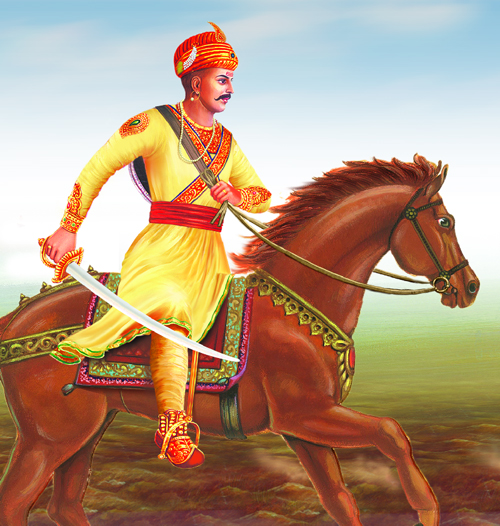
Peshwa Bajirao Delhi

(PC: theviralmedia.in)

Share on FacebookShare on X

28th March – Does this date ring a bell in your mind? Maybe, maybe not.

How many Battles of Panipat were fought? Everyone know this one- 3.

RelatedPosts

UNSC Seat or Propaganda Platform? India Exposes Pakistan’s Habit of Misusing Global Forums

India and Venezuela Signal Energy Recalibration as Rodríguez Visits New Delhi for Crucial Talks

Saket Collapse: Six Lives Lost as Illegal Construction and Oversight Gaps Come Under Scanner in South Delhi

Load More

How many times was Delhi invaded by Islamic marauders? A whopping 12 times.

And how many times did the Indians, especially the Hindus, win Delhi back? Most people are unaware.

Selective screening of material and careful hiding of information by Marxist intellectuals and academicians, who have mostly written the history books we have read in our childhood, have kept us in the dark about our true history. We’re one of those rare civilizations which is relatively aware of how we were invaded and subjected to incessant torture, pillage and massacres, but not of how we ferociously resisted them, fought back, and even won many a time.

We know how the Turks, the Uzbeks, and even the Mughals invaded India and tried to subjugate her to Islamic influence, but we hardly know about how our ancestors fought back and maintained the diversity that our nation is proud of. We know of the architectural wonders our invaders created, but we hardly know of the immense knowledge and brilliance our indigenous ancestors exhibited. One such legend was Peshwa Bajirao Ballal I, a warrior not even the likes of Aurangzeb and Akbar could match in terms of intellect and battlefield supremacy.

Bajirao Ballal? Isn’t he the Bajirao who fell in love with the Muslim daughter of the king of Bundelkhand, Raja Chhatrasal, as depicted in Bajirao Mastani? Yes, but it’s not the real Bajirao that history remembers. In that movie, we’ve been shown a mockery of the legend that Peshwa Bajirao was.

The real Peshwa Bajirao, only notorious for his alleged relationship with Mastani, was a far more superior warrior and statesman than depicted. He was not only intelligent in terms of political wisdom, but also equally skilled in terms of warfare. The lack of strong artillery that Peshwa Bajirao inherited at the time of assuming the Peshwa’s post was compensated during his rule by a very strong and efficient cavalry.

With his faithful brother and accomplice, Chimaji Appa Rao (certainly not the jealous, insensitive courtier as shown in Sanjay Leela Bhansali’s movie), Bajirao had managed to conquer almost half of the Indian peninsula within a decade of his rule. Nobody, be it the Nizam of Hyderabador the Siddis of Janjira, the Nawabs of Awadhor even the Rohillas, could check his advance. Like the unstoppable horse synonymous with the Ashwamedha Yagna, Peshwa Bajirao’s expansion of the Maratha Empire proceeded smoothly, without any resistance.

However, what made Bajirao Ballal a household name before the advent of Marxist intellectuals and their nefarious designs that pushed him to the backwaters of Indian history books, was a battle that the Indian intellectuals don’t want you to know about. As once said by legendary martial arts expert Bruce Lee, “The successful warrior is an average man, with a laser like focus.”

This was the year 1737. It had been 17 years since Bajirao had assumed the post of the Peshwa (Prime Minister) in the Maratha Empire. He had been a successful warrior who had not lost any war till date. His administration was beyond any criticism. The following were some factors responsible for Bajirao’s highly successful reign.

Like his ideal Chattrapati Shivaji, he always inspired his subjects to fight for the higher ideal of ‘Hindavi Swarajya’, a state where the essential ideals of Bharatvarsha would be kept intact, under an able and efficient leadership.

He had an efficient, speedy and effective bureaucracy as well as an intelligence system, with no scope for an error, however minor. Of all things, one of the very few things that Sanjay Leela Bhansali depicted correctly in his movie on Bajirao was reflected in the dialogue, “Bajirao ki raftaar hi Bajirao ki pehchaan hai.” (The speed of Bajirao is his identity.)

In his administration, Bajirao chose young people who were barely out of their teens, who were unaffected by the malice senior and often rebellious nobles could pose to the sovereignty of the empire.

Not letting nepotism seep into his rule, he appointed such nobles purely on merit, which led to the rise of legendary warriors like Ranoji Shinde, Malhar Rao Holkar, Tukoji Holkar, Pawar brothers etc., who kept the spirit as well as the existence of Maratha Empire intact. They did not belong to those clans that held the hereditary Deshmukhi rights under the Deccan Sultanates.

These were a few qualities that Peshwa Bajirao kept up his sleeve as he decided to achieve the prime goal of his life: the unfurling of the saffron flag on the Red Fort. How he achieved this dream is also a prime example of how true warriors maintain the concept of ‘bro code’, long before this term officially became cool.

It all started with the death of Trimbak Rao Dabhade, the ex general of the Maratha forces who had betrayed the Peshwa by joining the rival forces. He had joined Muhammad Khan Bangash, the Nawab of Farrukhabad, who was decisively routed by the Maratha forces when he laid siege to the region of Bundelkhand. His death in 1731 at the Battle of Dabhoi broke the alliance against the Peshwas. 

The Mughal emperor recalled Bangash from Malwa and appointed Jai Singh II as the successor. However, he couldn’t keep the Marathas in check and was decisively defeated by Malhar Rao Holkar at the Battle of Mandsaur in 1733. It took another 3 years for Jai Singh to come to his senses and make an alliance with Peshwa Bajirao, when he joined hands with the Peshwa in 1736 at Kishengarh. It was here that he suggested Bajirao attack Delhi and weaken the remnants of the once strong Mughal Empire.

Bajirao had once himself said, sensing the decline of the Mughal Empire, “Strike, strike at the roots and even the biggest tree will also fall down.” He wasn’t wrong, considering the Mughal Empire was nowhere close to the regal charm it once sported under the likes of Babar, Akbar, Shah Jahan, even to a certain extent under Aurangzeb. Though Muhammad Shah had absolute control over his throne, his influence was only restricted to Delhi and the surrounding provinces. Besides, he was more focused on satisfying his individual pleasures than looking after the empire, which is why he was nicknamed ‘Rangeele Badshah’ (The wayward emperor).

It was on 12th November 1736 when the Peshwa marched towards Delhi from Pune, in two divisions : one led by himself, and the other led by his best friend and able warrior Malhar Rao Holkar, along with another commanding officer Pillaji Jadhav. The Holkar-Jadhav faction proceeded faster than the Peshwa division, almost reaching Doab, where the Ganga and the Yamuna converge.

Sensing danger to his reign, Muhammad Shah sent for the Nawab of Awadh, Saadat Ali Khan, to check the Maratha advance. However, before Saadat Ali Khan could intercept the Maratha forces, they had already crossed the Ganga and raided Mughal cantonments and towns at will, and compelled the Mughals to run for their lives. With a force of more than 150,000 soldiers, Saadat Khan finally intercepted the forces and gave them a shocking setback, defeating Malhar Rao and forcing him to retreat. However, the damage was already done.

Word had already reached the Peshwa, who was fuming about the humiliation his best friend and the rest of the force had to receive at the hands of the Nawab. He quickly advanced to Delhi in less than a month, and encamped near Talkatora. The Peshwa wasn’t only seeking revenge, he also aimed to give a blow to the Mughal Empire that they could never ever recover from. Like the Rajputs from the Rajputana province, none of the Marathas feared death. But the Peshwa knew that if they wished to win, they needed to attack, they needed to be assertive, and they needed to kill.  As George S. Patton later said, “A good plan executed violently now is much better than a perfect plan executed next week.”

With these thoughts in mind, the Maratha forces met for a final showdown on 28th March, 1737. They were outnumbered three to one, but not in spirit. Mir Hassan Khan Koka was leading the Mughal forces, and though they attacked first, confident of their win owing to their numerical superiority and technical brilliance, even when they were at their weakest position, they failed to take one thing into account: raw courage.

This is where they lost the battle, and it didn’t take Maratha forces very long to crush the entire Mughal army, after which Peshwa Bajirao marched towards the Red Fort. He had won his battle, and now, he achieved the objective every Maratha warrior dreamt of: unfurling the saffron flag on the Red Fort. Above all, he maintained the ‘bro code’ long before it was even considered cool.

The only place where Peshwa Bajirao faltered was not declaring Delhi as his new capital as he returned to Pune only three months after his victorious attack, but not before extracting a huge chunk of the Mughal exchequer. As the Maratha camps were returning, he was intercepted by a joint force of the Mughals- the Nizam’s forces and those of the Nawab of Awadh. Undeterred, Bajirao sent Chimaji Rao Appa back with 10,000 soldiers to guard the Deccan, while he himself marched towards Delhi with 80,000 soldiers. The two camps clashed at Bhopal on Christmas Eve 1737, where the Maratha forces comprehensively routed the joint forces under the Mughal Empire.  

The Nizam was forced to sign a peace agreement, this time at Doraha, which saw the transfer of Malwa’s ownership to the Marathas and a payment of 50 lakh rupees as compensation. The Nizam was forced to abide by the Koran on this treaty. This was a victory which not only weakened the Mughal Empire before the ultimate invasion of Nadir Shah, but also established the supremacy of Peshwa Bajirao over the Indian peninsula.

Today, it is sad to see that Bharatvarsha has not paid due tributes to such a legendary warrior, who not only won back our honor, but also fought throughout his life for the maintenance of our sovereignty. If only we had more warriors like Bajirao Ballal, maybe British would never have dared to even set their eyes on India.

In the memory of this glorious warrior,
Jai Bhavani! Har Har Mahadev!


Sources:
V.G. Dighe, Peshwa Bajirao and the Maratha Expansion
Gordon Stewart, ‘The Marathas’ – 1600 – 1818
Fall of the Mughal Empire, Shri [Sir] Jadunath Sarkar, CIE
Military History of India
Hindu Pad Padshahi, Shri Vinayak Damodar Savarkar
The Era of Bajirao, Uday S. Kulkarni
Tags: DelhiMaratha EmpireMarathasPeshwa BajiraoPune
Share11TweetSend
Previous Post

OMRS Technology- Indian Railways will be very safe (very soon)

Next Post

The reason why Congress initiated impeachment motion against CJI Dipak Misra

Related Posts

June 3, 1947 Revisited: Nishikant Dubey Blames Nehru-Gandhi Family for Partition and Kashmir Crisis
History

June 3, 1947 Revisited: Nishikant Dubey Blames Nehru-Gandhi Family for Partition and Kashmir Crisis

3 June 2026

A sharp political row has erupted over the legacy of Partition after Bharatiya Janata Party MP Nishikant Dubey accused...

Veer Savarkar
History

When Nehru Government Imprisoned Veer Savarkar for the Pakistani Prime Minister

28 May 2026

When Vinayak Damodar Savarkar, popularly known as Veer Savarkar, was imprisoned by the British in the Cellular Jail of...

Bhojshala: The Emerging Truth Between History, Faith and Evidence
Hinduism Religion

Bhojshala: The Emerging Truth Between History, Faith and Evidence

20 May 2026

Following the court orders, efforts have also intensified to bring back the idol of Maa Vagdevi, currently housed in...

Load More

Leave a Reply Cancel reply

Your email address will not be published. Required fields are marked *

I agree to the Terms of use and Privacy Policy.
This site is protected by reCAPTCHA and the Google Privacy Policy and Terms of Service apply.

Currently Playing

AIRCRAFT CARRIERS: INDIA’S MOST POWERFUL TOOL OF MARITIME POWER PROJECTION | INS Vikrant |

AIRCRAFT CARRIERS: INDIA’S MOST POWERFUL TOOL OF MARITIME POWER PROJECTION | INS Vikrant |

00:03:22

Rudram 2 Success: Made in India Missile Ready To Crush Enemy Radars| DRDO’s Big Breakthrough

00:03:46

From Runways to Warships: India’s Firefighting Warrior Built for Bases & Battles| IAF | VayuShakti

00:05:40

Ethanol, EVs and Solar- How India’s Energy Game Is Changing | Modi on LPG & Crude Oil | war| Hormuz

00:05:21

Truth of IRIS Dena: 8 Days That Changed Narrative | War zone Reality, Not an Indian Navy Exercise

00:08:02
Facebook Twitter Instagram Youtube
tfipostTfipost.com
Right Wing | News Analysis | Indian Opinion
  • About us
  • Contact Us
  • Careers
  • Brand Partnerships
  • Terms of use
  • Privacy Policy
  • Sitemap

©2026 TFI Media Private Limited

No Result
View All Result
  • Premium
  • Politics
    • Analysis
    • Opinions
    • Trending
  • Economy
    • Business
    • Finance
  • Defense
    • Defence
    • Strategy
    • Weaponry
  • Geopolitics
    • Africa
    • Americas
    • Asia Pacific
    • Europe
    • South Asia
    • West Asia
  • Knowledge
    • Culture
    • History
    • Indology
  • Law
  • Lounge
    • Books
    • Cinema
    • Food
    • Health
    • Sports
    • technology
    • Travel
    • Satire
TFIPOST हिन्दी
TFIPOST Global

©2026 TFI Media Private Limited