









TFIPOST हिन्दी
TFIPOST Global
Tfipost.com
Tfipost.com
No Result
View All Result
  • Premium
  • Politics
    • All
    • Analysis
    • Opinions
    • Trending
    ‘Agreed on Economic Cooperation Plan Till 2030,’ Says PM Modi in Joint Statement With Putin

    ‘Agreed on Economic Cooperation Plan Till 2030,’ Says PM Modi in Joint Statement With Putin

    ‘Ready to Continue Uninterrupted Shipments of Fuel to India,’ Says Putin at India-Russia Summit 2025

    ‘Ready to Continue Uninterrupted Shipments of Fuel to India,’ Says Putin at India-Russia Summit 2025

    ‘Should Work Together, Pave Way for Peace’: Says PM Modi in Bilateral Talks with Putin

    ‘Should Work Together, Pave Way for Peace’: Says PM Modi in Bilateral Talks with Putin

    Indira Gandhi’s Alliance with the Communists Redefined Indian History Education

    Indira Gandhi’s Alliance with the Communists Redefined Indian History Education

    • Analysis
    • Opinions
    • Trending
  • Economy
    • All
    • Business
    • Economy1
    • Finance
    From Paper-Mandates to eNACH Registration: How Digital Mandates Are Changing Cash Flow

    From Paper-Mandates to eNACH Registration: How Digital Mandates Are Changing Cash Flow

    What is the financial management cycle?

    What is the financial management cycle?

    Smart Investment Planning: Calculating Mutual Fund SIP Growth Easily

    Smart Investment Planning: Calculating Mutual Fund SIP Growth Easily

    Convert ETH to USD Using Price Statistics for Better Trading Decisions

    Convert ETH to USD Using Price Statistics for Better Trading Decisions

    • Business
    • Finance
  • Defense
    • All
    • Defence
    • Strategy
    • Weaponry
    Veterans Deserve More Than Promises: The System Must Match the Soldier’s Sacrifice

    Veterans Deserve More Than Promises: The System Must Match the Soldier’s Sacrifice

    How Ukraine Uses Psychological and Information Warfare to ‘Win,’ and What India Can Learn From This Strategy

    How Ukraine ‘Wins’ the Psychological and Informatiaon War Despite Destruction — Lessons India Cannot Afford to Ignore

    Pakistan’s ‘ship-launched ASBM’ claim doesn’t withstand technical or industrial scrutiny

    Pakistan’s ‘ship-launched ASBM’ claim doesn’t withstand technical or industrial scrutinys

    Borders Can Change: Why Rajnath Singh’s Sindh Remark is India’s New Message to Pakistan

    Borders Can Change: Why Rajnath Singh’s Sindh Remark is India’s New Message to Pakistan

    • Defence
    • Strategy
    • Weaponry
  • Geopolitics
    • All
    • Africa
    • Americas
    • Asia Pacific
    • Europe
    • South Asia
    • West Asia
    ‘Ready to Continue Uninterrupted Shipments of Fuel to India,’ Says Putin at India-Russia Summit 2025

    ‘Ready to Continue Uninterrupted Shipments of Fuel to India,’ Says Putin at India-Russia Summit 2025

    ‘Should Work Together, Pave Way for Peace’: Says PM Modi in Bilateral Talks with Putin

    ‘Should Work Together, Pave Way for Peace’: Says PM Modi in Bilateral Talks with Putin

    Europe’s Slow Descent Into Weakness

    Europe: A Continent Happily Committing a Long-Drawn Suicide

    End of NATO? US Secretary of State Marco Rubio May Skip Foreign Ministers’ Meet in Brussels for First Time in Two Decades

    End of NATO? US Secretary of State Marco Rubio May Skip Foreign Ministers’ Meet in Brussels for First Time in Two Decades

    • Africa
    • Americas
    • Asia Pacific
    • Europe
    • South Asia
    • West Asia
  • Knowledge
    • All
    • Culture
    • Education
    • History
    • Indology
    Despite Nehru’s objection, Rajendra Prasad became India’s first President !

    How Nehru Resisted Dr. Rajendra Prasad—from Presidency to Somnath visit  and Beyond

    Talom Rukbo Initiated the Donyi–Polo Movement: Bringing Tribal Youth Back to Their Roots

    Talom Rukbo: The Forgotten Hero Who Shielded Arunachal’s Tribal Communities from Religious Conversion

    How Guru Tegh Bahadur The Ninth Sikh Guru Became a Martyr for Religious Freedom

    How Guru Tegh Bahadur The Ninth Sikh Guru Became a Martyr for Religious Freedom

    21 November 1962: Looking Back at the Indo-China war and How it Redefined the Border Equation

    21 November 1962: Looking Back at the Indo-China war and How it Redefined the Border Equation

    • Culture
    • History
    • Indology
  • Law
  • Lounge
    • All
    • Books
    • Cinema
    • Entertainment
    • Food
    • Games
    • Health
    • Lifestyle
    • Satire
    • Sports
    • technology
    • Travel
    Mahashivratri 2026: Astrological Meaning & Horoscope Predictions for All Signs

    Mahashivratri 2026: Astrological Meaning & Horoscope Predictions for All Signs

    Top 5 Reasons Why Cloud and DevOps Are the Perfect Career Combo in 2026

    Top 5 Reasons Why Cloud and DevOps Are the Perfect Career Combo in 2026

    감정을 가진 로봇의 시대가 오고 있다

    감정을 가진 로봇의 시대가 오고 있다

    Is AISaver Face Swap the Best Tool for Face Swap Video Online Free in 2025?

    Is AISaver Face Swap the Best Tool for Face Swap Video Online Free in 2025?

    • Books
    • Cinema
    • Food
    • Health
    • Sports
    • technology
    • Travel
    • Satire
Tfipost.com
  • Premium
  • Politics
    • All
    • Analysis
    • Opinions
    • Trending
    ‘Agreed on Economic Cooperation Plan Till 2030,’ Says PM Modi in Joint Statement With Putin

    ‘Agreed on Economic Cooperation Plan Till 2030,’ Says PM Modi in Joint Statement With Putin

    ‘Ready to Continue Uninterrupted Shipments of Fuel to India,’ Says Putin at India-Russia Summit 2025

    ‘Ready to Continue Uninterrupted Shipments of Fuel to India,’ Says Putin at India-Russia Summit 2025

    ‘Should Work Together, Pave Way for Peace’: Says PM Modi in Bilateral Talks with Putin

    ‘Should Work Together, Pave Way for Peace’: Says PM Modi in Bilateral Talks with Putin

    Indira Gandhi’s Alliance with the Communists Redefined Indian History Education

    Indira Gandhi’s Alliance with the Communists Redefined Indian History Education

    • Analysis
    • Opinions
    • Trending
  • Economy
    • All
    • Business
    • Economy1
    • Finance
    From Paper-Mandates to eNACH Registration: How Digital Mandates Are Changing Cash Flow

    From Paper-Mandates to eNACH Registration: How Digital Mandates Are Changing Cash Flow

    What is the financial management cycle?

    What is the financial management cycle?

    Smart Investment Planning: Calculating Mutual Fund SIP Growth Easily

    Smart Investment Planning: Calculating Mutual Fund SIP Growth Easily

    Convert ETH to USD Using Price Statistics for Better Trading Decisions

    Convert ETH to USD Using Price Statistics for Better Trading Decisions

    • Business
    • Finance
  • Defense
    • All
    • Defence
    • Strategy
    • Weaponry
    Veterans Deserve More Than Promises: The System Must Match the Soldier’s Sacrifice

    Veterans Deserve More Than Promises: The System Must Match the Soldier’s Sacrifice

    How Ukraine Uses Psychological and Information Warfare to ‘Win,’ and What India Can Learn From This Strategy

    How Ukraine ‘Wins’ the Psychological and Informatiaon War Despite Destruction — Lessons India Cannot Afford to Ignore

    Pakistan’s ‘ship-launched ASBM’ claim doesn’t withstand technical or industrial scrutiny

    Pakistan’s ‘ship-launched ASBM’ claim doesn’t withstand technical or industrial scrutinys

    Borders Can Change: Why Rajnath Singh’s Sindh Remark is India’s New Message to Pakistan

    Borders Can Change: Why Rajnath Singh’s Sindh Remark is India’s New Message to Pakistan

    • Defence
    • Strategy
    • Weaponry
  • Geopolitics
    • All
    • Africa
    • Americas
    • Asia Pacific
    • Europe
    • South Asia
    • West Asia
    ‘Ready to Continue Uninterrupted Shipments of Fuel to India,’ Says Putin at India-Russia Summit 2025

    ‘Ready to Continue Uninterrupted Shipments of Fuel to India,’ Says Putin at India-Russia Summit 2025

    ‘Should Work Together, Pave Way for Peace’: Says PM Modi in Bilateral Talks with Putin

    ‘Should Work Together, Pave Way for Peace’: Says PM Modi in Bilateral Talks with Putin

    Europe’s Slow Descent Into Weakness

    Europe: A Continent Happily Committing a Long-Drawn Suicide

    End of NATO? US Secretary of State Marco Rubio May Skip Foreign Ministers’ Meet in Brussels for First Time in Two Decades

    End of NATO? US Secretary of State Marco Rubio May Skip Foreign Ministers’ Meet in Brussels for First Time in Two Decades

    • Africa
    • Americas
    • Asia Pacific
    • Europe
    • South Asia
    • West Asia
  • Knowledge
    • All
    • Culture
    • Education
    • History
    • Indology
    Despite Nehru’s objection, Rajendra Prasad became India’s first President !

    How Nehru Resisted Dr. Rajendra Prasad—from Presidency to Somnath visit  and Beyond

    Talom Rukbo Initiated the Donyi–Polo Movement: Bringing Tribal Youth Back to Their Roots

    Talom Rukbo: The Forgotten Hero Who Shielded Arunachal’s Tribal Communities from Religious Conversion

    How Guru Tegh Bahadur The Ninth Sikh Guru Became a Martyr for Religious Freedom

    How Guru Tegh Bahadur The Ninth Sikh Guru Became a Martyr for Religious Freedom

    21 November 1962: Looking Back at the Indo-China war and How it Redefined the Border Equation

    21 November 1962: Looking Back at the Indo-China war and How it Redefined the Border Equation

    • Culture
    • History
    • Indology
  • Law
  • Lounge
    • All
    • Books
    • Cinema
    • Entertainment
    • Food
    • Games
    • Health
    • Lifestyle
    • Satire
    • Sports
    • technology
    • Travel
    Mahashivratri 2026: Astrological Meaning & Horoscope Predictions for All Signs

    Mahashivratri 2026: Astrological Meaning & Horoscope Predictions for All Signs

    Top 5 Reasons Why Cloud and DevOps Are the Perfect Career Combo in 2026

    Top 5 Reasons Why Cloud and DevOps Are the Perfect Career Combo in 2026

    감정을 가진 로봇의 시대가 오고 있다

    감정을 가진 로봇의 시대가 오고 있다

    Is AISaver Face Swap the Best Tool for Face Swap Video Online Free in 2025?

    Is AISaver Face Swap the Best Tool for Face Swap Video Online Free in 2025?

    • Books
    • Cinema
    • Food
    • Health
    • Sports
    • technology
    • Travel
    • Satire
No Result
View All Result
Tfipost.com
Tfipost.com
No Result
View All Result
  • Premium
  • Politics
  • Economy
  • Defense
  • Geopolitics
  • Knowledge
  • Law
  • Lounge

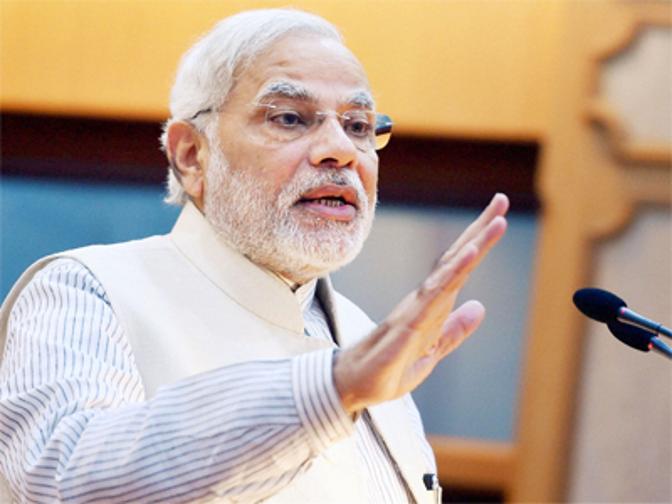
After Demonetisation and GST, Here is PM Modi’s latest Financial Reform – Possibly the biggest since 1969

Vasudeva Reddy by Vasudeva Reddy
22 July 2017
in Analysis, Economy
economic offenders ordinance

(PC:PTI)

Share on FacebookShare on X

If my memory serves me right, we have celebrated the resilience of Indian financial system for escaping the second worst financial crisis, after Great Depression, unscathed. But, the recent turmoil in the Indian banking system has made us realize that nobody is scratch proof when a storm hits, only difference is time frame and the level of impact. So, how did the financial crisis that hit the world in 2008 has managed surface in the other side of the world and that too nearly after 10 years? Though the genesis of crisis was of totally different reason, crisis in our banking system’s backyard has its roots in that same sub-prime crisis.

When the sub-prime crisis gripped the world markets, few of the largest banking institutions in the world had to face bankruptcy and people lost faith in their banking system. And, due to the severe losses and erosion of capital, banks had become too cautious to lend and corporations were not keen to take any more debt. Companies and Investors who had surplus money had to choose alternative investment avenues as the developed markets offered near zero interest rates and negative growth, emerging markets were the perfect alternative. Thanks to easy money available throughout the emerging markets, we had managed to register a staggering GDP growth rates above 10%. Confidence of the domestic corporates reached new high and even banks were more than ready to lend money to corporates as the retail loan growth fell short of expectations. Corporates have availed loans from banks more than they can afford to repay and banks had taken exposure that they can’t afford to lose with very favorable terms like 5 years moratorium and interest free moratorium etc.

RelatedPosts

SBI report projects strong Q4 FY25 GDP growth for India at approximately 6.4-6.5%

SBI Outlook Optimistic about Trump 2.0 Impact on India

Once a butt of all jokes, Indian PSUs are posting better results than Fortune 500 companies

Load More

Had things went well according to the plan, our corporates and our banking system would have flourished by now. But, as you can see, that’s not the case. Corporates who had availed huge amounts of debt from banks (majorly Public-Sector Banks) weren’t able to generate sufficient cash flows to meet the interest and debt obligations. To keep the confidence going and due to peer pressure, banks refused to declare them as Non-Performing Asset (addressed as NPA henceforth) by various means like extending the moratorium period, Ever Greening etc.

Ever wondered why the banks which were making record high profits two years back have come to a stage where they need external capital to keep them with in the regulatory requirements. Every single PSB in India has declared profit till the quarter ending December 2015. But, with the credit quality review carried out by the RBI, most of the banks declared losses for the quarter ended March 2016. So, what has happened in those three months for that kind of tectonic shift to happen? Three-month period is too small to alter any realistic situation, particularly for financial system. In fact, nothing new had happened in those three months, but, banks started to show their true-to-the-form balance sheets. So, were they manipulating balance sheets before that? Answer would both Yes and No. It doesn’t matter what the answer is, as long as current results that the banks are declaring are true, isn’t it?

If banks started to declare true-to-the-form results now, previously declared results might not be so-true. Coming to the big question of the evening, why banks had to declare abnormal profits when there weren’t any? There might be several reasons, but, I’m going to discuss one very important reason. Who is the owner of Public Sector Banks? Yes, Of course, the GoI holds the majority share of the ownership. So, who benefits the most when a bank declares profits and issue dividends? No surprises here, Government again. PSBs have funded government expenses at the cost of their own survival. But, Mr. Raghuram Rajan, who had identified the inherent conflict of public sector banks, dictated banks to clean their own mess or RBI will have to do that with huge penalties. Banks had no other choice but to report true-to-the-form balance sheets. In that process, they had to forego the accumulated reserves which doesn’t have any real basis. In addition to their accumulated reserves out of profits, banks had to give up their own capital in order to make provisions for freshly declared NPAs.

Now that the preamble is done with, let me take you through the discussion on the real issue, which can be Current Government’s another “masterstroke”. I am talking about merger of banks. Are mergers needed? Yes. But, Why?

Without getting into technicalities, let me say, as a safety measure every bank must set aside certain portion of their capital to meet the unforeseen losses (in banking terms, losses loosely translate to NPAs). That portion of total credit is called as Capital Adequacy Ratio (CAR). RBI has asked banks to keep a minimum of 9% CAR (how they arrived on that figure is not a part of our discussion) to meet the expected/unexpected losses. When banks started declaring NPAs which were kept under rug before December 2015, they had to keep the provisions for those freshly declared NPAs in order to meet the losses of they won’t get upgraded. Those provisions has to set aside from the profit generated for that accounting period. However, when the profit generated is less than the provisions that need to be set aside, provisions above the profit generated has to set aside from capital/reserves.

So, as the size of NPAs gets bigger, provisions get bigger and reserves deplete. For a mid-sized bank, usually the reserves will be lower, and if the small to mid-sized banks take concentrated exposure and when those accounts turn to NPA, bank balance sheet will be heavily affected. That is what happening with our banks, currently. You can see the clear demarcation over here. Even the largest bank in India, SBI, started cleaning up its balance sheet and they did declare loss for the Quarter ended March 2016, however, they were very fast in recovery too. They were able to come out of that slump relatively easily. Now, take the case of small and midsize banks, they are still struggling with the mounting NPAs and ever-increasing provisions, they balance sheets are in red, their capital is eroding.

Traditionally, Indian banks are conservative and it has been a blessing in disguise in the time of crisis. Though RBI has prescribed CAR at 9%, banks usually maintain much more than that. That extra capital banks used to keep aside has been much helpful in maintaining their regulatory requirements. Now, the NPAs and provisions have become so high, few banks CAR has come dangerously closer to the regulatory requirement of 9%. This is where the merger of banks will come to rescue. Once a bank achieved scale, that bank will have a flexibility in their operations and it will not be so susceptible to the single largest exposure, like the way we have seen it in SBI.

Another reason is, India is the sixth largest economy in nominal terms and 3rd largest in terms purchasing power parity (nevermind if you don’t understand what that is, as it is not part of our discussion). But, may I ask, how many Indian banks are there in world top-ten list? None. Top twenty? None. It is very important to have a global presence for a domestic bank for a country to grow and to provide enough opportunities to the domestic businesses overseas. In USA, top 5 banks contribute 56% of total assets. You might have heard of Citi Bank, JPMC, Bank of America etc, but, how many of US Citizens know about SBI? That is where consolidation helps.

Consolidation gives the greater opportunity to grow outside of India, if growing domestically is a difficult task. But, RBI is playing with the double-edged sword by allotting the new licenses to the private banks and trying to consolidate PSBs. PSBs have played very instrumental role in the growth of Indian financial sector. When the govt launched PMJDY, PMSBY, PMJBY etc, it was the PSBs that made those schemes successful. Even in the period of demonization, role of PSBs was commendable. Even today, PSBs have a share about 72% of total business in India, which is substantial. It was only possible because of the competition amongst the public-sector banks, though the healthiness of that competition is questionable.

Though the consolidation of banks is the only way to grow in size Inorganically and to have global presence, matter has to be dealt with utmost care. We have seen the cases in 2008 financial crisis in US, that no bank is immune irrespective of the size. Century old Lehman Brothers had gone bankrupt which took down entire world financial stability with it. Big is not always better, but, in case of India, merger is the only option to rejuvenate the failing Public Sector Banks. But, caution is advised. If Modi government is planning to merge the banks just to avoid further capital infusion into it, that would be a mistake. After 2008 financial crisis, USA has infused about $2270 billion to keep the banking industry afloat. Not so long ago, China has infused about $120 billion into their banking system. In India, our government has infused about just $13 billion in the last few years. We certainly can’t afford a failure of big sized bank in India.

Merger of Public Sector Banks will be the single most important decision in Indian Banking history after nationalization of Banks in 1969 and a Historical Step by Modi Government.

If they rush into the decision just to avoid further capital infusion, that would be the single biggest mistake in post-independence Indian financial history. Synergy of merged banks is the most vital factor to consider before going ahead with the merger. If we merge a East India loss making bank with a south India profit making one, just to avoid the capital infusion, and if the new entry is unable to draw synergy out of merger, there is a risk of failing newly formed entity.

Undoubtedly, Indian financial system is one of the strongest, if not the strongest. But, when an earthquake, it doesn’t make any difference whether the building is of one floor or ten floors. So, the idea behind the merger should be to reap the benefits of larger size of the newly formed entity, but not to avoid further capital infusion.

Tags: banksPSBsSBI
Share704TweetSend
Previous Post

Felt Bad After Seeing LK Advani’s Painful Expressions During Presidential Elections? After Reading This You Won’t

Next Post

It’s Historic, For the First Time BJP Supporters Are Close To Beating Liberals And Leftists at Their Own Game

Related Posts

From Paper-Mandates to eNACH Registration: How Digital Mandates Are Changing Cash Flow
Finance

From Paper-Mandates to eNACH Registration: How Digital Mandates Are Changing Cash Flow

3 December 2025

For years, recurring payments in India relied on processes that were slow, paperwork-heavy, and prone to avoidable errors. Even...

What is the financial management cycle?
Finance

What is the financial management cycle?

2 December 2025

Every organization, whether it is a small homegrown business or a large multinational company, depends on one crucial ability....

Congress’s Pakistan Syndrome: How Appeasement and Denial Threaten India’s Strength
Analysis

Congress’s Pakistan Syndrome: How Appeasement and Denial Threaten India’s Strength

1 December 2025

Congress’s “Pakistan Syndrome” goes far beyond sympathy for Pakistan. It is a deliberate imitation of Pakistan’s formula for self-destruction....

Load More

Leave a Reply Cancel reply

Your email address will not be published. Required fields are marked *

I agree to the Terms of use and Privacy Policy.
This site is protected by reCAPTCHA and the Google Privacy Policy and Terms of Service apply.

Currently Playing

A War Won From Above: The Air Campaign That Changed South Asia Forever

A War Won From Above: The Air Campaign That Changed South Asia Forever

00:07:37

‘Mad Dog’ The EX CIA Who Took Down Pakistan’s A.Q. Khan Nuclear Mafia Reveals Shocking Details

00:06:59

Dhurandar: When a Film’s Reality Shakes the Left’s Comfortable Myths

00:06:56

Tejas Under Fire — The Truth Behind the Crash, the Propaganda, and the Facts

00:07:45

Why Rahul Gandhi’s US Outreach Directs to a Web of Shadow Controversial Islamist Networks?

00:08:04
Facebook Twitter Instagram Youtube
tfipostTfipost.com
Right Wing | News Analysis | Indian Opinion
  • About us
  • Contact Us
  • Careers
  • Brand Partnerships
  • Terms of use
  • Privacy Policy
  • Sitemap

©2025 TFI Media Private Limited

No Result
View All Result
  • Premium
  • Politics
    • Analysis
    • Opinions
    • Trending
  • Economy
    • Business
    • Finance
  • Defense
    • Defence
    • Strategy
    • Weaponry
  • Geopolitics
    • Africa
    • Americas
    • Asia Pacific
    • Europe
    • South Asia
    • West Asia
  • Knowledge
    • Culture
    • History
    • Indology
  • Law
  • Lounge
    • Books
    • Cinema
    • Food
    • Health
    • Sports
    • technology
    • Travel
    • Satire
TFIPOST हिन्दी
TFIPOST Global

©2025 TFI Media Private Limited