

















New Delhi: The Indian Air Force (IAF) has wrapped up back-to-back deployments to Australia and Malaysia, concluding its participation in Exercise Pitch Black 2026 and Exercise Udara Shakti 2026 — a dual-nation engagement the Air Force says showcased its long-range operational reach and deepened tactical cooperation across the Indo-Pacific.
Pitch Black 2026: Rafales debut in Darwin
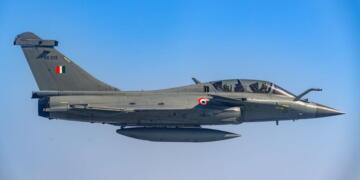
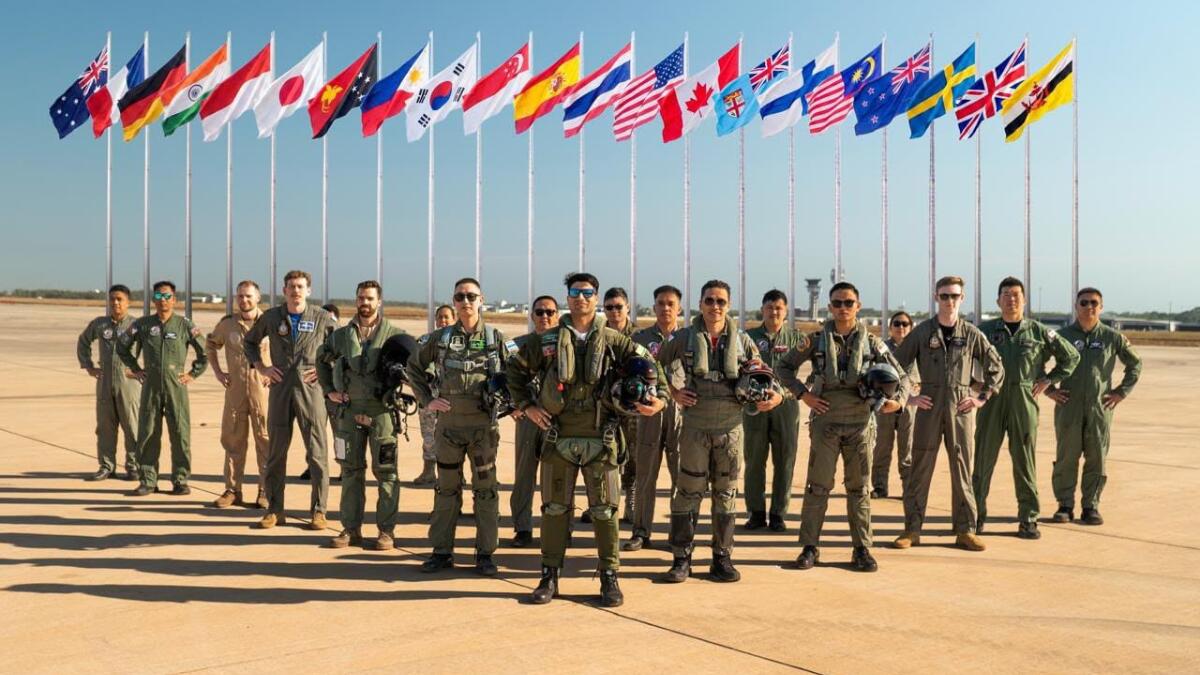
The IAF sent four Rafale fighters, two C-17 Globemaster III transport aircraft, an IL-78 air-to-air refuelling tanker and more than 100 air warriors to Darwin, Australia, for Exercise Pitch Black 2026, hosted by the Royal Australian Air Force (RAAF). Running from July 20 to August 7 across RAAF bases Darwin, Tindal and Amberley, the exercise brought together roughly 100 aircraft and over 2,500 personnel from more than 20 nations — one of the largest editions in the drill’s 45-year history.
It also marked the Rafale’s first-ever appearance at Pitch Black, with the jets opening the exercise with a flypast over Darwin’s Mindil Beach. The Indian contingent interacted with Australian Prime Minister Anthony Albanese at the opening ceremony and, alongside the flying programme, picked up a gold medal in the exercise’s multinational football tournament.
Flying complex Large Force Employment (LFE) missions in a high-threat, multi-domain setting, IAF crews operated alongside — and against — aircraft including F-35s from Australia, the US and Japan, Eurofighter Typhoons from Germany and Spain, and fighters from South Korea, Indonesia and other participating air forces, sharpening interoperability across a genuinely multinational coalition.
Udara Shakti 2026: Rafale meets Su-30MKM in Malaysia
Rather than returning home after Australia, the IAF contingent flew its Rafales on to Subang Air Base in Selangor, Malaysia, for the bilateral Exercise Udara Shakti 2026 with the Royal Malaysian Air Force (RMAF) — using the long transit home to extract extra training value from the deployment.
The exercise’s three-day flying phase ran from August 11 to 13 and concluded on August 14. India fielded four Rafales from 101 Squadron along with two C-17s from 81 Squadron; Malaysia countered with two Su-30MKMs from No. 12 Squadron, two F/A-18D Hornets from No. 18 Squadron, and an A400M from No. 8 Squadron. In all, roughly 83 personnel and 11 aircraft took part.
Aircrew flew dissimilar air combat training, air-to-air refuelling and joint tactical manoeuvres, alongside Subject Matter Expert Exchanges (SMEE) aimed at swapping doctrine and best practice. It was the Rafale’s debut at Udara Shakti — a biennial exercise last held in 2024, when the IAF flew Su-30MKIs — and continued a broader push by India to deepen defence engagement with Malaysia, a country weighing options to modernise its own ageing fighter fleet.
Beyond the cockpit
Across both deployments, the IAF said cooperation extended past flying to include maintenance practices, mission-planning exchanges and cultural interactions between air warriors of different nations, reinforcing what the Air Force described as growing professional camaraderie among coalition partners.
“Exercise Udara Shakti 2026 culminates with IAF Rafale and RMAF Su-30MKM and F/A-18 crews exchanging operational insights and sharing experiences,” the IAF said, adding that the exercise had deepened “the enduring bonds of friendship and cooperation between the two Air Forces.”
The Indian Air Force said it remains committed to enhancing regional stability and interoperability through continued joint training engagements with partner air forces across the Indo-Pacific and beyond.