











TFIPOST हिन्दी
TFIPOST Global
Tfipost.com
Tfipost.com
No Result
View All Result
  • Premium
  • Politics
    • All
    • Analysis
    • Opinions
    • Trending
    Army Chief General Dhiraj Seth Reviews Central Command’s Combat Readiness, Pushes for Future-Ready Force

    Army Chief General Dhiraj Seth Reviews Central Command’s Combat Readiness, Pushes for Future-Ready Force

    Bengal Chief Minister Targeted in Alleged JeM Plot

    Bengal Chief Minister Targeted in Alleged JeM Plot

    PoK Protests Intensify as Pakistan Faces Scrutiny Over Media Curbs

    PoK Protests Intensify as Pakistan Faces Scrutiny Over Media Curbs

    Commonwealth Games 2026: India’s Campaign Beyond Medals

    Commonwealth Games 2026: India’s Campaign Beyond Medals

    • Analysis
    • Opinions
    • Trending
  • Economy
    • All
    • Business
    • Economy1
    • Finance
    How to Start Trading Forex and Crypto in India: A Beginner’s Roadmap

    How to Start Trading Forex and Crypto in India: A Beginner’s Roadmap

    Small-Ticket EMIs Are Turning Into India’s New Credit Habit

    Small-Ticket EMIs Are Turning Into India’s New Credit Habit

    Borrowing in the US and India: Their Economic Effects

    Borrowing in the US and India: Their Economic Effects

    ULIP Fund Switching Explained: When, Why, and How to Boost Returns

    ULIP Fund Switching Explained: When, Why, and How to Boost Returns

    • Business
    • Finance
  • Defense
    • All
    • Defence
    • Strategy
    • Weaponry
    Army Chief General Dhiraj Seth Reviews Central Command’s Combat Readiness, Pushes for Future-Ready Force

    Army Chief General Dhiraj Seth Reviews Central Command’s Combat Readiness, Pushes for Future-Ready Force

    INS Nipun, India's second indigenous Diving Support Vessel built by Hindustan Shipyard Limited for the Indian Navy.

    Here’s What Nipun’s Delivery Actually Tells Us About Aatmanirbhar Bharat

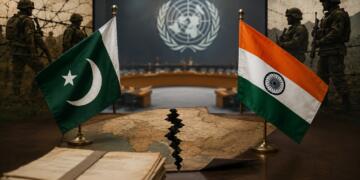
    Flags of India and Pakistan with the United Nations emblem, representing the Kashmir dispute and UN resolutions on plebiscite and troop withdrawal.

    Selective Invocation: Pakistan’s Plebiscite-Only Narrative

    From Shipbuilder to Maritime Capability Partner: Navy Outlines Bigger Vision for Defence PSU HSL With Dy Chief of Navy’s visit

    From Shipbuilder to Maritime Capability Partner: Navy Outlines Bigger Vision for Defence PSU HSL With Dy Chief of Navy’s visit

    • Defence
    • Strategy
    • Weaponry
  • Geopolitics
    • All
    • Africa
    • Americas
    • Asia Pacific
    • Europe
    • South Asia
    • West Asia
    Modi-Takaichi Summit Signals India-Japan’s Strategic Pivot Towards a Stronger Indo-Pacific Alliance

    Modi-Takaichi Summit Signals India-Japan’s Strategic Pivot Towards a Stronger Indo-Pacific Alliance

    PoK Leadership Explodes at Islamabad as Khawaja Asif’s Kashmir Remark Sparks Rare Public Break and Identity Showdown

    PoK Leadership Explodes at Islamabad as Khawaja Asif’s Kashmir Remark Sparks Rare Public Break and Identity Showdown

    Canada’s Khalistan Blowback: After 41 Years, Ottawa Finally Admits Canada-Based Khalistani Extremists Blew Up Air India’s Kanishka

    Canada’s Khalistan Blowback: After 41 Years, Ottawa Finally Admits Canada-Based Khalistani Extremists Blew Up Air India’s Kanishka

    From Cells To Networks: NIA Maps Affiliate Terror Structure In JMB–IMK Case, Chargesheets 11 Linked To Northeast Bengal Module

    From Cells To Networks: NIA Maps Affiliate Terror Structure In JMB–IMK Case, Chargesheets 11 Linked To Northeast Bengal Module

    • Africa
    • Americas
    • Asia Pacific
    • Europe
    • South Asia
    • West Asia
  • Knowledge
    • All
    • Culture
    • Education
    • History
    • Indology
    Flags of India and Pakistan with the United Nations emblem, representing the Kashmir dispute and UN resolutions on plebiscite and troop withdrawal.

    Selective Invocation: Pakistan’s Plebiscite-Only Narrative

    Why Choose an MBA After B.Com? Here’s the Case

    Why Choose an MBA After B.Com? Here’s the Case

    Shankaracharya, Dharma, and Politics: The Avimukteshwaranand Question

    Can a Shankaracharya Be Political? The Avimukteshwaranand Debate Through the Lens of Dharma

    ‘Not Refugees, But Warriors’: Mohan Bhagwat Seeks to Redefine the Legacy of Partition Migrants

    ‘Not Refugees, But Warriors’: Mohan Bhagwat Seeks to Redefine the Legacy of Partition Migrants

    • Culture
    • History
    • Indology
  • Law
  • Lounge
    • All
    • Books
    • Cinema
    • Entertainment
    • Food
    • Games
    • Health
    • Lifestyle
    • Satire
    • Sports
    • technology
    • Travel
    The Importance of Personalised Care in IVF Treatment

    The Importance of Personalised Care in IVF Treatment

    Surat to Delhi Flight vs Train: Which One Makes More Sense?

    Surat to Delhi Flight vs Train: Which One Makes More Sense?

    Why Gen Z Travellers Are Choosing Hostels in Rishikesh Over Hotels

    Why Gen Z Travellers Are Choosing Hostels in Rishikesh Over Hotels

    How RajBet’s VIP Program Actually Works

    How RajBet’s VIP Program Actually Works

    • Books
    • Cinema
    • Food
    • Health
    • Sports
    • technology
    • Travel
    • Satire
Tfipost.com
  • Premium
  • Politics
    • All
    • Analysis
    • Opinions
    • Trending
    Army Chief General Dhiraj Seth Reviews Central Command’s Combat Readiness, Pushes for Future-Ready Force

    Army Chief General Dhiraj Seth Reviews Central Command’s Combat Readiness, Pushes for Future-Ready Force

    Bengal Chief Minister Targeted in Alleged JeM Plot

    Bengal Chief Minister Targeted in Alleged JeM Plot

    PoK Protests Intensify as Pakistan Faces Scrutiny Over Media Curbs

    PoK Protests Intensify as Pakistan Faces Scrutiny Over Media Curbs

    Commonwealth Games 2026: India’s Campaign Beyond Medals

    Commonwealth Games 2026: India’s Campaign Beyond Medals

    • Analysis
    • Opinions
    • Trending
  • Economy
    • All
    • Business
    • Economy1
    • Finance
    How to Start Trading Forex and Crypto in India: A Beginner’s Roadmap

    How to Start Trading Forex and Crypto in India: A Beginner’s Roadmap

    Small-Ticket EMIs Are Turning Into India’s New Credit Habit

    Small-Ticket EMIs Are Turning Into India’s New Credit Habit

    Borrowing in the US and India: Their Economic Effects

    Borrowing in the US and India: Their Economic Effects

    ULIP Fund Switching Explained: When, Why, and How to Boost Returns

    ULIP Fund Switching Explained: When, Why, and How to Boost Returns

    • Business
    • Finance
  • Defense
    • All
    • Defence
    • Strategy
    • Weaponry
    Army Chief General Dhiraj Seth Reviews Central Command’s Combat Readiness, Pushes for Future-Ready Force

    Army Chief General Dhiraj Seth Reviews Central Command’s Combat Readiness, Pushes for Future-Ready Force

    INS Nipun, India's second indigenous Diving Support Vessel built by Hindustan Shipyard Limited for the Indian Navy.

    Here’s What Nipun’s Delivery Actually Tells Us About Aatmanirbhar Bharat

    Flags of India and Pakistan with the United Nations emblem, representing the Kashmir dispute and UN resolutions on plebiscite and troop withdrawal.

    Selective Invocation: Pakistan’s Plebiscite-Only Narrative

    From Shipbuilder to Maritime Capability Partner: Navy Outlines Bigger Vision for Defence PSU HSL With Dy Chief of Navy’s visit

    From Shipbuilder to Maritime Capability Partner: Navy Outlines Bigger Vision for Defence PSU HSL With Dy Chief of Navy’s visit

    • Defence
    • Strategy
    • Weaponry
  • Geopolitics
    • All
    • Africa
    • Americas
    • Asia Pacific
    • Europe
    • South Asia
    • West Asia
    Modi-Takaichi Summit Signals India-Japan’s Strategic Pivot Towards a Stronger Indo-Pacific Alliance

    Modi-Takaichi Summit Signals India-Japan’s Strategic Pivot Towards a Stronger Indo-Pacific Alliance

    PoK Leadership Explodes at Islamabad as Khawaja Asif’s Kashmir Remark Sparks Rare Public Break and Identity Showdown

    PoK Leadership Explodes at Islamabad as Khawaja Asif’s Kashmir Remark Sparks Rare Public Break and Identity Showdown

    Canada’s Khalistan Blowback: After 41 Years, Ottawa Finally Admits Canada-Based Khalistani Extremists Blew Up Air India’s Kanishka

    Canada’s Khalistan Blowback: After 41 Years, Ottawa Finally Admits Canada-Based Khalistani Extremists Blew Up Air India’s Kanishka

    From Cells To Networks: NIA Maps Affiliate Terror Structure In JMB–IMK Case, Chargesheets 11 Linked To Northeast Bengal Module

    From Cells To Networks: NIA Maps Affiliate Terror Structure In JMB–IMK Case, Chargesheets 11 Linked To Northeast Bengal Module

    • Africa
    • Americas
    • Asia Pacific
    • Europe
    • South Asia
    • West Asia
  • Knowledge
    • All
    • Culture
    • Education
    • History
    • Indology
    Flags of India and Pakistan with the United Nations emblem, representing the Kashmir dispute and UN resolutions on plebiscite and troop withdrawal.

    Selective Invocation: Pakistan’s Plebiscite-Only Narrative

    Why Choose an MBA After B.Com? Here’s the Case

    Why Choose an MBA After B.Com? Here’s the Case

    Shankaracharya, Dharma, and Politics: The Avimukteshwaranand Question

    Can a Shankaracharya Be Political? The Avimukteshwaranand Debate Through the Lens of Dharma

    ‘Not Refugees, But Warriors’: Mohan Bhagwat Seeks to Redefine the Legacy of Partition Migrants

    ‘Not Refugees, But Warriors’: Mohan Bhagwat Seeks to Redefine the Legacy of Partition Migrants

    • Culture
    • History
    • Indology
  • Law
  • Lounge
    • All
    • Books
    • Cinema
    • Entertainment
    • Food
    • Games
    • Health
    • Lifestyle
    • Satire
    • Sports
    • technology
    • Travel
    The Importance of Personalised Care in IVF Treatment

    The Importance of Personalised Care in IVF Treatment

    Surat to Delhi Flight vs Train: Which One Makes More Sense?

    Surat to Delhi Flight vs Train: Which One Makes More Sense?

    Why Gen Z Travellers Are Choosing Hostels in Rishikesh Over Hotels

    Why Gen Z Travellers Are Choosing Hostels in Rishikesh Over Hotels

    How RajBet’s VIP Program Actually Works

    How RajBet’s VIP Program Actually Works

    • Books
    • Cinema
    • Food
    • Health
    • Sports
    • technology
    • Travel
    • Satire
No Result
View All Result
Tfipost.com
Tfipost.com
No Result
View All Result
  • Premium
  • Politics
  • Economy
  • Defense
  • Geopolitics
  • Knowledge
  • Law
  • Lounge

Destroy Punjab and India will fall automatically, sadly the Pakistani Plan seems to be moving towards fruition

Aashrai Shrivaths by Aashrai Shrivaths
16 March 2017
in History
punjab

Image Courtesy: Indian Etzone

Share on FacebookShare on X

Not too long ago, when Brahamdagh Bugti, the son of Nawab Akbar Khan Bugti – the slain Baloch leader, made an impassioned appeal to the Indian media stating unequivocally that Balochistan was supposed to have been an independent nation, that appeal fell on many deaf ears. However, I decided to do a little searching of my own upon hearing what he said. The revelation revealed a certain possibility to me – that the Pakistan we see today was never supposed to exist legally speaking. And the fact that it does exist might have a far more insidious foundation than the one we can think of.

A retrospect

RelatedPosts

Selective Invocation: Pakistan’s Plebiscite-Only Narrative

‘Not Refugees, But Warriors’: Mohan Bhagwat Seeks to Redefine the Legacy of Partition Migrants

PoK Leadership Explodes at Islamabad as Khawaja Asif’s Kashmir Remark Sparks Rare Public Break and Identity Showdown

Load More

In 1948, Mir Ahmad Yar Khan was, according to Baloch nationalists, coerced into signing the accession to Pakistan. Soon after, a nationalist Balochi uprising took place which was subdued by the Pakistani army. Given the fractious nature of the Baloch tribal rulers and their families, a number of them could be bribed into Pakistan’s side while a good number of them including the Bugti family would hold out against Pakistan and continue to demand their independence.

Tribes such as the Achakzai too were instrumental in the uprisings and a good many of them were arrested. Many aristocratic Baloch leaders such as Prince Karim Khan and Nawab Nowroz Khan were leading the anti-Pakistan struggle which is still ongoing today. The irony is that even in accordance to the British clause of ‘allowing the princely states to choose their nation of accession,’ the annexation of Balochistan in 1948 was illegal.

What was worse was that it was not just the princes who wanted independence (as was the case in Junagadh and Hyderabad) or even accession to India, but a large percentage of the people themselves did not want to join Pakistan. The Mengal and Marri tribes for instance form the majority of Balochistan’s population and they are the most vocal in their demands for independence.

Their cries had for nearly 70 years has remained ignored by a largely Congress ruled India (which is ironic as the Congress is one of the most Muslim appeasing political parties in the world and the Baloch are majority Sunni Muslim on paper at least) but were heeded at long last by Narendra Modi – a greater irony as he is a Hindu nationalist leader.

If we rewind to Sindh’s history, we see a region with large pockets of Hindu majority acceding to Pakistan – a state that had pledged itself to be a champion of Islamization in the subcontinent. Areas of Sindh like Tharparkar and Karachi had thriving Hindu populations often in the majority and yet, when Sindh’s assembly went to vote, we see a largely Muslim dominated vote which voted for Sindh’s accession to Pakistan. The Hindus had no say in it.

Moreover, one would have expected that the regions with Hindu majorities would have at least been assisted by India to accede to India. Considering that Nehru ruled India then, it is not surprising that Sindh was wholly neglected by India.

The cleansing

We constantly notice one thing in Pakistan’s formation in 1947-48 – a Punjabi Muslim elite commanding largely Pashto speaking and rural Punjabi Muslim rag tags into committing genocide against Hindus.

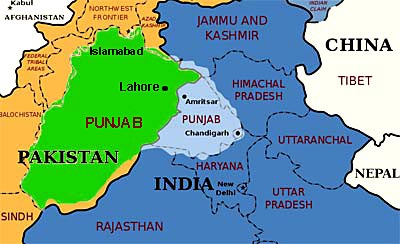
In fact, the whole theatrical formation of Pakistan was based out of Punjab. Pakistan’s leaders took their seats in Lahore and Islamabad and the majority of Pakistan’s genocidal formation was laid in Punjab. No one ever asked himself the question ‘Why Punjab?’

It is one thing that Punjab’s Muslim landowning gentry are the centres of Pakistan’s wealth, but the choice of Punjab to be the nerve centre of the future Pakistani state seems rather disturbing to me.

If we rewind to the 1700s, after the fire breathing Marathas in mainland India, the one force that the Muslims of the north and the west of India feared (as far as Afghanistan and Gilgit-Baltistan) was Punjab and its ruler Maharaj Ranjit Singh. Ever prior to that, Aurangzeb’s campaign to Islamize the south of India and annihilate Hinduism failed largely because of the Sikh revolutionaries of Punjab who fought to the last man, woman and child to stave off the annihilation of Hinduism.

Even when Nader Shah Afshar of Iran invaded India in 1738, it was Punjab which offered some of the stiffest resistance to the extent of attacking and freeing several caravan trains full of Hindu women who were being deported as sex slaves. Punjab was the liberator of Kashmir 300 years after Sikandar Butshikan and his converted nobles expelled and cleansed Hindus in that land. Jammu today has a Hindu majority largely due to Maharaj Ranjit Singh’s policies.

If we observe the arch nemesis of the Sikhs and north western Hindus, we notice the Afghans. For centuries, the Afghans vied for control over Kashmir, Punjab and lands as far as modern day Haryana. It was only due to combined Sikh and Jat resistance that they largely lost in most of these theatres of medieval Jihad.

If we juxtapose these events in history with Jinnah’s demand for a Pakistan, we can conclude the obvious disturbing possibility that:

Jinnah realized by historical example that a Muslim state of Pakistan can never ever exist as long as the Sikh and Jat rulers of western Punjab continued to rule the land demographically. By historical example, he also seems to have taken note that the Pashtuns of the far west would be more than happy to indulge in the outright cleansing of these lands given that for 2 centuries prior, they had already been trying to do exactly that.

The choice therefore to make Punjab the nerve centre of the future Islamic state of Pakistan had only one goal to reach – to deprive the most formidable enemies of Islam in that region of the homeland, thereby creating a homeless refugee exodus into India and in the process, supplanting the most formidable enemies of Islamization overnight with a Muslim majority.

What followed was expected – Pashto and Punjabi speaking Muslim hordes all over Kashmir and Northwest Frontier Province and Punjab were imported into the rest of Pakistan. It worked like a charm. Sindh, Kashmir and Punjab saw a wave of Hindus running for their lives and flooding Indian cities. One might think that they were safe within India. The truth is they were not and the reason for that is much deeper than the obvious.

An uprooted population

The amount of psychological trauma faced by an uprooted expelled population is immeasurable. When a population – especially a population whose entire culture and identity are rooted in the geography of its ancient homeland, is uprooted, you end up creating a scenario wherein the population loses its identity along with its homeland.

In Punjab’s case, many holy sites (many of them now destroyed) stood across the lands of 5 rivers. One of the most prominent of them being Nankana Saheb. When I spoke to a Sikh around 2 years ago about the plight of Hindus in Pakistan, he told me unequivocally that there are none left. That most of them have been killed, expelled or forcefully converted. That places like Nankana Saheb are relic sites of Hindus and Sikhs – now amidst a sea of Muslims while only a generation or two ago, the scenario was opposite.

In all this, Pakistan today uses the cleansed half of Punjab to cultivate and traffic drugs – a plan which they seem to have had for long considering the meticulously planned industry that drugs in Punjab have become. Even out of personal experience, I can state that the drug culture is more rampant with the descendants of the uprooted migrants as the drug culture exponentially rises as we go towards the border towards regions wherein the drugs are actually produced.

Likewise, cultural perdition is more rampant among the descendants of migrants who grew up in a surrounding that never had the spiritual, cultural, geographical or even the emotional connect their folk enjoyed for generations. Such a population of uprooted lost people will lose all purpose to exist as a separate identity for when a man loses the soil of his homeland, he loses his purpose to fight, survive and live.

Such a population will try to assimilate into its new surroundings and no matter how friendly and culturally similar those surroundings may be, the inherent resentment of having to live as a guest in a neighbour’s and the inherent sense of clinging on to what one has lost will make such a population destructively assimilate with its surroundings. And as time goes by, such a population will spawn a generation of resentful people who blame fate and circumstance for everything, and this in turn will lead to ingratitude, inferiority and ultimately to self-hate.

Is it any wonder that Punjab produces so many liberals?
Is it any wonder that Punjab entertains anti-India parties like AAP and Congress on such a war footing?
Is it any wonder that Punjabis among some of the most culturally deracinated people on the one extreme, while some of the most culturally rooted on the other extreme?
Is it any wonder that so many youth are steadily losing their lives to drugs in the same land that Maharaj Ranjit Singh spawned defenders of our faith and folk?

The drugs are merely the second stage. They are a consequence of the uprooting and of the insidious and devilish plan to rid India of her most illustrious defenders – the men and women of Punjab. We can either try to spiritually reorient Punjab – a gargantuan and Herculean task which cannot occur under the current secular setup given the inherent media bias against any such thing and given that this is a nation that will not even repatriate the Kashmiri Pandits, let alone try to instil cultural pride into Punjab. We can otherwise take back the real Punjab and integrate both the Punjabs together into a Greater Punjab, followed by a repatriation of all those Hindus whose grandparents had to run for their lives. Or we could do nothing and watch – something we as Hindus are experts at doing.

70 years later, as India seems to be awakening from its Nehruvian slumber of deceit, communism, lies and self-hate, Pakistan’s plan seems to be moving towards fruition.
Tags: Aam Admi PartyModiPakistanPartition of IndiaPunjab
Share3TweetSend
Previous Post

A fatwa on a piece of paper DOES matter, don’t let the secularists fool you

Next Post

International Experts have some really inspiring words for PM Modi and his Political future

Related Posts

Flags of India and Pakistan with the United Nations emblem, representing the Kashmir dispute and UN resolutions on plebiscite and troop withdrawal.
Analysis

Selective Invocation: Pakistan’s Plebiscite-Only Narrative

30 July 2026

Pakistan's statements on Jammu and Kashmir at the United Nations have, across seven decades, referred to the plebiscite provision...

‘Not Refugees, But Warriors’: Mohan Bhagwat Seeks to Redefine the Legacy of Partition Migrants
History

‘Not Refugees, But Warriors’: Mohan Bhagwat Seeks to Redefine the Legacy of Partition Migrants

2 July 2026

Rashtriya Swayamsevak Sangh (RSS) chief Mohan Bhagwat on Wednesday asserted that those who migrated to India during the 1947...

Samvidhan Hatya Diwas: The Emergency That Put India’s Democracy Under Suspension and Still Divides Memory
History

Samvidhan Hatya Diwas: The Emergency That Put India’s Democracy Under Suspension and Still Divides Memory

25 June 2026

June 25, 1975 remains one of the most defining turning points in India’s constitutional history. The Emergency, declared under...

Load More

Leave a Reply Cancel reply

Your email address will not be published. Required fields are marked *

I agree to the Terms of use and Privacy Policy.
This site is protected by reCAPTCHA and the Google Privacy Policy and Terms of Service apply.

Currently Playing

INS NIPUN: MEET INDIA’S NEW DSV

INS NIPUN: MEET INDIA’S NEW DSV

00:03:05

POJK ERUPTS IN PROTEST

00:02:53

The Indian Air Force Mission That Broke Pakistan's Backbone at Tiger Hill | Op Safed Sagar

00:58:34

Pakistan’s Plebiscite Claim: The Missing Context of the UN Framework

00:03:23

TRUMP'S PHARMA TARIFF SHOCK

00:03:54
Facebook Twitter Instagram Youtube
tfipostTfipost.com
Right Wing | News Analysis | Indian Opinion
  • About us
  • Contact Us
  • Careers
  • Brand Partnerships
  • Terms of use
  • Privacy Policy
  • Sitemap

©2026 TFI Media Private Limited

No Result
View All Result
  • Premium
  • Politics
    • Analysis
    • Opinions
    • Trending
  • Economy
    • Business
    • Finance
  • Defense
    • Defence
    • Strategy
    • Weaponry
  • Geopolitics
    • Africa
    • Americas
    • Asia Pacific
    • Europe
    • South Asia
    • West Asia
  • Knowledge
    • Culture
    • History
    • Indology
  • Law
  • Lounge
    • Books
    • Cinema
    • Food
    • Health
    • Sports
    • technology
    • Travel
    • Satire
TFIPOST हिन्दी
TFIPOST Global

©2026 TFI Media Private Limited