




















In 2024, the streets of Dhaka lit a fire that ended Sheikh Hasina’s 15-year rule and handed the responsibility of rebuilding a fractured nation to Nobel laureate Muhammad Yunus. The student-led uprising raised hopes of political reform and a new democratic beginning.
More than two years later, Bangladesh is once again witnessing arson, bomb attacks, street clashes and political confrontation. The ancestral home of former interim government chief Yunus was set ablaze in Chattogram late on Wednesday, as supporters of Hasina’s banned Awami League enforced a nationwide shutdown on Thursday.
The latest violence is unfolding under an elected government led by the prime minister, Tarique Rahman, who took office in February 2026 after Yunus’s interim administration handed over power. The unrest has renewed questions about whether Bangladesh has been able to move beyond the political divisions that led to Hasina’s removal.
As poet Rahat Indori’s warning about a fire spreading through a neighbourhood suggests, no household can assume that the flames will stop at its doorstep.
Why is Bangladesh witnessing fresh violence?
The immediate trigger is Hasina’s stated intention to return to Bangladesh from India in December. The former prime minister has lived in exile since fleeing Dhaka on August 5, 2024, as protests against her government intensified.
Hasina has sought a new passport and national identity card to facilitate her return. The government has rejected her request, prompting supporters of her banned Awami League to organize protests and rallies. The party announced a week-long mobilization campaign that culminated in a nationwide shutdown on November 19.
The unrest has spread across several districts. Police have reported crude-bomb explosions, arson attacks and vandalism. Two members of the ruling Bangladesh Nationalist Party (BNP) were killed amid the latest violence, while the homes of two BNP lawmakers were vandalised and set on fire, according to Reuters.
The violence also reached Yunus’s ancestral home in Chattogram. Police said flames were spotted in an unused ground-floor room shortly before midnight on Wednesday. A patrol extinguished the fire, and Yunus’s relatives living on the upper floors were reported safe. Police are investigating the incident.
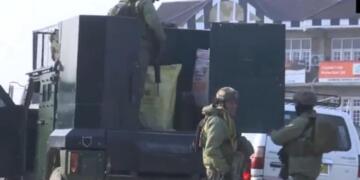
Authorities deployed 97 platoons of the Border Guard Bangladesh across seven districts to prevent further violence. Dhaka police also arrested 107 people allegedly linked to the Awami League and affiliated organizations within 24 hours, according to Reuters.
How did Bangladesh reach this point?
The current crisis has its roots in the events of July and August 2024.
Hasina had been in power since 2009 when student protests erupted over a controversial government job quota system. The demonstrations expanded into a nationwide movement against her administration, with protesters accusing it of suppressing dissent and restricting political freedoms.
The government’s crackdown intensified the unrest. The UK government’s October 2026 assessment cites estimates of around 1,400 people killed and 20,000 injured during the protests and crackdown.
On August 5, 2024, Hasina resigned and fled to India. Three days later, an interim administration led by Yunus was appointed.
The administration was tasked with restoring stability, undertaking institutional reforms and preparing the country for elections. It also oversaw a process of political and constitutional reform that resulted in the July National Charter, which was put to a referendum alongside the February 2026 general election.
However, the interim period was marked by disagreements over the pace and scope of reforms, law and order and the political future of the Awami League.
From Yunus’s interim administration to Tarique Rahman’s government
Bangladesh held parliamentary elections on February 12, 2026, its first general election since Hasina’s ouster.
The BNP, led by Tarique Rahman, won 209 of the 300 directly elected parliamentary seats. Jamaat-e-Islami secured 68 seats, while the student-led National Citizens Party won six. Rahman was sworn in as prime minister on February 17, succeeding Yunus.
The election marked the return of the BNP to government after nearly two decades. However, the Awami League was unable to contest because its political activities had been banned under the interim administration and its registration suspended.
The exclusion of a major political party remained an important feature of the post-Hasina political landscape. Although the election brought an elected government to power, it did not settle questions about political inclusion, accountability and the future role of the Awami League.
The new administration inherited these unresolved issues alongside the task of maintaining law and order and implementing the reform agenda.
Hasina’s legal troubles and the question of her return
Hasina’s planned return has added another layer to the political confrontation.
In November 2025, a Bangladeshi tribunal sentenced her to death in absentia after finding her guilty of crimes against humanity linked to the crackdown on the 2024 uprising. Hasina has denied the charges.
She has remained in India, while Bangladesh has sought her extradition. In November 2026, she requested a new passport and national identity card, saying she intended to return in December and surrender before a court.
Her party, meanwhile, remains banned from formal political activity. Several Awami League leaders have fled the country or gone into hiding. The government has accused party figures abroad of encouraging unrest, although the party’s leaders have not been available for comment in recent reporting.
The violence has also affected institutions associated with Yunus. Grameen Bank, founded by the Nobel laureate, reported that at least 37 of its branches and offices had been targeted in arson attacks or attempted fires since November 10, according to Reuters.
Economic pressures add to the challenge
Political unrest is not the only challenge facing Bangladesh. The country is also dealing with economic and labour-related pressures.
On Thursday, garment workers separately staged protests demanding higher wages. Hundreds blocked a major highway leading into Dhaka, forcing some factories to close.
These demonstrations were separate from the Awami League’s political shutdown. However, they underline the range of pressures facing the government in a country where the ready-made garment industry is a major source of employment and export earnings.
The new administration must therefore address political instability alongside economic concerns, labour demands and the institutional reforms initiated during the interim period.
Can Bangladesh move beyond the 2024 uprising?
Bangladesh now faces a difficult question: can a movement that successfully removed a long-serving government translate its demands for democratic reform into a stable political system?
The latest violence shows that the struggle over the country’s political future is far from settled. Hasina’s supporters are seeking a path back into the political arena, while the BNP government is attempting to maintain the ban on the Awami League and prevent further unrest.
At the same time, the authorities face the challenge of maintaining public order without allowing political confrontation to deepen existing divisions.
Yunus’s departure from office did not bring an end to the tensions that defined his interim administration. Nor did the February election resolve all the competing claims over who should shape Bangladesh’s future.
The streets that once brought down Hasina’s government are again witnessing unrest. The challenge now is to prevent the aftermath of that revolution from becoming another cycle of political violence.