



















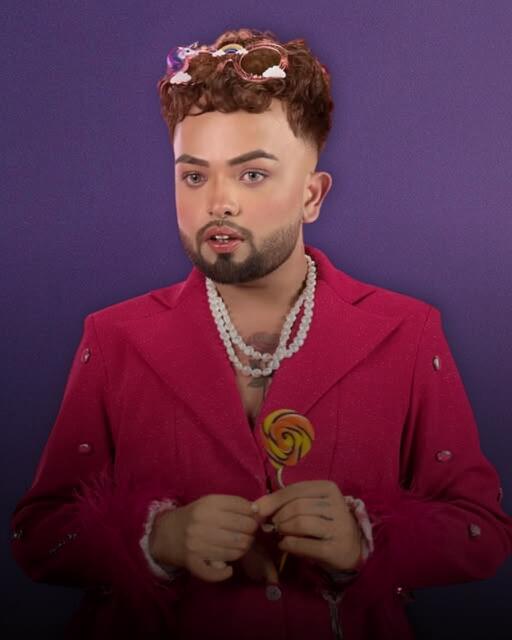
The brutal killing of LGBTQ+ influencer and make-up artist Mad Sandhu in Amritsar has sent shockwaves through Punjab, particularly as it emerges that he had been living under threat from Nihang extremists for months before his death. Sandhu, whose real name was Madhusudan, was shot dead on Saturday evening, 3rd October, when two unidentified men on a motorcycle opened fire at him on Loharka Road. The 26-year-old had gone to collect his car from a washing centre when the attackers approached and fired multiple rounds, leaving him with fatal bullet injuries. He was rushed to a private hospital but succumbed to his wounds during transit.
The murder bears disturbing echoes of a previous case involving Nihang extremists and moral policing. More than a year before Sandhu’s killing, social media influencer Kanchan Kumari, also known as Kamal Kaur Bhabhi, was strangled inside her car on 10th June 2025. Her decomposed body was discovered later on the Bathinda-Chandigarh highway. Police investigations revealed that the accused considered her content “immoral” and took it upon themselves to silence her. Two men, Jaspreet Singh and Nimaratjeet Singh, were arrested in connection with that murder, with authorities stating that the main accused, Amritpal Singh Mehron, had instructed them to flee and promised future assistance.
What makes Sandhu’s case particularly troubling is that he had already been warned by Nihang extremists about his social media content. The influencer, who had amassed approximately 2.26 lakh followers on Instagram and had appeared in the Punjabi film Oye Bhole Oye, was known for discussing make-up, fashion, gender issues and LGBTQ+ rights. In recent months, a group of radical Nihang extremists had taken issue with some of his posts, his clothing choices and older videos that had resurfaced online.
According to reports, the Nihang extremists warned Sandhu that his content was hurting Punjab’s culture and corrupting its youth. In response, Sandhu had attempted to de-escalate the situation by stating that he had changed and would not repeat his earlier mistakes. He had also claimed that some of his old videos were being deliberately circulated again to create controversy around him. Despite these assurances, the threats apparently never truly subsided, and now he has paid with his life.
Amritsar Commissioner of Police Harmanbir Singh Gill confirmed that Sandhu was the son of a retired Punjab Police sub-inspector. Police have formed multiple teams to identify and trace the attackers and are examining CCTV footage from the area surrounding Loharka Road. Two empty bullet shells were recovered from the spot where the shooting took place, providing forensic evidence that investigators hope will lead to the perpetrators.
“Police have solid leads and we will soon nab the culprits and ensure exemplary punishment for them,” Gill stated, expressing confidence that the case would be solved swiftly. However, the motive behind the killing has not yet been officially established. Police are examining various angles and have not confirmed any direct link between the murder and the controversy Sandhu had faced over his social media content. This cautious approach suggests investigators are keeping all possibilities open while pursuing leads.
The pattern emerging from both Sandhu’s killing and the earlier Kanchan Kumari case points to a worrying trend of vigilante violence linked to objections over social media content. The Kanchan Kumari murder had already drawn significant controversy when Akal Takht Sahib head granthi Giani Malkit Singh appeared to justify the killing while speaking about people accused of spreading vulgarity and defaming the Sikh community. Such statements from religious figures have raised concerns about whether they embolden Nihang extremists to take the law into their own hands.
The two cases together have renewed attention on allegations of moral policing and violence linked to objections over social media content in Punjab. Civil society groups and LGBTQ+ rights organisations have expressed alarm at the targeting of individuals for their online expression, particularly when it appears to be motivated by religious or cultural objections. The fact that Nihang extremists have been implicated in both cases suggests a disturbing pattern that authorities must address urgently.
As police continue their investigation into Sandhu’s killing, questions remain about whether adequate protection was provided to him after the earlier threats. The young influencer’s death has sparked outrage among his followers and the wider LGBTQ+ community, who see it as a tragic consequence of unchecked extremism. For now, authorities are urging patience while they pursue leads, but the pressure to deliver justice in this high-profile case is mounting with each passing day.