















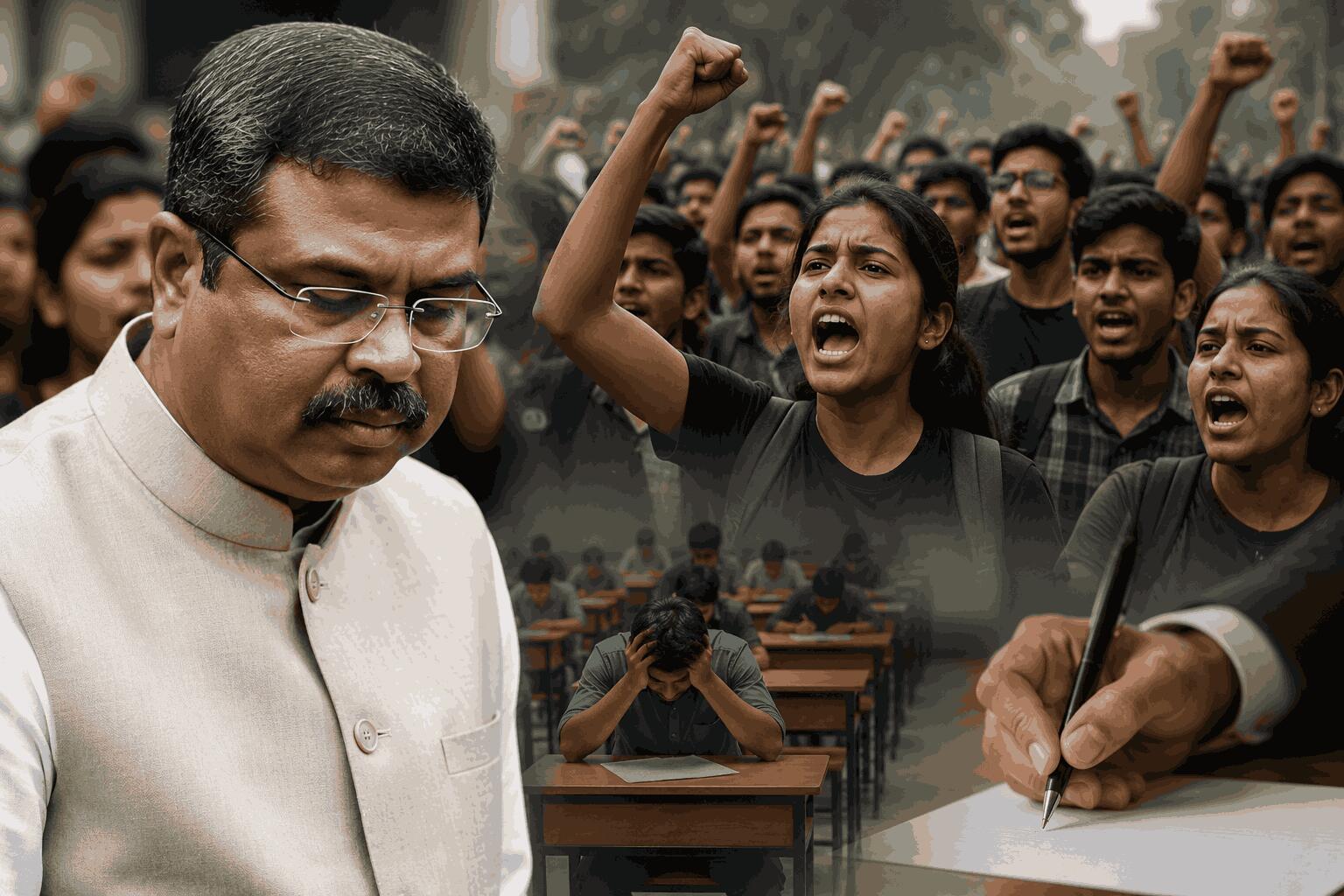
Union Education Minister Dharmendra Pradhan announced his resignation on Saturday, saying that the future of millions of students should never become a casualty of political confrontation. The decision comes after weeks of nationwide demonstrations over the alleged NEET paper leak controversy, with pressure mounting on the government to restore confidence in the country’s competitive examination system.
The resignation marks one of the most significant developments in the ongoing education crisis, which has triggered widespread public debate over transparency, accountability, and the integrity of India’s entrance examinations. Student groups, political parties, and civil society organizations have repeatedly demanded stronger safeguards to ensure that merit remains the cornerstone of higher education admissions.
In his public statement, Dharmendra Pradhan said his decision was guided by the larger interest of students rather than political considerations. He emphasized that the controversy should not continue to overshadow the aspirations of lakhs of young people preparing for competitive examinations. According to reports, he maintained that protecting the credibility of India’s education system was of paramount importance and that his resignation should help reduce tensions surrounding the issue.
The controversy began after allegations surfaced that the NEET examination paper had been leaked, raising serious concerns about fairness in one of India’s most competitive entrance tests. The issue quickly snowballed into a nationwide movement, with students expressing frustration over repeated examination irregularities and demanding systemic reforms. As demonstrations spread across multiple states, calls for accountability grew louder from both opposition leaders and student organizations.
Political reactions followed swiftly after the announcement. Opposition leaders argued that the resignation represented an acknowledgment of public dissatisfaction with the handling of the examination crisis. Several leaders reiterated that restoring faith in the examination process would require not only changes in leadership but also comprehensive institutional reforms aimed at preventing future irregularities.
Supporters of Dharmendra Pradhan, however, contended that he had accepted moral responsibility despite ongoing investigations into the alleged paper leak. They argued that accountability in public office sometimes requires difficult decisions, even before all facts are fully established. Government representatives also reiterated their commitment to strengthening examination security and ensuring that deserving students are not disadvantaged by malpractice.
For millions of medical aspirants and their families, the controversy has been emotionally exhausting. Students spend years preparing for the highly competitive NEET examination, often investing substantial financial resources and personal sacrifices. Allegations of question paper leaks naturally create anxiety among candidates who expect a transparent and merit-based selection process. Education experts believe that rebuilding trust will require technological improvements, stricter monitoring, and swift legal action against those responsible for any wrongdoing.
Observers note that Dharmendra Pradhan had repeatedly defended the government’s efforts to address concerns surrounding examination integrity while also promising corrective measures. Nevertheless, as protests intensified, public pressure continued to mount. His resignation is now being viewed as a political turning point in the broader debate over education governance and examination reforms in India.
The focus is now expected to shift toward identifying a successor capable of restoring confidence in the Ministry of Education while implementing meaningful reforms. Experts have suggested stronger digital surveillance, encrypted examination logistics, enhanced coordination with investigative agencies, and stricter penalties for organized examination fraud. Such measures, they argue, are essential to preserving the credibility of national entrance tests.
Meanwhile, Dharmendra Pradhan concluded his message by urging all stakeholders to keep students’ interests above political disagreements. His remarks reflected the broader sentiment that education should remain a unifying national priority rather than a source of prolonged political conflict. Whether his resignation eases public anger or merely marks the beginning of a deeper institutional overhaul remains to be seen.
As investigations continue and policymakers debate the next steps, the NEET paper leak controversy has become more than a dispute over a single examination. It has evolved into a larger conversation about transparency, accountability, and the responsibility of institutions entrusted with shaping the future of India’s youth. For countless students awaiting certainty, the hope is that the lessons learned from this episode will lead to a stronger, fairer, and more resilient examination system for the years ahead.