















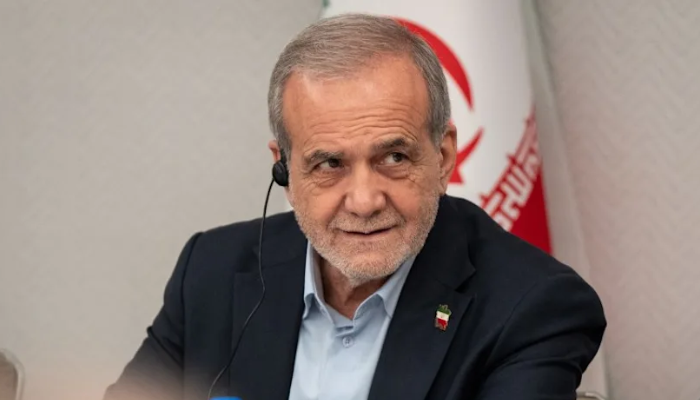
Iranian President Masoud Pezeshkian has reportedly submitted his resignation to Supreme Leader Mojtaba Khamenei, claiming that real authority within the country has shifted into the hands of commanders of the Islamic Revolutionary Guard Corps (IRGC).
According to a report by Iran International, Pezeshkian stated in his resignation letter that his administration was increasingly being excluded from major state decisions and that elected institutions no longer exercised meaningful control over critical policy matters. The report claimed that since the outbreak of the conflict involving Iran, Israel and the United States earlier this year, the government’s role in decision-making had diminished significantly as military leadership assumed greater influence.
The report further alleged that Pezeshkian felt unable to effectively govern under the existing arrangement and had therefore decided to step down. It did not indicate whether Supreme Leader Mojtaba Khamenei had accepted or responded to the reported resignation.
If accurate, the allegation would represent one of the strongest indications yet of tensions between Iran’s civilian leadership and the powerful Revolutionary Guards. The IRGC already wields substantial influence across Iran’s military, political and economic spheres, but the report suggests that its role in shaping state policy has expanded further during the current crisis.
Tehran Rejects Resignation Claims
Iranian authorities moved swiftly to dismiss the report.
Seyed Mehdi Tabatabaei, Deputy Chief of the Communications and Information Dissemination Department in the President’s Office, described the resignation claims as false and insisted that Pezeshkian remains fully committed to serving the Iranian people.
In a statement posted on X, Tabatabaei said the president would not retreat from his responsibilities and accused foreign media outlets of spreading rumours designed to weaken national unity. He added that just as the Iranian people would continue on the path of solidarity and resistance, Pezeshkian would continue serving the nation.
The denial was echoed by Elias Hazrati, Director of Iran’s Government Information Council, who said the president remained fully engaged in managing the country’s affairs. Hazrati criticised foreign media reports and argued that they were intended to create uncertainty and division within Iranian society.
Notably, neither Pezeshkian nor any other senior Iranian leader has publicly commented on the reported resignation letter.
Power Structure Under Scrutiny
The controversy has emerged at a particularly sensitive moment for Iran as the country navigates regional military tensions and diplomatic engagement with the United States.
The report’s central claim is not merely that a president considered resigning, but that Iran’s elected government was allegedly being sidelined from major decisions while IRGC commanders exercised growing control over state affairs. Such an allegation, if substantiated, would raise significant questions about the balance of power within the Islamic Republic and the role of civilian institutions during a period of heightened geopolitical pressure.
While the resignation claim remains unverified and has been officially denied, the episode has once again placed the influence of the IRGC at the centre of political debate and intensified scrutiny of how key decisions are being made in Tehran.