






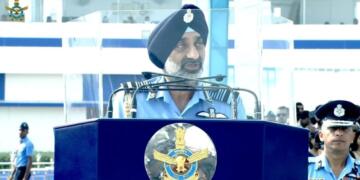












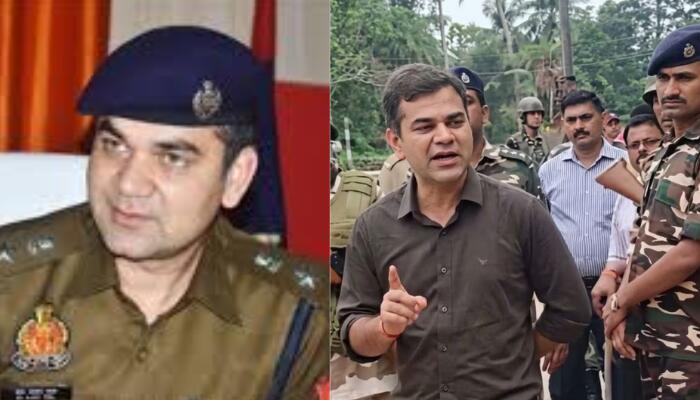
A fresh political storm has broken over West Bengal’s Assembly elections after a PIL in the Supreme Court sought the removal of Uttar Pradesh cadre IPS officer Ajay Pal Sharma as Election Commission observer. Supporters of the officer argue the challenge is not about neutrality, but about resisting strict poll enforcement.
Petitioner Aditya Das moved the plea under Article 32 and sought Sharma’s removal over allegations of bias and intimidation. But the petition came immediately after Sharma’s intervention in South 24 Parganas. That timing has led many to see the move as an attempt to blunt tough oversight during voting.
Videos showed Sharma warning alleged troublemakers against voter intimidation and disorder. For supporters, the officer did what a serious observer in a volatile constituency should do. He sent a message that coercion would not be tolerated.
From Observer to Political Target?
Known as the ‘Singham of UP’, the 2011-batch IPS officer has built a reputation for hard policing. In Bengal, supporters say that same firmness has unsettled those used to operating with impunity.
Reports said Sharma acted after complaints that electors were being pressured and voter identity cards collected. Accompanied by central forces, he warned alleged troublemakers of strict consequences.
That intervention triggered outrage from Trinamool Congress leaders. Critics of the backlash, however, argue the reaction reflects discomfort with enforcement, not concern over procedure.
The BJP’s West Bengal unit portrayed Sharma’s actions as proof that powerful local actors were finally facing scrutiny.
That framing has raised an uncomfortable question. If an observer acts against alleged intimidation and is dragged into litigation, what message does that send to officials securing elections?
Neutrality Does Not Mean Inaction
The petition cites Section 20B of the Representation of the People Act and argues observers must remain neutral. Supporters of Sharma counter that neutrality cannot mean silent spectatorship when allegations of coercion emerge.
In their view, an observer who watches intimidation without reacting fails the democratic mandate the law seeks to protect.
That is why the legal challenge has grown bigger than one officer.
The Calcutta High Court declined to interfere with Sharma’s appointment during an ongoing poll process. Critics of the PIL say the Supreme Court move now seeks to cast suspicion over firm election monitoring itself.
Battle Over Poll Integrity
Political attacks have intensified. Trinamool leaders accused Sharma of overreach. Samajwadi Party chief Akhilesh Yadav called him a “BJP agent”. Proponents say those attacks only reinforce the need for hard-nosed observers.
They argue the backlash is directed not at misconduct, but at an officer unwilling to look away.
With 95 observers deployed by the Election Commission in vulnerable constituencies, Sharma has become a symbol in a wider struggle over whether strong institutional intervention will be defended or demonised.
What the Petition Says
The petition, listed as Aditya Das v. Election Commission, Diary No. 26135/2026, alleges that Sharma threatened political candidates and acted beyond the statutory role under Section 20B.
Supporters counter that his actions followed field complaints that associates of TMC candidate Jehangir Khan were collecting voter identity cards and intimidating electors. Those complaints prompted Sharma’s visit to Khan’s residence and election office.
That sequence remains central to Sharma’s defence.
The dispute must also be viewed in the context of the second phase polling across 142 seats. South 24 Parganas, seen as part of Abhishek Banerjee’s stronghold, remains under particular scrutiny.
Eyes and Ears or Active Enforcement?
Critics argue observers are merely the Election Commission’s “eyes and ears”, not its “arms and legs”. Sharma’s supporters reject that reading as too passive. They argue oversight loses meaning if observers cannot respond when coercion allegations surface.
Mahua Moitra’s personal attacks and Akhilesh Yadav’s claims of a “BJP agenda” have sharpened the row. Defenders say those attacks avoid a central issue: whether the complaints that triggered Sharma’s intervention were false.
Sharma’s own profile has fed the debate. He is posted in Prayagraj, studied dental science before joining the police, and built a reputation as an encounter specialist. Supporters say that explains both his assertive conduct and the intensity of the backlash.
EC Action Adds Fresh Twist
In a significant development on polling day, the Election Commission transferred Joint Block Development Officer Sourav Hazra out of Falta and posted him to Purulia, while appointing Ramya Bhattacharya in his place. In a separate order, the Commission also removed South 24 Parganas ADM Bhaskar Pal and Birbhum ADM Souvik Bhattacharya from all election-related duties, though it did not publicly cite reasons.
The timing proved politically consequential. The transfer came amid allegations of non-cooperation by Hazra with Sharma during the observer’s intervention in Falta, a detail that supporters say lends weight to the argument that Sharma was not acting in isolation.
For backers of the officer, the EC’s move suggests institutional seriousness around the disturbances that triggered Sharma’s intervention, even though the Commission did not publicly assign reasons for the administrative changes.
The development also followed Sharma’s continued route marches in sensitive pockets and searches based on intelligence inputs about potential troublemakers. Those actions drew further protests from Trinamool workers, who raised ‘Go Back’ and ‘Jai Bangla’ slogans as tensions escalated.
Falta, part of the Diamond Harbour Lok Sabha seat represented by Abhishek Banerjee, has been treated as a sensitive constituency with heightened surveillance and heavy central deployment. Reports said Sharma moved through the area with over a hundred armed paramilitary personnel, an armoured vehicle, and a list of suspected troublemakers.
Backers say these developments reinforce a central counterpoint to the PIL: Sharma’s actions were rooted in field inputs and were followed by Election Commission interventions, rather than amounting to personal adventurism.
Critics maintain the observer overstepped. Supporters say the fresh EC orders raise harder questions for that charge.
The question now is whether tough observers will be protected or punished for doing their job.