










France’s reputation as a fiercely independent military aviation power is now facing a new kind of test, not on the battlefield, but in boardrooms and strategic partnerships.
Long admired for its ability to design and produce advanced fighter jets without relying on external partners, France is increasingly encountering pushback from allies and customers over its guarded approach to technology sharing.
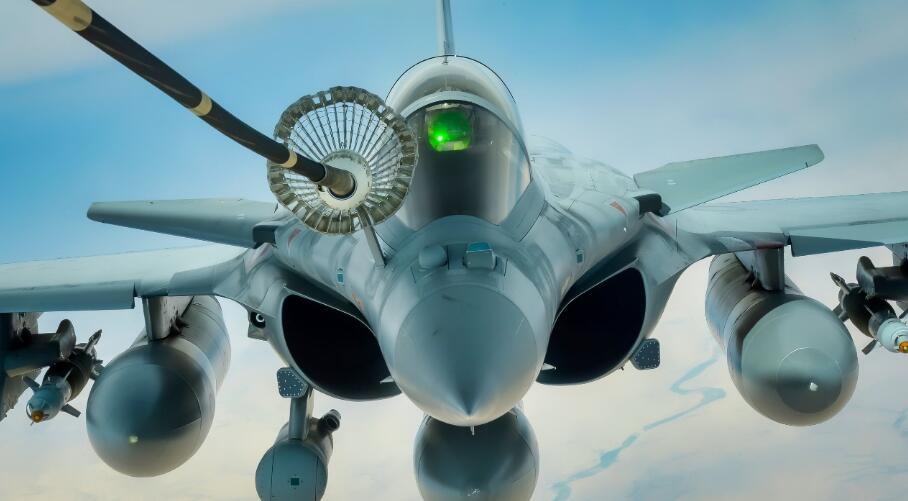
The debate has intensified around the Dassault Rafale, the backbone of French airpower and a major export success story. While Paris continues to market the aircraft as a symbol of technological excellence and sovereignty, growing frustration among partners from the UAE to Germany suggests that this very strategy could be limiting France’s long-term influence in the global defence market.
France’s Strategic Strength and Its Limits
For decades, France has prided itself on maintaining full-spectrum defence autonomy. Unlike many European nations, it has independently developed combat aircraft, engines, avionics, and weapons systems.
According to reports, this approach has helped Paris secure its place as the world’s second-largest arms exporter, behind the United States, accounting for nearly 10% of global arms exports between 2021 and 2025.
The Rafale fighter sits at the center of this success. By late 2025, total confirmed orders had reached 533 aircraft, including major deals with India, Egypt, Qatar, Greece, Croatia, the UAE, Serbia, and Indonesia.
Its combination of versatility, combat-proven capability, and political reliability has made it one of the most sought-after 4.5-generation fighter jets in the world.
Yet, this success comes with a caveat. France’s insistence on retaining tight control over critical technologies—especially in sensitive areas like avionics, electronic warfare, and optronics has increasingly become a sticking point in negotiations.
UAE’s Exit from Rafale F5: A Warning Signal
The most visible sign of this friction has emerged from the UAE, one of France’s biggest defence clients. In 2021, Abu Dhabi reportedly signed a landmark $19.2 billion deal for 80 Rafale F4 jets and 12 military helicopters, the largest export order in the aircraft’s history.
The UAE was not just a buyer; it was expected to become a key development partner. It had shown interest in co-funding the next-generation Rafale F5 variant, reportedly offering around €3.5 billion toward a €5 billion program. The F5 is envisioned to include advanced sensors, improved weapons integration, and more secure communication systems.
However, that partnership has now unraveled. Reports indicate that the UAE has withdrawn from the F5 program following high-level disagreements between Emmanuel Macron and Mohamed bin Zayed Al Nahyan. At the heart of the fallout lies France’s reluctance to share critical technologies, particularly in the field of optronics.
For Paris, the implications are significant. Emirati funding would have eased the financial burden of developing the F5 and allowed France to allocate resources to other defence priorities. Instead, it now faces the prospect of going it alone—once again.
Strains Within Europe: Germany and the FCAS Challenge
Tensions are not limited to export clients. Even within Europe, France’s approach has created friction. The ambitious Future Combat Air System (FCAS), jointly pursued with Germany and Spain, has been plagued by disagreements over workshare, intellectual property, and technology access.
Led by Dassault Aviation and Airbus, the program is meant to deliver a sixth-generation combat system. However, Germany has reportedly grown frustrated with what it sees as France’s unwillingness to fully open up core technologies, raising concerns about delays and long-term viability.
These disputes underline a broader dilemma: while strategic autonomy gives France control, it also complicates collaboration in an era where next-generation defence systems increasingly depend on shared expertise and funding.
What This Means for India
For India, one of the Rafale’s most prominent operators, these developments carry important lessons. New Delhi has long sought deeper technology transfer and local production capabilities in its defence partnerships. France has been seen as a more flexible partner compared to others, but the current tensions suggest clear limits to that flexibility.
If France continues to guard its core technologies, it could complicate India’s future plans for upgrades, indigenous integration, and possible expansion of its Rafale fleet. At the same time, this reinforces India’s broader push for self-reliance in defence manufacturing under its “Atmanirbhar Bharat” vision.
Strategically, India may adopt a more cautious and diversified approach, balancing its partnership with France while accelerating domestic programs and exploring co-development opportunities with other global players. In the long run, the unfolding situation could push India to negotiate harder, demand clearer technology-sharing frameworks, and reduce dependence on any single supplier.
France’s doctrine of technological sovereignty has long been its strength. But as global defence partnerships evolve, the challenge for Paris will be finding the right balance between control and collaboration before its prized independence begins to cost it influence, contracts, and strategic trust.