






















In a swift response to escalating unrest and violent demonstrations, the Yogi Adityanath-led Uttar Pradesh government has approved a significant increase in minimum wages for factory workers across the state.
Accprding to media reports, the decision was finalised during a high-powered committee meeting on Monday night and aims to quell the agitation that paralysed parts of Noida and Ghaziabad earlier this week.
The unrest reached a breaking point on Monday morning as hundreds of workers took to the streets, demanding long-pending salary revisions and better working conditions.
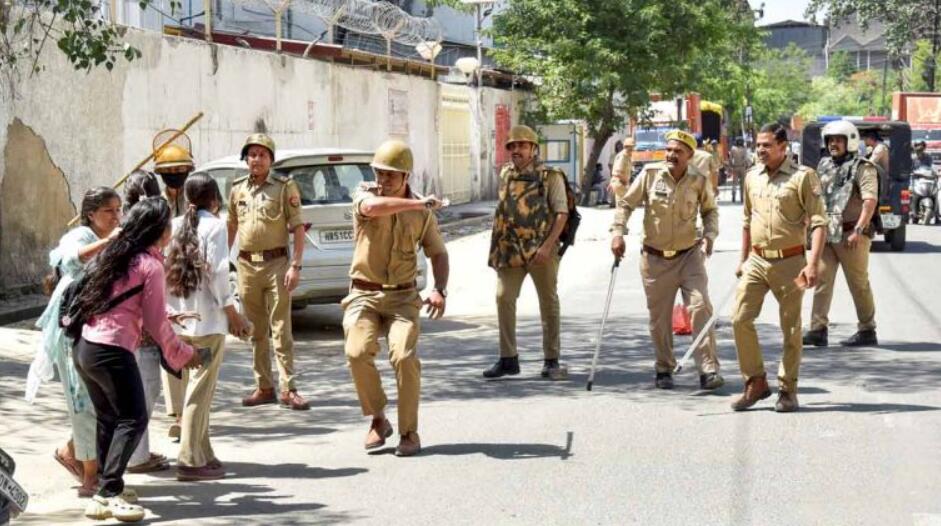
The protests turned violent in Noida’s Phase-2 and Sector 60, resulting in torched vehicles, including a police van, vandalised buildings, and stone-pelting. Armed police in riot gear were deployed to manage the face-off, which left key arterial roads choked for hours.
New Wage Structure Across Uttar Pradesh
Following the Chief Minister’s approval, the revised pay scale has been categorised based on the region and the skill level of the workers. In the high-demand zones of Gautam Buddh Nagar and Ghaziabad, unskilled workers will now see their monthly earnings rise to Rs 13,690, up from the previous Rs 11,313. Within the same region, semi-skilled workers are set to earn Rs 15,059, while the wage for skilled workers has been increased to Rs 16,868.
For other municipal corporation areas across the state, the government has set the monthly wages at Rs 13,006 for unskilled labor, Rs 14,306 for semi-skilled workers, and Rs 16,025 for those in the skilled category. In the remaining districts of Uttar Pradesh, the revised rates have been fixed at Rs 12,356 for unskilled workers, Rs 13,591 for semi-skilled workers, and Rs 15,224 for skilled workers.
Why Are Workers Protesting?
A major driver of the unrest is the financial struggle faced by the labor force, with most protesting workers reporting monthly earnings of less than Rs 15,000. Workers have openly questioned how they are expected to make ends meet and sustain their families on such a sum amid rising costs.
Beyond the demand for better pay, there is significant resentment regarding working hours; many laborers claimed they are currently forced to work 12-hour days and are demanding a shift to a standard 8-hour workday to ensure fair labor practices.
The ‘Haryana Factor’ and Worker Grievances
The primary catalyst for the sudden intensity of the Noida protests was a recent policy shift in neighboring Haryana. The Nayab Singh Saini government recently implemented a 35% hike in minimum wages, setting the floor for unskilled workers at Rs 15,220 and semi-skilled workers at Rs 16,780. This disparity led Noida-based workers to feel “short-changed,” questioning why they should earn significantly less than their counterparts just across the state border for identical labor.
Beyond pay, workers highlighted grueling conditions, with many reporting 12-hour shifts. Protesters demanded a transition to standard 8-hour workdays, claiming their current earnings, often under Rs 15,000 were insufficient to meet the rising cost of living.
There were also widespread allegations that industrial units were failing to comply with existing central government wage mandates, further fueling the resentment that boiled over into Sunday and Monday’s violence.
Government Stance on Safety and Order
Chief Minister Yogi Adityanath emphasized that while the state is committed to the welfare of the workforce, lawlessness will not be tolerated. He stated that “every worker should get a respectable salary, a safe working environment and basic facilities,” while simultaneously calling on industrial units to strictly adhere to labor laws and address the legitimate grievances of their employees.
However, the Chief Minister also issued a stern warning against the violence, noting, “Those creating nuisance in the name of workers must face strict action and security must be beefed up in industrial areas.”
He further cautioned authorities to remain vigilant against what he described as a “conspiracy to revive almost-dead Naxalism.” The Gautam Buddh Nagar Police have since confirmed the situation is under control, though they remain on high alert to prevent further disruptions to public order.