





















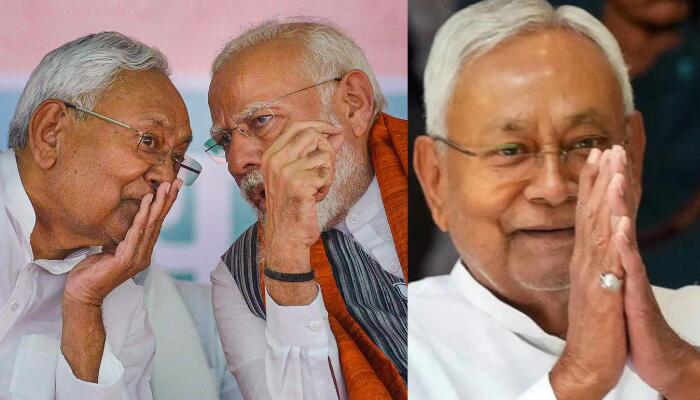
Bihar entered a new political phase today as Chief Minister Nitish Kumar resigned from office after nearly two decades in power, bringing an end to one of the longest and most influential tenures in the state’s political history. Kumar submitted his resignation to the Governor after chairing his final cabinet meeting in Patna and recommending the dissolution of the state cabinet.
His departure clears the way for the Bharatiya Janata Party, the single largest party in the 243-member Bihar Assembly with 89 legislators, to form the next government. The BJP is expected to elect its legislature party leader later in the day, with the new chief minister likely to take oath on April 15 at Lok Bhawan. Prime Minister Narendra Modi is expected to attend the ceremony.
Kumar, who heads the Janata Dal (United) and was elected to the Rajya Sabha last week, assured that he would continue to support the incoming administration. In his first reaction after stepping down, he said the new government would receive his “full cooperation and guidance” and expressed confidence that Bihar would continue to move forward on the path of development.
An emotional farewell after years of leadership
Kumar’s final cabinet meeting was marked by an emotional atmosphere as ministers and colleagues reflected on his long tenure in office. Several leaders described the moment as deeply sentimental, with some visibly moved during the proceedings.
Addressing his colleagues, Kumar urged them to maintain the momentum of development and continue working for the welfare of the people. He thanked ministers, officials and party colleagues for their cooperation and acknowledged the collective effort behind the government’s achievements.
Following his resignation, Kumar said his administration had worked for the development of all sections of society. According to him, the government pursued initiatives that benefited Hindus, Muslims, upper castes, backward classes, extremely backward classes, Dalits and Mahadalits alike. He noted that progress had been made across sectors including education, health, roads, electricity and agriculture, while special emphasis was placed on programmes for women and youth.
Kumar also recalled that the rule of law had prevailed in Bihar since the National Democratic Alliance formed its first government in the state in November 2005, adding that development remained a consistent priority during this period.
A political journey shaped
Nitish Kumar’s political journey began with setbacks before eventually transforming him into one of Bihar’s most enduring leaders. After losing the 1977 Assembly election from Harnaut in Nalanda district, he famously declared during a discussion with journalists in Patna that he would one day become the Chief Minister.
An electrical engineering graduate from Bihar College of Engineering in 1972, Kumar had entered politics inspired by the socialist movement that emerged from the 1974 JP Movement. However, electoral success eluded him for several years before he finally won the Harnaut seat in 1985.
During the period when Lalu Prasad dominated Bihar’s politics between 1990 and 2005, Kumar largely remained active at the national level. His first brief stint as Chief Minister came in 2000 and lasted only seven days. His political fortunes changed decisively in 2005 when he helped lead the National Democratic Alliance to power in Bihar, marking the beginning of his long tenure at the helm of the state.
Development and governance under Nitish Kumar
Kumar’s supporters often credit him with steering Bihar away from administrative instability and poor infrastructure that had characterised earlier decades. His first term between 2005 and 2010 focused heavily on building roads and bridges across the state, while the following years saw the expansion of schools, hospitals and government offices.
During his tenure, several prominent public structures were commissioned, including the Bihar Museum, the Samrat Convention Centre, the Sardar Patel Bhavan, which houses the Bihar Police headquarters, and Bapu Tower.
However, critics argue that while infrastructure development became visible across the state, deeper institutional reforms in education and healthcare did not progress at the same pace. Questions have also been raised about shortages of medical staff in government hospitals and the broader quality of public services.
Social welfare and women’s empowerment
Another defining feature of Kumar’s tenure was the expansion of welfare programmes aimed at widening access to education and opportunities. Initiatives such as free bicycles and uniforms for schoolgirls, scholarships and tuition support helped increase enrolment and participation in education.
His government also introduced major measures to strengthen women’s participation in governance and public life. Bihar became the first state to provide 50 per cent reservation for women in panchayats in 2006, followed by a 35 per cent quota for women in police and government jobs. The state also introduced a gender budget and expanded the Jeevika programme, a large network of women-led self-help groups that now plays a key role in rural development initiatives.
The end of a long political era
Kumar’s long tenure was also defined by his ability to navigate coalition politics. Aligning with the BJP in the mid-1990s, he later retained influence through a series of strategic political realignments, often positioning himself as a balancing figure between competing forces in Bihar’s complex political landscape.
His resignation therefore marks more than a routine leadership change. It signals the end of a defining era in Bihar politics and the beginning of a new phase under different leadership.
How history ultimately judges Nitish Kumar’s legacy will remain a matter of debate. Yet few would dispute that his two decades in power altered the course of governance in Bihar and left a lasting imprint on the state’s political and administrative landscape.