


















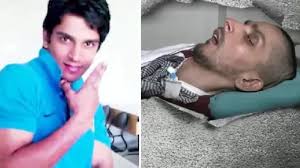
The Supreme Court of India permitted passive euthanasia for Harish Rana, a 31-year-old man who has remained in a permanent vegetative state for more than 13 years after suffering a severe brain injury in a fall in 2013. In a landmark decision, the court allowed the withdrawal of life-sustaining treatment, applying the principles laid down in the 2018 Common Cause judgment that recognized the right to die with dignity as part of the right to life under Article 21 of the Constitution.
A bench comprising Justices JB Pardiwala and KV Viswanathan directed that Rana be admitted to the palliative care centre at the All India Institute of Medical Sciences, where the process of withdrawing clinically assisted nutrition will be carried out gradually. The court also waived the mandatory 30-day reconsideration period usually required in such cases and emphasized that the process must be conducted in a manner that preserves the patient’s dignity.
Accident That Left a Young Student Bedridden
Harish Rana was a BTech student in 2013 when he reportedly fell from the fourth floor of his paying guest accommodation. The accident caused a severe traumatic brain injury that left him completely disabled with quadriplegic disability.
Since the accident, Rana has remained bedridden and dependent on others for all activities of daily life. He has required round-the-clock care and has been sustained through clinically assisted nutrition delivered via a percutaneous endoscopic gastrostomy tube.
Medical experts who examined him over the years concluded that his neurological condition was irreversible. Doctors noted that Rana exhibits sleep-wake cycles but shows no meaningful interaction with his surroundings, remaining entirely dependent on medical care.
Medical boards at the All India Institute of Medical Sciences also concluded that there were virtually no chances of recovery.
Family’s Long and Painful Struggle
For more than a decade, Rana’s parents continued caring for him despite immense emotional and financial strain. Reports indicate the family spent substantial resources on treatment and repeated hospitalisations, at one stage even selling their house to sustain the costs of medical care.
With no improvement in his condition over the years, Rana’s father approached the courts seeking permission to withdraw life-sustaining treatment so that his son could be allowed to die naturally.
The family initially approached the Delhi High Court, requesting the constitution of a medical board to examine Rana’s condition. The high court declined the plea, noting that he was not dependent on mechanical life support and therefore did not fall within the framework of passive euthanasia at that stage.
The family later moved to the Supreme Court in 2024. As medical evaluations continued to confirm that Rana’s condition remained unchanged and irreversible, a fresh petition was filed seeking withdrawal of life-sustaining treatment, including clinically assisted nutrition and hydration.
Court Clarifies Scope of Passive Euthanasia
During the proceedings, the Supreme Court examined the medical findings and held extensive discussions with Rana’s family, medical experts and the central government before reserving its judgment in January 2026.
The bench addressed a key legal question by ruling that feeding tubes and clinically assisted nutrition constitute medical treatment rather than basic care, allowing their withdrawal under passive euthanasia safeguards.
The court also clarified the distinction between active and passive euthanasia. While active euthanasia, which involves administering medication to cause death, remains illegal in India, passive euthanasia involves the withdrawal or withholding of life-prolonging medical treatment and is permitted under strict safeguards.
Under the process laid down by the Supreme Court in 2023, two separate medical boards must assess a patient’s condition before life support can be withdrawn. A primary medical board comprising three doctors first determines whether the condition is irreversible. If it recommends withdrawal of treatment, a secondary board conducts an independent review before the process can proceed.
The court observed that the right to live with dignity also includes the right to refuse artificial life-prolonging treatment when recovery is impossible. In earlier observations, the bench noted that Rana’s condition was “pathetic”, reinforcing the conclusion that meaningful recovery was unlikely.
Justice Pardiwala reportedly began the discussion on the right to die with dignity by referencing Shakespeare’s famous line “To be or not to be”, while examining the ethical and legal complexities surrounding the case.
Rare Application of the Right to Die With Dignity
The 2018 judgment in Common Cause v. Union of India recognised passive euthanasia and upheld the validity of living wills or advance directives. However, Rana’s case is among the rare instances where the court has permitted withdrawal of life-sustaining treatment in a specific case after detailed medical and judicial scrutiny.
The bench also acknowledged the unwavering care shown by Rana’s family over the years and commended the legal team that assisted the court in addressing the complex ethical and constitutional questions raised in the case.
Advocates Rashmi Nandkumar and Dhwani Mehta, along with law clerks who assisted the proceedings, were praised by the court for their extensive research and cooperation in helping the bench arrive at a considered decision. Additional Solicitor General Aishwarya Bhati also presented the view that there was no hope of recovery and that nature should now be allowed to take its course.
With this ruling, the Supreme Court reaffirmed that the constitutional promise of dignity under Article 21 extends even to the final stages of life. By permitting the withdrawal of life-sustaining treatment in Rana’s case after exhaustive medical and judicial scrutiny, the court underscored that when recovery is medically impossible, the law must recognize a person’s right to a dignified and natural end.