













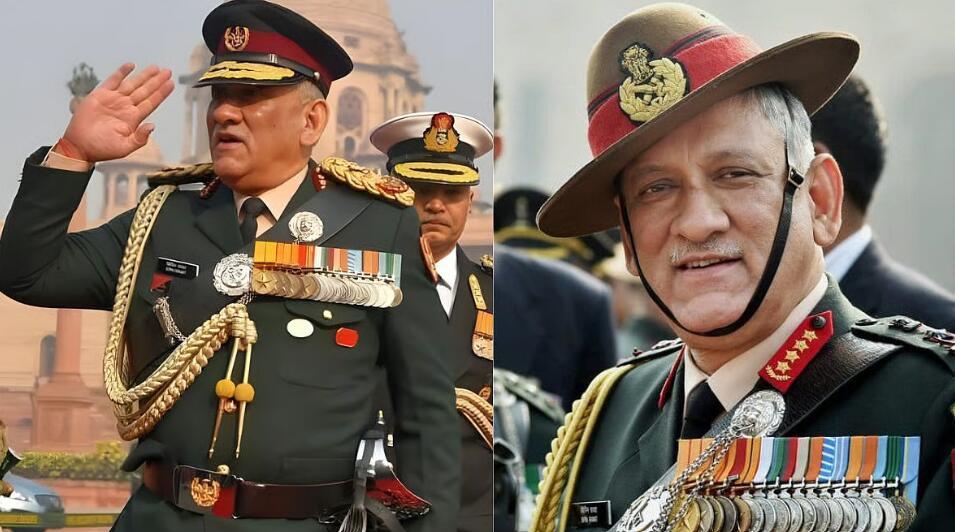
On a day marking the birth anniversary of one of India’s most transformative military leaders, it is fitting to revisit the bold structural vision that Bipin Rawat championed a leaner, more agile and truly integrated Indian military.
As India’s first Chief of Defence Staff (CDS), General Bipin Rawat carried not just a new title but a clear strategic blueprint. At the core of that vision was the creation of Integrated Theatre Commands, aimed at bringing greater jointness and operational efficiency to the armed forces.
The Man and the Mandate
The appointment of Bipin Rawat as India’s first Chief of Defence Staff (CDS) in January 2020 marked a historic moment for the country’s defence establishment. For decades, the Indian Army, Indian Navy and Indian Air Force had largely operated in silos, each with its own command structures, procurement priorities and operational philosophies.
As CDS, General Rawat was tasked with breaking down these silos and embedding jointness into the very DNA of India’s defence apparatus, his answer was the Integrated Theatre Commands, a concept already proven in the United States, China, and several NATO nations.
The idea was straightforward but revolutionary for India, to reorganise the military into geographically defined unified commands where all three services operate under a single Theatre Commander.
Each command would be responsible for a specific strategic frontier, one for the western border with Pakistan, one for the northern border with China, and a maritime command for the Indian Ocean Region.
Why It Mattered
Modern warfare does not wait for inter-service coordination meetings. The battlefield of the 21st century demands seamless integration, air cover for ground troops, naval assets supporting coastal operations, cyber and space domains woven into conventional combat.
General Rawat understood this with a clarity shaped by decades of operational experience, from counter-insurgency in the Northeast to the Line of Control in Kashmir. He argued that a soldier on the ground should never have to wonder whether the aircraft above him belongs to a command that “talks” to his command.
Theatre Commands would eliminate that ambiguity, resources would be pooled, intelligence would be shared in real time, and a single commander would bear unified accountability. It was about fighting smarter, not just harder.
The vision, however, ran into institutional friction. The Indian Air Force, in particular, expressed concerns about the dilution of its strategic assets and the command of air power under a Theatre Commander who might not fully appreciate its doctrinal complexities.
Negotiations over the structure, number, and authority of commands stretched through 2020 and 2021, however the progress was deliberate and, at times, painfully slow.
General Rawat was undeterred as he continued consultations, built consensus where he could, and pushed the bureaucratic machinery forward. He was acutely aware that this was generational work, a reform that would outlive any individual tenure.
Tragedy and the Torch
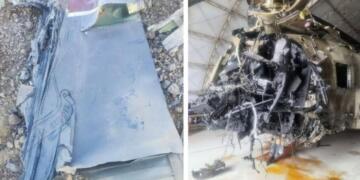
On December 8, 2021, General Bipin Rawat, his wife Madhulika, and 11 others were killed in a helicopter crash near Coonoor, Tamil Nadu. The nation mourned not just a soldier, but a strategist mid-sentence, a reformer whose most consequential chapter remains unwritten.
Yet the vision did not die with the man. India has continued to deliberate on Theatre Commands, and the groundwork laid by General Rawat remains the foundational blueprint. His legacy is not measured in commands commissioned, but in a conversation he permanently elevated, one that has moved jointness from aspiration to institutional imperative.
An Unfinished Symphony
On his birth anniversary, India remembers General Bipin Rawat not with ceremony alone, but with purpose. The finest tribute to his memory would be the day an Indian Theatre Commander leads a joint force across a unified operational theatre, seamlessly, decisively, and without hesitation.





