
















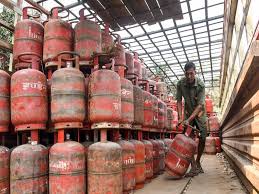
India has raised the price of domestic cooking gas and introduced precautionary measures to stabilize supplies as tensions in the Middle East continue to unsettle global energy markets. The move reflects the country’s reliance on imported liquefied petroleum gas and the vulnerability of supply chains passing through one of the world’s most sensitive geopolitical corridors.
Domestic LPG cylinder prices were increased by ₹60 earlier this month, while commercial cylinders saw a steeper rise of ₹115. Following the revision, the price of a standard 14.2-kilogram domestic cylinder has reached about ₹913 in Delhi. In other major cities, the cost stands at roughly ₹912.50 in Mumbai, ₹939 in Kolkata and around ₹928.50 in Chennai.
The revision comes after several months of relative stability in household LPG prices and is closely tied to rising international energy costs triggered by escalating tensions in West Asia. The conflict has created uncertainty around oil and gas shipments from the region, pushing global prices upward and raising concerns about potential supply disruptions.
Government Moves to Prevent Supply Pressure
Alongside the price increase, authorities have introduced measures aimed at preventing panic buying and maintaining steady distribution across the country. The minimum waiting period between LPG refill bookings has been extended from 21 days to 25 days. The step is intended to discourage hoarding and ensure that supplies remain available for households.
Officials have also instructed domestic refineries to increase LPG production to reduce dependence on imports during the period of global uncertainty. Additional LPG recovered during the refining process is being prioritized for household consumption rather than industrial use in order to protect cooking fuel supplies for millions of families.
Despite these precautions, some regions have reported strain in the supply of commercial LPG cylinders. Small businesses such as restaurants, caterers and street vendors rely heavily on commercial cylinders and are particularly sensitive to price increases and availability disruptions. While domestic household supply remains stable, authorities are continuing to monitor distribution closely.
India’s Dependence on Gulf Energy
The current situation highlights India’s structural dependence on overseas LPG supplies. The country imports more than half of the LPG it consumes, with a significant share coming from major producers in the Gulf region, including Qatar, Saudi Arabia and Kuwait.
Much of this energy passes through the Strait of Hormuz, a narrow maritime corridor that handles a substantial portion of the world’s oil and gas shipments. Any instability in this region can quickly ripple through global energy markets by raising shipping costs, insurance premiums and supply risks.
Experts warn that if tensions in the Middle East persist or escalate further, LPG prices could remain volatile in the coming months. In such a scenario, India may increasingly turn to alternative suppliers such as the United States and other energy-exporting regions to maintain stable supplies.
For households across the country, the developments underline how geopolitical tensions far beyond India’s borders can directly influence the cost of everyday essentials such as cooking fuel.